The real story on North Korea and its healthcare

By Stephen Gowans

The United States has announced that it is adding a new tranche to the Himalaya of sanctions it has built up since 1950 against North Korea, sanctions I outlined in my last article Amnesty International botches blame for North Korea’s crumbling healthcare. Calling the new sanctions “measures” – perhaps to escape the disfavor the word has fallen into after sanctions wiped out the lives of half of million Iraqi children in the 1990s — US secretary of state Hillary Clinton purred reassuringly that the new “measures are not directed at the people of North Korea.” [1] She didn’t predict, however, whether they would add to the misery the previous umpteenth round of sanctions has already visited upon the lives of North Koreans, even if she says they aren’t directed at them, but we can be pretty sure they will.

At the same time preparations were underway to launch Operation Invincible Spirit, a four day joint US-South Korea military exercise to take place in the Sea of Japan, involving 8,000 troops, 200 warplanes and an armada of warships led by the aircraft carrier USS George Washington. The point of the exercise, according to the US commander in the Pacific, Robert Willard, is to “send a strong signal to Pyongyang and Kim Jong-il regarding the provocation that Cheonan represented” [2](the Cheonan being the South Korean warship that sunk in disputed waters in May.) Inasmuch as the Cheonan’s sinking appears to be a replay of the Gulf of Tonkin incident [3] – the alleged attack on a US Navy destroyer by North Vietnamese patrol boats used by US president Lyndon Johnson as a pretext to step up war on Vietnam – the military exercises represent the second stage of what looks like a plan to increase pressure on Pyongyang, with a view to producing what US policy has been trying to produce north of the 38th parallel for the last 60 years: the collapse of the anti-imperialist governments led by Kim Il-sung and now Kim Jong-il. The first part of the plan was to blame North Korea for the Cheonan’s sinking. The second part is to launch military exercises using the pretext of the first.

US secretary of war Robert Gates: Neglects to mention that North Korea’s “stagnation and isolation” may have more than a little to do with US economic warfare and the unrelenting threat of US military intervention.

China calls the exercises, scheduled to begin this Sunday, provocative. And University of Chicago historian Bruce Cumings points out that the North Koreans become agitated whenever the United States and South Korea carry out joint military exercises, because they “see them as a prelude to a possible attack.” [4] Indeed, since it is impossible to distinguish troops, warships and warplanes massing on one’s borders for the purposes of conducting war games from troops, warships and warplanes massing on one’s borders for the purposes of an invasion, it is hardly surprising that the North Koreans are agitated. And that’s the point: keep the DPRK on a continual war-footing, so that it diverts its sanctions-starved economy into military preparedness and away from productive investments and provision of healthcare, education, housing and so on. Joint US-South Korea military exercises aren’t just a sometimes thing. They happen every year, and Operation Invincible Spirit adds another provocation to the annual cycle.

Forcing its ideological opponents to spend heavily on defense — when they always start off poorer and weaker than the United States and can therefore ill-afford to do so if they’re ever going to progress — is a tactic Washington has been using for decades to contain, cripple and ultimately defeat countries that offer a humane and progressive alternative to integration into a worldwide capitalist system of imperial relations.

On top of the advantages of this tactic abroad, at home the defense spending needed to threaten target countries transfers wealth upwards, from working Americans through their taxes to the investors and businesspeople in the armaments industry who benefit in two ways: first, from the profits they reap from arms contracts and second from interest on the bonds they buy to finance US defense spending. The tab is picked up by US taxpayers with their labor and, if a war is waged against their country, by foreigners with their lives, or with crippled standards of living, if their governments are forced to skimp on civilian spending to build a credible defensive force to deter the threat of US military intervention. As the dues-payers for the US warfare economy along with its foreign victims, US citizens have more in common with the citizens of official enemy countries than they think. Who’s the real enemy?

The tactic of spending ideological opponents into bankruptcy has two dimensions: a physical one, of suffocating an alternative economy until it either breaks down or is left staggering under the weight of economic warfare and the costs of preparing to repel the unrelenting ominous threat of military intervention, and an ideological one, of attributing the break-down to the inherent characteristics of the alternative system itself. In this way a warning is sent on two levels: a surface one aimed at ordinary people, which says, while this alternative may seem like a good idea, it doesn’t work and only leads to disaster. To work, this necessitates the cover up of the real causes of the break down.

William Blum: Every socialist experiment has “had life made impossible for it, by the United States and its allies.”

At the demilitarized zone separating the two Koreas yesterday, both Clinton and US secretary of war [5] Robert Gates, played up the message that North Korea’s dire straits are endogenous, and not the product of a systematic campaign of breaking the country’s back. Gates said: “It is stunning to see how little has changed up there (in the North) and yet how much South Korea continues to grow and prosper. The North by contrast, stagnates in isolation and deprivation.” [6] Clinton said much the same. Of course, neither mentioned that sanctions, and the continual harassment of North Korea by US forces, might have something to do with North Korea’s isolation and stagnation. On a deeper level, a warning is sent to would-be leaders of oppressed classes and peoples: try to break free from the US imperial orbit, and this will happen to you, too.

Forty years ago, Felix Greene outlined how Washington had used this tactic against China and Cuba, but his description also fits North Korea today.

“The United States imposed a 100 percent embargo on trade with these countries; she employs great pressure to prevent her allies from trading with them; she arms and finances their enemies; she harasses their shipping; she threatens them with atomic missiles which she announces are pre-targeted and pre-programmed to destroy their major cities; her spy ships prowl just beyond these countries’ legal territorial waters; her reconnaissance planes fly constantly over their territory. And having done all in their power to disrupt these countries’ efforts to rebuild their societies by means of blockades to prevent essential goods from reaching them, any temporary difficulties and setbacks these countries may encounter are magnified and exaggerated and presented as proof that a socialist revolutionary government is ‘unworkable’.” [7]

Author William Blum, who writes an Anti-Empire Report monthly, elaborates on Greene’s point:

“…every socialist experiment of any significance in the twentieth century — without exception — was either overthrown, invaded, corrupted, perverted, subverted, destabilized, or otherwise had life made impossible for it, by the United States and its allies. Not one socialist government or movement — from the Russian Revolution to the Sandinistas in Nicaragua, from Communist China to the FMLN in El Salvador — not one was permitted to rise or fall solely on its own merits; not one was left secure enough to drop its guard against the all-powerful enemy abroad and freely and fully relax control at home. It’s as if the Wright brothers’ first experiments with flying machines all failed because the automobile interests sabotaged each test flight. And then the good and god-fearing folk of the world looked upon these catastrophes, nodded their heads wisely, and intoned solemnly: Humankind shall never fly.” [8]

Disputed Territory

Cumings offered insight into the context surrounding the Cheonan affair in a May 27, Democracy Now interview. The incident, Cummings observed:

“happened very close to the North Korean border, we’ve had incidents like this, somewhat different ones, but with large loss of life, going back more than ten years. In 1999, a North Korean ship went down with thirty sailors lost and maybe seventy wounded. That’s a larger total of casualties than this one. And last November, a North Korean ship went down in flames. We don’t know how many people died in that. This is a no man’s land, or waters, off the west coast of Korea that both North and South claim. And the Cheonan ship was sailing in those waters…” [9]

University of Chicago historian Bruce Cumings: “The US and South Korea demarcated a so-called Northern limit line unilaterally.” An incident waiting to happen.

The hypocrisy need not be pointed out. When North Korean ships are sunk, there’s no provocation, except to North Koreans, who, in the view of Western governments and the propaganda apparatus of private-sector mass media, don’t matter (in the same way Israeli soldier Gilad Shalit, who was kidnapped by Hamas, matters to Western governments and Western mass media while the countless Palestinians who have been kidnapped by Israeli soldiers in the West Bank and Gaza and have since disappeared into the bowels of Israeli prisons are invisible.) But when a South Korean ship is sunk in the same disputed waters, North Korea is immediately blamed (by the politicians of South Korea’s ruling Grand National Party, though not by the South Korean military, which for weeks, said it had no evidence of North Korean involvement.) And the sinking is used to justify more sanctions and more military exercises to ratchet up the pressure.

Cumings went on to explain that the waters in which the South Korean warship went down in May “is a no man’s land, where the US and South Korea demarcated a so-called Northern limit line unilaterally. The North has never accepted it. The North says that this area is under the joint jurisdiction of the North and South Korean militaries. So you have an incident waiting to happen.” [10] Into this cauldron of roiling waters waiting for an incident to happen will soon be tossed Operation Invincible Spirit.

The World Health Organization Weighs In

While the Western media lighted on Amnesty International’s portrayal of North Korea’s healthcare system as a horror show with the eagerness of flies on road-kill, the World Health Organization had a more sober assessment of the rights organization’s Cold War-era hatchet job. WHO spokesman Paul Garwood faulted the report for being “mainly anecdotal, with stories dating back to 2001, and not up to the UN agency’s scientific approach to evaluating healthcare.” [11]

“All the facts are from people who aren’t in the country,” Garwood said. “There’s no science in the research.” [12]

In contrast, WHO chief Margaret Chan visited North Korea in April and returned with an assessment that makes Amnesty’s report look like it was written to cater to US foreign policy propaganda requirements.

Chan noted that:

“The health system requires further strengthening in order to sustain the government policy of universal coverage and, of course, to improve the quality of services. More investments are required to upgrade infrastructure and equipment and to ensure adequate supplies of medicines and other commodities, and to address the correct skill mix of the health workforce.” [13]

WHO chief Margaret Chan: Her assessment of North Korea’s healthcare system makes Amnesty’s look like a Cold War-era hatchet job.

All of this is consistent, in a way, with what Amnesty says. Of course, the ability of the government to invest in infrastructure, upgrade equipment, and secure adequate supplies of medicines, is severely hampered by the US-led campaign of economic warfare and by Pyongyang’s need to raid its civilian budget to secure it borders against incessant US military harassment. Lifting sanctions and removing the military sword of Damocles that dangles menacingly above North Koreans’ collective heads (I wonder whether the US nuclear missiles targeted on Pyongyang are, as Clinton claims with sanctions, not directed at the North Korean people) would go far to improving the provision of healthcare in North Korea. Which is one big reason it will never happen. The point of sanctions and unremitting military threat is to destroy what the US government calls North Korea’s Marxist-Leninist system (inaccurately) and its non-market economy, not to make life better, healthier and happier for North Koreans.

Despite these challenges, DPR Korea appears to have secured what Chan describes as “advantages over other developing countries,” including:

o No shortage of doctors and nurses.
o No brain drain of healthcare professionals (a particularly acute problem in Africa.)
o An elaborate health infrastructure and a developed network of primary health care physicians. [14]

Chan also noted that “the government has done a good job in areas such as immunization coverage, effective implementation of maternal, newborn and child interventions, in providing effective tuberculosis treatment and in successfully reducing malaria cases.” [15]

Perhaps, the real story about North Korean healthcare isn’t the challenges it faces, or the systematic efforts of the United States to make it collapse, but the fact that it hasn’t collapsed despite these challenges, and has managed to earn the praise of the WHO as the envy [16] of many developing nations.

1. Justin McCurry, “US announces fresh North Korea sanctions”, The Guardian (UK), July 21, 2010.
2. Ibid.
3. Stephen Gowans, “The sinking of the Cheonan”, PSLweb.org, May 27, 2010. http://www.pslweb.org/site/News2?page=NewsArticle&id=14044&news_iv_ctrl=2801
4. “Historian Bruce Cumings: US Stance on Korea Ignores Tensions Rooted in 65-Year-Old Conflict; North Korea Sinking Could Be Response to November ’09 South Korea Attack”, Democracy Now, May 27, 2010. http://www.democracynow.org/2010/5/27/nk
5. The US military is all about offense not defense, unless defense refers to the defense of capital accumulation within a system of imperial relations. Calling Gates the secretary of defense stupidly reinforces this deception. No one, but the Japanese and its Axis allies, would have called Japan of the 1930s and 1940s the liberator of Asia from Western imperialism, even though Japan bestowed the self-serving and misleading title upon itself. Why, then, should we refer to Gates by the equally self-serving and misleading title of secretary of defense?
6. McCurry
7. Felix Greene, The Enemy: What Every American Should Know about Imperialism, Vintage, New York, 1970, p. 292.
8. William Blum, “The Anti-Empire Report,” September 2, 2009. http://killinghope.org/bblum6/aer73.html
9. Cumings: Democracy Now
10. Ibid.
11. Bradley S. Klapper, “WHO criticizes Amnesty report into NKorea health”, The Associated Press, July 16, 2010.
12. Ibid.
13. Lisa Schlein, “WHO chief notes N. Korean achievements in public health care”, Voice of America News, April 30, 2010.
14. Ibid.
15. Ibid.
16. Klapper

Amnesty International botches blame for North Korea’s crumbling healthcare

“Economic sanctions are, at their core, a war against public health.”
–The New England Journal of Medicine [1]

By Stephen Gowans

Amnesty International has released a report condemning the North Korean government for failing to meet “its obligations to respect, protect and fulfil the right to health of its citizens”, citing “significant deprivation in (North Koreans’) enjoyment of the right to adequate care, in large part due to failed or counterproductive government policies.” The report documents rundown healthcare facilities which “operate with frequent power cuts and no heat” and medical personnel who “often do not receive salaries, and many hospitals (that) function without medicines and essentials.” Horrific stories are recounted of major operations carried out without anaesthesia. Blame for this is attributed solely to the North Korean government. [2] While unstated, the implication is that DPR Korea is a failed state, whose immediate demise can only be fervently wished for (or worked toward.)

The attack is joined by Barbara Demick, the Beijing bureau chief for the Los Angeles Times and author of Nothing to Envy: Ordinary Lives in North Korea, writing in the British newspaper, The Guardian. She acknowledges the DPR Korea’s considerable social achievements – an acknowledgement that would never have been permitted in the pages of a major Western newspaper in the depths of the Cold War – but does so only in order to show how far the country has regressed.

If we recognize that “economic sanctions are, at their core, a war against public health” and acknowledge, as a former US president has, that North Korea is “the most sanctioned nation in the world,” it is difficult not to draw the obvious conclusion: that the crumbling of North Korea’s healthcare system is due to sanctions. How is it, then, that a new Amnesty International report blames Pyongyang’s “failed or counterproductive” policies, while saying not a word about sanctions?

“The country once had an enviable healthcare system,” Demick writes, “with a network of nearly 45,000 family practioners. Some 800 hospitals and 1,000 clinics were almost free of charge for patients. They still are, but you don’t get much at the hospital these days.” Demick continues: “The school system that once allowed North Korea’s founder Kim Il-Sung (father of the current leader) to boast his country was the first in Asia to eliminate illiteracy has now collapsed. Students have no books, no paper, no pencils.” [3]

Nowhere is the role of sanctions mentioned in Demick’s account of North Korea’s “giant leap backwards” [4] or in Amnesty’s condemnation of Pyongyang for failing to safeguard the basic healthcare rights of its citizens. Instead, Demick and Amnesty point to a botched currency reform, as if it alone accounts for the country’s deep descent into poverty. Neither mention that no country has been subjected to as long and determined a campaign of economic warfare as North Korea, or that in recent years, a UN sanctions regime little different from the one that destroyed the healthcare system of Iraq in the 1990s, and led to the deaths of half a million Iraqi children under the age of five from 1991 to 1998 [5], has been imposed on a country that has struggled with food shortages since the collapse of the Soviet-led socialist trading community and as a result of a series of natural calamities. No mention either is made of Washington’s efforts to “squeeze North Korea with every financial sanction possible” with the aim of bringing about the collapse of the country’s economy, [6] and with it, its public healthcare and educational systems. What’s more, while Demick acknowledges that South Korea and other countries have sharply reduced food aid to the North, she blames North Korea’s leadership for refusing to dismantle its nuclear program and for “provocations” against the South, for inviting the aid reduction. (The provocations Demick refers to include the sinking of a South Korean corvette in March, attributed, with not a lot of evidence – and over the initial denials of the South Korean military [7] – to a North Korean submarine.) Demick and Amnesty could have condemned South Korea and the United States for using food as a weapon. Instead, Demick censures North Korea for putting itself in the position of being sanctioned, while Amnesty counsels major donors not to base food aid on political considerations, without acknowledging that this is exactly what major donors have done.

Both Amnesty and Demick operate within the framework of Western propaganda. As the North Korea specialist Tim Beal points out, Western propaganda invokes economic mismanagement as the explanation for North Korea’s collapsing economy, despite an obvious alternative explanation: sanctions. “The results — those malnourished babies,” Beal wrote prophetically three years ago, “can be blamed on the Koreans, which in turn is produced as evidence that the sanctions are desirable and necessary.” [8]

Sanctions of Mass Destruction

“In contrast to war’s easily observable casualties, the apparently nonviolent consequences of economic intervention seem like an acceptable alternative. However, recent reports suggest that economic sanctions can seriously harm the health of persons who live in targeted nations.” [9] This has been well established and widely accepted in the cases of Iraq in the 1990s and the ongoing US blockade of Cuba. Political scientists John Mueller and Karl Mueller wrote an important paper in Foreign Affairs, in which they showed that economic sanctions “may have contributed to more deaths during the post-Cold War era than all weapons of mass destruction throughout history.” [10]

While unstated, the implication of Amnesty International’s new report on North Korea’s healthcare is that DPR Korea is a failed state, whose immediate demise can only be fervently wished for (or worked toward.) The rights organization covers up the role played by the United States and its allies in undermining the conditions that would allow Pyongyang to fulfill the healthcare rights of North Koreans, and then blames the disaster on Pyongyang.

“The dangers posed today by such enfeebled, impoverished, and friendless states as Iraq and North Korea are minor indeed”, they wrote in 1999. It might be added that the dangers posed by North Korea to the physical safety of US citizens are not only minor but infinitesimally small. Notwithstanding the fevered fantasies of rightwing commentators, North Korea has neither the means, nor the required death wish, to strike the United States. However, the danger the country poses to the idea of US domination – and hence, to the banks, corporations, and major investors who dominate US policy-making – are admittedly somewhat greater.

“Severe economic sanctions”, the Muellers contend, ought to be “designated by the older label of ‘economic warfare’”. “In past wars economic embargoes caused huge numbers of deaths. Some 750,000 German civilians may have died because of the Allied naval blockade during World War I.” [11]

“So long as they can coordinate their efforts,” the two political scientists continue, “the big countries have at their disposal a credible, inexpensive and potent weapon for use against small and medium-sized foes. The dominant powers have shown that they can inflict enormous pain at remarkably little cost to themselves or the global economy. Indeed, in a matter of months or years whole economies can be devastated…” [12] And with devastated economies, come crumbling healthcare systems and failure to provide for the basic healthcare rights of the population.

Sixty Years of Sanctions

From the moment it imposed a total embargo on exports to North Korea three days after the Korean War began in June 1950, the United States has maintained an uninterrupted regime of economic, financial, and diplomatic sanctions against North Korea. [13] These include:

o Limits on the export of goods and services.
o Prohibition of most foreign aid and agricultural sales.
o A ban on Export-Import Bank funding.
o Denial of favourable trade terms.
o Prohibition of imports from North Korea.
o Blocking of any loan or funding through international financial institutions.
o Limits on export licensing of food and medicine for export to North Korea.
o A ban on government financing of food and medicine exports to North Korea.
o Prohibition on import and export transactions related to transportation.
o A ban on dual-use exports (i.e., civilian goods that could be adapted to military purposes.)
o Prohibition on certain commercial banking transactions. [14]

In recent years, US sanctions have been complemented by “efforts to freeze assets and cut off financial flows” [15] by blocking banks that deal with North Korean companies from access to the US banking system. The intended effect is to make North Korea a banking pariah that no bank in the world will touch. Former US President George W. Bush was “determined to squeeze North Korea with every financial sanction possible” until its economy collapsed. [16] The Obama administration has not departed from the Bush policies of financial strangulation.

Washington has also acted to broaden the bite of sanctions, pressing other countries to join its campaign of economic warfare against a country it faults for maintaining a Marxist-Leninist system and non-market economy. [17] This has included the sponsoring of a United Nations Security Council resolution compelling all nations to refrain for exporting dual-use items to North Korea (a repeat of the sanctions regime that led to the crumbling of Iraq’s healthcare system in the 1990s.) Washington has even gone so far as to pressure China (unsuccessfully) to cut off North Korea’s supply of oil. [18]

Dual-Use Sanctions: 1990s Iraq Redux

The Amnesty report blames Pyongyang for a shortage of syringes at hospitals. Yet in the 1990s Iraq suffered from a similar shortage, not due to failed government policies, but because “the importation of some desperately needed materials [had] been delayed or denied because of concerns that they might contribute to Iraq’s WMD programs. Supplies of syringes were held up for half a year because of fears they might be used in creating anthrax spores.” [19] Like Iraq in the 1990s, North Korea is under sanctions that ban dual use items – goods that have important civilian uses but might also be used in the production of weapons. “Medical diagnostic techniques that use radioactive particles, once common in Iraq, [were] banned under the sanctions, and plastic bags needed for blood transfusions [were] restricted.” [20] On October 14, 2006 the United Nations Security Council banned the export to DRP Korea of any goods, including those used for civilian purposes, which could contribute to WMD-related programs – the very same sanctions that led, at minimum, to hundreds of thousands of deaths in 1990s Iraq when the export of potentially weapons-related material, also essential to the maintenance of sanitation, water treatment and healthcare infrastructure, was held up or blocked. Not a word of the escalating sanctions regime against North Korea is mentioned in the Amnesty report, an omission so glaring as to resemble a report on the post-World War II devastation of Europe that says nothing of the string of Nazi aggressions that caused it.

Kaesong, the vast industrial park of South Korean factories employing North Korean workers situated near the South Korea-North Korea border, provides an example of how ridiculously wide the dual-use sanctions net can be cast. “U.S. officials blocked the installation of a South Korean switchboard system at Kaesong on grounds that the equipment contained components that could have been adapted for military use. As a result…the 15 companies operating at Kaesong share a single phone line, and messages must often be hand-delivered across the border.” [21] While dual-use sanctions may appear to be targeted, just about any item required for the provision of basic healthcare, sanitation, and educational rights – chlorine, syringes, x-ray equipment, medical isotopes, blood transfusion bags, even graphite for pencils – can be construed to have military uses and therefore banned for export.

Most of North Korea’s trade after the fall of the Soviet Union was with China, Japan and South Korea. In 2002, Japan banned the export of rice to North Korea and effectively prohibited North Korean ships from using Japanese ports. [22] In 2009, Tokyo went further, imposing a total ban on exports to the beleaguered country. [23] No wonder former US President George W. Bush called North Korea “the most sanctioned nation in the world”. [24]

Food as a Weapon

The Amnesty report recommends that “major donors and neighbouring countries…ensure that the provision of humanitarian assistance in North Korea is based on need and is not subject to political conditions”. In making this recommendation, the rights organization tacitly acknowledges that humanitarian assistance has indeed been subject to political conditions. (If this practice was unheard of, why make the recommendation?) In fact, the United States, Japan and South Korea have used food aid as a weapon. “After Pyongyang test-fired missiles in July (2006), South Korea announced plans to eliminate the 500,000 tons in annual food aid it provides directly to North Korea.” At the same time, food aid from China dropped one-third. [25] And in 2005, the Bush administration cut off all food aid to North Korea. [26] In all instances, humanitarian assistance was withheld to exact concessions from Pyongyang.

Amnesty International and Imperialism

The United Nations Committee on Economic, Social and Cultural Rights recognized in 1997 that sanctions “often cause significant disruptions in the distribution of food, pharmaceuticals and sanitation supplies, jeopardize the quality of food and the availability of clean drinking water, severely interfere with the functioning of basic health and educational systems, and undermine the right to work.” [27] These disruptions were evident in Iraq in the 1990s, and led to the crumbling of the country’s healthcare system, contributing to what the UN Humanitarian Coordinator in Iraq, Denis Halliday, called “a de facto genocide.” [28] Additionally, the deleterious effects of US economic warfare on the Cuban healthcare system are uncontested except by anti-Castro émigrés and the US government. [29] If we recognize that “economic sanctions are, at their core, a war against public health” and acknowledge, as a former US president has, that North Korea is “the most sanctioned nation in the world,” it is difficult not to draw the obvious conclusion: that North Korea’s crumbling healthcare system and “great leap backwards” are not due in large measure to Pyongyang’s “failed or counterproductive” policies, but to the inhumane policies of the United States, Japan and South Korea.

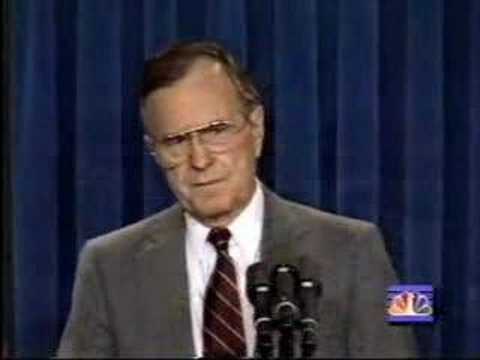
Amnesty International’s contributions to US imperialism are not unprecedented. In 1991 the rights organization claimed that Iraqi soldiers had thrown Kuwaiti babies from incubators, a hoax, perpetrated by the daughter of the Kuwaiti ambassador to the United States. When US President George H.W. Bush appeared on television to announce that he was readying for war on Iraq, he had a copy of the Amnesty report in his hands.

Amnesty’s failure to point to the role played by the United States and its allies in undermining the conditions that would allow Pyongyang to fulfill the healthcare and other rights of North Koreans, and its willingness to play a part in legitimizing Washington’s foreign policy agenda, is not without precedent. While Amnesty was critical of the human rights record of apartheid South Africa, it alone among human rights organizations refused to denounce apartheid itself. [30] The organization also refused to condemn the 1999 NATO bombing of Yugoslavia [31], even though it was an exercise in imperial predation that denied the rights of many innocent Yugoslavs to life, security of the person and employment. Amnesty excused its inaction on grounds that it is not an antiwar organization, as if war and human rights are not often inextricably bound. The war on Yugoslavia certainly was, at least rhetorically, since NATO invoked the language of human rights to justify its attack. But Amnesty’s most egregious service to the propaganda requirements of US foreign policy came in 1991, when the rights group released a report in the run-up to the Gulf War claiming that Iraqi soldiers had thrown Kuwaiti babies from incubators. This was a hoax, perpetrated by the daughter of the Kuwaiti ambassador to the United States, orchestrated by the public relations firm Hill & Knowlton, which had been hired to launch a propaganda campaign to galvanize public support for a US war on Iraq. When US President George H.W. Bush appeared on television to announce that he was readying for war on Iraq, he had a copy of the Amnesty report in his hands. [32]

Conclusion

A Western-based organization, Amnesty has proven itself time and again to be incapable of operating outside the propaganda system of Western governments, and at times has acted to justify the imperialism of dominant powers or turned a blind eye to it. In its latest North Korea report it has made an invaluable contribution to the campaign of the United States and its East Asian allies to bring down one of the world’s few remaining top-to-bottom alternatives to capitalism and Third World dependency on the United States and former colonial powers. It has done so by fulfilling the two requirements needed for an anti-North Korea propaganda campaign to work: First, to cover up the role played by the United States, Japan and South Korea in starving the country’s healthcare and educational systems of necessary inputs, and second, to blame the ensuing chaos on the North Korean government. The action of Amnesty in misdirecting responsibility for this tragedy is no less shameful than that of the governments that have perpetrated it.

1. Eisenberg L, “The sleep of reason produces monsters—human costs of economic sanctions,” New England Journal of Medicine, 1997; 336:1248-50. http://content.nejm.org/cgi/content/short/336/17/1247
2. Amnesty International, “The crumbling state of health care in North Korea”, July 2010. http://www.amnesty.org/en/library/asset/ASA24/001/2010/en/13a097fc-4bda-4119-aae5-73e0dd446193/asa240012010en.pdf
3. Barbara Demick, “North Korea’s giant leap backwards”, The Guardian (UK), July 17, 2010. http://www.guardian.co.uk/world/2010/jul/17/north-korea-famine-fears
4. Ibid.
5. “Iraq surveys show ‘humanitarian emergency’”, UNICEF.org, August 12, 1999. http://www.unicef.org/newsline/99pr29.htm
6. The New York Times, September 13, 2006.
7. Stephen Gowans, “The sinking of the Cheonan”, PSLweb.org, May 27, 2010. http://www.pslweb.org/site/News2?page=NewsArticle&id=14044&news_iv_ctrl=2801
8. Tim Beal, “Invisible WMD- the effect of sanctions”, Pyongyang Report, Volume 9, Number 4, October 2007. http://www.vuw.ac.nz/~caplabtb/dprk/pyr9_4.mht
9. Karine Morin and Steven H. Miles, “Position paper: The health effects of economic sanctions and embargoes: The role of health professionals”, Annals of Internal Medicine, Volume 132, Number 2, 18 January 2000. http://www.annals.org/content/132/2/158.abstract
10. John Mueller and Karl Mueller, “Sanctions of mass destruction”, Foreign Affairs, Volume 78, Number 3, May/June 1999.
11. Ibid.
12. Ibid.
13. Dianne E. Rennack, “North Korea: Economic sanctions”, Congressional Research Service, October 17, 2006. http://www.au.af.mil/au/awc/awcgate/crs/rl31696.pdf
14. Ibid.
15. Mark Landler, “Envoy to coordinate North Korea sanctions”, The New York Times, June 27, 2009. http://www.nytimes.com/2009/06/27/world/americas/27diplo.html?partner=rss&emc=rss
16. The New York Times, September 13, 2006.
17. According to Rennack, the following US sanctions have been imposed on North Korea for reasons listed as either “communism”, “non-market economy” or “communism and market disruption”: prohibition on foreign aid; prohibition on Export-Import Bank funding; limits on the exports or goods and services; denial of favorable trade terms.
18. The Washington Post, June 24, 2005.
19. Mueller and Mueller.
20. Ibid.
21. The Washington Post, November 16, 2005.
22. Rennack.
23. “KCNA dismisses Japan’s frantic anti-DPRK racket”, KCNA, June 23, 2009.
24. U.S. News & World Report, June 26, 2008; The New York Times, July 6, 2008.
25. The Los Angeles Times, October 25, 2006.
26. The Washington Post, May 16, 2008.
27. United Nations Economic and Social Council, “The relationship between economic sanctions and respect for economic, social and cultural rights”, December 12, 1997. http://www.unhchr.ch/tbs/doc.nsf/0/974080d2db3ec66d802565c5003b2f57?Opendocument
28. Denis J. Halliday, “The Deadly and Illegal Consequences of Economic Sanctions on the People of Iraq”, Brown Journal of World Affairs, Winter/Spring 2000 – Volume VII, Issue 1. http://www.watsoninstitute.org/bjwa/archive/7.1/Essays/Halliday.pdf
29. Richard Garfield and Sarah Santana, “The Impact of the Economic Crisis and US Embargo on Health in Cuba”, American Journal of Public Health, January 19997, Volume 87, Number 1. http://www.ncbi.nlm.nih.gov/pmc/articles/PMC1380757/
30. Francis A. Boyle and Dennis Bernstein, “Interview with Francis Boyle. Amnesty on Jenin”, Covert Action Quarterly, Summer, 2002. http://cosmos.ucc.ie/cs1064/jabowen/IPSC/php/art.php?aid=4573
31. Alexander Cockburn, “How the US State Dept. Recruited Human Rights Groups to Cheer On the Bombing Raids: Those Incubator Babies, Once More?” Counterpunch, April 1-15, 1999. http://cosmos.ucc.ie/cs1064/jabowen/IPSC/articles/article0005098.html
32. Boyle and Bernstein.

It’s the regime change agenda all the time

The United States, Canada and Australia are abusing the Kimberly Process, an initiative to prevent the sale of “blood” diamonds, in order to frustrate Zimbabwe’s efforts to establish a multi-billion dollar annual revenue stream from its rich Marange diamond fields. The aim is to keep up economic pressure on the country to undermine popular support for Robert Mugabe and his land reform and economic indigenization programs.

By Stephen Gowans

Zimbabwe’s Marange diamond fields hold out the promise of billions of dollars per year in diamond sales [1], a bounty that could help the southern African country develop economically, and place it among the world’s top diamond producers.

But if the United States, Canada and Australia have their way, Zimbabwe will have to find a way to sell its diamonds without a seal of approval from the Kimberly Process, “a joint governments, industry and civil society initiative to stem the flow of conflict diamonds – rough diamonds used by rebel movements to finance wars against legitimate governments.” [2]

Abbey Chikane, a South African businessman appointed by the Kimberly Process to monitor the Marange fields, recommended that the diamonds be certified. He also recommended that Zimbabwe’s army, which has guarded the fields from the anarchy of illegal diamond diggers hoping to strike it rich, continues to do so until the police are in a position to maintain order. [3]

Most African countries — including Zimbabwe’s neighbors South Africa, Botswana, Angola and Tanzania — backed up Chikane’s recommendation, as did India, China and Russia, which together represent the bulk of humanity. But the United States, Canada and Australia blocked certification.

The three countries, among the world’s richest, point to claims made by two ostensibly independent nongovernmental organizations, Global Witness and Partnership Africa Canada, to justify their decision. They say the Zimbabwe military is committing human rights abuses at the Marange fields and running a smuggling operation. [4]

So why did the Kimberly Process auditor recommend certification, despite allegations of human rights abuses and smuggling? First, the Kimberly Process seeks to prevent the sale of rough diamonds to finance rebel wars, not to prevent human rights abuses and smuggling. Second, Kimberly Process chairman Bernard Esau says there is “no proof of alleged human rights violations at the Marange diamond fields.” [5]

The United States, Canada and Australia, along with Britain and the European Union, have been actively seeking to drive Robert Mugabe and Zanu-PF from power for the last decade. Their regime change efforts are dressed up as “democracy promotion”, but Washington’s own documents make clear that “democracy promotion” is nothing more that helping the Western-backed, -conceived and -funded Movement for Democratic Change (MDC), which currently shares power with Zanu-PF, govern alone. The MDC would end, and possibly reverse, Zanu-PF’s policies of land redistribution and economic indigenization [6] — policies which are giving substantive meaning to the country’s hard fought for independence.

In order to undermine popular support for Zanu-PF and its policies, the United States, Canada and Australia, along with other Western countries, have imposed sanctions which have had a crippling effect on the economy. While they deny that the sanctions are anything other than targeted, and that they’re aimed only at top Zanu-PF leaders, the Zimbabwe Democracy and Economic Recovery Act, a US law passed in 2001, blocks Zimbabwe’s access to international lines of credit. Explicitly taking aim at Zimbabwe’s land redistribution program, the law has cruelly undercut economic development.

Zimbabwe’s land reform and economic indigenization programs remain an inspiration to poor and landless Africans of neighboring countries, who decades after liberation from European colonialism, apartheid and white settler rule, have yet to see any substantive change in their conditions. The economic indigenization program, which mirrors similar policies that South Korea, Japan, Venezuela, Canada and other countries have once used or currently use to promote domestic economic development, [7] requires that at least 51 percent of Zimbabwe’s economy be placed in the hands of Zimbabweans who were disadvantaged by colonial oppression and white minority rule.

While it’s true that Global Witness and Partnership Africa Canada are nongovernmental organizations, they are hardly independent of the Western governments that have worked for regime change in Zimbabwe. Global Witness is funded by the Canadian Department of Foreign Affairs and International Trade, Britain’s Department for International Development, the European Commission, Ireland’s Department of Foreign Affairs, the Netherlands Ministry of Foreign Affairs, the Swedish International Development Co-operation Agency and Norad. [8] Partnership Africa Canada receives its funding from many of the same organizations, including a Canadian government department (Foreign Affairs and International Trade) and agency (the Canadian International Development Agency.) [9]

Many NGOs active in Africa create the illusion of being independent of the Western governments that have historically despoiled the continent, while relying on the same governments to provide their funding. It’s highly unlikely that organizations whose existences depend on the support they can get from Western governments stray far from their funders’ interests and foreign policy imperatives. The implication that NGOs are independent of governments is deliberately deceptive.

The Marange diamond fields, then, present a problem to Western governments that have been working to undermine popular support for Zanu-PF and its policies. How can sanctions work if they’re offset by billions of dollars per year in diamond sales?

The answer, of course, is that a rich flow of diamond revenues, and anything else that promises to make life better for Zimbabweans, counters the aims of the sanctions, and therefore, under the logic of Western foreign policy, must be blocked.

To frustrate Zimbabwe’s efforts to benefit from the Marange fields, the United States, Canada and Australia have abused the Kimberly Process. The initiative is intended to prevent rebel movements using rough diamonds to finance wars against legitimate governments. Is there any evidence this is happening in Zimbabwe? None at all.

But the flaw in the Kimberly Process is that it operates on the principle of consensus. That means that participants who seek to deny certification can, for their own mischievous political reasons, withhold their approval and therefore prevent consensus, invoking some unrelated humanitarian principle as justification.

“We want to be orderly, to do like what other countries in the region are doing,” said Mugabe last May, “but countries like the US, Britain, Australia and Canada want to take advantage of us by ensuring the process creates the same effect like sanctions on us; that we should not be allowed to sell our diamonds.”

“They have been heard saying what happens to our sanctions if Zimbabwe sells its diamonds? It is the regime change agenda all the time.” [10]

1. Celia W. Dugger, “Report on Zimbabwe diamond trade angers rights groups”, The New York Times, June 8, 2010.

2. http://www.kimberleyprocess.com/
Accessed June 25, 2010.

3. Celia W. Dugger, “Report on Zimbabwe diamond trade angers rights groups”, The New York Times, June 8, 2010.

4. Celia W. Dugger, “Zimbabwe diamonds fail to get conflict-free approval”, The New York Times, June 24, 2010.

5. “No proof of diamond fields human rights violations: KP,” The Herald (Zimbabwe), June 28, 2009.

6. Stephen Gowans, “US Government Report Undermines Zimbabwe Opposition’s Claim of Independence”, what’s left, October 4, 2008, https://gowans.wordpress.com/2008/10/04/us-government-report-undermines-zimbabwe-opposition%e2%80%99s-claim-of-independence/

7. Ha-Joon Chang, Bad Samaritans: The Myths of Free Trade and the Secret History of Capitalism, Bloomsbury Press, 2008. The author, a South Korean who teaches economics at the University of Cambridge, is hardly a favorite of the South Korean Ministry of National Defense. In July, 2008 the ministry banned from military barracks Bad Samaritans, along with 23 other books, labeled anti-capitalist, anti-American and pro-North Korean. Also included were books by Noam Chomsky. “Military expands book blacklist”, The Hankyoreh, July 31, 2008; Chose Sang-Hun, “Textbooks on Past Offend South Korea’s Conservatives,” The New York Times, November 18, 2008.

8. http://www.globalwitness.org/pages/en/our_funders.html
Accessed June 25, 2010.

9. http://www.pacweb.org/partners-e.php
Accessed June 25, 2010.

10. Takunda Maodza, “President slams KPCS”, The Herald (Zimbabwe), May 28, 2010.

Nobel Peace Price Winner Scorns North Korean Peace Offer

Peace is “not what we’re offering,” says U.S. secretary of state

By Stephen Gowans

North Korea recently let Washington know that it will dismantle its nuclear weapons if the United States signs a formal peace treaty ending the Korean War. This, offered Pyongyang, could be negotiated through bilateral talks between the United States and north Korea.

Alternatively, Pyongyang said it was prepared to return to six-nation talks, aimed at denuclearizing the Korean peninsula, if the United Nations removes the sanctions it imposed after north Korea launched a satellite and conducted a nuclear test.

North Korea regards the sanctions as unjust, and with good reason – they are. Neither the satellite launch nor the nuclear test were illegal under international law.

No law prohibits a country from launching satellites, or even testing ballistic missiles — what Washington accuses north Korea of doing under cover of a satellite launch.

And since north Korea is no longer a signatory to the Nuclear Non-Proliferation Treaty – it withdrew after the United States re-targetted some of its strategic nuclear weapons from the defunct Soviet Union to north Korea in the early 1990s — it is not prohibited from developing and testing nuclear arms.

The reality that north Korea’s satellite launch and nuclear test were not illegal, did not, however, stop the United Nations Security Council from imposing sanctions, while at the same time overlooking Washington’s repeated violations of international law, a double-standard made inevitable by Washington’s veto and domination of the council.

North Korea says that it would not have built nuclear weapons had the United States not threatened it with military aggression. This is almost certainly true.

In the early 1990s, long before north Korea developed a rudimentary nuclear weapons capability, Washington announced it was targeting north Korea with nuclear weapons. A month later, Pyongyang withdrew from the non-proliferation treaty. Cause and effect.

Washington, which quashed the basis for a nascent independent Korean government in 1945, has stationed tens of thousands of troops on Korean soil since (but for a single brief hiatus.) U.S. warships patrol the fringes of north Korea’s territorial waters, and U.S. warplanes patrol the margins of north Korean airspace … and not infrequently, intrude upon it. The U.S. military conducts annual war games with south Korea – the south’s military budget is much larger than the north’s – keeping the north off balance and on an unremitting war footing.

Soon after 9/11, the United States ratcheted up its sabre rattling when the Bush administration listed north Korea as one of three countries making up an axis of evil, along with Iraq and Iran. The illegal invasion of Iraq, carried out soon after and for fabricated reasons, made two things clear:

• North Korea could be next.
• Disarming – as Iraq had done – was not a good idea.

In the face of Washington’s threats — indeed, because of them — Pyongyang stepped up its entreaties to Washington to sign a peace treaty.

At the same time, it worked on developing a nuclear weapons capability that would make the Pentagon think twice about another illegal war.

But Washington was dismissive of Pyongyang’s overtures of peace. Colin Powell, then Secretary of State, said “We don’t do peace treaties.”

North_Korea_by_Latuff2Today, a U.S. administration led by a Nobel Peace Prize laureate who wages wars in Iraq, Afghanistan, Pakistan, Somalia and Yemen, says it will only discuss a peace treaty if north Korea dismantles its nuclear weapons first. Washington promises only to discuss, not sign, a peace treaty. If Pyongyang delivers what the United States demands, Washington will think about signing a peace treaty…maybe. The United States, of course, won’t be dismantling its own nuclear weapons.

Washington also says that north Korea’s “appalling” human rights record stands in the way of normalizing relations, even though the appalling human rights records of Egypt, Israel, Saudi Arabia, Ethiopia, Colombia and Afghanistan, hasn’t prevented Washington from maintaining normal, if not favored, relations with these countries, including showering Israel, Egypt and Colombia with billions of dollars in annual aid. And that’s to say nothing about Washington’s own appalling human rights record – one replete with restrictions on mobility rights (i.e., travel to Cuba), secret prisons, prisoner abuse, extrajudicial assassination, unlawful detention and torture.

Clearly, the United States is not interested in peace on the Korean peninsula. Its military intimidation leaves north Korea no option, short of surrender, but to allocate a punishingly high percentage of its meagre budget to defense, with unhappy consequences for the well-being of north Koreans and the civilian economy.

Washington uses north Korea (and a few other sanctioned and threatened countries) to send a message about what happens when countries try to chart an independent course, especially one that is a top-to-bottom alternative to Washington’s prescribed US investor-friendly free market, free trade, and free enterprise regime.

Washington’s real interest is to engineer the collapse or surrender of the pro-independence government in the north, to clear the way for U.S. domination of the Korean peninsula up to China’s borders.

And so it is that an offer of peace and denuclearization on the Korean peninsula – one that would seem to appeal to any administration led by a deserving Nobel Peace Prize laureate – has been summarily rejected. “That is what they want,” sniffed the peace prize-winning warmonger’s secretary of state, “but that is not what we’re offering.”

Obama and New York Times Working to Give Solidity to Groundless Iran Nuclear Weapons Charge

By Stephen Gowans

I have no idea whether Iran has a secret nuclear weapons program, and neither does the Obama administration, but that hasn’t stopped Obama’s advisers from claiming that Iran remains determined to develop nuclear weapons. Nor has it stopped The New York Times from working with the Obama administration to create the impression that Iran has a covert nuclear arms program, despite the country’s insistence it hasn’t, and absent any compelling evidence it has.

In a January 3 article (“U.S. sees an opportunity to press Iran on nuclear fuel”) New York Times’ reporters Steven Erlanger and William Broad cite the views of U.S. and other Western officials that dispute Tehran’s claim that Iran’s nuclear program is for civilian use only. Erlanger and Broad note that:

o Obama’s strategists believe that “Iran’s top political and military leaders [remain] determined to develop nuclear weapons.”
o “Iran’s insistence that its nuclear program is for civilian purposes only is roundly rejected by Western officials and, in internal reports, by international nuclear inspectors.”
o “After reviewing new documents that have leaked out of Iran and debriefing defectors lured to the West, Mr. Obama’s advisers say they believe the work on weapons design is continuing on a smaller scale — the same assessment reached by Britain, France, Germany and Israel.”
o “In early September, the American ambassador to the International Atomic Energy Agency, Glyn Davies, warned that Iran had ‘possible breakout capacity.’”
o “Mr. Obama’s top advisers say they no longer believe the key finding of a much disputed National Intelligence Estimate about Iran, published a year before President George W. Bush left office, which said that Iranian scientists ended all work on designing a nuclear warhead in late 2003.”

In these five paragraphs Erlanger and Broad manage to reveal nothing that isn’t already known: that Iran says it isn’t seeking nuclear weapons and that U.S and Israeli politicians say it is. But they’ve written the article in a way that creates the impression that the existence of a nuclear weapons program in Iran is almost beyond dispute.

At no point do The New York Times’ reporters cite contradictory evidence, except to acknowledge that Iran denies it seeks nuclear weapons. However, they immediately counter Iran’s denial, noting that it is rejected by Western officials.

It is, however, untrue that Iran’s denials are uniformly rejected. The United Nations nuclear watchdog, the IAEA, says there is no solid evidence that Iran has ever had a nuclear arms program. Erlanger and Broad themselves reported this on October 4, 2009. “In September, the IAEA issued a ‘statement cautioning it ‘has no concrete proof’ that Iran ever sought to make nuclear arms, much less to perfect a warhead.’” [1] Added Mohamed ElBaradei, the chief nuclear watchdog at the time: “We have not seen concrete evidence that Tehran has an ongoing nuclear weapons program… But somehow, many people are talking about how Iran’s nuclear program is the greatest threat to the world. In many ways, I think the threat has been hyped.” [2]

While the U.S. intelligence community hasn’t gone so far as to say there is no concrete proof that Tehran ever had a nuclear weapons program, in its 2007 National Intelligence Estimate (NIE) it did say that Iran hasn’t had a nuclear weapons program since 2003.

In a September 10, 2009 article, Erlanger reported that “new intelligence reports delivered to the White House say that [Iran] has deliberately stopped short of the critical last steps to make a bomb,” and “The new intelligence information collected by the Obama administration finds no convincing evidence that the design work has resumed.” [3]

It could be that new evidence compiled since September has led the Obama administration to adopt a revised view. Certainly, Obama’s advisers say they no longer believe the NIE, but they’ve been saying that since February. Back then, they acknowledged that “no new evidence (had) surfaced to undercut the findings of the (NIE)” but that they didn’t believe it, all the same. [4]

Significantly, Erlanger and Broad report that, “The administration’s (current) review of Iran’s program … (does) not amount to a new formal intelligence assessment.” In other words, the new intelligence, information from allies, and analyses that have led Obama’s advisers to conclude that Iran remains determined to develop nuclear weapons, isn’t of sufficient weight or credibility to revise the NIE. Just as was true in February.

Sanger and Broad reported as recently as December 16 that the “Institute for Science and International Security, a group in Washington that tracks nuclear proliferation” urged “caution and further assessment” of some of the evidence Obama advisers say has led them to reject the NIE, because “we have seen no evidence of an Iranian decision to build” nuclear weapons. [5]

The Obama administration’s recent actions smack of the former Bush administration’s practice of glomming on to any evidence, no matter how dubious, to make the case that Iraq had banned weapons. Bush may have been replaced by Obama, but the practice of sexing up intelligence to fabricate a case for war, or in this case, more sanctions in the short term — and of The New York Times playing a role in uncritically circulating pretexts for U.S. aggression — continue.

It would appear that while there is no credible evidence to revise the NIE, it is convenient for the Obama administration to claim that Iran is bent on acquiring nuclear arms. So it simply says it has new evidence that Iran is secretly working on building nuclear weapons. The New York Times, frequently complicit in U.S. foreign policy deceptions, plays along.

One other matter: Would an Iran with a nuclear weapons capability be a threat that warrants a pre-emptive strike?

Any nuclear arms capability Iran developed would be rudimentary and pose what U.S. foreign policy critic Edward Herman has called the threat of self-defense. Nuclear weapons would offer Iran a way of making the United States and Israel, both with vastly larger arsenals than Iran could ever develop in decades, and track records of attacking countries that threaten to disturb the balance of power in the Middle East (i.e., that threaten to challenge U.S. domination of the region), to think twice about overt aggression. A few nuclear weapons wouldn’t turn Iran into the new bully on the block, capable of throwing its weight around, and getting its way. Israel, with its estimated 200 nuclear warheads, is the region’s biggest bully, and, backed by the bully extraordinaire, the United States, will continue to be for some time. Iran, even a nuclear-armed one, is a military pipsqueak, by comparison.

As Uzi Rubin, a private defense consultant who ran Israel’s missile shield program in the 1990s, reminds us: Iran “is radical, but radical does not mean irrational … They want to change the world, not commit suicide.” [6] The United States, on the other hand, wants to rule the world, and will resort to whatever baseless charges are necessary to justify its actions.

1. “Report says Iran has data to make a nuclear bomb,” The New York Times, October 4, 2009.
2. http://www.boston.com/news/world/europe/articles/2009/09/02/un_nuclear_watchdog_says_iran_threat_hyped/
3. “US says Iran could expedite nuclear bomb,” The New York Times, September 10, 2009.
4. Greg Miller, “US now sees Iran as pursuing nuclear bombs,” Los Angeles Times, February 12, 2009.
5. “Nuclear memo in Persian puzzles spy agencies,” The New York Times, December 16, 2009.
6. Howard Schneider, “Israel finds strength in its missile defenses,” The Washington Post, September 19, 2009.

Dracula censures mosquito for feasting on human blood‏

Despite revelations of complicity in major human rights abuses, Canada takes lead role in U.N. rebuke of Iran.

By Stephen Gowans

Canada sponsored on November 20 a U.N. General Assembly Resolution censuring Iran for human rights abuses, only three days after a senior Canadian diplomat testified before a Canadian House of Commons committee that the Canadian military had been complicit in the torture of Afghans.

Richard Colvin, who served 17 months in Afghanistan, testified that Afghans who were detained by Canadian soldiers were tortured after they were turned over to Afghan authorities. Colvin says that when he raised the matter with higher authorities, he was ignored and later told to remain silent.

In his testimony, Colvin asked Canadian members of parliament, “If we are complicit in the torture of Afghans in Kandahar, how can we credibly promote human rights in Tehran or Beijing?” [1]

As early as May 2006, Colvin informed Lieutenant-General Michel Gauthier, then-commander of Canadian Expeditionary Force Command, that he had reason to believe ”the likelihood is that all the Afghans we handed over were tortured.” [2]

Despite repeated attempts to red-flag his concerns to higher authorities, Colvin was ignored. Then in April 2007, he received “written messages from the senior Canadian government co-ordinator for Afghanistan to the effect that (he) should be quiet and do what (he) was told.” [3]

Canada had defended its transfer policy, arguing that if detainees were tortured, the Red Cross would let Canadian military officials know. But Colvin testified that when the Red Cross tried to alert the Canadian military, the “Canadian Forces in Kandahar wouldn’t even take their phone calls.” [4]

After Colvin raised the alarm, it took more than a year for Ottawa to negotiate a new transfer agreement. Under the new agreement, Canadian officials were able to visit detainees to determine whether they were being tortured. An Afghan human rights organization that receives funding from the Canadian government, reported this year that 98 percent of detainees are tortured, an indication that torture continues, despite the amended transfer agreement. [5]

While Colvin condemned Canada’s complicity in torture on the grounds that it is “a very serious violation of international and Canadian law” and is “a war crime,” [6] the Canadian media have largely overlooked the principal wrong, focusing instead on how the revelation could strengthen the insurgency and complicate efforts to win the hearts and minds of Afghans. That Canada’s military has committed a serious violation of international law – a war crime — is barely acknowledged.

Colvin is partly to blame for deflecting attention from the principal crime to tactical considerations. In his testimony, he offered four reasons Canadians ought to care about Afghan detainees being tortured. (That he felt he had to offer any reason, is shocking.) Violating Canadian and international law ranked only second. What concerned Colvin more – and what the Canadian media have picked up on as the principal crime – is that most of the detainees were “innocent,” that is, weren’t insurgents. In other words, implicit in much of the media coverage, and Colvin’s testimony, is the idea that the real scandal isn’t that detainees were tortured, but that the wrong people were tortured, and that this strengthens the insurgency by turning large numbers of Afghans, who would have otherwise acquiesced to the occupation, against it. Based on the additional concern Colvin has shown for the “farmers, truck drivers, tailors, peasants” and “random human beings in the wrong place at the wrong time; young men in their fields and villages who were completely innocent but were nevertheless rounded up,” [7] torturing those who resist a foreign military occupation isn’t the problem; it’s the torture of “innocents” that is troubling, and it’s troubling because it stirs up the natives. Canadian soldiers, then, are being criticized, not, as they should be, for committing a war crime, but for acting in a way that undermines the mission’s goal of pacifying the Afghan population.

The use of the word “innocents” to describe those who aren’t resisting occupation, and by implication, “guilty” for those who are, is a criminalization of a behavior that, while inconvenient to the goals of the Canadian military in helping to enforce U.S. domination of Afghanistan, is hardly criminal at all. It is what some part of a population will reliably do, and has every right to do, when confronted by an uninvited foreign military presence. Complicity in the torture of insurgents is every bit as much a crime as complicity in the torture of non-insurgents.

As other Western countries, Canada presents itself as having the moral authority to call non-Western nations to account for human rights abuses. Its condemnations, however, are selective, directed exclusively at countries that resist Western domination, while passing over those that are firmly within the orbit of U.S. imperialism. Canada is prepared to censure Iran, Zimbabwe and China, but not Haiti (where it acts as part of a foreign occupation force), Egypt, Saudi Arabia, Israel and countries of North Africa, despite regular and flagrant human rights violations in these countries. It is difficult to understand how a country that participates in the military occupation of Afghanistan for reasons that are contrived and indefensible, joined an unprovoked and illegal air war against Yugoslavia in 1999, is complicit in torture, and has treated its aboriginal people abominably, has the moral authority to lecture anyone on human rights.

By contrast, Iran, the object of Canada’s censure, hasn’t attacked any country in the modern era, doesn’t act as a janissary to an imperialist bully, and isn’t complicit in torture as an occupying force in foreign territory.

Were Canada genuinely interested in promoting human rights it would have long ago sponsored U.N. General Assembly resolutions to censure the United States for its notorious abuses of prisoners at Guantánamo Bay, Abu Ghraib in Iraq, and at the largest U.S. detention facility in Afghanistan, Bagram air base, where US “military personnel who know Bagram and the prison at Guantánamo Bay, Cuba, describe the Afghan site as tougher and more Spartan” and where “many are still held communally in big cages.” [8] But, then, the abuse of prisoners carried out in the service of U.S. foreign policy goals doesn’t seem to rank high on Canada’s list of human rights violations.

Canadian officials defend their country’s military presence in Afghanistan as necessary to back up the “democratic” government of Hamid Karzai, and yet Karzai’s government routinely tortures prisoners, and without the slightest censure by Canada in international forums. Karzai recently won a second term as president in an election marred by fraud engineered in part by his brother, Ahmed Wali Karzai, a C.I.A. operative who is “a suspected player in the country’s booming illegal opium trade.” [9] While vote fraud in the last presidential election in Iran is only alleged, and without much supporting evidence, the fraudulent nature of the last Afghan presidential election is nowhere in dispute. [10] The Afghan president should be denounced as a dictator, (and would be, were he not a puppet of the United States and therefore immune from the demonizing criticism the Western media and Western governments dole out to leaders of countries that resist U.S. control and domination.) And yet, far from censuring the Afghan government for its human rights abuses and vote fraud, Canada helps prop up the country’s deeply unpopular government through an illegitimate military presence.

Despite calls in parliament for an inquiry into Colvin’s allegations, the Canadian government refuses to pursue the matter publicly, preferring instead to engage in attempts to discredit Colvin as unreliable, an effort undermined by its having seen fit to appoint him to a senior diplomatic post in Washington. Ottawa insists there is no evidence that Afghan officials tortured detainees turned over by Canadian soldiers. But the Afghanistan Human Rights Commission, which receives substantial funding from the Canadian government, reported this year that a survey it conducted of detention center inmates found that 98 percent had been tortured. [11]

On top of complicity in the torture of the people of a country it is guilty of participating in an indefenesible military occupation of, the Canadian government is guilty of torturing the truth, in the service of the fiction that it has the moral authority to rebuke other countries for their human rights abuses. We in the West, and particularly those of us in Canada, ought to be more concerned about the behavior of the Canadian government and its military, than of the Iranian government, whose censurable activities (related to political survival in the face of an overthrow movement Western powers have had a hand in organizing [12]) are by far the lesser crimes, if indeed, they can even be called crimes.

Canada, then, is waging an unjust war, within which, the evidence suggests, it has committed a war crime. On top of this, it has been silent on the crimes and human rights abuses of its Western allies and non-Western countries that operate, as it does, under the umbrella of U.S. imperialism.

The only way Canada can begin to establish moral authority is to withdraw from Afghanistan, offer restitution to the Afghans it has been complicit in the torture of, and hold the United States, Britain, Israel and other allies to account for their crimes and human rights abuses. And that’s just for starters. It also needs to refrain from sponsoring movements to overthrow governments, such as Iran’s, that pursue an independent course outside the domination of other countries. (Tehran’s arrest of political activists who have sought, with Western assistance and encouragement, to overthrow the Ahmadinejad government, would never have happened had Canada and other Western countries not interfered in Iran’s affairs by financing regime change NGOs.) Until Ottawa makes these amends, its censure of Tehran remains tantamount to Dracula rebuking a mosquito for feasting on human blood.

1. “Transcript: Explosive testimony on Afghan detainees,” The Canadian Press, November 18, 2009.
2. Steve Chase, “Canada complicit in torture of innocent Afghans, diplomat says,” The Globe and Mail (Toronto), 2009.
3. Ibid.
4. Ibid.
5. Steve Chase and Campbell Clark, “Many detainees were just farmers, Afghan official says,” The Globe and Mail (Toronto), November 20, 2009.
6. “Transcript: Explosive testimony on Afghan detainees,” The Canadian Press, November 18, 2009.
7. Ibid.
8. Eric Schmitt, “Pentagon seeks prison overhaul in Afghanistan,” The New York Times, July 20. 2009.
9. Dexter Filkins, Mark Mazzetti and James Risen, “Brother of Afghan leader is said to be on C.I.A payroll,” The New York Times, October 28, 2009.
10. Stephen Gowans, “When election fraud is met by congratulations,” What’s Left, November 3, 2009. https://gowans.wordpress.com/2009/11/03/when-electoral-fraud-is-met-by-congratulations/
11. Steve Chase and Campbell Clark, “Many detainees were just farmers, Afghan official says,” The Globe and Mail (Toronto), November 20, 2009.
12. Stephen Gowans, “The role and aims of US democracy promotion in the attempted color revolution in Iran,” What’s Left, July 4, 2009. https://gowans.wordpress.com/2009/07/04/the-role-and-aims-of-us-democracy-promotion-in-the-attempted-color-revolution-in-iran/

The Problem with Nonviolent Regime Change

By Brendan Stone and Stephen Gowans

http://www.radio4all.net/index.php/program/35743

or

http://soundclick.com/share?songid=8107918

A wrecking ball of imperialism

By Stephen Gowans

Brian Martin, a professor of social sciences at Australia’s University of Wollongong, has written a reply to my article Overthrow Inc.: Peter Ackerman’s quest to do what the CIA used to do and make it seem progressive , and then a reply to my reply. Martin is the author of a number of books and articles on nonviolence, including Nonviolence against Capitalism, Technology for Nonviolent Struggle, and “Nonviolent strategy against capitalism” (in Social Alternatives, Vol. 28, No. 1, 2008, pp. 42-46.)

In the latest exchange, I try to show that the disagreement between Martin and me is rooted, I believe, in a conflict between Marxist and anarchist perspectives on the state, and the question of whether the state is inherently good or bad.

I argue that because anarchists are opposed to domination, and because the state is an instrument of domination, anarchists often line up alongside imperialist forces seeking the overthrow of foreign states. Because the regime change efforts of imperialist forces are aimed exclusively at states operating outside the North Atlantic imperialist orbit, the effect is for anarchists who participate in campaigns to challenge these states to act as one of Western imperialism’s wrecking balls. While the anarchist aim is to challenge state authority, the aim of the imperialist forces that fund and provide training for the nonviolent resistance campaigns anarchists are often involved in, is to transfer control of the state from often popular and anti-colonial forces to comprador forces that are willing to facilitate the despoliation of their countries by North Atlantic banks, corporations and investors. Anarchist challenges to North Atlantic states, without the generous funding Western governments, corporate foundations and wealthy individuals are prepared to allocate to challenges to states operating outside the United States’ informal empire, are modest and ineffectual by comparison.

The State

I think Martin would agree that the state is an instrument of domination, which claims a monopoly on the legitimate use of violence within a defined geographical territory, exercised by the police and military. In the Marxist view, the state enforces the interests of one class over another, which is to say, it is an instrument whereby one class dominates and oppresses another. Slave owner states oppress slaves, landowner states oppress serfs, capitalist states oppress workers, and working class states oppress capitalists to limit or prevent capitalist exploitation. To Marxists, the question of whether the state is good or bad depends on who controls it, and who’s asking the question. To people conscious of their membership in the working class, the capitalist state is bad, not because it’s repressive, but because it’s repressive against their interests. Similarly, to a capitalist, the working class state is bad, not because it relies on the use or threat of violence to enforce a system of laws that privilege the working class, but because the system of laws backed by violence is against the interests of capital.

Anarchists, on the other hand, regard the state as inherently bad because it is based on domination enforceable through violence. To Martin, nonviolence is “especially useful for those who want to challenge domination” and it “involves empowerment of the population to challenge groups backed by force.” In other words, nonviolent resistance (NVR) is useful for doing what anarchists do: challenge the state.

But what if the state is under the control of a previously oppressed class or nation and its repressive function is used to prevent its former oppressor’s return to power? The leaders of Zimbabwe’s national liberation, for example, have used the state, and its repressive powers, to advance the interests of indigenous people at the expense of a former colonial oppressor, European settlers, and would-be neo-colonialists. The Bolsheviks used state power to enforce a wide array of measures favourable to the working class at the expense of capitalists and landowners. Is the use of state power to crack down on forces which seek to reduce Zimbabwe to neo-colonial servitude inherently bad? And were the Bolsheviks wrong to use state power to repress class enemies, as a condition of advancing the interests of the working class?

To anarchists the answer is yes. The Zimbabwe state is repressive. It uses violence to enforce the interests of indigenous Africans over those of European settlers and their descendants. The Bolshevik state was also repressive. It used violence to repress capitalists, estate-owners, rich peasants, saboteurs, and political enemies. Whether working class or capitalist, anti-colonial or colonial, the state is repressive; it is an instrument of domination. For these reasons anarchists oppose it.

A movement which challenges the state in Zimbabwe, or the state in countries in which working class interests are dominant, earns the support of anarchists. Indeed, because anarchists are against any state, whether feudal, capitalist, working class or anti-colonial, they often find themselves lining up with capitalist and neo-colonial forces against working class-oriented and anti-colonial states. And because North Atlantic governments, corporate foundations and wealthy individuals are eager to bankroll challenges to working class-oriented and anti-colonial states, but not to North Atlantic states and their satellites, anarchists who participate in these campaigns act as a wrecking ball of imperialism; their function is to tear down independent states so that control can be transferred to forces acceptable to Western banks, corporations and investors. At the same time, anarchist nonviolent resistance aimed at Western capitalist states – which tends to be low-level and largely non-disruptive, owing to the absent or meagre funding received from governments and philanthropic foundations – poses no serious threat.

Interestingly, Martin took exception to what he believed was my description of NVR as being guided by the goal of seizing power. This wasn’t my description, but that of Peter Ackerman, one of the principal proponents of NVR. Anarchists don’t seek power (the ability to dominate); they only seek to undermine it. What Martin failed to recognize was that Peter Ackerman, while a proponent of nonviolence, is not an anarchist but a capitalist, and a very wealthy one, whose avocation is to assist in the transfer of state power abroad from forces not yoked to U.S. financial and export interests, to pro-capitalist forces beholden to the US ruling class. Ackerman defines NVR as the use of strikes, boycotts, mass demonstrations and other forms of civil disobedience, including nonviolent sabotage, to make a country ungovernable in order to seize power. And yet while Ackerman’s NVR aims are clearly at odds with those of Martin, Martin talks favourably of Ackerman, and Ackerman’s docent, Gene Sharp.

Nonviolence

Whether nonviolence is a defining feature of anarchism is a matter of dispute among anarchists. Martin, I suspect, would say it is. Peter Gelderloos, an anarchist whose book, How Nonviolence Protects the State, rejects exclusive nonviolence as an effective strategy for anarchists, would say it isn’t.

I agree with Gelderloos that proponents of nonviolence have claimed success in excess of what the data support. The modus operandi of NVR advocates is to exaggerate the achievements of campaigns which have featured the use of nonviolent tactics (India’s liberation from British colonial rule; the US civil rights movement; the anti-Vietnam War movement; the anti-nuclear weapons movement) and then to attribute the success of these campaigns to nonviolent tactics alone.

For example, in his reply to me, Martin credits the movements against nuclear weapons — “which used NVR as well as conventional political methods” — with saving the world from nuclear catastrophe. But how do we know that demonstrations and civil disobedience made any difference? The fact that some people used nonviolent tactics in an effort to deter superpower nuclear proliferation hardly means that nonviolence worked. If it did, I could say the crowing of the rooster causes the sun to rise, because the rooster crowed and the sun soon rose.

A more compelling case can be made that the end of the arms race came about because the United States no longer needed to expand its nuclear arsenal. It had embarked on an arms build-up to force the Soviets into bankruptcy. With the goal of toppling its ideological competitor achieved, there was no longer a need to pile weapon upon weapon. And after acquiring the capability to obliterate the world many times over, there was little point in acquiring more nuclear weapons. There comes a point where one more nuke makes no difference.

Moreover, were the decision to end the arms race attributable to nonviolent tactics, we could still say very little was achieved. The United States, Britain, France, Russia, China, and Israel still have nuclear arms, and evince not the slightest interest in giving them up. India, Pakistan and north Korea have acquired their own nuclear arsenals (or at least, capabilities.) The United States continues to threaten non-nuclear countries with nuclear weapons, thereby encouraging non-nuclear states to develop their own nuclear arms to deter U.S. aggression. What success was achieved was minor indeed.

Ackerman uses the same approach, attributing the success of campaigns that involved nonviolent tactics in some way to nonviolence alone, as if massive surrounding violence played no role. Believe his version of history, and the violence of a Western-sponsored armed insurgency in Kosovo, sanctions, a 78-day NATO terror bombing campaign, unceasing Western hostility, and a political fifth column, had nothing whatever to do with the overthrow of Slobodan Milosevic in the former Yugoslavia in 2000. It was all due to anarchist activists practicing nonviolent resistance.

In the same manner, proponents of NVR attribute India’s political independence from Britain to Gandhian nonviolence. In doing so, they ignore the armed struggle led by Chandrasekhar Azad, Bhagat Singh’s campaign of bombings and assassinations, and the effects of the massive violence of two world wars and the armed resistance to British rule in Palestine in weakening Britain and sapping it of the manpower and resources it needed to hold onto its colonies. What’s more, the success was limited. Britain exchanged direct rule for indirect rule. It authored India’s constitution, handpicked its successors, and continued to dominate India’s economy. India’s independence was largely symbolic.

Relatedly, Martin disagrees with my point that NVR is a means to an end, and is therefore neither inherently good nor bad, but is good or bad depending on what it’s used for. Nuclear weapons, he rejoins, are inherently bad, because they are indiscriminate, and because they are a means of domination. The corollary, it seems, is that NVR is inherently good, because it challenges the state, an instrument of domination, and does so without recourse to violence, violence also being a means of domination. This follows consistently from the anarchist abhorrence of domination.

On the other hand, one could argue that Martin has to claim that NVR is good independent of its consequence, because the consequences of the Ackerman-Sharp-Helvey deployments that have been associated with regime change successes have been so negative from the point of view of the working class, that to do otherwise would leave his pro-NVR case in a shambles. NVR looks good only if its recent outcomes are ignored and the role of violence in the progressive outcomes it claims as its own are passed over. In other words, NVR’s positive reputation depends on ignoring the reality that NVR color revolutions have cleared the way for the ascension to power of Washington-aligned neo-liberal regimes that have privileged North Atlantic investors at the expense of domestic workers. At the same time the role of violence in the progressive developments (India’s liberation from British colonial rule, the end of the Vietnam War, and so on) that NVR advocates claim as their own must be ignored. Or you can simply say – as Martin and some peace advocates do – that the outcomes are immaterial; what matters is the process itself. This is sheer sophistry. A process cannot be evaluated independent of its outcomes. If so, a process that invariably produced bad outcomes, would be considered good.

A Marxist would say that domination isn’t always bad. It depends on who’s dominating who, and why. The domination of the formerly exploiting few by the formerly exploited many is not bad, but good, progressive and necessary. Marxists don’t want to dominate for the sake of domination, but if dominating a minority of exploiters and the use of violence are necessary to prevent the minority’s return to power, and to prevent the resumption of mass exploitation, then domination and violence are acceptable. Likewise, if a nuclear weapons capability allows north Korea to deter the United States from using military (including nuclear) aggression to dominate the Korean peninsula and integrate north Korea into Washington’s informal empire, can nuclear weapons be said to be inherently bad and necessarily bound up with the enforcement of domination? On the contrary, it would seem that north Korea’s nuclear capability challenges the domination of the most violent of all states, that of the United States.

Conclusion

At root, the disagreement between Martin and me seems to boil down to this: is domination and the use of violence always bad, or are domination and violence bad depending on who uses them, why they’re used, and what the outcomes are? These are normative questions.

An empirical question concerns whether the commitment of anarchists to challenge the state is useful to imperialist forces. Through their control of philanthropic foundations and such organizations as the International Center for Nonviolent Conflict, involved in the training of (often anarchist) activists in techniques of destabilization, and through their control of the media, which shape public understanding of states that operate outside the North Atlantic imperial orbit as being based on unjustified authority, imperialist forces galvanize anarchists into action as one of their wrecking balls — challenging working class-oriented, anti-colonial, and North Atlantic-independent states. These challenges never develop to the point where the state collapses, as anarchists hope, but to the point where state control is transferred to comprador forces, as the imperialist sponsors of NVR campaigns intend. Despite their aim of challenging the state, NVR activists act in ways that help enhance the power of North Atlantic states to dominate and exploit the global south and Eastern Europe. Anarchist nonviolent strategy hasn’t threatened capitalism or challenged the domination of North Atlantic states. On the contrary, its record is one of service to North Atlantic imperialist forces in integrating hold-out countries into Washington’s informal empire, through the participation of NVR activists in campaigns to smash independent states.

U.S. imperialism: Hidden in plain sight

By Stephen Gowans

The dominant U.S. approach to exercising influence over people in foreign countries is to operate through locals who are committed to U.S. imperialist values or fiercely oppose U.S. enemies. Locals, whether rulers, politicians, military officers, journalists, scholars or activists, are provided with opportunities, funding, training, equipment and support in exchange for assuming leadership roles on behalf of U.S. interests or against U.S. targets. The sine qua non of the paradigm is the appearance of independence. While locals may express admiration and support for U.S. positions, their own pro-U.S. stances, or opposition to U.S. enemies, are to be understood to have been arrived at independently. And, in many, if not most, cases, this is true. Locals who assume leadership roles on behalf of U.S. interests are often educated or trained in the United States, where they have absorbed pro-imperialist values. At the same time, the ubiquitous U.S. mass media convey pro-imperialist values to locals who haven’t been educated in the imperial nerve center. And some may, for their own (often class) reasons, be passionate opponents of individuals, groups or movements the United States government would like to eliminate. What matters is not how pro-U.S. positions, or anti-U.S.-enemy passions, are arrived at, only that some locals have them and that U.S. funding and support provide them with a platform to influence the political, military and informational landscape of their home country.

A recent example of how this paradigm operates is provided in an August 16, 2009 New York Times article by Thom Shanker (“U.S. turns to radio stations and cellphones to counter Taliban’s propaganda.”)

Shanker quotes Richard Holbrooke, the U.S. proconsul in Afghanistan and Pakistan, who acknowledges that the United States is losing the information war to the Taliban. In this, Holbrooke reminds us that war is multi-faceted, comprising not only military action, but other elements, as well. Warfare may be waged concurrently with or independently of military action: through economic means (trade sanctions, blockades and financial isolation); through non-violent warfare (destabilization); through sabotage; through cyber attacks; and through what concerns Holbrooke, information. Information warfare is “variously named public affairs, public diplomacy, strategic communications and information operations.” In plain language, it’s propaganda, a term invariably applied to the other side’s public affairs, public diplomacy, strategic communications and information operations, but propaganda all the same.

U.S. officials say they’re losing the information war because their “efforts to describe American policy and showcase American values are themselves viewed as propaganda.” The other reasons, unacknowledged by Holbrooke, are that the U.S. military has created considerable hardship, fear, and bloodshed in its efforts to quell opposition to its attempted conquest of Afghanistan and because, as the New York Times reported on July 28, 2009, the Taliban has bolstered its popularity by pursuing “a strategy intended to foment a class struggle,” rewarding “landless peasants with profits of the crops of the landlords,” the Taliban has ousted. To counter the Taliban’s growing popularity, Washington plans to “amplify the (anti-Taliban) voices of Afghans speaking to Afghans, and Pakistanis speaking to Pakistanis” by spending up to $150 million per year to “step up the training of local journalists and help produce audio and video programming, as well as pamphlets, posters, and CDs denigrating militants and their message.” By operating through locals, Washington hopes to conceal the “‘Made in the U.S.A.’ stamped on the programming.”

There’s little new here. For decades the C.I.A amplified the voices of citizens talking to citizens by funding anyone who had anything negative to say about the Soviet Union and Communism. As Frances Stonor Saunders revealed in her book The Cultural Cold War, anti-Communist leftists were particularly favored with C.I.A lucre, often channelled through philanthropic foundations – foundations parts of the Western left continue to receive funding from today. Just as Shanker reports that U.S. officials say they’ll amplify the voices of Pakistanis and Afghans who “denigrate the enemy”, so too did the C.I.A amplify the voices of Westerners who denigrated the Soviet Union and Communism. Since social democrats, Trotskyites and anarchists were already fiercely opposed to the Soviet Union, and being leftists could be presented as credible critics of Soviet Communism, they received the bulk of covert funding from the U.S. state, funding whose origins many were unaware of or chose to turn a blind eye to. Their mission: denigrate the U.S.S.R and Communism. This they were already doing, but C.I.A funding allowed them to do it more visibly, to a wider audience, and therefore more effectively. By doing so they justified U.S. engagement in the Cold War and, acting knowingly or unwittingly as U.S. agents, used Uncle Sam’s money to denigrate a shared enemy. Today, the common understanding of the Soviet Union and Communism carries over from the C.I.A amplifying the voices of Communism’s, the U.S.S.R’s, and Stalin’s political enemies. The amplification of categorically critical voices so thoroughly polluted scholarly histories of the U.S.S.R that historians have had to discard what was produced in the Cold War period and start afresh. It’s time too that Western leftists did the same. The fear of British historian E.H. Carr — that only the worst aspects of the Soviet experiment with socialism would be remembered, while the astonishing achievements would be forgotten – has been realized, thanks in no small part to the C.I.A and the anti-Communist leftists whose voices it amplified. Advances in human progress as significant as those achieved by the Soviet Union (full employment, free health care and education through university, no inflation, gender equality, mild and shrinking income inequality, low-cost housing and transportation, worker participation in enterprise management, support for national liberation movements, industrialization of underdeveloped regions) should no longer remain concealed behind the muck of C.I.A-backed Cold War propaganda.

While the paradigm is a long-standing one, what’s different today, from when the C.I.A covertly channelled funds to voices that served Washington’s interests, is that funding is no longer provided covertly. Washington learned a lesson when C.I.A support for anti-communist, anti-socialist and anti-national liberation movements came to light. Washington’s revealed hidden hand immediately undermined the legitimacy of these movements, setting back U.S. efforts to counter opposition to the unchecked spread of U.S. financial, military and corporate domination. From that point, greater openness was injected into funding individuals, groups and movements working against U.S. enemies. Rather than concealing Washington’s hand, Washington’s objectives would be concealed behind a rhetorical screen. Funding would be targeted at democracy promotion, international development, and public diplomacy – carried out openly, so that no one could say the hidden hand of U.S. imperialism was involved (though the overt hand of U.S. imperialism certainly was.) By dressing up U.S. imperialism in clothing that appealed to the sartorial preferences of the non-Communist left, the overt hand of U.S. imperialism was concealed behind honeyed phrases. Social democrats didn’t see imperialism; they saw humanitarian intervention, democracy promotion and the responsibility to protect vulnerable populations. Anarchists and Trotskyites didn’t see U.S. efforts to dominate other countries on Wall Street’s behalf; they saw the fight against tyrants, dictators and Stalinists.

And so it is that U.S. imperialism is concealed in plain sight. Washington’s funding of fifth columns, quislings, phoney ‘independent’ journalists and overthrow movements may be on the public record, but few know it, and even fewer are prepared to spend the time to make it widely known. Those who do are dismissed by social democrats, Trotskyites and anarchists – unwilling to rock the boat of U.S. imperialism under its humanitarian, anti-despot guise – as revealing nothing of significance. The money, training, equipment and support that flow in cataracts from the hands of Western governments, wealthy financiers and corporate foundations make no difference, they counter weakly. In this milieu, U.S. officials are now able to openly talk in the pages of the New York Times about how they plan to win the information war against the Taliban by enlisting locals as their mouthpieces – and openly acknowledge they are doing so to conceal the “Made in the U.S.A” stamped on the programming – without fear the exercise will be seen as illegitimate.

Peaceniks for imperialism

Canada’s Peace Magazine and the promotion of non-military warfare in the service of US foreign policy goals

By Stephen Gowans

While apparently possessing impeccable leftwing credentials, the Canadian publication, Peace Magazine, is a bulwark of conservatism which virtually operates as a house organ of the Ackerman-Helvey-Sharp destabilization school of US foreign policy. Although it opposes military intervention in the pursuit of US foreign policy goals, it is supportive of liberal-democratic-free-trade capitalist arrangements and the overthrow of governments that operate outside the US axis of domination. It promotes the use of US-sponsored and funded nonviolent resistance (NVR), sometimes called political defiance, or what the CIA calls destabilization, to “take out” governments whose overthrow Washington justifies by demonizing as dictatorial. And it uncritically echoes the pronouncements on official enemies of the White House and US State Department, endorsing from the left US government-provided pretexts for the expansion of US imperialism. The peace that Peace Magazine promotes, is one in which the United States is firmly in control, and the system of government and economy its ruling class favours has been imposed, willy-nilly, in every corner of the earth.

The Ackerman-Helvey-Sharp destabilization school

Peter Ackerman, an immensely wealthy investor and member of the premier US establishment think-tank, the Council on Foreign Relations, and Robert Helvey, a thirty year veteran of the US Army, are the major proponents of a method developed by Gene Sharp for destabilizing foreign governments. While the name NVR gives the technique a fresh look, it is nothing more than CIA-style destabilization, with a twist: it rejects overt CIA sponsorship to escape the taint of being associated with the CIA. Instead, it relies on funding channelled openly through Western government and ruling class foundations. Ackerman defines the technique as: “the shrewd use of strikes, boycotts, civil disobedience” [1] in addition to mass protests [2] and even nonviolent sabotage, to disrupt the functioning of government [3] and make “a country ungovernable.” [4] NVR, then, is equivalent to the CIA-engineered destabilization used to help overthrow Chile’s leftist president, Salvador Allende.

Ackerman, Helvey and Sharp are involved in some capacity in deploying Sharp’s destabilization techniques to countries the US government pressures diplomatically, militarily and economically: Cuba, Venezuela, Zimbabwe, Belarus, Myanmar, Iran, and formerly Georgia, Ukraine and Yugoslavia. Peace Magazine likes the governments of none of these countries, calling Venezuela’s economic policies mistaken [5] and welcoming a nonviolent resistance to (i.e., destabilization of) Hugo Chavez’s government. [6] The magazine’s fondest wishes have been fulfilled. “A couple of people who worked with us, including Bob Helvey, have been there and done a workshop for Venezuelans,” explains Gene Sharp. [7]

The trio illegitimately abstracts destabilization from the multi-tiered approach the United States employs to take out targeted foreign governments, in order to argue deceptively that NVR alone, and not NVR plus the threat or use of military violence plus economic warfare are responsible for regime change successes. For example, the role of a 78-day bombing campaign and economic warfare in the eventual ouster of Yugoslav president Slobodan Milosevic has been minimized by the destabilizers, whose version of history holds that it was Helvey’s training of US-funded nonviolent mercenaries in Sharp’s techniques that was responsible for Milosevic’s overthrow and his replacement by a US-backed neo-liberal regime.

Peace Magazine amplifies this deception, acting as an indefatigable cheerleading squad for Sharp, Helvey and Ackerman and their views. All three have been frequently featured in the magazine, through major interviews, or through the wholesale adoption of their positions in editorials, or both.

Promoting capitalist democracy

Editor Metta Spencer frequently adulates democracy, whose imposition on other countries has formed one of the enduring pretexts for US interventions. The democracy she celebrates is the multi-party parliamentary democracy dominant in the West, and not the original idea of rule by or for a previously subordinate class or people – the original sense having always been regarded as dangerous and undesirable by property-owning classes (and social democrats, too, to say nothing, I suspect, of Peace Magazine.) To be sure, it is not democracy in its dangerous and original sense that Spencer adulates. It is democracy tamed by the wealthy that she celebrates.

In an interview with Seymour Martin Lipset, Spencer invites the academic to refute Western democracy’s Marxist critics.

Spencer: But people sometimes say, “Don’t tell me Canada and the United States are democratic. Look at the way money controls the outcome of the elections…”

Lipset: …It is obviously true that money has enormous influence on elections. However, that does not determine everything. [8]

The Marxist critique of Western democracy isn’t that money determines everything, but that those who own productive property and therefore have immense wealth have the means to dominate the electoral process and shape its outcomes to favour their interests and to encroach upon the interests of everyone else. They don’t always get their way, true – but they often do. That the wealthy don’t always win, however, is hardly a ringing endorsement of capitalist democracy, and hardly a reason to be satisfied with it or work for its promotion. Nevertheless, Lipset and Spencer believe that so long as the majority can influence the government some of the time on some issues in some way, all is well.

Cuba’s democracy, based on the election of individuals unaffiliated with political parties (as opposed to ambitious, exhibitionist lawyers who have been vetted by political parties financed overwhelmingly by wealthy individuals and corporations) doesn’t count as democracy in the Peace Magazine view. Cuba, instead, is denounced by the magazine as a tyranny, and Cuba’s former president, and presumably its current one, too, is regarded as being on the same plane as Hitler, Pinochet, Saddam Hussein, and Ida Amin. So too are Lenin and Stalin. [9] That Peace Magazine’s democratic sympathies lie with those of the dominant property-owning class in the West, and not with revolutionaries guided by a definition of democracy closer to the original meaning, is evident in Spencer drawing on the arch-establishment figure, imperialist and war criminal Winston Churchill, for support. “As Winston Churchill pointed out,” she reminds us sententiously, “democracy is the worst system of government — except all others.” [10]

In Spencer’s view, “Democratic states virtually never are involved in wars against other democratic states” (only against “repressive” or “failed” states). [11] The absurdity of this view hardly needs to be pointed out. Israel, a multi-party democracy along Western lines, attacked Gaza, precisely because the Palestinian territories are a democracy which elected a party, Hamas, which Israel refuses to accept. The only way this nonsense can be made true is by defining the democratic states that other democratic states attack as being repressive or failed. But the logic is circular. In 1999, Yugoslavia, a federation that had adopted Western multi-party democracy, was attacked militarily by Western democracies. But in the circular logic of Peace Magazine, Yugoslavia was attacked because it was repressive, and therefore not truly democratic. But how do we decide when a country is truly democratic, and when it is repressive or failed? Moreover, who decides? The answer, in the Peace Magazine view, is that Washington does.

Legitimizing imperialist intervention

The Peace Magazine modus operandi is to accept all US government pronouncements on the threats posed by foreign governments as true, and then to propose the use of Sharp’s destabilization techniques as an alternative to military intervention to deal with the threats.

For example, Peace Magazine contributor John Bacher wrote in a 2004 review of a Robert Helvey book that, “Rather than attempting to build costly and leaky shields for missiles from Iran and north Korea, why not seek non-violently to change these regimes into democracies?” [12] Apparently, it never occurred to Bacher to ask why Iran and North Korea would attack the West, since it would mean their immediate annihilation, nor inquire into what possible motivation either country could have to lob missiles at the West. Instead, he accepted as true a rather transparent pretext for justifying the construction of missile shields that would provide the United States with a nuclear first strike capability against Russia, while fattening the bottom lines of US military contractors.

Even more astonishingly, in 2003, the magazine’s editor took peace activists to task for failing to acknowledge that “George W. Bush was right about…the need for regime change in Iraq.” [13] She echoed Peter Ackerman, who, a year earlier, had teamed up with sidekick Jack DuVall to write a Sojourner’s Magazine article urging “anyone who opposes U.S. military action to dethrone (Saddam Hussein)…to suggest how he (Hussein) might otherwise be ushered out the backdoor of Baghdad.” [14] Spencer also scolded “the organizers of protests (against the war on Iraq, for failing to) on the whole propose any alternative nonviolent way of bringing democracy to Iraq.” [15] In this, the magazine accepted US positions on Iraq as legitimate, and demanded that opponents pressure the US government to use non-military means. In the Peace Magazine view, the left should partner with the US government, and try to influence it to adopt less sanguinary methods of achieving its foreign policy goals. This apes Gene Sharp. Asked what he thought of mass demonstrations in the United States against the war on Iraq, Sharp replied,

“I don’t think you can get rid of violence by protesting against it. I think you get rid of violence only if people see that you have a different way of acting, a different way of struggle. […] Part of my analysis is that if you don’t like violence, you have to develop a substitute. Then people have a choice. If they don’t see a choice, then violence is all that they really have. […] The thing that is most shocking is that the Bush Administration acted on the basis of the belief – dogma, ‘religion’ – in the omnipotence of violence. […] The assumption is an invading country can come in, remove its official leader, arrest some of the other people, and well, then, the dictatorship is gone.” [16]

The reason Spencer believes peace activists should endorse Washington’s regime change agenda is evident in her approval of the “responsibility to protect” doctrine, an up-to-date intellectual apology for imperialism. She writes,

“States have a responsibility to protect their own citizens. If instead they abuse them, as in Iraq, they cannot take refuge in the usual rules of sovereignty. The international community may legitimately intervene against such a state.” [17]

The critical flaw in this doctrine lies in the question of who decides when a state has abnegated its responsibility. The answer is “the international community,” a high-sounding synonym for the United States and any other country Washington can bully, cajole or entice to join a coalition under its leadership.

Spencer tops off her endorsement of the US right to determine when intervention is justified with jaw-dropping sophistry.

“And having been complicit in imposing sanctions that caused the deaths of a million or so Iraqis, we have a moral duty now to intervene and help them…” [18]

By this logic, creating a grave injustice through an initial intervention provides a perpetual moral obligation to continue to intervene to try to set the original injustice straight. Of course, the United States and Britain’s subsequent military intervention, following the mass murder of over one million Iraqis in the preceding decade through economic warfare, didn’t redress the initial injustice. Instead, it sparked a humanitarian calamity of colossal magnitude, far greater than the one in Darfur. And yet the magazine advocates non-military warfare to overthrow the government of Sudan [19], but is completely silent on the use of the same NVR techniques to disrupt the US government and make US society ungovernable, to put a stop to the much larger, US-engineered, catastrophe in Iraq.

National Sovereignty

In an astonishing exchange with Gene Sharp, Spencer expresses her contempt for national sovereignty (at least that of countries the United States seeks to dominate) and wonders why anyone would object to Washington overthrowing foreign governments.

Spencer: Recently we showed the film about Otpor (an underground destabilization group trained by Robert Helvey and bankrolled by the US government) and the overthrow of Milosevic, Bringing Down a Dictator. Lots of pro-Milosevic people were present. The real issue for them is, here is the evil US…funding this nonviolent resistance. To them that’s a cardinal sin. A government cannot sponsor the overthrow of another government!

Sharp: Why not?

Spencer: Because the US has interests and it’s supposedly immoral to have interests. Nobody is surprised that the US gives guns to people, but the idea that they assisted the Serbs to get rid of Milosevic seems somehow especially evil. To my mind, it is particularly the US, of all countries, that I want to see supporting nonviolence. It would be the greatest thing in the world for the US to adopt nonviolence.

Sharp: … What do they prefer that the US spend money on? [20]

Intervention

While the defense of national sovereignty has become associated with the left, it has not always been true that the left has supported an absolute right of countries to be free from foreign intervention. Indeed, there have been frequent interventions supported by the left and carried out by leftist forces: the Soviet Union and the International Brigades in the Spanish Civil War;  China in the US imperialist war on the Korean peninsula; Cuba in Africa. In these interventions the question wasn’t whether countries had an absolute right to sovereignty, but whether the reasons for and outcomes of intervention were progressive. Was the point to free a class from exploitation and a people from oppression, or to provide a foreign ruling class with new opportunities for expropriating the economic surplus of another country?

Peace Magazine and the destabilizers present US interventions as progressive, guided by opposition to tyranny and the goal of spreading democracy. But the question is whether the democracy the destabilizers promote is a cover for another kind of tyranny, that of domination by US corporate and financial interests. One way to tell is to look at the outcome of successful interventions. Who benefited? Who was injured? In Yugoslavia, the intervention the destabilizers point to with particular pride, the overthrow of the socialist Milosevic, was soon followed by a spate of privatizations, in which formerly publically- and socially-owned assets were bought by Western investors. In Eastern Europe, where a similar destabilization paradigm helped bring about the collapse of socialism and its replacement by a liberal-democratic-capitalist model, joblessness, economic insecurity, deep inequality and the recrudescence of previously virtually eliminated diseases, replaced equality of income, education, healthcare and opportunity. That the outcomes of US interventions have not been progressive may explain why the destabilizers never consider them. But to Spencer, outcomes don’t matter.

“Getting rid of Milosevic did not immediately bring good governance to Serbia…and neither Afghanistan nor Iraq will likely become democratic soon…We can’t help much with that. But their democratization must start with liberation, and we can help them achieve that – non-violently.” [21]

Having no qualms about aligning itself with Washington’s imperialist projects, Peace Magazine endorses without scruple the Western government foundations which support the work of the destabilizers. Asking “How can we help?”, the magazine explains that,

“Many countries maintain organizations that help democratic opposition movements inside tyrannical regimes. In Britain, it’s the Westminster Foundation. In the US it’s the National Endowment for Democracy. In Sweden it’s the Olaf Palme Center. In Canada it’s Montreal-based Rights and Democracy. Moreover, there are experts who have studied nonviolent struggle and who can help dissident movements develop effective strategies” [22] such as Robert Helvey.

It would doubtlessly cause little embarrassment to the magazine to point out that the National Endowment for Democracy was established by the Reagan administration to overtly bankroll the overthrow movements the CIA used to fund covertly. So long as imperialist goals are pursued through non-military means, Peace Magazine is content.

Conclusion

Despite its apparent left credentials, Peace Magazine serves the conservative function of legitimizing the goals of US foreign policy and burnishing the reputation of a capitalist democracy subordinated to US corporate and financial domination. The magazine apes the views of Peter Ackerman, Robert Helvey and Gene Sharp, the major proponents within the US establishment of the use of destabilization methods to overthrow foreign governments that resist domination by US corporate and financial interests. The magazine’s only disagreement with US foreign policy is its reliance on military intervention. This disagreement is motivated in part by a public relations concern. If the US government “would restrict its interventions to aiding nonviolent opponents of tyrants,” the magazine contends, “the world would admire it.” [23] That a peace magazine wants the world to admire the leading champion of capitalist imperialism leaves little doubt as to its orientation, whose side it’s on, and what role it seeks to play in the struggle for economic, social and political justice.

1. Ackerman, Peter, “Paths to peace: How Serbian students brought dictator down without a shot fired,” National Catholic Reporter, April 26, 2002.
2. Ackerman, Peter and Jack DuVall, “The nonviolent script for Iran,” Christian Science Monitor, July 22, 2003.
3. Ackerman, Peter and Jack DuVall, “With weapons of the will: How to topple Saddam Hussein – nonviolently,” Sojourners Magazine, September-October 2002 (Vol 31, No. 5, pp.20-23.)
4. Ackerman and DuVall, 2003.
5. Spencer, Metta, “Gene Sharp 101.” Peace Magazine, July-September 2003. “Personally, I think Chavez is steering the wrong course on economic matters,” writes Spenser. “They won’t get out of the hole until they have different policies.”
6. Ibid.
7. Ibid.
8. Spencer, Metta, “Democracy matters: A conversation with Seymour Martin Lipset,” Peace Magazine, July-September, 2000.
9. Spencer, Metta, “Introduction: Nonviolence versus a dictatorship,” Peace Magazine, October-December, 2001.
10. Ibid.
11. Ibid.
12. Bacher, John, “On Strategic Nonviolent Conflict: Thinking About the Fundamentals,” Peace Magazine, October-December 2004.
13. From the Editor, Peace Magazine, April-June, 2003.
14. Ackerman, Peter and Jack DuVall, “With weapons of the will: How to topple Saddam Hussein – nonviolently,” Sojourners Magazine, September-October 2002 (Vol 31, No. 5, pp.20-23.
15. Metta Spencer, “Ushering Democracy into Iraq – Nonviolently,” Peace Magazine, January-March 2003.
16. Pal, Amitabh, “Gene Sharp Interview,” The Progressive, March 2007.
17. From the editor, 2003.
18. Ibid.
19. Lee McKenna, “The nonviolent way in Sudan,” Peace Magazine, January-March, 2009.
20. Spencer, July-September 2003.
21. From the editor, 2003.
22. Spencer, Metta, January-March, 2003.
23. From the editor, 2003.