Democrats are incensed that the US war on Iran is illegal. But how many US wars and other interventions, including sanctions, have been authorized by the Congress and blessed by the UN Security Council? Since 1945, the year the UN Charter came into force, most US wars and sanctions campaigns have either been undertaken without Congressional approval or have contravened international law or both. Criminal US wars and sanctions are not an anomaly; they’re the norm.
Reacting to the norm as if it’s an aberration is part of an ideological process of maintaining the legitimacy of the US state. The state’s lawless conduct is reliably characterized as a departure from the norm, rather than the norm. “This isn’t who we are. We uphold and live by international law. The current war is an exception.” No, it’s not. It’s precisely who you are.
Reacting to the norm as if it’s an aberration is a reflection of what the philosopher Charles Mills called ‘the epistemology of ignorance” – refusing to see what’s staring you in the face. For example, one can only believe that the United States is a beacon of liberty and paladin of democracy by refusing to see that:
the country carried out a genocide of the indigenous people and stole their land;
enslaved millions of Africans and exploited their labor;
didn’t give women the vote until 1920;
failed to provide blacks even formal civil liberties until 1965;
established formal colonies in Hawaii, Guam, the Philippines, Puerto Rico, and the US Virgin Islands, and informal colonies around the world;
practices democracy for the few billionaires and political impotence for the many;
defends and upholds the exploitation of wage and salary earners as a matter of law and high moral principle.
There has been a substantial increase in freedom and democracy since 1776, but that’s only because the people who were so long denied these advantages fought long and hard to win them. It would be more accurate to say that contained within the US nation has been a movement of the oppressed and exploited that has fought heroically against a contending movement of oppressors and exploiters. The two movements continue to define political struggle in the United States today, and around the world.
Democrats and liberals who oppose this war (mainly because it’s Trump’s war), also contribute to maintaining the fiction that the US state is legitimate by demonizing the war’s victims. The Nobel Prize-winning economist Paul Krugman began his blog today with a shockingly puerile assertion: “The Iranian regime is evil, and it would be a good thing if this war leads to its demise.” In other words, maybe the war is illegal, but the Iranian regime is heinous, so we can be assured that at the end of the day Washington’s intentions are good and everything will work out for the greater benefit of humanity. Apparently, childish analysis disqualifies no one from winning a Nobel Prize in economics. It may even be a prerequisite.
To return to the lawlessness of US wars. The trouble with dwelling on the illegality of US interventions, as if they could be expected to be otherwise given that they almost always are illegal, is that, not only does this buttress the notion that the conduct of the US state is, at its core, legitimate (when it clearly is not), but avoids asking the relevant question: Why is this intervention being undertaken? For surely, if we’re troubled by the kinds of wars, both military and economic, that the United States and its pals wage against what are usually largely defenseless countries and peoples, we should want to know what causes them, so that we can know how to put an end to them.
Since February of 2022, the month Russia tried to conquer Ukraine, I’ve spent much of my time studying the origins of major wars. This has led me to the works of international relations (IR) scholars, including the neo-realists, the most visible of whom, these days, is John Mearsheimer. IR scholars can be commended, Mearsheimer included, for seeking the root causes of war, rather than indulging in pointless moral sermonizing. But they can’t be commended for their analyses.
Take Mearsheimer, for example. He began by articulating a model of major wars based on security competition within an anarchic inter-state system. States, he argued, try to maximize their military power in order to defend themselves against the possible aggressions of rival states. On this basis, he predicted that the United States would avoid major wars in the Middle East and Eastern Europe in order to concentrate on containing China, its closest near-peer rival. When Washington embroiled itself in major wars in the Middle East, contrary to Mearsheimer’s theorizing, he declared the Middle East an anomaly, and attributed the failure of his theory to account for US conduct to an alleged hijacking of the US state by Israel and its lobbyists.
In fact, Mearsheimer’s argument that the Israel lobby runs US foreign policy, while allowing him to get out from under the failures of his “offensive realism” thinking, is part of the same ideological process of maintaining the legitimacy of the US state that is expressed in portrayals of illegal US warfare as a departure from the norm. Don’t blame the US state for its malignant wars on West Asia; at their core, the US policy- and decision-makers are decent and benign human beings who want to do the right thing. The trouble is that they have fallen under the sway of the Israeli Svengali. The idea that Jews lurk in the shadows manipulating world events refuses to die.
I have leaned toward Lenin’s analysis of war, articulated in his voluminous writings from 1914-1918 on the first world war. The obvious limitation of Lenin’s thinking is that it is based on one war and the events leading up to it. He didn’t undertake an historical survey of wars, and obviously, could not take account of wars that have been fought since. Moreover, he used the term imperialism in a highly inconsistent way which has led to no end of confusion. All the same, I have found his thinking to offer a useful way to think about war waged by major powers.
Unfortunately, those who might be interested in Lenin, often read him second hand, rather than exploring what he said in his own words, free from the interpretations of others. Furthermore, on matters of war, they usually consult his pamphlet on Imperialism, which, in my view, is the least interesting and useful of his war-related work, though, sadly, the most frequently consulted.
Unlike IR realists, such as Mearsheimer, who are IR theorists because they want to advise the US foreign policy establishment on grand strategy, Lenin’s aim was to understand the origin of war in order to bring about a world whose realization would mean the end of war. In this respect, his concerns resonate best with those of anti-war activists, a compelling reason for turning to him rather than Mearsheimer and his IR colleagues, whose careers in academe tend to depend on how helpful their work is to a US foreign policy establishment whose aim is to exploit other countries and cement US domination over the rest of humanity.
Back to legality. Should it matter whether a war is legal? Who decides what is legal or illegal? It certainly hasn’t been people trying to free their country or class from exploitation. The United States and other large powers wrote international law and control the Security Council. If the Security Council says a war is legal, does that make it just?
I would argue, and so did Lenin, that a just war is one that brings us closer to a world free from the exploitation of one class by another and of one state by another. That is a just war, worth fighting, even if it is condemned by the US Congress and prohibited by international law and the Security Council.
In his analyses of the causes of the first world war, Lenin stressed the importance of understanding the policies the belligerent states pursued before the war. Borrowing from the Prussian military theorist Carl von Clausewitz, the Bolshevik leader argued that war is politics by other (namely, violent) means. Clausewitz put it this way: “War is policy itself, which takes up the sword in place of the pen.” Lenin echoed Clausewitz: All “war is but a continuation by violent means of the politics which the belligerent states and their ruling classes had been conducting for many years, sometimes for decades, before the outbreak of war.”
So, what policies were the belligerents pursuing by the pen, before they took up the sword? The answer, in Lenin’s view, explained what caused the war. If “you have not studied the policies of [the] belligerent groups over a period of decades … then you don’t understand what this war is all about,” he wrote.
All the belligerents, argued Lenin, were pursuing the same policy: they were reaching across the world for opportunities to dominate its economic surpluses wherever they could be found. They had been able to do this, for a time, without each greatly impeding the other. However, they had arrived at the point where this was no longer possible. The sum total of opportunities had been completely claimed, and acquiring new ones, could only mean encroaching upon the opportunities that other states, or more specifically, other ruling classes, claimed for their own. The cause of the war, then, was “the whole policy of the entire system of European states in their economic and political interrelations.” The war, said Lenin “steadily and inevitably grew out of this system.”
The word ‘system’ is important. Lenin saw powerful states as actors hopelessly entangled in a system of inter-state relations which pit one against the other for economic advantage. This was a system in which individual states, acting on behalf of, and as the instruments of, individual ruling classes, competed for opportunities to exploit labor and acquire raw materials in order to appropriate as much of the world’s economic surpluses as they possibly could. As a class, said Engels, the bourgeoisie has a common interest and this community of interest, which is directed against the proletariat inside the country, is directed against bourgeois of other nations outside the country. What do ruling classes do? Exploit the labor of subordinate classes. So, when the common interest of one ruling class is directed against the common interest of another, it is directed against encroaching on territory over which the other exploits labor. The community of interest against the ruling classes of other states took both non-violent (by the pen) and violent (by the sword) forms. “These policies,” argued Lenin, “show … continuous economic rivalry between the world’s … greatest giants, capitalist economies.”
In light of his analysis, Lenin believed that the question of which belligerent fired the first shot in the war—that is, which, in today’s terms, launched a war of aggression contra international law—was beside the point, for each was pursuing a policy that would inevitably lead to war. As he put it: “This war is the continuation of a policy of … conquest, of capitalist robbery on the part of [the states] involved in the war. Obviously, the question of which [state] was the first to draw the knife is of small account to us.” Why? To reiterate: “Everybody was preparing for the war; the attack was made by the one who considered it most auspicious for himself at a given moment.” Another would have turned to the sword first, if, in the moment, violence was the means judged to be most suitable to the pursuit of policy. For this reason, Lenin refused to blame Germany for starting the first world war, even though the Kaiser declared war on Russia and France and invaded Belgium. “For decades,” explained Lenin, “three bandits (the bourgeoisie and governments of England, Russia, and France) armed themselves to despoil Germany. Is it surprising that the two bandits (Germany and Austria-Hungary) launched an attack before the three bandits succeeded in obtaining the new knives they had ordered?”
Much of the discourse on the current war in Ukraine is concerned with the question of which state started it. If we take Lenin’s view, the question is of no consequence, since the origin of the war lies not in Valdimir Putin’s decision to send Russian troops thundering across the border into Ukraine on 24 February 2022, or the decisions of US and NATO leaders to renege on their promises to assuage Russian security concerns by forbearing from NATO expansion into the former Russian sphere of influence. It lies instead in the rivalry between the Atlantic Alliance and Moscow for the economic interests of their respective ruling classes.
When I say the economic interests of the ruling classes I don’t mean specific deals, or pipeline routes, or mining concessions, although they may be involved. I mean, something broader: the ability of a ruling class to exploit opportunities for capital accumulation over as wide a territory as possible—which means at home, and if the state is strong enough, abroad. The existence of multiple ruling classes obviously complicates matters. Since there are multiple states, hence multiple ruling classes, there are multiple ongoing efforts to exploit the same economic spaces. This isn’t to say that security concerns aren’t relevant. The first job of a ruling class is to survive. Security concerns very likely played a part in Moscow’s decision to try to conquer Ukraine. But why do exploiting ruling classes want to survive? To exploit.
The Imperialism of Peace
Lenin’s analysis produces the interesting and important concept of the imperialism of peace. If war, in Lenin’s view is simply one means of pursuing a policy for economic space and opportunity, then soft-power, diplomacy, and other non-violent forms of inter-state intercourse, are but alternative methods of pursuing the same policy. In the words of the German-Polish Marxist, and cofounder of the German Communist Party, the martyred Rosa Luxemburg, policy is pursued as either war or armed peace. Peace treaties may stay a violent hand for a time, but they do not eradicate the rivalry that gives rise to war. On this matter, Lenin and Luxemburg were ad idem with the eighteenth-century philosopher Immanuel Kant. Kant argued that a “treaty of peace makes an end to the war of the moment, but not to the conditions of war which at any time may afford a new pretext for opening hostilities” (emphasis added). This is a radical view. To end war, the conditions of war must be eradicated. Peace treaties simply paper over the problem and fail to address the root of war.
In the view of Lenin, Luxemburg, and Kant, inter-state rivalry is ubiquitous and interminable; competition among states is always present, even when violence is absent from their intercourse. If we define war as the effort of one ruling class to impose its will on another, then states are always at war, even if they are not using violence to get their way. Kant again: “A state of peace among men who live side by side is not the natural state, which is rather to be described as a state of war: that is to say, although there is not perhaps always actual open hostility, there is a constant threat that an outbreak may occur” and “the separate existence of a number of neighboring and independent states…is in itself already a state of war.”
Incessant struggle, even in times of formal peace, calls to mind the observations of numerous other thinkers. Lenin’s view was hardly novel.
Clinias of Crete, a character in Plato’s final dialogue, The Laws, contended that “Even what most men call peace is but a name. The reality is that every state, by a law of nature, is engaged at all times in an undeclared war against every other state.”
In 1651 Thomas Hobbes argued in Leviathan that: “In all times kings, and persons of sovereign authority, because of their independence, and in ceaseless competition [for power], are in the state and posture of gladiators; having their weapons pointing and their eyes fixed on one another; that is, their forts, garrisons, and guns, upon the frontiers of their kingdoms; and continual spies upon their neighbors; which is a position of war.”
British prime minister Pit the Elder in 1763 accurately predicted that the Treaty of Paris, ending the Seven Years’ War, would be nothing but an armed truce.
French marshal Ferdinand Foch presciently characterized the Treaty of Versailles as “not a peace [but] an armistice for 20 years.”
While every state may be at war with its neighbors, some states are more able, as a matter of their great size and strength, to wage it. Washington is at war with every state (that is every other ruling class) that does not submit to US hegemony. Almost always the war is carried out as the imperialism of peace. For decades, Washington has waged war on Iran by mainly economic means, punctuated, every now and then, by violence, but violence has been the exception. The rule has been daily non-violent coercion extending over decades. The US war on Iran aims to contain and weaken the state so that it is incapable of extending its own domain to territory the US state currently dominates; to demonstrate to other states that what happens to countries that fail to toe the US line is that they will be menaced, throttled, and undermined by the United States, its proxies, or both; and to make Tehran more compliant with US demands favorable to US ruling class interests.
Washington has long held Iran in a cruel economic vice that has immiserated Iranians. The predictable and intended outcome of this campaign has been civil unrest. The program has paid off handsomely for Washington, with the Iranian economy collapsing under the weight of US cruelty. Iranians took the street to demand their government provide relief from the pain, relief Tehran had not the power to provide. Even capitulating to US demands would not bring about the desired relief, since Washington refused to provide any immediate easing of its sanctions. On 20 January, The Wall Street Journal quoted US Treasury Scott Bessent: “U.S. financial pressure ‘has worked because in December, their economy collapsed. This is why the people took to the street. This is economic statecraft, no shots fired.’” To be clear, the reason why civil unrest erupted in Iran was because the United States brought it about, not by accident, not unintentionally, but by malice aforethought.
Bessent’s acknowledgement that the collapse of the Iranian economy is the product of US “economic statecraft”, which is to say the imperialism of peace, is virtually absent from the analyses of the quality, but all the same, Chauvinist and pro-imperialist, US media. No matter how sound their analyses might otherwise be, they cannot help but propagate the fiction that the collapse of economies undermined by US “economic statecraft” is due to the “economic mismanagement” of the targeted “regime.” Thus, the victim is blamed for the miseries the US ruling class visits upon the victim’s citizens. This is true of the US imperialism of peace in Venezuela and Cuba as much as Iran.
As shocking and deplorable as the current US-Israeli attack on Iran is, is it any more shocking and deplorable than the decades-long dropping of economic atom bombs on the people of Iran by the US state and its bootlicking vassals, Canada, the UK, Germany, and so on? Indeed, it may turn out that US “economic statecraft” has created more misery in Iran than will be created by all the US and Israeli bombs that will be dropped and all the missiles that will be fired in the current campaign of violence. This isn’t to lessen the gravity of the violence unleashed on the Iranians, but to point out that a program of deliberately wrecking an economy and immiserating a people in order to expand the domain over which US and allied billionaires can dominate the world’s economic surpluses is equally deplorable and is as richly deserving of condemnation and opposition as the use of violence to achieve the same end.
Mendacity
As to the claim that Washington and its toadies are engaged in an operation to deter an Iranian threat, we can dispense with this piece of nonsense immediately. The notion that Iran is developing a nuclear arsenal and ICBMs to reach the United States is the kind of bald-faced, shameless, mendacity in which the US administration specializes. As the New York Times reported two days ago:
President Trump and his aides assert that Iran:
Has restarted its nuclear program;
Has enough available nuclear material to build a bomb within days; and
Is developing long-range missiles that will soon be capable of hitting the United States.
But:
There is no evidence that Iran has made active efforts to resume enriching uranium or trying to build a mechanism to detonate a bomb.
American intelligence agencies believe Iran is probably years away from having missiles that can hit the United States.
What’s more, US intelligence is of the view that Iran is not actively pursuing nuclear weapons.
Iran, a country dwarfed in population, GDP, and military assets by the United States alone, to say nothing of the United States and its allies, is no more of a threat to the United States than a Boy Scout troop armed with peashooters is a threat to a platoon of US Marines. All threats the chronically mendacious Washington cites are greatly inflated because Washington regards as a threat any state that 1) does not submit to US “leadership” and 2) has a means of self-defense. Iran will only be characterized as a non-threat when it has given up every means of defending itself. Indeed, US demands in its phony negotiations with Iran can be understood as an ultimatum to surrender all means of self-defense or face a withering attack.
Even if Iran had ICBMs and nuclear-warheads to place atop them it still wouldn’t be a threat to the physical safety of any person in the United States. North Korea is a nuclear-armed state with, what might very well be the ability to deliver warheads to the continental US by ICBMs, but it is hardly a threat. The reason why is that Pyongyang can’t survive a war with the United States, and therefore would never start one. The same would be true of a nuclear-armed Iran. What a nuclear-armed Iran is a threat to is Washington’s latitude to bully Tehran and impose its will on the state. That, in turn, is a threat to the US ruling class project of dominating as much of the world as possible. This, of course, is the aim of every exploiting ruling class, but few have the resources to pursue the goal. Most must be content with defending spheres of exploitation within their own territory, either by resisting the aggressions of larger states seeking to encroach on their own domestic sphere of exploitation, or coming to an arrangement that makes concessions to the larger state’s menacing demands. As for Iran, its failure to follow the path of North Korea is largely responsible for the peril in which it now finds itself. No country in Iran’s position that wishes to pursue an independent path free from the domination of the United States (or any other meddling great power) can afford to be without a nuclear deterrent.* Washington may sincerely believe Tehran is pursuing a nuclear weapons program and developing ICBMs because it makes sense for the Iranian state to do so in light of Washington’s own conduct. It should be clear by this point that a view that is consistent with Lenin’s would deny that Washington will ever refrain from behaving in ways that encourage its victims to proliferate. The raison d’etre of the US ruling class is not to live in peace with other ruling classes, but to weaken them and turn them into vassals, and if that can’t be done, to crush them. Letting them be is not an option, any more than choosing not to try to score goals is an option for a hockey team.
International Law
Lenin’s view of war raises a question about whether international law has any practical significance. I would say that the answer is manifestly in the negative and I would hardly be alone in this view. Kant, for example, observed that “Codes [of international law] whether couched in philosophical or diplomatic terms, have not—nor can have—the slightest legal force, because states, as such, are under no common external authority.” Nothing has changed in two hundred years to contradict Kant’s thinking. Large powers and their proteges regularly violate international law without the slightest reservation and do so with impunity. They get away with it because there is no overarching, independent, authority equipped with the means to enforce compliance with international law. The strong do as they will, and the weak suffer what they must. Given this sad reality, it is “an illusion,” remarked the Marxist economist Rudolf Hilferding, “to preach international law in a world … of capitalist struggle where [the] superiority of weapons is the final arbiter.”
I point this out because much discourse about war, apart from ignoring the imperialism of peace, attaches itself to outraged diatribes against the failure of various states (usually the United States and Israel, the accustomed miscreants) to abide by international law. Carrying on a discussion as if international law and the rules-based order have any significance as guardrails on the conduct of powerful states, focusses attention in the wrong place. The Tartuffe of international law, Canadian prime minister Mark Carney, admitted in his vaunted World Economic Forum address what anyone not stultified by the propaganda of the United States and its international lickspittles already knew: That “the story of the international rules-based order was partially false; that the strongest would exempt themselves when convenient; that trade rules were enforced asymmetrically. And we knew that international law applied with varying vigor depending on the identity of the accused or the victim.” If Venezuela, Iran, or Cuba were to violate international law, they would be held accountable and punished by the UN Security Council, largely a plaything and instrument of the United States.** When the United States and its proxies (Israel especially) violate international law, as they regularly do, nothing happens, except that a chorus of progressive voices bleats fecklessly about US and Israeli crimes, on the assumption presumably that ‘speaking truth to power’ will make the malefactors mend their ways. As the nineteenth-century French novelist Balzac is reputed to have observed: “Laws are spider webs through which big flies pass and little ones get caught.” Despite all the bleating, the big flies continue to pass through the spider webs with scarcely a concern.
To echo Hilferding, it is an illusion to preach international law in a world of struggle among states where the superiority of weapons is the final arbiter. As Lenin, and before him, Marx, argued, though not precisely in these words, inter-state war ends when inter-state rivalry ends. And inter-state rivalry ends, when states end. What should not be forgotten is that the long-range project of socialism is not only the end of class, which is to say the end of exploitation of one group by another, but, as a consequence of this, the end of states. We say, declared Lenin in a lecture on war and revolution, our aim “is to achieve a socialist system of society, which, by eliminating the division of mankind into classes, by eliminating all exploitation of man by man and nation by nation, will inevitably eliminate the very possibility of war.”
Notes
*On the other hand, nuclear weapons would not be a panacea for Iran. While they would very like dampen the war-lust of Washington and Tel Aviv for bombing Iran, they would do little to stop the US-led siege warfare that cripples the country and immiserates its people.
Moreover, Iran’s geopolitical situation is different from that of North Korea, and concluding that what is strategically sound for North Korea is also strategically sound for Iran, may be an error.
North Korea borders two significant powers, Russia and China. As states outside the US orbit, Russia and China are willing to trade with Pyongyang if it’s to their advantage. This makes the DPRK less vulnerable to US economic warfare than Iran, which is isolated geographically from China.
Additionally, Iran is located in, what is for Washington, a strategically important region. West Asia produces a substantial fraction of the world’s petroleum resources, which Washington aims to control in order to exercise leverage over China, Japan, and Europe, which depend on energy imports from the region. In order to control the region, Washington needs regional states to be submissive to US preferences. Inasmuch as Iran refuses to act as a US client, it has been the target of US conventional and economic warfare.
North Korea, in contrast, occupies territory that is less strategically significant for Washington, and therefore, Pyongyang can be more readily ignored. It matters little from the US coign of vantage that North Korea zealously asserts its independence. Doing so doesn’t affect US strategic interests. While it is true that China is considered the United States’ single most important strategic threat, and North Korea abuts China, Washington’s focus on the Indo-pacific region is mainly confined to maintaining control of the First Island Chain, the belt of islands running from Japan through Tawain to the Philippines and Malaysia.
An independent North Korea, then, is less of an impediment to US geopolitical ambitions than an independent Iran, and the United States is therefore less likely to be moved to attack it, nuclear arms or otherwise. It’s not clear that the same calculations apply to Iran. Why take a gamble on attacking North Korea, if the outcome might be a nuclear counter-strike? On the other hand, Washington might be prepared to gamble on attacking a nuclear-armed Iran, in light of Iran’s greater strategic importance.
** While the Security Council by no means invariably produces resolutions reflecting US preferences, on matters that do not abridge the interests of other permanent members, the council tends to go along with US wishes. Witness, for example, UNSC Resolution 2803 of 17 November 2025, which effectively ceded Donald Trump a personal autocracy over Gaza. It is from this very same resolution that Trump’s Board of Peace was born. There has been much talk about Trump using his Board, of which he is the chairman, as an alternative to the Security Council. A case might be made that the Security Council is not the plaything and instrument of the United States, for if it is, why would Trump seek to establish the Board of Peace as a new Security Council? It’s true that a whole loaf is better than nine-tenths of one, but wanting a whole loaf doesn’t prove that you don’t already have nine-tenths of it. In any event, the Board of Peace is comprised, apart from its chairman, of leaders of states with insignificant power that have joined to curry favor with the US president. The Board’s power is in no way equal, much less greater, than that of the Security Council. It may be able to compel its few members to go along with Trump’s whims, but the Security Council, in theory anyway, can compel the compliance of every UN member state.
While the assassination of an Iranian general by a US drone attack in Iraq has been construed in some quarters as a consequential act of war, it is only one, in a long series of US actions, that constitute de facto acts of war by the United States against Iran that have caused considerable harm to the country.
Ever since Iranians overthrew the US puppet ruler, Mohammad Reza Pahlavi, in 1979, Washington has pursued an unceasing campaign of aggression against the sovereign state with the aim of returning Iran to its orbit. Since 2018, US aggression has intensified. In a stepped up effort to topple the independence-minded government in Tehran, Washington has undertaken campaigns of destabilization on top of information-, cyber-, and economic-warfare—significant aggressions against which the assassination of Major General Qassem Soleimani is but a minor act.
The roots of anti-Iranian US hostility can be summed up in one sentence: Tehran rejects the hegemony of the United States and its allies over the Middle East and the Muslim world. [1] This is consistent with the view of the US Joint Chiefs of Staff. Iran, they testified before the US Congress in 2017, seeks to “counter the influence of the U.S. and our Allies.” [2] Accordingly, the Iranian government has been declared an enemy of the United States. In short, Washington insists on imposing its will on the Middle East, and Tehran refuses to submit to US despotism. A former Iranian president, Mahmoud Ahmadinejad, once expressed the Iranian position this way: “We tell [the United States] that instead of interfering in the region’s affairs, to pack their things and leave.” [3] Insisting there should be no limit to its global influence, Washington targets for elimination any force that insists limits must be imposed. Advocacy of local independence and national assertiveness, in the US view, is an act of war against the United States, and must be met by aggression. That, at its base, explains Soleimani’s demise, and explains the character of US foreign policy—thuggery in the service of an international dictatorship.
The immediate goal of Washington’s campaigns of destabilization and information- and economic-warfare “is to spur uprisings in Iran that would lead to the overthrow of the cleric-led government,” according to The New York Times. [4] Washington is using economic tools to destroy the Iranian economy, along with US influence over media to mislead the Iranian population into attributing the collapse of their economy to government mismanagement, and therefore to view the solution to their misery as the overthrow of their own government.
Acts of war I: Economic terrorism
To destroy Iran’s economy, Washington has acted to cut Iran’s oil exports to zero. Additionally, by “sanctioning many of the country’s largest banks, including its central bank, it has severed most of Iran’s financial ties to the world. Other major non-oil sources of revenue have also been targeted—including the auto, aluminum, and petrochemical sectors—and insurers are prohibited from covering Iranian shipments,” according to The Wall Street Journal. [5] The sanctions, in the words of US president Donald Trump, are “massive.” [6] Indeed, the United States has used its economic weight and pressure on other countries to impose a total embargo on Iran, adding the Islamic republic to the list of countries now facing a total US embargo, including Venezuela, North Korea, Syria and Cuba. [7] Significantly, all of these countries share a single thing in common: refusal to submit to US domination.
The “massive” sanctions are hardly limited, surgical, or targeted—that is, restricted to government figures with exemptions for the civilian population. On the contrary, as the Iranian diplomat Majid Takht-Ravanchi explained to the United Nations Security Council in June,
The sanctions are basically designed to harm the general public, particularly those who are vulnerable, such as women, children, the elderly and patients. The sanctions harm the poor more than the rich, the ill more than the healthy and infants and children more than adults. In short, those who are most vulnerable suffer the most. For instance, patients who have severe conditions and therefore need scarce and expensive medicines and advanced medical equipment, which in most cases must be imported, suffer the most. [8]
“Sanctions aren’t an alternative to war,” tweeted Iranian foreign minister Javad Zarif in June. “They ARE war.” [9] Indeed, if we define war as the use of harm to achieve political ends, then harmful coercive economic measures are acts of war. As Takht-Ravanchi told the Security Council,
The United States is weaponizing food and medicine against civilians, which is a clear manifestation of the collective punishment of an entire nation, amounting to a crime against humanity and thus entailing international responsibility. [10]
Terrorism is the deliberate harm of civilians to achieve political goals. Economic warfare is terrorism. Washington’s anti-Iranian sanctions program has a clear political aim: to topple the independence-minded government in Tehran in order to re-assert US hegemony over the country. And there is no question it is aimed at civilians. US Secretary of State, Mike Pompeo, acknowledged the terrorist nature of the US economic warfare campaign when he said “The Iranian leadership has to make a decision that they want their people to eat.” [11]
“These days, the biggest, baddest weapon in the American arsenal isn’t a missile, or a tank, or a fighter jet. It is America’s economic clout,” remarked Gerald F. Seib, a columnist with The Wall Street Journal. [12] Patrick Cockburn, the veteran Middle East correspondent with The Independent, echoed Seib:
Because the media and much of the political establishment in Washington and western capitals are so viscerally anti-Trump, they frequently underestimate the effectiveness of his reliance on American economic might… At the end of the day, the US Treasury is a more powerful instrument of foreign policy than the Pentagon for all its aircraft carriers and drones. [13]
The US drone strike on Soleimani killed a handful of soldiers, people who had devoted their lives to local independence and national assertiveness. The Treasury Department’s sanctions have harmed vastly more people—of a different category: civilians, the victims of the United States’ crazed drive to extend its dictatorship over as many countries as will bow to US coercion.
Pompeo’s threat to starve Iranians unless Tehran capitulates to US demands was anticipated by Martinique-born Algerian revolutionary Frantz Fanon, author of The Wretch of the Earth. ”’When a colonial and imperialist power is forced to give independence to a people, this imperialist power says: ‘you want independence? Then take it and die of hunger.’ Because the imperialists continue to have economic power,” remarked the late Italian philosopher Domenico Losurdo, “they can condemn a people to hunger, by means of blockades, embargoes, or underdevelopment.” [14]
Acts of war II: Information warfare
Annihilating the Iranian economy is easily within the Treasury Department’s power, but misleading tens of millions of Iranians into understanding their misery as originating in their own government’s mismanagement, rather than US economic terrorism, is a task of an altogether different sort. In an effort to “win over the Iranian public” Washington has launched “an information campaign blaming the country’s economic hardship on its leaders and discrediting those who oppose the White House’s policies,” according to The Wall Street Journal. “The campaign aims to erode public support for the leadership in Tehran with hashtags, YouTube videos and traditional pro-U. S. media outlets broadcasting in the Middle East.” [15]
To this end, Washington “has helped anti-Iranian government hashtags to trend on Twitter, including #40YearsofFailure that coincided with the 40th anniversary of the country’s revolution. It has used Persian-language social media to blame deadly floods … on government mismanagement, tapping into a complaint many Iranians have made.” Additionally, Washington relies on its formal propaganda apparatus, the Voice of America, to beam messages aimed at discrediting the Iranian government to 14 million residents of Iran. [16] The propagation of lies to discredit a state in order to destabilize it and bring down its government is every bit as much an act of war as the assassination of Soleimani.
And when Washington isn’t using its influence over information media to try control the minds of Iranians, it’s acting to silence those who present an opposing point of view. Last year, Instagram cancelled Soleimani’s account, after Washington designated him the head of a foreign terrorist organization—an act of stunning hypocrisy, considering that the US government is targeting the entire Iranian population with harm in order to achieve its political goals, i.e., is practicing terrorism. What’s more, US terrorism is carried out on a massive scale, far in excess of anything the insurgents Washington labels as terrorists could ever hope to emulate. Additionally, Washington moved to discredit expatriate Iranians who contested the US war on Iran by dubbing them as propagandists for the Iranian government. According to The Wall Street Journal, “an online platform funded by the State Department, the Iran Disinformation Project, spearheaded a campaign to discredit Iranian journalists and scholars living in the U.S. and Europe, accusing them of being mouthpieces for the Iranian regime.” Their offense was to support the 2015 nuclear deal. [17]
Acts of war III: Covert CIA action
The total embargo of Iran is the principal means by which Washington intends to destabilize the country. But Washington is also relying on CIA covert action to help foster political instability. In 2017, The New York Times, citing multiple US defense and intelligence officials, reported that the Trump administration intended to use US “spies to help oust the Iranian government.” [18] The CIA destabilization program would be led by Michael D’Andrea, nicknamed “the Dark Prince”, who led the hunt for Osama bin Laden. In the years after 9/11, D’Andrea was “deeply involved in the detention and interrogation program,” which resulted in the torture and deaths of a number of prisoners. [19]
Citing a former US military commander, The New York Times reported that “there was a range of options that the Pentagon and the C.I.A. could pursue that could keep Iran off balance but that would not have ‘crystal-clear attribution’ to the United States.” [20] These included putting a bounty “on Iran’s paramilitary and proxy forces” to encourage “mercenary forces to take on Hezbollah and other Iranian proxies.” It could also include spreading “information, either embarrassing truths or deliberate false rumors, aimed at undermining the support that Tehran’s elites have for Iran’s leaders.” Additionally, Washington could provide assistance to Iran’s labor movement to make its protests against the government more effective. [21]
Acts of war IV: Cyber options
On top of these acts of war, Washington has carried on an ongoing campaign of cyberwarfare against the Iranian state. According to The New York Times, “The head of United States Cyber Command, Army Gen. Paul M. Nakasone, describes his strategy as ‘persistent engagement.’” According to a senior US defense official, US operatives “are carrying out constant low-level digital attacks.” [22] One of the most ambitions campaigns of cyberwarfare ever launched, namely, the Stuxnet virus, was developed jointly by the United States and Israel to disrupt Iran’s entirely legal uranium processing activities.
Of the multiple means Washington has used to try to impose its will on Iran and negate the country’s sovereignty—from total embargo, to the deliberate spreading of lies, to the suppression of alternative voices, to aid to dissidents, to persistent harassment of the Iranian state through cyber-operations—the assassination of the Quds Brigade commander has been the least significant in producing harm to Iran and perhaps the most likely to backfire and harm the United States.
Fighting back
What measures may a state legitimately take, in a de facto or de jure state of war, to protect itself from an aggressor? In 1939, the British authorities rounded up and jailed members of Oswald Mosley’s British Union of Fascists. While Mosley’s followers were not accused of crimes, [23] their loyalty was deemed to be questionable. Accordingly, they posed a credible threat to national security during a period of acute crisis, and were duly incarcerated. Few people today would challenge the British government’s decision to lock up British fascists while the country was at war with a fascist state. Neither would they question the decision to suspend elections and confer extraordinary powers on the prime minister, that is, to establish a totalitarian state, while the country was at war.
There is no question that Iran finds itself in a state of emergency and a de facto state of war, arising through no fault of its own, but through Washington’s unceasing efforts to project its influence over the entire face of the globe and negate the sovereignty of other states. Whatever political police state measures Tehran takes to protect itself from US despotism are fully justified under the standards invoked by leading Western democracies during two world wars and other national emergencies.
I make this point because there is a principle that lies at the heart of Iran’s struggle against US tyranny—the principle of independence and local sovereignty, one which partisans of the tradition of equality, liberty, and international solidarity must defend. Defending this principle, however, can be difficult. Witness Washington’s attempts to discredit expatriate Iranians who have spoken out against the de facto US war. To avoid such difficulties, some seek an escape route. A favored tactic is to eschew support for states deemed official enemies of the United States on the grounds that they are police states, or authoritarian, or have abridged human rights. Of course, all of these descriptions fit. But if official enemies are police states, it is because they have been made so by US actions, in the same way the crises of world wars made leading Western democracies into robust police states. If we’re genuinely concerned with human rights, political openness, and political democracy, the way to make these institutions flower is to stop Western governments from poisoning the soil in which the institutions thrive.
Deciding one’s attitude to targets of US aggression on the basis of whether they’re police states sets an impossible standard. It mandates that countries attacked by the West must deny themselves the same defenses their own countries have taken in times of emergency to merit our support. In this view, our solidarity and assistance are available only to those who allow themselves to be victimized, while those who act in the real world, in realistic and consequential ways in defense of laudable principles and aims, are shunned, deplored, ostracized, and excoriated. The consequences of this for the preservation of the principles of democracy on an international scale, for self-determination, and for equality, are not difficult to discern.
Conclusion
While the US assassination of Qassem Soleimani was an act of international barbarity, emblematic of the thuggish nature of US foreign policy, it was neither the only de facto act of war the United States has undertaken against Iran, nor the most harmful. Indeed, against the total embargo Washington has imposed on Iran with the intention of starving Iranians into submission or inducing them to overthrow their government, the killing of Soleimani is a act of little consequence, even if its significance in provoking widespread outrage and galvanizing opposition to US aggression is undoubted.
1. Said K. Aburish, The Rise, Corruption and Coming Fall of the House of Saud, Bloomsbury, 2005, p. 137.
2. Posture statement of 19th Chairman of the joint Chiefs of Staff before the 115th Congress Senate Armed Services Budget Hearing, June 13, 2017.
3. Howard Schneider, “Iran, Syria mock U.S. policy, Ahmadinejad speaks of Israel’s ‘annihilation’”, The Washington Post, February 26, 2010.
4. Edward Wong, “U.S. Turns Up Pressure on Iran With Sanctions on Transportation Firms,” The New York Times, December 11, 2019.
5. Ian Talley and Rebecca Ballhaus, “Trump imposes sanctions on Iran’s supreme leader, others,” The Wall Street Journal, June 24, 2019.
6. Michael R. Gordon, Ian Talley and Laurence Norman, “US plans new Iran sanctions as Europe tries to defuse tensions,” The Wall Street Journal, June 23, 2019.
7. Vivian Salama, “US expands sanctions against Venezuela into an embargo,” The Wall Street Journal, August 5, 2019.
8. Takht Ravanchi (Islamic Republic of Iran) 8564th meeting of the United Nations Security Council, 26 June 2019.
9. Laurence Norman and Stacy Meichtry, “Iran threatens to pull out of nuclear treaty, like North Korea,” The Wall Street Journal, June 27, 2019.
10. Takht Ravanchi.
11. Mike Pompeo, November 7, 2018, quoted in ”Iran letter to the UNSG and UNSC on Pompeo provocative statement,” Permanent Mission of the Islamic Republic of Iran, November 30, 2018.
12. Gerald F. Seib, “The risks in overusing America’s big economic weapon,” The Wall Street Journal, May 13, 2019.
13. Patrick Cockburn, “Europe doesn’t have the power to be much more than a spectator in the escalating US-Iran conflict,” The Independent, May 11, 2019.
14. Domenico Losurdo, “The New Colonial Counter-Revolution,” Revista Opera, October 20, 2017.
15. Sune Engel Rasmussen and Michael Amon, “US aims a megaphone at Iranian public as part of pressure campaign,” The Wall Street Journal, July 25, 2019.
16. Rasmussen and Amon.
17. Ibid.
18. Matthew Rosenberg and Adam Goldman, “CIA names the ‘dark prince’ to run Iran operations, signaling a tougher stance,” The New York Times, June 2, 2017.
19. Ibid.
20. Julian E. Barnes, Eric Schmitt and Thomas Gibbons-Neff, “White House is pressing for additional options, including cyberattacks, to deter Iran,” The New York times, June 23, 2019.
21. Ibid.
22. Julian E. Barnes, “US cyberattack hurt Iran’s ability to target oil tankers, officials say,” The New York Times, August 28, 2019.
23. David A. Price, “’Agent Jack’ review: Tell it to Hitler.” The Wall Street Journal, November 8, 2019.
The “Iranian leadership has to make a decision that they want their people to eat.” – US Secretary of State Mike Pompeo, November 7, 2018 [1]
June 17, 2019
By Stephen Gowans
Who is responsible for the recent attacks on the fuel tankers in the Gulf of Oman?
Washington blames Iran, and has offered what it calls proof—a grainy video allegedly showing what are said to be Iranians removing what is said to be a mine from what is said to be the hull of a stricken tanker. But the video proves nothing more than someone removed, or appeared to remove, (not affixed but removed) something from the hull of a ship. Even The New York Times was skeptical of the video-graphic indictment. US secretary of state Mike Pompeo argued that the attacks could only have been carried out by a perpetrator with “a high level of expertise,” i.e., a state, and not just any state, but Iran. But the Times pointed out that “the video depicts a curiously haphazard operation, with an ill-advised placement of the mine on the ship, careless safety procedures to remove it and little effort to hide the activity.” [2] This is hardly what you would expect of a sophisticated perpetrator with a high level of expertise. That this so-called proof of Iranian culpability was provided by Pompeo, who in May crowed that as director of the CIA “we lied, cheated, and stole” [3] hardly makes the case more convincing.
On the other hand, while Iran fervently denies responsibility for the attacks, its denials carry little weight. The country has very good reason to disrupt the flow of oil through the Strait of Hormuz, and equally good reason to deny it is doing so. Iran is the target of an undeclared but hardly secret war by the United States and of efforts by Washington to reduce Iranian oil exports—the country’s major source of revenue—to zero. Tehran warned as long ago as 2011 that it would retaliate against efforts to block its oil shipments, and that it would do so by dint of lex talionis—that is, via the Old Testament justice of an eye for an eye. [4] The logic is clear. Since continued access to oil revenue is a sine qua non of Iran’s existence as a viable independent state, it cannot afford to allow the United States to sever it connections to the world economy. One of the few effective measures it can take to force Washington to back off is use its geostrategic position in the Gulf to disrupt the flow of oil on which US investors depend for profits and US allies depend for energy. Accordingly, Tehran has “repeatedly threatened to shut down the Strait of Hormuz if Iran isn’t allowed to export oil.” [5] The idea, then, that Iranian operatives may be behind the oil tanker attacks is hardly far-fetched. And, Iran’s leaders, hardly simpletons, would never willingly acknowledge responsibility, since an admission would quickly be turned by Washington into a casus belli.
This isn’t to say that Iran is indeed the perpetrator; only that it may be the perpetrator, and that if it is, the fact that it is, is entirely predictable. As William J. Burns, a former deputy secretary of state in the Obama administration put it, “If the Iranians were responsible for the attacks on shipping in the gulf, it is … a predictable consequence of an American coercive diplomacy strategy.” [6] What’s more, considering the nature of the undeclared US war on Iran—one led by a program of what Iranian foreign Minister Mohammad Javad Zarif aptly calls ‘economic terrorism’—Iranian retaliation against US-allied shipping is not only predictable, but legitimate, as one of the few, if not only, means available to the Iranian state to safeguard its existence against an unprovoked attack by the United States.
Speaking at the Heritage Foundation in May, 2018, Pompeo issued a list of 12 demands to Iran, [7] reducible to three overarching requirements:
End support for opponents of US allies Israel and Saudi Arabia;
Abandon the Syrian government in its fight against a Western-backed Sunni Islamist insurgency;
Forebear from enriching uranium and developing ballistic missiles, activities that could provide the basis for a militarized nuclear self-defense in posse.
In short, Pompeo demanded that Iran capitulate to a US dictatorship over the region.
There is only a vanishingly small chance that the current government in Tehran, which is constitutionally opposed to monarchy (Saudi Arabia, UAE, Bahrain, Jordan, Qatar, hence, Washington’s Arab allies), European settler colonialism (Israel), and submission to US tyranny, will prostrate itself before Pompeo’s diktats. Which means the only way Washington could possibly achieve Iranian compliance is by replacing the country’s current government with a regime of marionettes. While Washington denies it seeks regime change in Tehran, Brett McGurk, the former US envoy for the fight against ISIS, acknowledges the obvious. “Trump may not even realize it, but particularly since the arrival of John Bolton as national security adviser last year, his administration has been pursuing what are effectively regime-change policies in not one but three countries: Venezuela, Syria, and Iran.” McGurk explains that while the United States is not explicitly calling for regime change, it is pursuing policies “that, if carried to their logical conclusion, necessitate a change of government.” [8]
There is no doubt that, its denials notwithstanding, Washington seeks regime change in Iran. Former U.S. Ambassador Robert Blackwill points out that Pompeo’s 12 demands are “effectively impossible for Iran to accommodate without fundamentally changing its leadership and system of government.” [9] Pompeo admitted to “Michael J. Morell, a former acting director of the C.I.A., that the administration’s strategy would not coerce Iranian leaders into a friendlier stance. But, he said, ‘I think what can change is, the people can change the government.’” [10] In other words, since the current government is unlikely to bow to US demands, a new government must be installed, one willing to pander to US requirements. This accords with the thinking of US national security advisor John Bolton. In July 2017, Bolton opined, “The behavior and the objectives of the regime are not going to change and, therefore, the only solution is to change the regime itself.’” [11] If any further proof is needed that Washington is pursuing a regime change program, consider this:
Bolton has long been on record as demanding regime change in Iran. “The declared policy of the United States should be the overthrow of the mullahs’ regime in Tehran,” Bolton said before being hired by US president Donald Trump. [12] Michael McFaul, a former US ambassador to Russia, argues that given Bolton’s very clear positions, “If you hire him, you’re making a clear signal that’s what you want.” [13] “In May 2018, Trump attorney Rudy Giuliani told reporters that the administration is ‘committed to regime change’ in Iran.” [14]
Bolton “warned Iran’s leader, Ayatollah Khamenei, after the 40th anniversary of Iran’s 1979 revolution, that he should not expect ‘many more to enjoy’ (suggesting that Khamenei may be gone in a year).” [15]
Pompeo has referred to the US “effort to make sure that the Iranian people get control of their capital” [16] and has “suggested the Iranian public could take matters into its own hands.” [17]
If the US goal of regime change in Iran isn’t secret, then neither are the means by which Washington intends to achieve its objective. The methods are clearly spelled out in open source documents and have been reported widely in the US news media. In sum, the United States seeks to recruit Iranian citizens en masse as US agents of regime change. The goal is to induce Iranian citizens to “take matters into [their] own hands” and “get control of their capital.” The lash that will drive them to do this, according to the plan, will be the misery created by US efforts to destroy the Iranian economy, chiefly by driving Iran’s oil revenue to zero, a goal to be achieved by threatening secondary sanctions on any country that does business with the Islamic Republic. Driven by economic desperation, Iranians will channel their energies into movements to overthrow the government, facilitated by a CIA-led program of subversion, if the plan proves successful. At the same time, the CIA will stir up unrest among Iran’s ethnic minorities, adding to the maelstrom.
Washington has subjected Iran to what Pompeo calls “the strongest sanctions in history,” [18] which he describes “as being calculated to produce domestic political unrest in Iran.” [19] “What Mr. Trump and his team are trying to do,” observed The Wall Street Journal, “is to use economic sanctions to generate unprecedented pressure on Iran … to create enough economic distress in Iran that the regime could buckle under the weight of popular discontent.” [20]
Whether the sanctions are the strongest in history, as Pompeo claims, is unclear. But what is clear is that they attack the length and breadth of the Iranian economy. The United States “has sanctioned the oil sector, the metals industry and military leaders by cutting them off from the American-led international financial system. To compel unhappy allies to go along, it has threatened to cut off their companies as well if they continue doing business with Iran.” [21]
More “than 700 Iranian banks, companies and individuals, have been targeted. [22] And Washington imposed “sanctions that would severely penalize any foreign or U.S. company that does business with Iran.” [23] The US goal is to completely cut off all Iranian oil sales [24] and to blockade the country economically.
Iran’s foreign secretary calls the sanctions economic terrorism, and with good reason. If terrorism is the threat, or infliction, of harm on civilians in order to achieve political ends, then the US measures clearly constitute terrorism. There’s no doubt that the measures are intended to achieve the political goal of regime change; that they’re intended to pressure Iranian civilians; and that they’re causing harm to civilians.
As a result of US economic coercion, Iran’s economy is cratering, according to The Wall Street Journal. [25] The New York Times says the Iranian economy is “reeling from sanctions” [26] and that it is “in a bad state.” [27] Iran’s president, Hassan Rouhani, says his country is facing the worst economic challenge in forty years. [28]
US economic warfare on Iran has caused the value of the country’s currency, the rial, to plunge. [29] This, in turn, has “led to a sharp increase in the prices of imported goods.” [30] “By raising the cost of imports, the currency collapse” has sparked a massive inflation. Inflation is running at 40 per cent. [31] Inflation has bankrupted businesses and put many imported goods, such as critical medicines, beyond the reach of ordinary Iranians. [32] The IMF predicts that the economy will continue to undergo significant contraction. [33] In turn, the misery of ordinary Iranians will increase.
The cratering of the Iranian economy by itself creates the possibility of social unrest, but leaving nothing to chance, Washington has established a CIA program to help the process along. “In 2017, John Bolton—not yet national security adviser—recommended in a memo to President Trump that the U.S. support ‘internal resistance’ and minorities inside Iran,” according to The Wall Street Journal. [34] As it turned out, the administration was already working along these lines. HR McMaster, Bolton’s predecessor as national security advisor, had “signed and put out a 27-page methodical Iran strategy with two prongs. The first was…a subversion campaign to influence Iran’s population. The second was confrontation,” according to Bob Woodward, in his book about the Trump White House, Fear. [35] The New York Times’ Matthew Rosenberg and Adam Goldman had reported in June 2017 that the US president had “appointed to the National Security Council hawks eager to contain Iran and push regime change, the groundwork for which would most likely be laid through C.I.A. covert action.” According to the reporters, “Ezra Cohen-Watnick, the council’s senior director for intelligence — the main White House liaison to intelligence agencies” had told other administration officials that he wanted “to use American spies to help oust the Iranian government.” Appointed to lead the subversion operation was Michael D’Andrea, “the Central Intelligence Agency officer who oversaw the hunt for Osama bin Laden.” D’Andrea goes by the sobriquets “Dark Prince or Ayatollah Mike.” [36]
In late December 2017 and early January 2018 economic “problems and political complaints led to a wave of public protests in more than 100 Iranian cities.” [37] Trump aides pointed “to outbursts of protest in the streets of Iranian cities as a sign that, maybe” Pompeo’s “strongest sanctions in history” were producing their intended effect. One senior administration aide acknowledged “that the protests are ’sporadic’ and without any central organization, but” said: “In a hundred cities and towns in the country there is enormous dissatisfaction.” [38] According to The New York Times, “with runaway inflation, broad economic problems and labor unrest, the Iranian government believes its popularity is weakening.” [39]
Bolton had also called on Washington to foment secessionist unrest among “minorities inside Iran.” [40] Ethnic minorities, including Kurds, Arabs, and Baluchis, account for one-third or more of Iran’s population, [41] and uprisings by these communities could substantially add to the chaos already occasioned by Washington’s economic war on the Persian Gulf state. The Wall Street Journal reported that “Iran’s non-Persian ethnic groups, once relatively quiet, are increasingly discontented with the regime,” and that the “wave of protests across much of the country … has been strongest in the predominantly non-Persian districts.” [42] “Kurdish groups have been clashing with Iranian forces with increasing frequency in the northwest, where most of Iran’s roughly 8 million Kurds live.” To the south, Arab separatists launched a September 2018 attack on a military parade in Iran’s main oil hub. Meanwhile, “to the east, insurgents fighting for greater autonomy or independence for the Baluch people of Iran have hit military posts in an area bordering Pakistan.” [43]
Bad enough as these malign US actions are, US economic terrorism and CIA subversion are only two layers of a palimpsest of US aggression, overlaid upon ongoing US military pressure. As The New York Times notes, “The United States Navy’s Fifth Fleet patrols the Persian Gulf. American forces are deployed in Iraq to the east, Afghanistan to the west and in other regional neighbors including Turkey, Bahrain and Qatar.” [44] Iran is hemmed in by hostile US forces.
The country has also been the target of a major US cyberwarfare effort. “In the early years of the Obama administration,” wrote David E. Sanger and Mark Mezzetti in The New York Times, “the United States developed an elaborate plan for a cyberattack on Iran in case the diplomatic effort to limit its nuclear program failed and led to a military conflict. The plan, according to the reporters, is “code-named Nitro Zeus,” and is “devised to disable Iran’s air defenses, communications systems and crucial parts of its power grid.” At its zenith, “the planning for Nitro Zeus involved thousands of American military and intelligence personnel, spending tens of millions of dollars and placing electronic implants in Iranian computer networks to ‘prepare the battlefield,’ in the parlance of the Pentagon.” [45]
Earlier, the United States’ “fast-growing ranks of secret cyberwarriors” had blown up nuclear centrifuges in Iran in an effort to prevent the country from acquiring a latent nuclear weapons capability that could be actualized in an emergency to defend itself. “The attacks on Iran’s Natanz nuclear facility, begun in the George W. Bush administration and code-named Olympic Games, destroyed roughly 1,000 centrifuges and set back the Iranians by a year or so,” according to The New York Times. [46]
Recently, Washington has ratchetted up its military pressure on Iran, sending a carrier, the USS Abraham Lincoln, “and its accompanying ships as well as what is known as a bomber task force to the region.” [47] The US warship carries more than 40 F-18 Super Hornets, which are “now conducting ‘persistent presence’ missions in international airspace near Iran,” [48] that is, unremitting patrols along the edge of Iranian airspace with one purpose: intimidation. “The U.S. also is sending the amphibious assault ship USS Arlington to the Middle East. The ship carries U.S. marines, amphibious vehicles and helicopters that can be used in a range of military operations.” [49]
Additionally, “Acting Defense Secretary Patrick Shanahan presented an updated military plan that envisions sending as many as 120,000 troops to the Middle East.” Some US officials dismiss the plans as a scare tactic, [50] a bluff designed to frighten the Iranians. But bluff or not, the intent is to intimidate, and is thus part of the undeclared war on Iran.
If Iran is indeed responsible for disrupting the flow of oil from the Persian Gulf (and it may not be), its actions are only the predictable consequence of the multilayered US aggression. What’s more, attacks on Persian Gulf shipping may be the only practicable means by which Iran can defend itself against a threat to its very existence as a viable independent state. What recourse has Iran to avert the complete collapse of its economy, and the starvation of its citizens, while retaining its independence, but to carry out deniable attacks on Persian Gulf shipping to disrupt the tranquil digestion of US oil company profits and uninterrupted delivery of oil supplies to US allies? Despite the promises of the European Union to rescue Iran from economic collapse by way of a financial mechanism that would allow the country to circumvent the US blockade, Brussels has failed to deliver. “These days, the biggest, baddest weapon in the American arsenal isn’t a missile, or a tank, or a fighter jet. It is America’s economic clout,” observes The Wall Street Journal’s Gerald F. Seib. [51] The Iranians, it seems, are on their own, fated to mount a defense against the economic clout of the world’s largest economy and the military clout of the planet’s biggest war machine.
US chauvinists will retort that while the war on Iran is undeclared and may be reasonably described as terrorism that it is, all the same, justifiable as a measure to prevent Iran from acquiring nuclear weapons and the means to deliver them, to say nothing of pressuring Tehran to curb its support for Hezbollah, Hamas, Islamic Jihad, and the Syrian government, and to cease its opposition to Israel and Saudi Arabia. There is insufficient space to reply in full here, except to make the following points:
If Iran had ever been working on a militarized nuclear program, it abandoned the work as long ago as 2003, according to the US intelligence community. [52]
If Iran embarks on a militarized nuclear program, it will be the predictable consequence of ongoing US and Israeli military pressure.
If the United States, Israel, Britain, France, and other countries can maintain nuclear arsenals in order, they say, to protect themselves from nuclear blackmail, why should that option be permanently foreclosed to Iran (or any other country whose sovereignty is outraged by more militarily formidable opponents)? If nuclear weapons are to be counted among the military equipment available to imperialist powers and settler colonial states, should they not also be available to states seeking to defend themselves against the formers’ predations?
Using pressure to coerce Iran to alter its foreign policy to accommodate US needs is an act of imperialism and a violation of Iran’s independence, to say nothing of its being an incentive to Iran to develop the nuclear weapons Washington claims it seeks to prevent Iran from developing.
Iran’s foreign policy is rooted in the country’s opposition to monarchy and European settler colonialism, along with its intolerance of Western domination of the Muslim world. Since most of Washington’s Arab allies collude in the US tyranny over West Asia, and since most of its Arab allies are monarchies, and since Israel is a settler colonial state, Iran, quite naturally, finds itself at odds with Washington’s satraps in the region, and allied to Syria and movements opposed to Israeli apartheid and US dictatorship. It ought to be clear who the good guys are in this struggle—or at the very least, who they aren’t. Iran may not be on the right side of every progressive struggle, but it is clearly on the right side of this one—a struggle against three of humanity’s most abhorrent institutions: monarchy, settler colonialism, and empire.
1 Quoted in “Iran letter to the UNSG and UNSC on Pompeo provocative statement,” Permanent Mission of the Islamic Republic of Iran, November 30, 2018.
4 David E. Sanger and Annie Lowrey, “Iran threatens to block oil shipments, as U.S. prepares sanctions,” The New York Times, December 27, 2011.
5 Benoit Faucon, Costas Paris, and Summer Said, “Gulf of Oman attacks trigger together security on key shipping routes,” The Wall Street Journal, June 14, 2019.
6 David E. Sanger and Edward Wong, “After placing blame for attacks, Trump faces difficult choices on confronting Iran,” The New York Times, June 13, 2019.
7 Michael R. Gordon, “US lays out demands for new Iran deal,” The Wall Street Journal, May 21, 2018.
8 Brett McGurk, “American foreign policy adrift: Pompeo is calling for realism—Trump isn’t delivering,” Foreign Affairs, June 5, 2019.
9 Edward Wong, “Trump pushes Iraq to stop buying energy from Iran,” The New York Times, February 11, 2019.
10 Vivian Yee, “US sanctions cut deep, but Iran seems unlikely to budge,” The New York Times, May 12, 2019.
11 Walter Russel Mead, “Trump’s Iran gambit,” The Wall Street Journal, June 8, 2018.
12 Patrick Cockburn, “The mysterious ‘sabotage’ of Saudi oil tankers is a dangerous moment in Trump’s pumped up feud with Iran,” The Independent, May 13, 2019.
13 David E. Sanger and Gardiner Harris, “’America First’ bears a new threat: military force,” The New York Times, March 24, 2018.
14 Walter Russel Mead, “Trump’s Iran gambit,” The Wall Street Journal, June 8, 2018.
15 Brett McGurk, “American foreign policy adrift: Pompeo is calling for realism—Trump isn’t delivering,” Foreign Affairs, June 5, 2019.
16 Edward Wong and Ben Hubbard, “Pompeo’s anti-Iran tour faces obstacles of a fractious Middle East,” The New York Times, January 14, 2019.
17 Ian Talley, “US toughens stance on future Iran oil exports,” The Wall Street Journal, June 26, 2018.
18 Michael R. Gordon, “US lays out demands for new Iran deal,” The Wall Street Journal, May 21, 2018.
19 Mark Landler, Maggie Haberman and Eric Schmitt, “Trump tells Pentagon chief he does not want war with Iran,” The Wall Street Journal, May 16, 2019.
20 Gerald F. Seib, “Amid the fog, Trump’s real agenda in Iran,” The Wall Street Journal, May 20, 2019.
21 Gerald F. Seib, “The risks in overusing America’s big economic weapon,” The Wall Street Journal, May 13, 2019.
22 Ian Talley and Courtney McBride, “As new Iran sanctions loom, US aims to plug gaps,” The Wall Street Journal, November 2, 2018.
23 Greg Ip, “Trump trade levers test long-term US alliances,” The Wall Street Journal, June 2, 2019.
24 Ian Talley and Courtney McBride, “As new Iran sanctions loom, US aims to plug gaps,” The Wall Street Journal, November 2, 2018.
25 Grep Ip, “Trump trade levers test long-term US alliances,” The Wall Street Journal, June 2, 2019.
26 Edward Wong and Clifford Krauss, “US moves to stop all nations from buying Iranian oil, but China is defiant,” The New York Times, April 22, 2019.
27 Thomas Erdbrink, “Iran is changing, but not in ways Trump thinks,” The New York Times, June 25, 2018.
28 Thomas Erdbrink, “Iran faces worst economic challenge in 40 years, president says,” The New York Times, January 30, 2019.
29 Sune Engel Rasmussen and Michael R. Gordon, “Iran defies US bid to curb its Middle East influence,” The Wall Street Journal, September 7, 2018.
30 Thomas Erdbrink, “Iran is changing, but not in ways Trump thinks,” The New York Times, June 25, 2018.
31 Patrick Cockburn, “The mysterious ‘sabotage’ of Saudi oil tankers is a dangerous moment in Trump’s pumped up feud with Iran,” The Independent, May 13, 2019.
32 Edward Wong and Clifford Krauss, “US moves to stop all nations from buying Iranian oil, but China is defiant,” The New York Times, April 22, 2019; Thomas Erdbrink, “Iran’s economic crisis drags down the middle class almost overnight,” The New York Times, December 26, 2018.
33 Patrick Cockburn, “Europe doesn’t have the power to be much more than a spectator in the escalating US-Iran conflict,” The Independent, May 11, 2019.
34 Isabel Coles and Ali Nabhan, “Iranian groups press for rights—and Tehran hits back,” The Wall Street Journal, October 1, 2018.
35 Bob Woodward. Fear: Trump in the White House. Simon & Shuster. 2018. p. 133.
36 Matthew Rosenberg and Adam Goldman, “CIA names the ‘dark prince’ to run Iran operations, signaling a tougher stance,” The New York Times, June 2, 2017.
37 Asa Fitch, “New unrest roils Iran as US ramps up pressure,” The Wall Street Journal, July 1, 2018.
38 Gerald F. Seib, “Amid the fog, Trump’s real agenda in Iran,” The Wall Street Journal, May 20, 2019.
39 Julian E. Barnes and Eric Schmitt, “Pentagon builds deterrent force against possible Iranian attack,” The New York Times, May 10, 2019.
40 Isabel Coles and Ali Nabhan, “Iranian groups press for rights—and Tehran hits back,” The Wall Street Journal, October 1, 2018.
41 Isabel Coles and Ali Nabhan, “Iranian groups press for rights—and Tehran hits back,” The Wall Street Journal, October 1, 2018.
42 Walter Russel Mead, “Trump’s Iran gambit,” The Wall Street Journal, June 8, 2018.
43 Isabel Coles and Ali Nabhan, “Iranian groups press for rights—and Tehran hits back,” The Wall Street Journal, October 1, 2018.
44 Rick Gladstone, “Iran’s missile tests and the nuclear deal,” The New York Times, March 10, 2016.
45 David E. Sanger and Mark Mazzetti, “U.S. had cyberattack plan if Iran nuclear dispute led to conflict,” The New York Times, February 16, 2016.
46 David E. Sanger and Eric Schmitt, “U.S. cyberweapons, used against Iran and North Korea, are a disappointment against ISIS,” The New York Times, June 12, 2017.
47 Gordon Lubold and Michael R. Gordon, “US deploys forces to Mideast to deter Iran,” The Wall Street Journal, May 5, 2019.
48 Gordon Lubold, “US commander weighs an expanded Mideast force to counter Iran,” The Wall Street Journal, June 9, 2019.
49 Nancy A. Yousef, “US bolsters its Gulf defense to counter Iran,” The Wall Street Journal, May 10, 2019.
50 Eric Schmitt and Julian E. Barnes, “White House reviews military plans against Iran, in echoes of Iraq war,” The New York Times, May 13, 2019.
51 Gerald F. Seib, “The risks in overusing America’s big economic weapon,” The Wall Street Journal, May 13, 2019.
52 David E. Sanger, “US says Iran could expedite nuclear bomb,” The New York Times, September 10, 2009.
One US military leader has called Israel “the intelligence equivalent of five CIAs.” An Israeli cabinet minister likens his country to “the equivalent of a dozen US aircraft carriers,” while the Jerusalem Post defines Israel as the executive of a “superior Western military force that” protects “America’s interests in the region.” Arab leaders have called Israel “a club the United States uses against the Arabs,” and “a poisoned dagger implanted in the heart of the Arab nation.”
Israel’s first leaders proclaimed their new state in 1948 under a portrait of Theodore Herzl, who had defined the future Jewish state as “a settler colony for European Jews in the Middle East under the military umbrella of one of the Great Powers.” The first Great Power to sponsor Herzl’s dream was Great Britain in 1917 when foreign secretary Sir Arthur Balfour promised British support for a Jewish homeland in Palestine.
In 1967 Israel launched a successful war against the highly popular Arab nationalist movement of Egyptian leader Gamal Abdel Nasser, the most popular Arab leader since the Prophet Mohammed. Nasser rallied the world’s oppressed to the project of throwing off the chains of colonialism and subordination to the West. He inspired leaders such as Nelson Mandela, Fidel Castro, Hugo Chavez, and Muammar Gaddafi.
Viewing Israel as a potentially valuable asset in suppressing liberation movements, Washington poured billions into Israel’s economy and military. Since 1967, Israel has undertaken innumerable operations on Washington’s behalf, against states that reject US supremacy and economic domination. The self-appointed Jewish state has become what Zionists from Herzl to an editor of Haaretz, the liberal Israeli newspaper, have defined as a watch-dog capable of sufficiently punishing neighboring countries discourteous towards the West.
Stephen Gowans challenges the specious argument that Israel controls US foreign policy, tracing the development of the self-declared Jewish state, from its conception in the ideas of Theodore Herzl, to its birth as a European colony, through its efforts to suppress regional liberation movements, to its emergence as an extension of the Pentagon, integrated into the US empire as a pro-imperialist Sparta of the Middle East.
Stephen Gowans is an independent political analyst whose principal interest is in who influences formulation of foreign policy in the United States. His writings, which appear on his What’s Left blog, have been reproduced widely in online and print media in many languages and have been cited in academic journals and other scholarly works. He is the author of two acclaimed books Washington’s Long War on Syria (2017) and Patriots Traitors and Empires, The Story of Korea’s Struggle for Freedom (2018), both published by Baraka Books.
Chapter 1. What the West’s Position on Iran Reveals about its Foreign Policy
Chapter 2. Democracy
Chapter 3. Foreign Policy and Profits
Chapter 4. The State in Capitalist Society
Chapter 5. Concealing the Influence of the Corporate Elite on Foreign Policy
Chapter 6. Syria: Eradicating an Ideological Fixation on Socialism
Chapter 7. Ukraine: Improving the Investment Climate
Chapter 8. Kosovo: Privatizing the Economy
Chapter 9. Afghanistan: Investment Opportunities in Pipelines and Natural Resources
Chapter 10. The Military-Industrial Complex, Foreign Aid and Marionettes
Chapter 11. How Foreign Policy Hurts Workers
o Divide and Rule
o Socializing the Costs, Privatizing the Benefits
o The Assault on Substantive Democracy in Korea
o The Terrorism of the Weak
o Bulking Up the Police State
o Obviating the Terrorism of the Weak
Chapter 12. The West’s Foreign Policy Priorities
David Cohen, a US Treasury Department undersecretary, took pains in The Wall Street Journal (December 10) to point out that despite the sanctions relief provided for in the November interim nuclear agreement between Tehran and the P5+1 [1], that the US-led economic war on Iran continues largely unabated. Cohen’s message is that the relief package “is economically insignificant to Iran,” while US-led oil sanctions, trade disruptions, and efforts to isolate Iran from the US banking system—which remain in place despite the deal—continue to hobble Iran’s economy.
I warned in an October article that no matter how it looked on the surface, an accord with Iran would represent an insignificant concession by Washington, a point Cohen confirms. The reality, however, has not been widely grasped, and the deal has been misconstrued in many quarters as a possible precursor to a detente and normalization of relations between the West and Iran. Cohen dashes this illusion.
Washington estimates that Iran “will stand to receive $6 billion to $7 billion in relief” over the agreement’s six-month term but lose “about $30 billion in oil revenue” as a result of continued “oil, financial and banking sanctions.” In other words, the relief package will mitigate the impact of sanctions, but only mildly—and the remaining sanctions will continue to bite deeply.
What’s more, the insignificant level of sanctions relief comes on top “of the roughly $80 billion Iran has lost since early 2012 because of US and European Union oil sanctions, and of the nearly $100 billion in Iran’s foreign exchange holdings that are mostly restricted or inaccessible due to U.S. financial and banking sanctions.”
Cohen reminds us that the US economic war has badly battered Iran’s economy. GDP contracted by five percent last year. Inflation is running at about 40 percent. And Iran’s currency, the rial, has lost 60 percent of its value against the US dollar in the last two years. For Tehran, the prognosis is grim. And sanctions relief—what little there is—is insufficient to brighten the outlook. The economy continues to shrink.
Cohen says Washington will continue to make Iran’s economy “suffer,” maintain the “pressure,” keep “Iran’s oil revenues depressed,” and ensure that “latent interest in trade” with Iran will be held back by bullying anyone “who thinks now might be a good time to test the waters.”
No matter how far Tehran goes in the final negotiations in limiting its nuclear program, it’s unlikely the West will abandon its efforts to bring about regime change in Tehran, or relinquish economic warfare as a regime change tool. Sanctions are likely to be a permanent feature of US policy on Iran, ending only when, and if, US foreign policy goals are brought to fruition and a Western oriented, pro-foreign investment regime comes to power in Tehran.
That’s because Washington’s ambitions go beyond depriving Iran of an independent means of producing nuclear fuel and preventing it from securing the theoretical capability of mounting a nuclear self-defense, to changing its economic and foreign policies. This can be seen in the reality that the US-led economic war didn’t begin in response to Iran enriching uranium. It began when Iran extricated itself from the US orbit by overthrowing Washington’s puppet, Mohammad Reza Pahlavi, in 1979. Ever since, Washington has deployed sanctions to prevent Iran from:
• Building ballistic missiles;
• Supporting Hezbollah, Hamas and Islamic Jihad;
• Exercising influence in the Middle East;
• Exporting arms;
• Dealing with unrest and subversion at home (stoked by the misery created by Western sanctions);
• Monitoring and censoring domestic internet communications. [2]
So, even if Iran agreed to give up uranium enrichment altogether and to permanently shut-down its Arak heavy-water reactor, Tehran’s support for Palestinian and Lebanese resistance organizations, its backing of Syria, and its predilection for promoting local enterprise and maintaining state-owned enterprises at the expense of foreign investors, would continue to evoke US hostility.
As Cohen points out, the idea that Washington has suspended its punishing economic war on Iran is an illusion. Until Iran’s independence from US domination is brought to an end, Washington’s war on Iran’s economy—and its people—will continue.
1. The five permanent members of the UN Security Council (the United States, Britain, Russia, China and France) plus Germany, also known as the E3/EU+3, E3 referring to the United States, Russia and China and the EU3 denoting the three largest countries of the EU: Germany, France, and Britain.
2. Kenneth Katzman, “Iran Sanctions”, Congressional Research Service, July 26, 2013.
US hostility to Iran didn’t begin with the latter enriching uranium. It began in 1979, when Iran extricated itself from US domination by overthrowing the US-backed Shah, who had been installed after the United States and Britain engineered the overthrow of Iran’s democratically-elected, and economically nationalist, prime minister, Mohammad Mosaddegh. Mosaddegh irked the British and Americans by nationalizing his country’s oil industry. Ever since the Shah’s overthrow, Washington has been waging war on Iran, through a proxy (Saddam Hussein’s Iraq), by sanctions, assassinations, cyber-warfare and threats of military intervention. The goal is to bring Iran back under US domination. Ending Iran’s nuclear program—or more specifically, its domestic production of nuclear fuel—is only part of the larger goal.
Recently, there has been talk of relaxing” or “easing” (though not ending) sanctions and of a possible “thaw” in US-Iranian relations. Washington sees, in the new Iranian president, the possibility of concessions, and wants to facilitate Iran’s partial capitulation. Israel fears that Iran is sending false signals, and is playing for time.
Iran is seeking an end to sanctions and recognition of its right to enrich uranium. [1] This conflicts with Washington’s view that Iran has the right to nuclear energy, but not to domestic production of nuclear fuel. Washington wants Iran to:
• Halt work on a heavy water reactor at Arak (which could produce plutonium);
• Destroy the subterranean Fordo uranium enrichment facility (which is invulnerable to air attack);
• Suspend production of uranium enriched to 20 percent purity (deemed dangerously close to weapons grade);
• Relinquish its existing stockpile of nuclear fuel;
• Allow international inspectors to talk to Iran’s top nuclear scientist Mohsen Fakhrizadeh (who has been hidden away, out of reach of Israeli assassins. [2]
Even if Iran acceded to all of Washington’s demands, a number of US sanctions would remain. These include sanctions intended to stop Iran from:
• Developing other weapons of mass destruction;
• Building ballistic missiles;
• Supporting Hezbollah, Hamas and Islamic Jihad;
• Exercising influence in the Middle East;
• Exporting arms;
• Dealing with unrest and subversion at home (stoked by the misery created by Western sanctions);
• Monitoring and censoring domestic internet communications. [3]
In previous talks with Iran, US and European negotiators have offered to relax some sanctions. For example, they proposed to end trade sanctions banning exports of airplane parts to Iran, in return for Iran suspending domestic production of nuclear fuel. This is a mild trade sanction, hardly punitive in comparison to the ban on Iranian oil exports and isolation of Iranian banks that have taken a heavy toll on Iran’s economy and the lives of its people.
Background
In return for forswearing the development of nuclear weapons, the Nuclear Non-Proliferation Treaty (NPT) grants to non-nuclear weapons states the right to develop and use nuclear technology for peaceful purposes. Iran is a member of the treaty, and its nuclear facilities are monitored by the International Atomic Energy Agency (IAEA). IAEA monitors have never reported that Iran has diverted nuclear material to military use.
Whether the right to develop and use nuclear technology for peaceful purposes includes the right to enrich uranium is disputed, but some NPT members, including Argentina, Brazil, Germany, Japan and the Netherlands, have domestic uranium enrichment programs which operate without sanction or threat. Only Iran is denied this right.
Israel refused to become a member of the NPT, presumably to allow itself the option to develop nuclear weapons. The country has an estimated 400 nuclear warheads, and the aircraft, ballistic missiles and submarine-launched cruise missiles to deliver them anywhere in the Middle East. In contrast, even if Iran did have nuclear warheads, it hasn’t anywhere near the range of delivery options Israel has, and would struggle to develop them.
This raises an embarrassing question for the United States. Why is Iran the object of sanctions, bombing threats, cyber-warfare, and an assassination campaign targeting its nuclear scientist, despite its forswearing the development of nuclear weapons and opening its nuclear facilities to the IAEA, when Israel, which actually has nuclear weapons and refuses to join the NPT, faces no similar pressure? The answer, according to John Bolton, who was deputy secretary of arms control under George W. Bush, is that “The issue for us is what poses a threat to the United States.” [4] In other words, the key here is not a nuclear weapons capability but whether the country that possesses it is under US domination.
The United States supplied the Shah’s Iran with the Tehran research reactor, which began operations in 1967, and is still used to produce medical isotopes. It is this reactor which requires uranium enriched to 20 percent purity. In 1974, with Washington’s approval, the Shah announced plans to build two reactors at Bushehr. At the time of the 1979 revolution, the reactors were nearing completion. After the revolution, the United States tore up its nuclear agreements with Iran and pressured other countries to treat the country as a pariah.
The history of Iran’s nuclear program can be divided into two periods: Before the revolution, and after. Before the revolution, the United States and other Western countries helped Iran acquire nuclear technology. After the revolution, they did their best to freeze Iran out.
In the mid-1980s, Iran asked the IAEA for assistance in enriching uranium. The NPT directs nuclear powers to furnish non-nuclear member states with information, equipment and materials for the peaceful use of nuclear energy. The idea is that there’s a quid-pro-quo: non-nuclear states agree to foreswear nuclear weapons in return for the nuclear weapons states helping them develop nuclear energy for peaceful purposes. Under US pressure, Iran’s request for assistance was rejected. With this avenue blocked, Iran turned to AQ Khan, the father of the Pakistan bomb. The AQ Khan network provided Iran with design information and equipment for uranium enrichment facilities, enabling Iran to build an enrichment plant at Natanz.
Crying Wolf
US, Israeli and other US-ally intelligence agencies, western politicians, and the western media, have cried wolf about Iran developing nuclear arms since the early 1980s. In 1984, Jane’s Defence Quarterly reported that Iran was “entering the final stage of the production of a bomb.” [5] In 1995, The New York Times reported that US and Israel officials believed that Iran would have nuclear weapons by the year 2000. [6] Thirteen years later, Iran still doesn’t have a bomb. “It’s 1938 and Iran is Germany, and it’s racing to arm itself with atomic bombs,” warned Israel’s current prime minister, Benjamin Netanyahu in 2006. [7] Netanyahu has been raising the same alarm for years. In 1992, he predicted that Iran was three to five years away from producing a warhead. [8] Today, he says Iran is only a few months away from developing a nuclear bomb.
No intelligence agency has ever produced hard evidence that Iran is developing nuclear weapons. The IAEA has never found that Iran has diverted nuclear material to military use. The US intelligence community’s Intelligence Estimate says that Iran abandoned a nuclear weapons program in 2003. The opinion that Iran had a nuclear weapons program to abandon in the first place is probably based on Iran acquiring information and equipment from AQ Khan. [9] Whatever the case, the US intelligence community doesn’t believe that Iran is developing nuclear weapons today, and has said so repeatedly. Even so, major US news media regularly assert that the West believes Iran is secretly developing nuclear weapons. If so, who in any official capacity in the West truly believes this?
In 2006, the United Nations Security Council passed six resolutions on Iran’s nuclear energy program, demanding that Iran suspend its uranium enrichment program. But the Security Council had no legal basis to claim that Iran’s nuclear energy program is a threat to international peace and security, and therefore, no basis to pass its resolutions. To repeat:
• There is no evidence Iran has nuclear weapons.
• The country’s nuclear facilities are monitored by the IAEA.
• The IAEA hasn’t uncovered any diversion of nuclear material for military use. [10]
What’s more, Iran hasn’t attacked another country in 200 years. And if Iran’s enriching uranium is a threat to international peace and security, why isn’t Argentina’s, Brazil’s, Germany’s, Japan’s and the Netherland’s? The answer is plain from Bolton: They’re US satellites; Iran isn’t.
Double Standards
Washington Post columnist Walter Pincus argues that the Israelis insist Iran is secretly developing nuclear weapons despite Tehran’s assurances they are not, because that’s what the Israelis themselves did. Pincus wrote that:
Israeli Prime Minister Benjamin Netanyahu and other Israeli leaders continue to accuse Tehran of deceit in describing its nuclear program as peaceful.
Perhaps Netanyahu sees Iran following the path Israel took 50 years ago when it’s known that his country joined the relatively small nuclear weapons club.
Back in the 1960s, Israel apparently hid the nuclear weapons program being carried on at its Negev Nuclear Research Center (NNRC) at Dimona. It deceived not only the international community but also its close U.S. ally. It repeatedly pledged “it would not be the first to introduce nuclear weapons into the area.”
In early 1966, at the time of a U.S. sale of F-4 fighter-bombers to Israel, the Johnson administration insisted that Israel reaffirm that pledge. “Foreign Minister Abba Eban told Secretary of Defense Robert S. McNamara that Israel did not intend to build nuclear weapons, ‘so we will not use your aircraft to carry weapons we haven’t got and hope we will never have,’” according to the State Department’s Foreign Relations of the United States, 1964–1968, Volume XVIII.
Sound familiar? Maybe that’s why Netanyahu was so tough Tuesday during his U.N. General Assembly speech when attacking Iranian President Hassan Rouhani’s statements that Tehran’s nuclear program is peaceful. When the Israeli prime minister asked, “Why would a country that claims to only want peaceful nuclear energy, why would such a country build hidden underground enrichment facilities?” I thought Dimona.
According to the bipartisan, Washington-based, Nuclear Threat Initiative, the Machon 2 facility at Dimona “is reportedly the most sensitive building in the NNRC, with six floors underground dedicated to activities identified as plutonium extraction, production of tritium and lithium-6,” for use in nuclear weapons. [11]
The answer to Netanyahu’s question about why Iran would bury its enrichment facilities deep underground is obvious: to protect them from an Israeli air attack. Israel destroyed Iraq’s Osirak nuclear facility in 1981 and bombed a suspected nuclear facility in Syria in 2007, and has repeatedly threatened to bomb Iran’s nuclear facilities. It would be criminally stupid not to hide enrichment facilities underground with Mars-worshiping Israel in the neighbourhood, since the Zionist settlers are bent on denying any country in the Middle East that is not under the sway of its patron, the United States, access to nuclear technology, whether for peaceful or military purposes.
The important point that Pincus misses is that Israel never joined the NPT, thereby giving itself the legal latitude to pursue nuclear weapons, but more importantly, remaining free from IAEA monitoring, which would have made keeping the development of nuclear weapons under wraps inordinately difficult, and more likely, impossible. A country that intends to develop nuclear weapons on the sly doesn’t want international inspectors poking around its nuclear installations. That’s why non-nuclear countries that have gone on to develop nuclear weapons have either not joined the NPT, or have withdrawn from it before embarking on nuclear weapons development. The fact that Iran continues to belong to the NPT and therefore submits to ongoing monitoring, even though its treaty rights have been abridged and nuclear member states have failed to live up to their treaty obligations to share nuclear technology and know-how with Iran, is a compelling reason to doubt the country is trying to follow the path Israel did of developing nuclear arms covertly.
Washington’s Aims
What Washington ultimately wants is the replacement of Iran’s independent government with a pliable regime, that is, regime change in Tehran—a return to the time before the 1979 revolution. A recent US Congressional Research Service report notes that “observers believe that the international community should offer incentives—such as promises of aid, investment, trade preferences, and other benefits—if Iran were to completely abandon uranium enrichment in Iran or were there to be a new regime formed in Iran (emphasis added.)” [12] If the goal of sanctions is to deter Iran from enriching uranium, why offer to lift sanctions were there to be a new regime formed in Tehran? In this can be glimpsed the ultimate aim of anti-Iran economic warfare: Not to force Tehran to relinquish its right to enrich uranium, but to install a new regime. The United States already allows its satellites Argentina, Brazil, Germany, Japan, and the Netherlands to enrich uranium, and doubtlessly would allow Iran to do the same were the regime in Tehran as committed to acquiescing to Washington’s leadership as US satellites are.
As it manoeuvres to bring about regime change in Tehran, the United States pursues its intermediate goal of containing Iran, to limit its influence. Crippling Iran’s economy through sanctions serves two goals: weakening Iran and warning other countries of what happens to those who do not submit to US hegemony. The prospect of Washington even relaxing some sanctions has agitated Saudi Arabia, Bahrain and the United Arab Emirates who fear that, with some of the fetters on Iran’s economy removed, the country will be better able to challenge them economically. [14]
Many US sanctions against Iran and those of US satellites are rooted in the pretext that Iran has a secret nuclear weapons program, or at the very least is developing a nuclear weapons capability, that must be stopped because it is a threat to Israel. Attributing a covert nuclear weapons program to Iran while propagating a farrago of nonsense about Iran seeking to annihilate Israel militarily, allows Israel to remain militarily bulked up and immune from calls to relinquish its weapons of mass destruction, ostensibly in order to defend itself, but actually to be intimidating enough to act as Washington’s policeman on the beat. How, it is asked, can Israel disarm when its security is under unceasing threat from hostile neighbors? The necessity of guarding against a wide array of vastly exaggerated threats is a pretext all aggressive powers use, including the United States and Britain, to justify the maintenance of vast and multifariously dangerous arsenals, less for self-defense and more for aggression and to cow other countries into submission. Britain, for example, says it needs its nuclear arsenal for self-defense, but denies that North Korea needs nuclear weapons for the same purpose. However, of the pair, North Korea is the most likely to come under attack. Indeed, it has been the object of unceasing hostility from the world’s greatest military power for over six decades. The chances of Britain being attacked, even absent its nuclear weapons, are about as great as the chances that nuclear-weapons-free Canada will be—approximately zero.
Iran’s military capabilities pale in comparison with those of Israel, which are subsidized by the United States. Moreover, Israel’s security is vouchsafed by US military power. Iran poses no military threat to Israel of consequence, and, even in possession of a few warheads, would be greatly outclassed by Israel, both in the size and sophistication of its nuclear arsenal, and in the means of delivery. As a supporter of Hamas, Islamic Jihad and Hezbollah, Iran is more of a nuisance to Israel than a direct threat. The idea that a nuclear-weapons-equipped Iran would pose an existential threat to Israel is a canard, of no more substance than Netanyahu’s frequent warnings, dating back to the early 1990s, that Iran is on the threshold of going nuclear.
Regime Change
Sanctions are a pathway to regime change. Their purpose is to create enough suffering that Iranians will rise in revolt and open the gate from within. That economic warfare has created suffering is not in doubt. Oil sales, which account for 80 percent of the country’s revenue, have been halved. Iran’s foreign exchange reserves have dwindled. Financing business deals has become terribly complicated. [14]
Bahman Eshghi, who owns a bus manufacturing company, told The New York Times that “he ‘nearly had a heart attack’ when he found out that President Obama had imposed sanctions against any company working with Iran’s automotive industry. ‘That’s me,’ he said. ‘I feed 100 families in a city where nobody has work. Is Mr. Obama waging economic war on our leaders or on us?’ [15]
The answer is “us.” When the hardships the US government imposes become unendurable, it’s hoped that ordinary Iraninas will rise in revolt and topple their government, allowing Obama or his successors to install a US puppet, to return Iran to its status before the 1979 revolution. At that point, if it is ever reached, US foreign policy goals for Iran will have come to fruition.
There’s little chance of Washington significantly relieving its pressure on Iran. The United States may make insignificant concessions in return for Iran curtailing its production of nuclear fuel. This would leave Iran dependent on the West for fuel to power its reactors, and therefore more pliant, and more apt to make concessions on other matters, from reducing support to its Axis of Resistance partners to “reforming” its economy to accommodate Wall Street. Apart from making these minor concessions, it’s difficult to see Washington lifting sanctions en masse or normalizing relations with Iran until a pliant puppet regime has taken up residence in Tehran. For Washington, the name of the game is regime change. Arms control alone falls well short of the goal-line.
1. Michael Schwirtz and David E. Sanger, “Dueling narratives in Iran over U.S. relations”, The New York Times, September 29, 2013.
2. David E. Sanger, “Big challenges remain despite progress on Iran”, The New York Times, September 28, 2013; Jodi Rudoren, “Israel and others in Mideast view overtures of U.S. and Iran with suspicion”, The New York Times, September 28, 2013.
3. Kenneth Katzman, “Iran Sanctions”, Congressional Research Service, July 26, 2013.
4. This section based on Peter Oborne and David Morrison, A Dangerous Delusion: Why the West is Wrong about Nuclear Iran, Elliot and Thompson, London, 2013.
5. Oborne and Morrison.
6. Oborne and Morrison.
7. Joel Greenberg, “Benjamin Netanyahu invokes Holocaust in push against Iran”, The Washington Post, February 29, 2012.
8. Oborne and Morrison.
9. Oborne and Morrison.
10. Oborne and Morrison.
11. Walter Pincus, “Fineprint: A new approach for Israel?” The Washington Post, October 2, 2013.
12. Katzman.
13. Sanger; Jay Solomon and Carol E. Lee, “Netanyahu, in U.N. speech, assails Iran’s new president”, The Wall Street Journal, October 1, 2013.
14. Thomas Erdbrink, “Iran staggers as sanctions hit economy”, The New York Times, September 30, 2013.
Who says you can’t form accurate judgments of people on the basis of first impressions? Long before he was Canada’s foreign minister, before he was even elected to public office, John Baird knocked at my door and introduced himself as a candidate in my riding for an election that had yet to be called. From the moment he spoke, I took a visceral dislike to him and pegged him for what he is: a demagogic creep whose life mission is pandering to the powerful.
His actions since have done nothing to soften my view. Consider, for example, his recent announcement that Canada will impose a total trade ban on Iran. Canada exports a few bushels of wheat to Iran in return for a truckload of Persian rugs. The ban means little sacrifice at home—and little pain for Iranians. In other words, it’s symbolic.
But it gives Baird a platform from which to demonize Iran and, in doing so, to ingratiate himself with Washington and Tel Aviv. Baird says the ban is necessary to punish Iran’s “reckless and irresponsible” behaviour in increasing its uranium enrichment activities. Problem is, there’s nothing reckless or irresponsible about Iran enriching uranium. Indeed, if anyone is reckless and irresponsible, it’s Canada.
As a non-nuclear weapons party to the Non-Proliferation Treaty, Iran has a right to enrich uranium, as long as it refrains from diverting fissile material to military use. The International Atomic Energy Agency—which monitors Iran’s enrichment activities—has never reported a single instance of Iran diverting fissile material. What’s more, Argentina, Brazil, Germany and Japan also enrich uranium on their own soil. When last I checked, Baird wasn’t denouncing these countries’ enrichment activities as reckless and irresponsible.
Iran has no nuclear weapons. And the US intelligence community says that, in its view, the Iranians aren’t developing them. As to the charge that Iran is just a few years away from a bomb, that canard has been around since the mid-1980s. And still Iran hasn’t a single nuclear weapon.
There’s nothing about Iran’s enrichment activities that are worthy of a trade ban. Except pandering to Israel. Which is kind of tricky considering that unlike Iran, Israel actually does have nuclear weapons—an estimated 400, and the means to deliver them by missiles, aircraft and submarines. Even if it did have nuclear weapons, Iran would—without long range bombers and submarines, and with missiles of limited range—struggle to deliver them.
Moreover, unlike Iran, Israel bars IAEA inspectors from monitoring its nuclear facilities. It won’t join the Non-Proliferation Treaty, despite UN resolutions directing it to do so. If any country were deserving of a total trade ban, Israel would seem to fit the bill, not only for its nuclear activities, but for its ongoing oppression of Palestinians and habit of attacking its neighbors.
Baird, then, can’t possibly be concerned about the presence of nuclear weapons in the Middle East.
Or anywhere else, for that matter.
In 2010—and here’s where Canadian recklessness and irresponsibility come in–Canada signed off on a deal to export uranium to India, despite concerns that the south Asian country would use the uranium to free up its domestic supply for military use. It’s widely believed that India used a research reactor sold to it by Canada to obtain weapons-grade plutonium to develop its first nuclear weapons. Because India, like Israel, is not a party to the Non-Proliferation Treaty, there are no international inspectors in India to ensure that uranium is used for peaceful purposes alone, as there are in Iran.
All of which means that Canada is about to sell uranium to a south Asian proliferator for commercial gain while imposing a symbolic trade ban on a non-proliferator to curry favour with a west Asian proliferator. And the west Asian proliferator is the regional attack dog of a country loaded to the gunwales with nuclear weapons, and no intention of relinquishing the political utility they provide in bullying other countries.
As I said: pandering to the powerful.
Finally, let’s be clear. As Peter Oborne and David Morrison point out in their excellent book, A Dangerous Delusion: Why the West is Wrong about Nuclear Iran, the West never had a problem with Iran’s nuclear program when Washington’s marionette, Shah Mohammad Reza Pahlavi, ruled with an iron fist in Tehran. It was only when the Iranians sent Pahlavi packing and asserted their independence that the United States turned sour on Iran’s civilian nuclear energy program—and much else about the country too.
The Americans, and their friends and allies, tend to have a disengaged attitude toward sanctions—disengaged both ethically and in terms of causality. Sanctions are, after all, but the modern version of the age-old military tactic of the siege. The aim of the siege is to reduce the enemy to such a state of starvation and deprivation that they open the gates, perhaps killing their leaders in the process, and throw themselves on the mercy of the besiegers.”
Later, Beal adds, “There are strong parallels between sanctions/sieges and terrorism: both inflict pain on ordinary, vulnerable people in order to turn them against their leaders…”
While Beal writes in connection with North Korea, Washington’s use of the modern-day siege extends to other countries, as well. Like North Korea, Iran is despised by Washington for its insistence on using its labor, markets and natural resources, not for Wall Street’s profits, but for self-directed development. And like North Korea, Iran is menaced by a campaign of sanctions. These sanctions, too, aim, as terrorism does, to make ordinary people suffer so they’ll pressure their government to change its policies to accommodate the interests of the besieger/terrorist (in this case, to replace the current economically nationalist government with one that will open the Iranian economy to ownership by foreigners and create business conditions favorable to foreign investors reaping handsome returns, albeit under the guise of building “democracy” and relinquishing an independent nuclear energy industry.)
The accustomed practice in mainstream journalism is to gloss over the effects of sanctions on besieged countries, or to insist that they’re targeted at a country’s leadership and therefore do no harm to ordinary people.
But in a March 17 Washington Post article, reporters Joby Warrick and Anne Gearan acknowledge that the sanctions on Iran are aimed at hurting ordinary people.
Warrick and Gearan write,
Harsh economic sanctions have taken a serious toll on Iran’s economy, but U.S. and European officials acknowledge that the measures have not yet produced the kind of public unrest that could force Iranian leaders to change their nuclear policies.
Nine months after Iran was hit with the toughest restrictions in its history, the nation’s economy appears to have settled into a slow, downward glide, hemorrhaging jobs and hard currency but appearing to be in no immediate danger of collapse, Western diplomats and analysts say.
At the same time, the hardships have not triggered significant domestic protests or produced a single concession by Iran on its nuclear program.
They continue,
The impact has been hardest on the middle and working classes, which have seen savings evaporate and purchasing power dry up. Yet, in recent months, Iran’s fiscal crisis appears to have eased, and economists say neither complete collapse nor widespread rioting appears likely in the near term.
So, sanctions aren’t working because they haven’t inflicted enough suffering to engender widespread unrest and rioting.
If sanctions do produce their desired effect, and wide-spread rioting does break out, the public unrest most assuredly will not be blamed by Western reporters on the suffering produced by sanctions, but dishonestly on Tehran’s “economic mismanagement.” And aid will continue to flow to opposition forces in Iran, who will be presented as “thirsting for democracy” (rather than relief from the suffering inflicted by the United States and European Union) to help them topple their government (which is to say, open the gate to let the besiegers in.)
The Warrick and Gearan article’s emphasis on the sanctions’ failure to promote rioting, may signal that policy-makers are coming to the conclusion that Washington’s goals for Iran cannot be achieved by sanctions alone, and that military intervention is also required.
Military intervention, however, may not be an alternative to the siege, but its complement. US Air Force Lt. General Michael Short’s explanation of the objectives of the 1999 US-led NATO air war on the former Yugoslavia resonates with the aim of the besieger/terrorist. Explained Short,
“If you wake up in the morning and you have no power to your house and no gas to your stove and the bridge you take to work is down and will be lying in the Danube for the next 20 years, I think you begin to ask, ‘Hey, Slobo, what’s this all about? How much more of this do we have to withstand?'” (“What this war is really about,” The Globe and Mail (Toronto), May 26, 1999.)
The modus operandi, then, of US foreign policy is to inflict pain on ordinary people who live in countries whose governments resist integration into the US-superintended system of global capitalist exploitation, in order to create public unrest that will either force the country’s leaders to change their policies, or step down and yield power to local representatives of global capitalist interests (deceptively labeled by Western state officials and establishment journalists as “pro-democracy” or “democratic” forces.)
The only thing “democratic” about US foreign policy is its insistence on democratizing suffering.

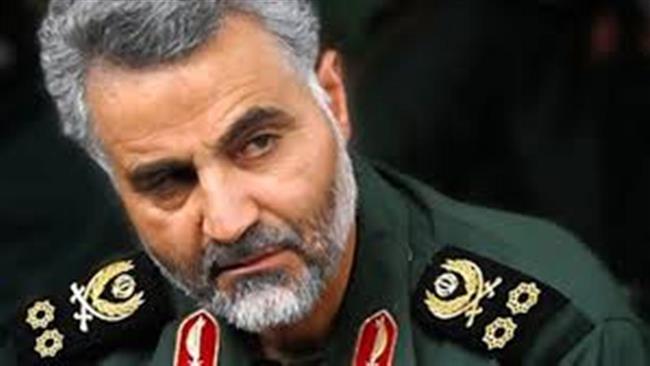



 What's Left