Recently, Laurence H. Shoup presented data in Monthly Review that shows that the key personnel of the organizations comprising the Israel lobby, as identified by political scientists John Mearsheimer and Stephen Walt in their book The Israel Lobby and US Foreign Policy, are also the key personnel of the leading US foreign policy think-thank, the Wall Street-based Council on Foreign Relations (CFR). The key foreign policy members of the Biden cabinet, the secretaries of state, treasury, defense, along with the director of the CIA, national security advisor, and US ambassador to the UN, are all CFR members. Cabinets in previous administrations have also drawn heavily from the Wall Street-based organization to fill top cabinet posts.
Shoup has argued in two books and multiple articles that US foreign policy is shaped by a Wall Street power elite operating largely through the Council on Foreign Relations to serve the economic interests of the US economic elite, the country’s ruling class. This is a Marxist view.
The Marxist view contrasts with the view of John Mearsheimer who has recently argued that US foreign policy—not just that touching Israel, but all US foreign policy—is shaped by a powerful lobby of Jewish and Christian Zionist business people who have used their wealth and influence to pressure US decision-makers to put Zionist interests ahead of US interests.
These two views differ on the following questions:
Who decisively influences US foreign policy? Mearsheimer says wealthy and powerful Zionists, both Jewish and Christian. A Marxist view says that a Wall Street power elite holds decisive sway over US foreign policy, and Shoup shows that the group includes members of and overlaps the Israel lobby.
What is the aim of US foreign policy? Mearsheimer says the aim is to protect and advance the Zionist project, in contrast to a Marxist view which says it is to protect and advance Wall Street’s interests around the world.
Is Israel a foreign policy asset? Mearsheimer says that far from being an asset, Israel is a liability, because Zionism creates problems in the Middle East which demand incessant US attention, diverting Washington from devoting its full energies to containing China, its principal foreign policy threat. A Marxist view holds that defending and promoting the interests of its patrons has always been central to the Zionist project and that this makes Israel a valuable instrument to be used in defending Wall Street’s interests in the Middle East.
Mearsheimer recently presented an argument that supports the idea that the US foreign policy establishment subsumes the Israel lobby, as Shoup has shown, though it was hardly Mearsheimer’s intention to support a Marxist view. We might suppose that the Israel lobby focuses on US-Israel relations, while the ambit of the US foreign policy establishment is broader—the world as a whole. But Mearsheimer sees the lobby’s ambit as coterminous with that of the US foreign policy establishment; in his view, Israel is not the only matter that commands the Israel lobby’s attention; it is also concerned with US foreign policy as a whole. Even to Mearsheimer, then, the Israel lobby looks like the US foreign policy establishment in the breadth of the regions in which it takes an interest.
But here’s where Mearsheimer introduces a new element into his thinking. Not only does he believe that the Israel lobby has pressured the US foreign policy establishment into robustly backing Israel, he also makes an argument that can be construed to mean he believes the Israel lobby has pressured US decision-makers into adopting an interventionist foreign policy everywhere in the world. Asked whether the lobby is concerned with US-Israel relations alone, Mearsheimer replies (at 14:32):
“The fact is that the lobby is deeply interested in seeing the United States involved militarily all over the planet. The reason is, is that if the United States is intervening all over the planet, that means it will have a commitment to intervening in Israel. You don’t want a situation where the United States pulls back its forces, implements a policy, a foreign policy, of restraint, and is very reluctant to interfere in other places around the world, because if that’s the case it means that Israel may get into a conflict and the United States might not be willing to intervene on its behalf. So, the lobby has had an interest in seeing the United States pursue a very aggressive foreign policy all across the globe.”
One interpretation of the text above is that Mearsheimer believes the Israel lobby has caused US foreign policy to be globally interventionist. Another is that he sees the lobby as favoring a broadly interventionist policy, but doesn’t go so far as to suggest it has caused US decision-makers to adopt one. But if the Israel lobby is powerful enough to cause US decision-makers to support Israel unconditionally as Mearsheimer contends, we might expect it also to be powerful enough to cause decision-makers to support a globally interventionist foreign policy that supports the Jewish state. It seems likely that Mearsheimer is arguing that the Israel lobby not only causes US decision-makers to favor Israel unconditionally but that it also causes them to adopt a globally interventionist foreign policy. This extends the Mearsheimer-Walt thesis considerably, from: the Israel lobby causes US decision-makers to back Israel unconditionally to: the Israel lobby causes US foreign policy to be robustly interventionist around the world.
Mearsheimer defines the lobby as a group of wealthy and powerful people who are committed to Israel. We might ask what lies behind their commitment. Mearsheimer cites Zionist convictions. The Israel lobby comprises people who are either Zionist Jews or Christian Zionists, he argues. But is that the only reason to be committed to Israel? Could one not also be committed to a policy of the United States backing Israel owing to the role the Jewish state is able to play as an outpost of US elite interests in the Middle East? Pace Mearsheimer, could it be that US foreign policy is shaped by US decision-makers guided by a Wall Street-based power elite that perceives Israel as an asset able to defend US ruling class interests in the Middle East in return for helping it carry forward the Zionist project?
Political Zionism has always rested on the idea of a quid-pro-quo between settler Jews emigrating from the West and the governments of the Western states from which they emigrated. The former would represent the interests of the latter in West Asia and North Africa, serving as a bulwark against Arab and Muslim nationalist interests, in exchange for the latter’s support for the Jewish settler project in Palestine. That project would inevitably arouse the enmity of the natives, who would naturally bristle at their displacement and the negation of their national aspirations. A Western backer would be vital to the project’s success, and Israel would return the favor by countering forces that opposed its sponsor’s interests in the region.
Israel, of course, isn’t the West’s only choice as proxy in the Arab and Muslim worlds. Washington could look to Arab states to help police the Middle East and assert US profit-making and strategic interests in the region. Indeed, Washington has done this, establishing relations with a series of royal and military dictatorships, including Egypt, Jordan, Saudi Arabia, the UAE, Oman, Bahrain, Qatar, and Kuwait.
The trouble is that US support in the Middle East is largely limited to the autocrats Washington helps keep in power over the opposition of their populations. It would be difficult for US-backed Arab despots to mobilize their countries against other Arabs and Muslims, specifically Iran, Syria, Hezbollah in Lebanon, and Ansar Allah in Yemen—states and movements which reject US domination of the Middle East. US-backed autocrats command little support at home. Their populations are imbued with nationalist aspirations, and unlike Israeli Jews, reject the idea that the region ought to be subordinate to US leadership. Tel Aviv, in contrast, can mobilize Israeli Jews against Arabs and Muslims, who are viewed as hostile barbarians, embittered against Israel, and bent on eliminating the Jews as a people.
To put it another way, Israeli Jews, who largely see themselves as Westerners, identify with the Western world and its project of imposing US leadership on the globe, including on the energy-rich and therefore strategically important Middle East; Arabs and Iranians are far less likely to share this view. Native states are, thus, poor choices as effective proxies for US interests in the Middle East. Israel, which sees itself as the West’s outpost in West Asia and North Africa, is, in contrast, a superb choice, motivated to cooperate with the US agenda by its security concerns which can only be satisfied by the United States and its Western partners and a common Western culture and commitment to the ideas of manifest destiny, Western superiority, and the desirability of US global leadership.
Mearsheimer has been known to reply to challenges to his view by asking, “Then why does the lobby exist?” The fact of the existence of an organization with a specific aim is hardly evidence that the organization has achieved its aim. The Democratic Socialists of America exist as an organization to bring socialism to the United States. Is the United States socialist?
The reason the Israel lobby exists is to shape public opinion, media coverage, intellectual discourse, and the research agendas and curricula of the universities and schools, and where public opinion cannot be manipulated to Israel’s advantage, to discourage elected representatives from responding to public opinion by initiating legislation or government action that could interfere with Washington’s accustomed support of its Israeli client. The lobby, as Shoup points out, is largely focused on electoral contests, not on twisting the arms of the unelected Wall Street-connected personnel who occupy the consequential foreign policy roles in the state—the secretaries of state, defense, treasury, chief of the CIA, and UN ambassador, and their phalanx of deputies and undersecretaries—all of whom are largely removed from the influence of public opinion. The role of the Israel lobby is, in short, to persuade US society and its elected representatives to accept US support of a client in the Middle East whose conduct is likely to inflame public opinion against it.
The idea that the Israel lobby is able to shape all of US foreign policy, as Mearsheimer contends, is, to use one of his favorite locutions, just not a serious argument. The idea that the Israel lobby causes US decision-makers to put Israeli interests ahead of US interests, fails to grasp (i) the complementarity of the two country’s interests; (ii) the trouble that local forces of independence and national assertiveness in the Middle East can create for US ruling class interests in the region; and (iii) the role Israel plays as the “rock, an extension of the West, against which the waves of… Arab [and Muslim] nationalism will be broken,” as Moshe Dayan, an Israeli chief of defense staff, minister of defense, and minister of foreign affairs, once put it.
Mearsheimer’s view comes perilously close to the idea that a cabal of rich Jews and their Christian Zionist friends pull the strings in Washington, diverting the country’s government from pursuing US interests to pursuing Jewish Zionist interests in the Middle East. Some might say the Marxist view is hardly different; it too attributes US foreign policy to a cabal, except, in this case, a cabal of Wall Street financiers. While it might seem on the surface that this is so, the Marxist view sees US foreign policy as reflecting the character of US society—one devoted to capitalism, indeed, thoroughly dominated by it, where the idea that billionaires, wealthy investors, and top-level corporate executives exercise considerable sway over almost every aspect of US society, including public policy, is almost axiomatic. As a 2014 study of over 1,700 US policy issues by the political scientists Martin Gilens and Benjamin I. Page showed, “economic elites and organized groups representing business interests have substantial impacts on government policy, while average citizens and mass-based interest groups have little or no independent influence.” The Council on Foreign Relations is only one of many instruments the US ruling class uses to influence public policy. It also funds the political campaigns of candidates that will support pro-business policies; donates to universities to shape their research agendas and influence who they hire and fire; owing to its significant wealth, lobbies the legislative and executive branches of government to a degree which unions, working people, and grassroots groups, which command significantly less wealth, are unable to do; and owns and controls the mass media, allowing it to shape public opinion and set the public policy agenda. The US ruling class uses all of these mechanisms to influence US foreign policy and tilt it in favor of US ruling class interests. The Marxist view, thus, holds that a class, not a cabal, pulls the strings in Washington, using its ownership and control of the economy to fund political campaigns, lobby government, and shape the public discourse, in its interests.
In contrast, Mearsheimer’s view is hardly different from the idea that a cabal of wealthy Zionist Jews and Zionist Christians has hijacked the US state in order to use it to serve the interests of Jews in Israel at the expense and to the detriment of the citizens of the United States. This view shares similarities with reactionary views that date as far back as 1789 and continued into the late nineteenth century and first half of the twentieth century–ideas about conspiracies of wealthy Jews operating in the background to pull strings and shape world politics to the benefit of Jews and at the expense of everyone else. If wealthy Jews were once thought by reactionaries to be behind everything they hated–the French Revolution, the Bolsheviks, international capitalism–they have become, in Mearsheimer’s hands, the reason why the United States supports Israel; in other words, they have been made to reprise their role as scapegoats.
The Israel lobby is run by the same people who hold enormous sway over public policy, the universities, and the mass media: the corporate elite
May 16, 2024
Updated May 17, 2024
By Stephen Gowans
Political scientists John Mearsheimer and Stephen Walt believe Israel is a US foreign policy liability, and that the only reason Washington strongly backs the Zionist state is because US decision-making has been hijacked by a powerful Israel lobby that is able to use its vast resources to severely punish politicians and decision-makers who fail to support Israel. US politicians and cabinet officials, in their view, recognize that support for Israel is inimical to US foreign policy interests but support Israel anyway for fear of running afoul of the powerful Israel lobby.
A recent study by Laurence H. Shoup in Monthly Review shows that the organizations Mearsheimer and Waltz identify as the Israel lobby are largely led by the same wealthy patrons who lead the United States’ premier foreign policy think-tank, the Council on Foreign Relations (CFR). The think-tank is directed by the colossi of Wall Street.
Wall Street, the Israel lobby, the CFR, the boards of universities and large mass media companies, are all interconnected as part of the same moneyed class.
The CFR regularly places its members in the top foreign policy cabinet positions. The current secretaries of state, defense, and treasury are members of the Wall Street-directed group, as well as Biden’s national security adviser, the director of the CIA, and the US ambassador to the UN.
Hence, the people who occupy the commanding heights of the US business world lead both the Israel lobby and the US foreign policy think-tank which supplies the personnel to staff the key foreign policy posts in the US government. Washington is unreservedly pro-Israel, because Wall Street is.
To illustrate the point, The New York Times reported on May 15 that “Wall Street’s big donors” are turning away from Biden owing to their “growing dissatisfaction with what [the donors] see as the White House’s hardening stance against Israel in its war on Gaza.” Biden’s pausing (not cancelling) a shipment of 2,000 lb. bombs in an effort to dissuade Israel from launching a major assault on Rafah (which was soon followed by Biden approving a major transfer of other arms to Israel), and the United States abstaining from a UN vote censuring Israel for its conduct in Gaza, hardly amount to much of a hardening stance against Israel. All the same, many “big donors are put off by [what they see as Biden’s] softening support for Israel,” the newspaper reports.
Today, the web site Responsible Statecraft posted an investigation, “Biden’s Gaza policy risks re-election but pleases his wealthiest donors“, which reveals that “over one third of the president’s top funders – those giving in excess of $900,000 to the Biden Victory Fund—appear to see little nuance in the conflict [between Israel and the Palestinians] and show overwhelming sympathy for Israel, at times verging into outright hostility to Palestinians and anti-Muslim bigotry.”
On May 16, The Washington Post revealed that a group of approximately 100 “billionaires and business titans” was “formed shortly after the Oct. 7” revolt in order “to ‘change the narrative’ in favor of Israel, partly by conveying ‘the atrocities committed by Hamas … to all Americans.’” The group’s self-stated mission was to “’help win the war’ of U.S. public opinion by funding an information campaign against Hamas.”
The group was formed by “billionaire and real estate magnate Barry Sternlicht.” The Post cited a November report from the news site Semafor “that Sternlicht was launching a $50 million anti-Hamas media campaign with various Wall Street and Hollywood billionaires.”
The group includes “former CEO of Starbucks Howard Schultz, Dell founder and CEO Michael Dell, hedge fund manager Bill Ackman and Joshua Kushner, founder of Thrive Capital and brother to Jared Kushner, former president Donald Trump’s son-in-law.”
The business titans also include “Kind snack company founder Daniel Lubetzky, hedge fund manager Daniel Loeb, billionaire Len Blavatnik and real estate investor Joseph Sitt” who met with New York City mayor Eric Adams to pressure him to deploy the police to clear the anti-genocide encampment at Columbia University.
The obvious conclusion is that the US capitalist class—the country’s billionaires and top-level executives—are decidedly pro-Israel, while the rest of the population is either less so, or strongly opposed to Israel’s conduct in Gaza. To put it another way: Wall Street supports the genocide (and therefore so too does Washington) while many ordinary Americans are appalled.
Since the capitalist class holds enormous sway over public policy—through its funding of political campaigns; by underwriting think-tanks to recommend public policy; by placing its representatives in key positions in the state; by donating to universities to shape their research agendas and influence who they hire and fire; by means of its extensive lobbying of the legislative and executive branches of government; and by its control of the mass media—it is inevitable that public policy will reflect the corporate elite’s strong backing of Israel.
Saying, as Mearsheimer and Walt do, that the Israel lobby shapes US foreign policy conceals a more important truth. Economic elites and organized groups representing business interests both strongly support Israel and shape US foreign policy. The Israel lobby predisposes Washington to support Israel only so far as the lobby is part of, and directed by, a capitalist class that leans strongly toward the Zionist state and has the resources and connections to strongly influence US foreign policy positions.
A 2014 study of over 1,700 US policy issues by the political scientists Martin Gilens and Benjamin I. Page found that “economic elites and organized groups representing business interests have substantial impacts on government policy, while average citizens and mass-based interest groups have little or no independent influence.”
The Israel lobby has a substantial impact on government policy because it is run by economic elites and organized business interests and because these elites are strongly pro-Israel. Mearsheimer and Walt call the Israel lobby powerful, but don’t inquire into the source of its power. The lobby is powerful because it is handsomely funded. The only class in a position to handsomely fund a lobby to make it powerful enough to decisively shape public policy is the class of top-corporate executives, financiers, and billionaire investors.
So, why is the US capitalist class overwhelmingly supportive of Israel?
Among members of the US economic elite, support for Israel may derive in some cases from Zionist convictions (either Christian or Jewish), but Zionist beliefs are far less important as the basis for pro-Israel views among members of the US capitalist class than is elite consciousness of the reality that Israel serves their class interests in an economically rich and strategically significant part of the world. US control of Middle Eastern oil provides corporate America with a rich source of profits. It also gives the corporate elite leverage over its business rivals in Europe, Japan, and China, who depend critically on Middle Eastern petroleum resources for survival. Israel helps Washington control the Middle East in a way no other state in the region is able to do.
Arab nationalist leaders have always been clear about why the US capitalist class supports Israel unreservedly. Israel is a watchdog, a snarling beast, “a dagger pointed at the heart of the Arab world,” that Washington uses to hold Arab and Muslim nationalist forces in check, to ensure the vast economic and strategic prize of Middle Eastern oil remains under the control of corporate America’s political servants in Washington and their Arab satraps, the kings, emirs, sultans, and military dictators who, to a man, loath democracy, and collaborate with Wall Street-backed US power against the ordinary people of the Arab and Muslim worlds.
Middle Eastern oil is not a prize corporate America is willing to yield to local forces of independence and national assertiveness. In return for Washington supporting Israel in carrying the Zionist project forward, Israel helps look after corporate America’s interests in the Middle East. It’s a mutually beneficial pact of Jewish nationalist forces collaborating with US business interests to keep the Arabs and Iranians down, the Americans in charge, and the Israelis supplied with arms and diplomatic support to enforce their regime of Jewish supremacy in the Levant.
“America is Israel. Israel is America and Europe combined in Palestine.”—Leila Khaled, 1973.
An article by Laurence H. Shoup in the May 2024 issue of Monthly Review, examining the Council on Foreign Relations (CFR), the premier think tank of the US foreign policy establishment, shows that the organization, whose members include the holders of the key US foreign policy cabinet positions, largely overlaps with the Israel lobby. The Israel lobby and the US foreign policy establishment are, in the main, the same. This poses problems for the Mearsheimer-Walt thesis, which holds that the US foreign policy establishment operates as a network of decision-makers that exists apart from an independent and powerful network of Israel supporters who twist the arms of the decision makers, compelling them to put Israeli goals ahead of US interests.
Shoup has written two books on the CFR—Imperial Brain Trust (with William Minter) and Wall Street’s Think Tank—as well as a number of articles on the think tank. His work explores the connections between Wall Street and the US foreign policy establishment, and focuses on the CFR as the organization that links the two.
The Council is a private organization with a chairman (for years David Rockefeller, who, until his death, remained the honorary chairman) and board members (typically billionaires or near billionaires) and approximately 5,000 members, who are selected by the board.
The raison d’être of the organization is to bring together intellectuals, prominent business people, leading members of the media, state officials, and top military leaders, to formulate foreign policy recommendations and promote them to the public and government. The majority of the key foreign policy cabinet positions, State, Defense, Treasury, National Security Adviser, and US Ambassador to the UN, are filled by Council members.
Antony Blinken (Secretary of State), Janet Yellen (Secretary of the Treasury), Lloyd Austin (Secretary of Defense), Linda Thomas-Greenfield (UN Ambassador), William J. Burns (Director of Central Intelligence), and Jake Sullivan (National Security Advisor), are all members of the CFR.
The directors of the organization are drawn from the colossi of Wall Street. For example, Larry Fink, the longtime CEO of Blackrock, was a CFR director from 2013 until 2023. “Blackrock is the world’s biggest asset manager, to the tune of about $10 trillion in assets, a figure larger than every nation’s GDP outside of the United States and China,” notes Shoup.
Shoup’s latest inquiry into the CFR concerns its relationship to the Israel lobby. Political scientists John Mearsheimer and Stephen Walt (both CFR members) criticized the lobby in a major paper and subsequent book titled The Israel Lobby and US Foreign Policy. The authors argued that Israel is not a US foreign policy asset, and, to the contrary, is a liability. How is it, then, that Washington is unfailingly devoted to Israel, supplying it with weapons, shielding it from penalty for its violations of international law, and attacking its critics? The answer, they argue, is the Israel lobby. In effect, a powerful network of Israel’s supporters has pressured the US foreign policy establishment to take positions that promote Israel’s interests at the expense of those of the United States.
Critics of the Mearsheimer-Walt thesis counter that even in the absence of an Israel lobby, Washington would support Israel, because the client state acts as a proxy for the United States in West Asia and North Africa in a way no other state in the region could.
What makes Israel especially suited for service as an outpost of the United States and the West in the Middle East, as Benjamin Netanyahu once described his country, are the cultural, familial, ideological, educational, and economic connections of a sizable portion of its leaders, military officials, and citizens to North America and Europe, the regions from which they, or their ancestors, arrived in Israel. Jewish settlers in Palestine see themselves as representatives of Western civilization in a land of barbarism. Bringing Western thought, culture, technology, and politics to the barbarian East is a leitmotif of political Zionist thinking, and has been since its origins in nineteenth century Europe.
Political Zionism has always rested on the idea of a quid-pro-quo between settler Jews emigrating from the West and the governments of the Western states from which they emigrated. The former would represent the interests of the latter in West Asia and North Africa, serving as a bulwark against Arab and Muslim nationalist interests, in exchange for the latter’s support for the Jewish settler project in Palestine. That project would inevitably arouse the enmity of the natives, who would naturally bristle at their displacement and the negation of their national aspirations. A Western backer would be vital to the project’s success, and Israel would return the favor by countering forces that opposed its sponsor’s interests in the region.
Israel, of course, isn’t the West’s only choice as proxy in the Arab and Muslim worlds. Washington could look to Arab states to help police the Middle East and assert US profit-making and strategic interests in the region. Indeed, Washington has done this, establishing relations with a series of royal and military dictatorships, including Egypt, Jordan, Saudi Arabia, the UAE, Oman, Bahrain, Qatar, and Kuwait.
The trouble is that US support in the Middle East is largely limited to the autocrats Washington helps keep in power over the opposition of their subjects. It would be difficult for US-backed Arab despots to mobilize their countries against other Arabs and Muslims, specifically Iran, Syria, Hezbollah in Lebanon, and Ansar Allah in Yemen—states and movements which reject US domination of the Middle East. US-backed autocrats command little support at home. Their populations are imbued with nationalist aspirations, and unlike Israeli Jews, reject the idea that the region ought to be subordinate to US leadership. Tel Aviv, in contrast, can mobilize Israeli Jews against Arabs and Muslims, who are viewed as hostile barbarians, embittered against Israel, and bent on eliminating the Jews as a people.
To put it another way, Israeli Jews, who largely see themselves as Westerners, identify with the Western world and its project of imposing US leadership on the globe, including on the energy-rich and therefore strategically important Middle East; Arabs and Iranians are far less likely to share this view. Native states are, thus, poor choices as effective proxies for US interests in the Middle East. Israel, the West’s outpost in West Asia and North Africa, is, in contrast, a brilliant choice, motivated to cooperate with the US agenda by its security concerns which can only be satisfied by the United States and its Western partners and a common Western culture and commitment to the ideas of manifest destiny, Western superiority, and the desirability of US global leadership.
Shoup’s latest article, which examines the CFR and the Israel lobby, makes a few points which raise questions about the validity of the Mearsheimer-Walt thesis (though it’s not clear that it was Shoup’s intention to do so.)
Shoup argues that the CFR is part of the Israel lobby. He does so by showing extensive overlaps between the organizations that Mearsheimer and Walt identify as the principals of the lobby and the CFR itself. People who hold key positions in the lobby also hold key positions in the CFR and vice-versa. At the same time, people who hold key positions in the US state, tend to come from the CFR and hence, its overlapping Israel lobby.
If we consider Shoup’s findings, that (1) most of the people who direct US foreign policy are members of the CFR; (2) by implication the CFR is, in effect, the US foreign policy establishment, or at least the source of most its foreign policy-related cabinet members; and (3) the CFR is part of the Israel lobby and the Israel lobby is part of the CFR, then, it must be true that the US foreign policy establishment is the Israel lobby and the Israel lobby is the US foreign policy establishment.
Shoup’s findings therefore identify a critical flaw in the Mearsheimer-Walt thesis, namely, that it treats the Israel lobby as existing apart from the US foreign policy establishment. US decision-makers are presented as pressured by an external agency, one committed to protecting and advancing Israeli interests, which pressures US decision-makers to prioritize Israel’s goals over US interests. People who put Israel’s interests ahead of those of the United States, are, in the Mearsheimer-Walt view, pressuring the US foreign policy establishment to pursue Israel’s aims. This, however, cannot be true if the lobby and the foreign policy establishment are one and the same, as Shoup reveals. Indeed, in light of Shoup’s findings, the Mearsheimer-Walt thesis reduces to a necessary truth—the US foreign policy establishment influences the US foreign policy establishment.
Shoup shows that contrary to what is implicit in the Mearsheimer-Walt view, the US foreign policy establishment subsumes, overlaps, and is highly interlocked with the Israel lobby, and is not independent of it. The two do not exist as separate networks, but as highly interpenetrated ones. The US foreign policy establishment is the Israel lobby and the Israel lobby is the US foreign policy establishment. This reveals that the Mearsheimer-Walt thesis is a tautology: The US foreign policy establishment backs Israel because the lobby, i.e., the US foreign policy establishment, backs Israel.
Based on Shoup’s findings, Mearsheimer and Walt might reply that the problem is even worse than they had anticipated; that the US foreign policy establishment has been completely taken over by Israel’s supporters who have turned the US security state into an unqualified instrument of Israel. But this would merely assign to Israel’s backers the role of bouc emissaire, scapegoats, to blame for why US foreign policy hasn’t embraced Mearsheimer and Walt’s policy recommendations. From a psychological point of view this is what lies behind the Mearsheimer-Walt thesis, viz., we say, US policy should be x; it’s not x; therefore, some external force must have intervened to disrupt the causal path that goes from our identification of the best course for US foreign policy to take and the foreign policy establishment’s endorsement of it. How could the foreign policy establishment not see the brilliance of our policy prescriptions? It must be that its members were suborned not to see it.
However, as we have seen, there are compelling reasons to reject the duo’s policy prescriptions on the grounds that the theorists have failed to grasp the role Israel plays to support US interests against Arab and Muslim nationalism, an enemy shared by both Israel and Wall Street. Washington opposes these forces because they threaten US control of the Middle East’s petroleum resources, a highly important strategic asset which is not only a source of immense profit for US corporations, but a source of considerable strategic leverage for Washington over Europe, Japan, and China, US economic rivals that depend for a good deal of their energy on the Middle East. Israel opposes forces of independence and nationalism in the Middle East because they threaten Israel’s continued existence as a colonial settler state. Israel critically depends on Washington to provide it the weapons, military and intelligence support, and diplomatic protection it needs for its colonial settler project to survive. Without US support, Israel would soon perish. For its part, Washington needs Israel to crush the nationalist aspirations of the natives which, if they were to flourish, would impede US profit making in a strategically significant region. The relationship is symbiotic.
The Israel lobby, which largely focusses on electoral contests and the shaping of public opinion in favor of Israel, is part of the US foreign policy establishment, and the US foreign policy establishment is part of the Israel lobby. The two networks overlap because the interests of Israel as a settler colonial state and the interests of Wall Street as an implacable opponent of foreign nationalism, intersect, not because Zionist Jews and Christian Zionists have hijacked the foreign policy establishment and turned the US government into an instrument of Israel against the interests of the United States. What Mearsheimer and Walt fail to grasp is that the interests of the two countries are not inimical; that Israel’s settler colonial interests and the profit-making and strategic goals of Wall Street, in large measure, complement each other. Israel is the tool of the United States, and the United States, as the guarantor of Israel’s survival, is the tool of Israel. The relationship between the two states is not, for the most part antagonistic, and is largely symbiotic and complementary.
Why then does the lobby exist? It exists, not to capture the apparatus of the state, which is already dominated by Wall Street interests which see US support for Israel as favorable to the goal of protecting US profit-making interests in the Middle East. The lobby exists, instead, to shape public opinion, media coverage, intellectual discourse, and the research agendas and curricula of the universities and schools, to favor Israel and, where public opinion cannot be manipulated to Israel’s advantage, to discourage elected representatives from responding to public opinion by backing legislation or government actions that could interfere with Washington’s accustomed support of its Israeli client. The lobby, as Shoup points out, is largely focused on electoral contests, not on twisting the arms of the unelected Wall Street-connected personnel who occupy the consequential foreign policy roles in the state—the secretaries of state, defense, treasury, director of national intelligence, chief of the CIA, and UN ambassador, and their phalanx of deputies and undersecretaries. The role of the Israel lobby is, in short, to persuade US society and its elected representatives to accept US support of a client in the Middle East whose conduct is likely to inflame public opinion against it.
The idea that the United States has “interests” abroad is an affront to democracy and geography. How can a country have interests, and not only that, but vital ones, in every corner of the world, unless we ignore geography and the idea that the people who live in a place ought to own it, and organize their own affairs? All the same, US leaders regularly pronounce that the United States has vital interests abroad, and that the possession of these interests warrants the “projection of power,” which is to say the establishment of a military presence in a region to intimidate its people and governments to acquiesce to US demands.
Rarely, if ever, is it said what these “vital interests” are. They simply exist, and must be defended. Occasionally, their nature is at least superficially glimpsed, as in the idea that the Middle East is a vital US interest owing to its vast reserves of oil, and that if these reserves were to come under the control of a “hostile” power, the world could be held to ransom. Elements of this view can be traced to the Carter Doctrine and form much of the basis of what is presented as US strategy in connection with the Middle East.
Much has been made of supposed US reliance on the Persian Gulf area for petroleum. But while tremendous profits are made by US-based petroleum corporations that continue to dominate the petroleum industry in this region, the United States is not in fact especially reliant on petroleum imports from the Gulf.To members of the general public it is likely that this thinking translates into the idea that the United States must interfere in the Arab world to guarantee the security of oil supplies, and thus the US way of life. What this overlooks, however, is that Canada is by far the largest foreign supplier of oil to the United States, accounting for 43 percent of all imports [1], versus just 22 percent in 2012 from six Persian Gulf suppliers, [2] and that the United States itself, is a major producer of oil, third ranked in the world, behind only Saudi Arabia and Russia [3]. Moreover, the United States is on track to become the world’s leading oil producer in just five years [4]. “[I]ncreasing production and declining consumption have unexpectedly brought the United States markedly closer to a goal that has tantalized presidents since Richard Nixon: independence from foreign energy sources” [5]. “The chimera of ‘energy independence’,” observes The New York Times, has begun “to look more tangible” [6].
As a major producer of oil, the United States has never been as dependent on Persian Gulf oil as it is popularly believed—and indeed, has never been dependent on the Persian Gulf for supplies of oil to any significant degree. It wasn’t until the mid-1970s, when consumption began to outstrip domestic supply, that the United States began to import oil from the Persian Gulf. An observation made by the sociologist Albert Szymanski in 1983 is still relevant today. “Much has been made of supposed US reliance on the Persian Gulf area for petroleum. But while tremendous profits are made by US-based petroleum corporations that continue to dominate the petroleum industry in this region, the United States is not in fact especially reliant on petroleum imports from the Gulf.” [7] Indeed,
“until the mid-1970s, very little Middle Eastern petroleum was imported into the United States, even though US transnational corporations had controlled the petroleum consortiums in the area for a generation. During this time, US transnational corporations took the oil out of the ground and sold it to Europe and Japan (as well as to the less developed countries) making tremendous profits, which they in good measure repatriated to the United States.
“In 1976…US petroleum companies in the Middle East exported less than 7 percent of their output to the United States while selling 82 percent to third countries.” [8]
Despite the minimal role the Persian Gulf has played in satisfying North American oil requirements, figures central to US foreign policy have justified US military intervention in the Middle East on the grounds of safeguarding security of supply. Bernard Lewis, an intellectual attached to the enormously influential US foreign policy organization, The Council on Foreign Relations, outlined the reasons for the US military intervention in the Persian Gulf in 1991 in the Council’s magazine Foreign Affairs, with reference to the need to protect the security of the world’s oil supply:
“If Saddam Hussein had been allowed to continue unchecked he would have controlled the oil resources of both Iraq and Kuwait. If the rest of the region observed that he could act with impunity, the remaining Persian Gulf states would sooner rather than later have fallen into his lap, and even the Saudis would have had either to submit or be overthrown. The real danger was monopolistic control of oil—which is a very large portion of the world’s oil.” [9]
Richard B. Cheney, then the US vice-president, invoked a similar rationale in August 2006 to explain the US invasion of Iraq in 2003: “Armed with an arsenal of…weapons of mass destruction, and seated atop 10 percent of the world’s oil reserves, Saddam Hussein could then be expected to seek domination of the entire Middle East [and] take control of the world’s energy supplies.” [10] (Note the false conflation of Persian Gulf oil with the “world’s” energy supplies.)
Since not all of the world’s oil lies in the Persian Gulf, and much of it is found in Russia and North America, the idea that Saddam Hussein could control the world’s oil supply—and threaten the economy and living standards of North Americans—is transparently false. Lewis and Cheney had engaged in deliberate fear-mongering to mobilize public support for illegitimate interventions in the Middle East to bring about the political and economic domination of the region by the United States. The real motivation was not to safeguard the security of energy supplies, but to eliminate a threat to the profits of US petroleum corporations posed by Arab nationalists. In his book Devil’s Game, Robert Dreyfuss paints a picture that doubtlessly agitated the minds of US foreign policy planners.
“The oil monarchies are ruled by royal kleptocracies whose legitimacy is nil and whose existence depends of outside military protection. Most Arabs are aware that the monarchies were established by imperialists seeking to build fences around oil wells. Arabs would gain much by combining the sophistication and population of the Arab centers, including Iraq, with the oil wealth of the desert kingdoms. At the center lies Egypt, with its tens of millions of people and Saudi Arabia with its 200 billion barrels of oil. Uniting Cairo and Riyadh would create a vastly important Arab center of gravity with worldwide influence.” [11]
It is fairly certain that were Arabs to unify, overcoming the artificial political divisions imposed on them by the British Sykes and French Picot after WWI, and overcoming the sectarian cleavages that outsiders have sought to deepen, that more of the benefits of the sales of their petroleum resources would be retained at home, available for their own development, and less would be transferred to accounts of the capitalist class in the United States. There’s no danger that a pan-Arab power in possession of its own resources would blackmail those countries that depend on Middle Eastern oil. Cutting off the supply of oil would destroy the economy of the pan-Arab state, since it would depend on oil sales to earn revenue to import goods and services from the same countries it would presumably be seeking to hold to ransom. Because underdeveloped countries typically rely on the developed world to supply them with a wide range of goods and services, which they pay for with a few agricultural or resource goods, “historically it has been the advanced countries that have been able to effect disciplined boycotts against the poorer countries, far more than the reverse.” [12] What “the less developed countries…are interested in,” observed Szymanski, is “securing significantly better terms of trade for themselves.” [13] But, of course, significantly better terms of trade for themselves means leaner profits for US shareholders and investors. And therein lies the motivation for the United States’ hegemonic ambitions in the Middle East, namely, preventing the natives from throwing off their exploitation by US corporations.
Who Rules America?
Szymanski and others, among them Ralph Miliband (The State and Capitalist Society), G. William Domhoff (Who Rules America?), Thomas Ferguson (Golden Rule) and Martin Gilens and Benjamin Page (“Testing Theories of American Politics: Elites, Internet Groups, and Average Citizens”), have made that case that US society is dominated politically by a wealthy class of billionaire bankers, investors, and corporate titans. Gilens and Page, reviewing a vast empirical literature on the political influence of various sections of US society, have summarized the research this way: “[E]conomic elites and organized groups representing business interests have substantial independent impacts on U.S. government policy, while average citizens and mass-based interest groups have little or no independent influence.” [14] The Gilens and Page analysis comes from academe, but a careful reading of major newspapers furnishes scores of instances that resonate with the duo’s conclusion. For example, The New York Times of October 10, 2015 reported that just 158 families and the companies they own and control, mostly in finance and energy, have contributed half the funds to Democratic and Republican presidential candidates in the 2016 presidential race [15], from which the not unreasonable conclusion can be drawn that just 158 families and the companies they own and control, have an impact on US politics far in excess of their numbers (but not their wealth)—another way of saying that the United States is more a plutocracy than a democracy.
The enormous wealth commanded by members of the US capitalist class allows them to use their money to shape electoral contests, spending just a small fraction of their income. For example, Chicago hedge fund billionaire Kenneth C. Giffen has contributed $300,000 to Republican presidential candidates in the 2016 race, well beyond the capabilities of an average citizen. But Giffen’s contribution represents less than one percent of his monthly income of $68.5 million. [16] The titles of the following articles further point out the role of wealth in shaping US politics: “Hillary, Jeb and $$$$$$” (New York Times, February 21, 2015); “Bloomberg starts ‘Super PAC’, seeking national influence” (New York Times, October 17, 2012); “The businessman behind the Obama budget” (Wall Street Journal, July 13, 2012); “Which millionaires are you voting for?” (New York Times, October 13, 2012); “Close ties to Goldman enrich Romney’s public and private lives” (New York Times, January 27, 2012); “Conservative non-profit acts as stealth business lobbyist” (New York Times, April 21, 2012); “Number of millionaires in Congress: 261” (CBS News, November 17, 2010); “White House opens door to big donors, and lobbyists slip in” (New York Times, April 14, 2012); “Obama sends pro-business signal with adviser choice” (New York Times, January 21, 2011); “Wall Street ties linger as image issue for Hillary Clinton” (New York Times, November 21, 2015); “Obama’s not-so-hot date with Wall Street”(New York Times, May 2, 2012). The last article appears to indicate that limits exist on Wall Street’s influence in Washington (the not-so-hot date) but in point of fact describes US politics as a contest between various factions of the capitalist class to persuade average voters to back their favored candidate. This calls to mind the wry observation that the art of politics is to enable the wealthy to persuade the rest of us to use our votes to keep the representatives of the super-rich in power.
However, the influence of the dominant economic class on politics extends well beyond the electoral arena. Szymanski offers a concise summary of the mechanisms the wealthy use to dominate US politics.
Szymanski on the Theory of the State [17]
There is a wealthy class that dominates the US state and the US government and runs the state in its interest and against the interests of the vast majority of people. There are various ways that the wealthy class is able to dominate the US government even though there are elections in which everyone is eligible to vote. There are at least seven different ways by which the wealthy are able to control the US government. The first four are instrumental mechanisms. The last three are structural mechanisms. Instrumental mechanisms refer to ways in which the rich directly intervene in the US government. Structural mechanisms refer to those conditions that constrain the decision-making process. They operate independent of instrumental mechanisms. Hence, even if wealthy people don’t influence the government, the government is compelled by the ideological environment, the imperative of maintaining business confidence to avert economic crises and military intervention to make decisions in the interests of big business.
There is a wealthy class that dominates the US state and the US government and runs the state in its interest and against the interests of the vast majority of people.The direct mechanisms are:
• The placement of wealthy individuals or elite corporate executives in the top policy-making positions in the state.
• The pressure exerted on elected representatives and regulatory commissioners by lobbyists to legislate and rule in favor of business interests.
• Campaign funding. Politicians have to do the bidding of business if they want to receive the campaign funds they need to seriously contest elections.
• The role of key policy-formation groups, including the Trilateral Commission, the Council on Foreign Relations, the Business Council—very powerful, exclusive, private organizations that formulate public policies and are able to transmit them to the government, by putting their people in top positions, holding regular conferences, and sending reports to the government.
There are 7-8 full-time lobbyists in Washington DC for every elected member of Congress. Virtually all work for big business.
Congress people, heads of regulatory commissions, and top generals are recruited by large corporations at the end of their public service careers to work as lobbyists, usually earning more money than they make in public service. Aware of the lucrative possibilities for their post public service careers, they ingratiate themselves with their prospective employers by acting in their interests while in politics, to ensure that they’re later offered remunerative positions.
There are no teeth in laws aimed at limiting the role of money in election campaigns. Consequently, the wealthy are able to spend as much as they want to get politicians who are sympathetic to their interests elected.
Policy-formation organizations are generally composed of two-thirds elite business people and one-third academics and major intellectuals and other influential people. They hold seminars and meetings with government officials, as well as transmit many policy recommendations to the government.
The structural mechanisms:
• Ideological hegemony: The ability of business to put ideas in our heads, so that we think like them, and thereby act the way they want us to act.
• Business strikes: Business’s ability to move outside a jurisdiction if the state’s policies are not conducive to profit-making. Businesses’ freedom to invest their capital as they see fit limits what governments can do.
• Military hegemony: If a government gets out of line and encroaches on business interests the military can take over.
Most people get their news and political values from the major media and educational system. Major media are major private corporations interlocked with major banks. But not only are they major private businesses themselves, they depend on advertising from major businesses. They are, then, doubly dependent on big business. If the media’s content becomes anti-business, sponsors cancel. So how we get our ideas is doubly controlled by big business.
The boards of trustees of universities are generally dominated by business people. Business people also make the major contributions to universities and therefore are in a position to influence what academics study.
Hence, schools and mass media are dominated by big businesses. We get our political values and ideas from the mass media and schools—hence, from big business.
We think our decisions about who we vote for are freely made, but our political ideas and values have been instilled by big business through the institutions of the mass media and education system which it dominates. All mass media and all universities are pro-business.
Suppose a state tripled the minimum wage and gave corporations six months to stop polluting. Business would move to another jurisdiction where wages were lower and there were no laws against pollution. Massive employment would ensue. In the next election, the government would be blamed for the economic crisis. It would lose the election to a right-wing party that would promise to bring jobs back by passing business-friendly legislation. It might propose to abolish the minimum wage altogether and to rescind all laws against pollution.
As long as business is free to invest or not invest—as long as it makes the economic decisions—the government has to structure the environment to serve businesses’ profit-making imperative; otherwise it will face a serious economic crisis. The only way to circumvent this structural constraint is to deny private business the freedom to make economic decisions, which is to say to nationalize them, so that capital cannot be relocated or made idle and is mobilized in the interests of a majority of people, rather than a wealthy minority of owners.
There are only eight countries in the world of say 160 capitalist countries that unremittingly had elections and parliamentary forms from about 1940: Britain, Ireland, the United States, Canada, Australia, New Zealand, Switzerland and Sweden. All others had a dictatorship or military government at some point. Hence, the normal state for capitalist economies is to have military rule. Only the wealthiest capitalist states haven’t had military rule. But when a capitalist country encounters a severe crisis that challenges capitalist rule, it resorts to military rule.
Often the military takes over, and then relinquishes power. When this happens, civilian governments know that if they implement anti-business policies, the military will intervene once again. Hence, they are careful to remain within the bounds of acceptable big business policy. If ever there were a deep crisis in the United States that threatened capitalist rule, US generals would act as their counterparts in other capitalist countries have.
The Council on Foreign Relations
Szymanski cites the elite policy-formation organization The Council on Foreign Relations as one of the principal organizations through which US capitalist class policy preferences are transmitted to the US government. Laurence H. Shoup has recently written a major treatise on the Council, titled Wall Street’s Think Tank, an update of an earlier analysis he co-authored with William Minter, titled Imperial Brain Trust. Shoup argues that the Council is the major organization through which the US capitalist class establishes its agency and direction, becoming a class for itself. As such, it is worth a closer look.
The Council on Foreign Relations is the major organization through which the US capitalist class establishes its agency and direction, becoming a class for itself.The Council is a private organization with a chairman (for years David Rockefeller, who remains the honorary chairman) and board members (typically billionaires or near billionaires) and approximately 5,000 members, who are selected by the board. The raison d’être of the organization is to bring together intellectuals, prominent business people, leading members of the media, state officials, and top military leaders, into an exclusive club which formulates foreign policy recommendations and promotes them to the public and government. The Council’s interlocks with the US state are extensive. Beginning with the Carter Administration and moving forward to the Obama Administration, Shoup found that 80 percent of the key cabinet positions, which he defined as State, Defense, Treasury, National Security Adviser, and US Ambassador to the UN, were filled by Council members. Presidents (George H.W. Bush and Bill Clinton) and vice-presidents (George H.W. Bush and Richard Cheney) were members at the time they were elected to these posts. One president, Carter, became a member after leaving the presidency.
The table below shows how many current Council members have filled key positions in the US state. They were usually members of the Council before they were appointed to these posts:
Secretary of Treasury, 10
National Security Adviser, 10
US Ambassador to the United Nations, 9
Secretary of State, 8
Secretary of Defense, 8
CIA Director, 8
Chairman of the Joint Chiefs, 4
Head of the Federal Reserve, 4
World Bank President, 3
President, 2
Vice-President, 2
Director of National Intelligence, 2
Director of the National Security Agency, 1
Seventeen key current and former members of Obama’s administration are members of the billionaire-directed private club: James Jones Jr. (national security adviser); Thomas Donilon (national security adviser); Susan Rice (national security adviser, US ambassador to the UN); Timothy Geithner (treasury); Jack Lew (treasury); Robert Gates (defense); Chuck Hagel (defense); Ashton Carter (defense); David Petraeus (CIA); Robert Zoellick (World Bank); Janet Napolitano (homeland security); John Bryson (commerce); Penny Pritzker (commerce); Ernest Moniz (energy); Sylvia Burwell (health and human services); Mary Jo White (securities and exchange); and Michael Froman (US trade representative.) John Kerry, while not a Council member, is married to near billionaire Teresa Heinz Kerry, who is.
On top of placing its members in key state positions, the Council also directly influences policy by dominating external advisory boards established to advise the secretaries of state and defense and the director of the CIA. The Foreign Affairs Policy Board acts “to provide the Secretary of State, the Deputy Secretaries of State, and the Director of Policy Planning with independent, informed advice and opinion concerning matters of U.S. foreign policy.” It consists of 20 advisers, 18 of whom belong to the Council as members. The Defense Policy Board provides “the Secretary of Defense, Deputy Secretary of Defense and the Under Secretary of Defense for Policy with independent, informed advice and opinion concerning major matters of defense policy.” Fourteen of its 22 members belong to the Council. On September 10, 2009 then CIA Director Leon Panetta announced the establishment of an external advisory board of “distinguished men and women” who would visit CIA headquarters “periodically and offer their views on managing [the CIA] and its relationships with key customers, partners, and the public.” Ten of the 14 advisers Panetta named to the board—the majority—were Council on Foreign Relations members.
The Council is interlocked with other influential foreign policy-related organizations, including the Trilateral Commission (an international version of the Council, reaching beyond the United States to include counterparts in Canada, Western Europe, and Japan), Human Rights Watch and the International Crisis Group.
Human Right Watch’s co-chair Joel Motley; vice-chair John Studzinski (global head of the investment firm Blackstone); board member Michael Gellert; executive director Kenneth Roth; and deputy executive director Carol Bogert, are all members of The Council on Foreign Relations. A major source of funding comes from Council member George Soros’ Open Society Institute.
The International Crisis Group has extensive overlaps with the Council. ICG Chairman Emeritus, George J. Mitchell, is a Council member, as are the following trustees: Mort Abramowitz; Samuel Berger; Wesley Clark; Thomas R. Pickering; Olympia Snowe; George Soros; and Lawrence Summers. Council members who serve as senior ICG advisers include Zbigniew Brzezinski; Stanley Fischer; Carla Hills; Swanee Hunt; James V. Kimsey and Jessica T. Mathews. Soros and Rockefeller are major sources of funding.
The Council membership includes an assortment of billionaires and prominent business people, including Peter Ackerman (supporter of non-violent overthrow movements and head of the CIA-interlocked Freedom House); Bruce Kovner; Henry R. Kravis; Penny Pritzker; David M. Rubenstein; Frederick W. Smith; George Soros; Leonard A. Lauder; Mortimer B. Zuckerman; Eric E. Schmidt; Stephen Schwarzman; John Paulson; Lloyd Blankfein; Edgar Bronfman Jr.; Jamie Dimon; Louis V. Gerstner, Jr.; and a number of Rockefellers, a Roosevelt, and members of other wealthy families. It also includes a media mogul, Rupert Murdoch, and prominent journalists: Tom Brokaw; Leslie H. Gelb; Robert W. Kagan; Charles Krauthammer; Nicholas D. Kristof; Lewis H. Lapham; Judith Miller; Peggy Noonan; Walter Pincus; John Podhoretz; Dan Rather; David E. Sanger; Diane Sawyer; George Stephanopoulos; and Barbara Walters. Not only does the Council place its members in key positions in the state and in influential civil society organizations, it also co-opts leading media figures to promote the Council’s views to the public.
Antipathy to Public Ownership
Joseph Stalin is reputed to be a monster for causing innumerable deaths as a consequence of decisions he took to defend the Soviet Union against multiple existential threats, not least of which was aggression by Nazi Germany. What category of monster, then, are former US presidents Bill Clinton and George W. Bush, who, in the absence of a security threat from Iraq, chose to sacrifice the lives of numberless Iraqis in pursuit of the foreign policy goal of establishing US hegemony in the Middle East to facilitate the accumulation of capital by their country’s economic elite?Significantly, every country in which the United States has intervened militarily either directly or through proxies, or threatened militarily, since WWII has had a largely publicly owned economy in which the state has played a decisive role, or has had a democratized economy where productive assets have been redistributed from private (usually foreign) investors to workers and farmers, and in which room for US banks, US corporations and US investors to exploit the countries’ land, labor, markets and resources has been limited, if not altogether prohibited. These include the Soviet Union and its allied socialist countries; China; North Korea; Nicaragua; Yugoslavia; Iraq; Libya; Iran; and now Syria. We might expect that a foreign policy dominated by a wealthy investor class would have this character. It would react to the restrictions of communists, socialists and economic nationalists on US profit-making as obstacles to overcome, even at great cost to the lives of others. For example, asked in 1996 about a UN estimate that US-led sanctions had killed 500,000 Iraqi children under the age of five, then US secretary of state Madeleine Albright (a Council member) told 60 Minutes that “It’s a hard choice, but I think, we think, it’s worth it.” [18] Italian philosopher and historian Domenico Losurdo has pointed out that the Clinton administration’s murder through sanctions-related hunger and disease of hundreds of thousands of Iraqis is a crime far in excess of any of which Soviet leader Joseph Stalin can been accused, since the deaths attributed to Stalin were the consequences of decisions he took as defensive responses to a permanent state of emergency the USSR faced during his years in power, including the aggressions of Nazi Germany and Imperial Japan and the Cold War, aggressions which threatened the very existence of the Soviet Union. By contrast, the United States faced no security threat from Iraq. Even so, then US president Bill Clinton chose to sacrifice the lives of numberless Iraqis in pursuit of the foreign policy goal of establishing US hegemony in the Middle East to facilitate the accumulation of capital by his country’s economic elite. [19] If Stalin is portrayed as a monster, then by what greater category of monster must we describe Clinton, or for that matter, George W. Bush, leader of the trumped-up 2003 war on Iraq? It is one thing to take decisions which lead to innumerable deaths in response to significant threats against one’s country, and quite another to kill numberless people in the absence of a threat in pursuit of foreign policy goals related to the profit-making interests of bankers, investors and oil companies.
US Foreign Policy Goals in Syria
We need not tarry too long on the idea that the intervention of the United States and its allies in the struggle in Syria is motivated in any way by considerations of human rights and democracy, since (a) the United States counts as its principal allies in the Middle East, despotic regimes whose disdain for human rights as elemental as the right of women to drive automobiles (in the case of Saudi Arabia) knows no parallel, and yet Washington is perfectly comfortable to dote on these anti-democratic monarchies, emirates and dictatorships, selling them arms, establishing military bases on their territory and protecting them against condemnation in international forums and from the opposition of democratic forces at home; and (b) these same tyrannies are the major supporters, along with the United States, of barbaric, sectarian Sunni jihadists who have butchered their way across Syria for the last four years. When their attacks are directed at Syrians, the brutality of these sectarian fanatics is mechanically noted then passed over quickly by the Western news media, in contrast to the copious coverage afforded to equivalent butchery aimed at Western targets. Hence, the ISIS attack in November of 2015 in Paris was given wide-ranging coverage and elevated to an event of earth-shattering proportions, while similar attacks carried out almost daily in Syria and Iraq, and in Syria by “rebels”, including the non-ISIS Sunni Islamists dubbed “moderates” by the US government, are largely ignored. For example, in August 2013, ISIS, the Nusra Front, Ahrar al-Sham and other Islamist fanatics slaughtered more than 200 Alawite villagers, and at the same time kidnapped more than 100 women and children. [20] There was no Western media-orchestrated outpouring of grief for these victims of Sunni Islamist terrorism.
There is a confluence of factors that seem to have conduced to making the Syrian government a target for US-sponsored regime change through militant Sunni Islamist proxies, but two appear to be primary.
The first is the status of the Syrian government as the last bastion of Arab nationalism. Arab nationalism threatens the ability of the US corporate class to draw a Himalaya of profits from the Atlantic to the Persian Gulf, the traditional range of the Arab nation. Instead of a free flow of profits to the United States, facilitated by Arab kings and emirs who have no legitimacy with their own people and rely on Washington’s support to continue their despotic rule, the proceeds of the sale of the region’s petroleum resources would be used for the region’s own internal development, if Arab nationalist aspirations were brought to fruition. The carriers of the Arab nationalist contagion must, from the point of view of US foreign policy planners, be eradicated.
The second is the existence in Syria of a major role for the state in the ownership and control of the economy. The idea of state control of industry and enterprise is an anathema to the US foreign policy establishment, as well we would expect it to be, given the enormous influence of bankers, investors and major corporations in Washington, in no small measure exercised through The Council on Foreign Relations. US capital is looking for places to export to and invest in. It is no accident that one of the first tasks undertaken by the dictator Washington initially installed in Iraq in 2003, L. Paul Bremer (not surprisingly, a member of the Council), was to remove most restrictions which the toppled Arab nationalist government in Baghdad had imposed on US investors and exporters. Tariffs and duties were abolished; scores of Iraqi enterprises were put on the auction block; much of the economy was opened to foreign investment; foreign investors were allowed to repatriate 100 percent of their profits; and a 15 percent flat tax was established. [21]
Likewise, much of the growing US hostility to China, signaled in the Obama’s administration’s military pivot to the Asia-Pacific region, and the Council’s call for Washington to “balance the rise of China” (which is to say eclipse its economic growth), is based on opposition to the significant role the Chinese Communist Party plays in China’s economy. Saying that Washington is opposed to state economic control is another way of saying that the US foreign policy establishment bristles at restrictions which prevent US investors and businesses from fully realizing the profit potential of Chinese land, labor, resources, and markets. US investors, US business people and US bankers want China as a wonderful source of profits, an aspiration that fails to comport fully with China’s own development strategy.
Similarly Damascus’s significant management of Syria’s economy at the expense of US investors and US corporations has very likely been a major consideration (among others) behind the decision taken by the big business-dominated US foreign policy establishment to attempt to engineer the ouster of Assad’s Arab nationalist government.
Conclusion
It is said that countries have interests, not friends, but is there any democratic or geographically legitimate sense in which they have economic interests on someone else’s territory? Only imperialists have economic interests beyond their own borders, enforced through threat and coercion, and that US state officials regularly invoke the phrase “our vital interests” in other countries in order to justify interventions is a measure of how unabashedly imperialist US foreign policy is. The vital interests the United States claims to have in the Middle East, Asia and Europe are no more valid than the vital interests Nazi Germany claimed to have in Europe, fascist Italy claimed to have in Africa, Imperial Japan claimed to have in East Asia, and Britain claimed to have in Asia and Africa.
An analysis of who exercises sway over public policy making in Washington leads to an inescapable conclusion: US foreign policy has a class content. It is that of bankers, investors and major shareholders of the United States’ key corporations who, through instrumental and functional mechanisms, dominate US public affairs. This class has an interest in unimpeded access to the land, labor, resources and markets of the entire world (and beyond [22]) for purposes of making itself ever wealthier. For this reason, US foreign policy is, and has always been, hostile to the threat posed by the economic self-determination of foreign populations which aspire to control their own wealth-producing assets for their own purposes. This is no less true in connection with Syria, whose government represents the last bastion of an Arab nationalism which is against US corporate control of the Arab heartland, and which plays a significant role in the country’s economic affairs at the expense of private US investors. By contrast with the imperialist character of US foreign policy, the thinking of the Syrian president is democratic and geographically valid: “Syria,” he has said, “is an independent state working for the interests of its people, rather than making the Syrian people work for the interests of the West.” [23] US foreign policy seeks to turn this on its head. In the view of US foreign policy planners, Syria ought to be a US client state which colludes in making the Syrian people work for the economic interests of a parasitic elite of billionaires, wealthy investors, and major shareholders who sit atop US society and aspire to sit atop the entire world.
1. Amy Harder and Colleen McCain Nelson, “Obama administration rejects Keystone XL pipeline, citing climate concerns,” The Wall Street Journal, November 6, 2015.
2. Juan Forero, “Center of gravity in oil world shifts to America,” The Washington Post, May 25, 2012.
3. Juliet Eilperin, “Canadian government overhauling environmental rules to aid oil extraction,” The Washington Post, June 3, 2012.
4. Benoit Faucon and Keith Johnson, “U.S. redraws world oil map,” The Wall Street Journal, November 12, 2012.
5. Clifford Kraus and Eric Lipton, “U.S. inches toward goal of energy independence,” The New York Times, March 22, 2012.
6. Daniel Yergin, “Who will rule the oil market?” The New York Times, January 23, 2015.
7. Albert Szymanski, The Logic of Imperialism, Praeger, 1983, p. 167.
8. Szymanksi (1983), p. 166.
9. Bernard Lewis, “Rethinking the Middle East, Foreign Affairs,” September 1, 1992.
10. Laurence H. Shoup, Wall Street’s Think Tank: The Council on Foreign Relations and the Empire of Neoliberal Geopolitics, 1976-2014, Monthly Review Press, 2015, p. 215.
11. Robert Dreyfuss, Devil’s Game: How the United States Helped Unleash Fundamentalist Islam, Holt, 2005, p. 99.
12. Szymanksi (1983), p. 165.
13. Ibid.
14. Martin Gilens and Benjamin I. Page, “Testing Theories of American Politics: Elites, Internet Groups, and Average Citizens”, Perspectives in Politics, Fall, 2014.
15. Nicholas Confessore, Sarah Cohen and Karen Yourish, “The families funding the 2016 presidential election,” The New York Times, October 10, 2015.
16. Ibid.
17. Transcript of audio file containing lecture by Albert Szymanski. The audio file is no longer available on the internet.
18. 60 Minutes, May 12, 1996.
19. Domenico Losurdo, “Flight from history? The communist movement between self-criticism and self-contempt,” Nature, Society and Thought, 2000, 1393): 457-514.
20. Sam Dagher and Raja Abdulrahim, “Russian fighter jet downed in region with diverse mix of rebel groups,” The Wall Street Journal, November 24, 2015.
The bill, which can be found on the US Congress website, reads: Sec. 202) This bill directs the President, acting through appropriate federal agencies, to: ….promote the right of U.S. commercial entities to explore outer space and utilize space resources, in accordance with such obligations, free from harmful interference, and to transfer or sell such resources.
“Syria is home to a violent Islamist insurgency. Syria’s jihadists have carried out hundreds of attacks on security forces.” That’s one way of describing what’s going on in Syria, though it clashes with the accustomed view of the Western news media. The New York Times, The Washington Post and The Wall Street Journal favor the view that the conflict is one in which rebel militias have taken up arms against a “brutal and vicious” dictatorship which has squandered its legitimacy. In the understanding promoted by the West’s press, Syria is home to a violent civil war where regime forces have carried out hundreds of barrel bomb attacks on civilians, not home to violent Islamist insurgents who carry out attacks on a legitimate government’s security forces.
Yet the view presented at the outset of this article is not so different from the Western news media’s depiction of a little-known conflict in Egypt’s Sinai Peninsula. In fact, I’ve imported the description of that conflict from The Washington Post and altered it with the lone replacement of the word Sinai by the word Syria. The original reads: “Sinai…is home to a violent Islamist insurgency…. Egypt’s Sinai jihadists…have carried out hundreds of attacks on security forces.” [1]
Laurence H. Shoup, who has written a recent study of the CFR, titled “Wall Street’s Think Tank,” says the Council works on “how to expand profit-making opportunities for US corporations abroad, sometimes by working to weaken or overthrow governments that are standing in the way of expansion of corporate capital.”The point of replacing Sinai with Syria is to show that interconnected violent Islamist insurgencies in the same neighbourhood can be—and are—depicted in very different ways. From the perspective of the Western media, there’s a “violent Islamist insurgency” in Egypt, but in Syria there’s a civil war. Unmentioned, though significant, is the reality that Egypt is home to a de facto dictatorship allied to the United States, while Syria is home to a government that zealously guards its independence from US domination.
Egypt’s conflict, according to Western news media, involves violent Islamist jihadists, but Syria’s features rebels. Yet the militias battling the Syrian government are dominated by violent Islamist jihadists, most belonging to al-Qaeda offshoots, or who are “enmeshed” with them, as The New York Times [2] delicately describes the fighters the United States backs under a $1B covert CIA train-and-equip program. [3]
And while the Western news media say Egypt has security forces which are under attack by jihadists, Syria is said to have “regime” forces which attack civilians. Implied in all this is that the government in Cairo is legitimate (it’s fending off attacks on its security forces), while the one in Damascus, which is regularly called a “regime”, is not (it’s killing its own people, we’re told.)
Clearly, when it comes to Syria, Western news media are chauvinistically biased. They present countries within Washington’s orbit in a different light from those outside it; those that are allied with the United States different from those that are not. So while we might expect two parallel conflicts to be described in a commensurate way, using the same language, this doesn’t happen. Instead, we get a civil war, rebels and regime forces in one case, and an insurgency, violent Islamist jihadists and security forces in another.
A related example of Western news media chauvinism is found in the reporting of The New York Times’ David E. Sanger, a member of The Council on Foreign Relations, an elite consensus-forming organization presided over by principals of US finance, banking and industry. In its own words, the Council acts to help shape US foreign policy, provide continuing leadership for the conduct of US foreign relations, and inform a wider audience. [4]
I mention the CFR, and Sanger’s connection to it, for reasons that will become clear in a moment.
Laurence H. Shoup, who has written a recent study of the CFR, titled “Wall Street’s Think Tank,” says the Council works on “how to expand profit-making opportunities for US corporations abroad, sometimes by working to weaken or overthrow governments that are standing in the way of expansion of corporate capital.” [5]
There’s no doubt that the Council has enormous influence in Washington. Since the Carter administration, if not before, the following key US cabinet positions have, in the majority, been filled by members of the billionaire-directed policy organization: State, National Security, Defense, Treasury, Ambassador to the UN, and CIA. Presidents Clinton and George H.W. Bush were members, and Carter became one after his presidency. As vice-presidents, Mondale, Bush, and Cheney were members. Joe Biden was once a member. [6]
The CFR is no less strongly represented in the Obama administration. All three of Obama’s national security advisers have CFR pedigrees, as do all of his defense secretaries, as well as secretary of state John Kerry (married to near-billionaire Terisa Heinz, who inherited the Heinz food fortune). Former CIA director David Petraeus is also a member. [7]
Back to New York Times reporter and CFR member Sanger. In a 1 November 2015 article [8] Sanger notes that Washington engages “with some of the world’s most repressive governments” despite its professed commitment to promoting human rights.
Indeed, Washington does engage with many of the world’s most repressive governments, including its allies Saudi Arabia, Bahrain, Egypt, Turkey, Qatar and Israel, even to the extent of establishing military bases on their soil or selling them arms or providing them military aid or colluding in their aggressions or running interference for them in international political forums, or in all of these ways.
But Sanger didn’t have these US allies in mind when he referred to the world’s most repressive governments. Instead, he mentioned just two, neither US allies: Iran and Cuba. Committing a sin of omission, he subtly advanced the misleading view that the world’s most repressive governments belong to the phalanx of countries to which Washington is hostile, drawing a veil over the reality that many of the world’s most repressive governments are key US client states. Worst, their repressions are often amply assisted by Washington militarily, economically and diplomatically, in return for favors to US finance, banking and industry.
For example, Saudi Arabia, a family dictatorship that beheads its citizens for some non-violent crimes, including apostasy, imprisons and flogs bloggers for criticizing the king, and which sequesters women and bans them from driving automobiles, is a source of immense profits to the US banking, finance, resource-extraction and weapons manufacturing industries. Washington dotes on the Saudi tyranny, and the Saudi tyranny dotes on US capital.
By contrast, the government in Damascus, which Washington reviles, offers none of the profit-making attractions so richly bestowed on Wall Street by the Gulf tyrannies. On the contrary, Damascus is the last redoubt of an Arab nationalism that views the vast resources of the Middle East and North Africa as the patrimony of the Arab nation, and which seeks to bring those resources under Arab control for the nation’s own internal development, and not to serve the profit-making imperatives of Western businesses and the personal extravagances of US-allied emirs. In the Wall Street-unfriendly view of Syria’s embattled president Bashar al-Assad, Arab states ought to work for the interests of their people, rather than making their people work for the interests of the West. [9]
This was a view shared by another of the United States’ Arab nationalist bêtes noire, Muamar Gaddafi, and he paid the price for acting on it with his life. “We came, we saw, he died,” crowed then US secretary of state Hilary Clinton, after violent Islamist jihadists, aided by NATO warplanes, did corporate America’s dirty work by removing an Arab leader The New York Times said “proved to be a problematic partner for international oil companies, frequently raising fees and taxes and making other demands.” [10] Gaddafi aroused corporate America’s enmity when he announced, “Oil companies are controlled by foreigners who have made millions from them. Now, Libyans must take their place to profit from this money.” [11] Clinton’s husband and daughter are both CFR members. [12]
The reality that Washington’s demons are almost invariably defiant champions of interests which conflict with Wall Street’s is a reality which will not be included among all the truth that’s fit to print in The New York Times. Nor this: There is, in Syria, a violent Islamist insurgency. It is fuelled by the United States and by some of the world’s most repressive governments through the provision of money, training and arms to jihadist cat’s paws. The insurgents’ aim is to topple a secular government and replace it with a theocratic one. Their backers’ aim is to eliminate an Arab nationalist orientation which lays too much stress on public ownership of the economy and rule in favor of local interests to suit the preferences of US finance, banking and industry.
Not surprisingly, The Washington Post and The New York Times, newspapers organically connected to the US capitalist class, put a spin on foreign affairs that demonizes countries whose policies fail to accommodate the interests of corporate USA. As noted, Shoup writes that the CFR (and so too the interlocked news media, State Department, CIA and Pentagon) work on “how to expand profit-making opportunities for US corporations abroad, sometimes by working to weaken or overthrow governments that are standing in the way of expansion of corporate capital.” When Wall Street-unfriendly governments are confronted by violent Islamist jihadists, backed by Washington and some of the world’s most repressive governments, they’re depicted as “brutal dictatorships” which kill their own citizens. But when the same “rebels” threaten repressive governments that facilitate the profit-making of US corporations, they suddenly become violent Islamist insurgents who attack “security” forces, or in the case of ISIS when it threatens control of oil fields in Iraq, “the world’s gravest threat.”
The description, then, of violent political Islam as comprising either rebels opposing an illegitimate dictatorship or violent Islamist insurgents attacking the security forces of a legitimate government depends entirely on whether the interests of the US plutocracy are facilitated or hindered. The US capitalist class, through its ownership and control of the mass news media and domination of the State Department, Pentagon, CIA and post of National Security Adviser, both shapes US foreign policy it is own interests, and shapes how we understand and think about it.
Of course, an understanding that comports with the profit-making interests of billionaires happens only to the extent we allow it to, and to the degree we docilely follow wherever the mass news media lead us—and only inasmuch as we uncritically parrot its conclusions, adopt its language, and acquiesce to its manipulations.
1. Eric Cunningham, “No survivors after Russian airliner crashes in Egypt’s Sinai Peninsula”, The Washington Post, October 31, 2015.
2. Anne Barnard and Michael R. Gordon, “Goals diverge and perils remain as U.S. and Turkey take on ISIS,” The New York Times, July 27, 2015.
3. Greg Miller and Karen De Young, “Secret CIA effort in Syria faces large funding cut,” The Washington Post, June 12, 2015.
4. Laurence H.Shoup. Wall Street’s Think Tank: The Council on Foreign Relations and the Empire of Neoliberal Geopolitics, 1976-2014, Monthly Review Press, 2015, p. 69.
5. Shoup, p. 68.
6. Shoup, Chapter 3.
7. Shoup, pp. 98-99.
8. David E. Sanger, “John Kerry is cautious on Human Rights during Uzbekistan visit”, The New York Times, November 1, 2015.


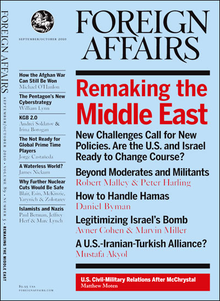

 What's Left