Stephen Gowans is the author of The Killer's Henchman: Capitalism and the Covid-19 Disaster (2022); Israel, A Beachhead in the Middle East: From European Colony to US Power Projection Platform (2019); Patriots, Traitors and Empires: The Story of Korea's Struggle for Freedom (2018); and Washington's Long War on Syria (2017).
For notification of updates, send an e-mail to stephen.roy.gowans@gmail.com with "subscribe" in the subject line.
Canadians measure their country against the United States. And the US benchmark defines their aspirations. If only Canada had a military to bestride the globe, moan many Canadians, a foreign policy leadership involved in all significant matters of international affairs, a reputation as a global leader, and an informal empire of countries governed by marionettes answerable to Ottawa. While many Canadians would like to elevate Canada’s role on the world stage to that of an imperial power on par with the United States, some on the left have gone beyond other Canadians’ aspirations. These leftists define Canada as a country with an “imperialist project,” all the better, perhaps, to show that just like their US counterparts, they too have an honest to goodness imperialist beast to slay, right here at home.
Todd Gordon, author of Imperialist Canada, cites numerous examples of retrograde Canadian behaviour on the world stage. These include Canada supporting a coup in Honduras, taking a lead role in promoting market-oriented reforms in Haiti, and military participation in the occupation of Afghanistan. Gordon believes these actions show Canada to be an imperialist country, just like the United States.
But in Gordon’s world, dominating other countries politically, backed up by military might—in other words, having an empire, whether formal or undeclared—is not the essential feature of imperialism. And for a leftist aspiring to wrestle with an imperialist beast at home, it’s a damn good thing. Turns out, Canada doesn’t have one.
So, if Canada is empire-free, how is that it has come to be called imperialist? Gordon says because Ottawa’s foreign policy supports Canadian business interests abroad (it “drains the wealth” of other countries.) Implicit in this view is the idea that any country with foreign investment outflows, and a foreign policy aimed at protecting and promoting them, is imperialist. Which means that counting the countries that aren’t imperialist becomes a task a kindergarten student can handle. One…two…three…four….According to the UN Conference on Trade and Development, even developing countries generate massive foreign direct investment outflows, $356.5B in 2011.
By Gordon’s definition, then, imperialism becomes a near universal, applicable to all countries but the poorest. That’s fine, so long as we acknowledge that if almost all countries are imperialist then imperialism doesn’t mean much of anything. When Lenin spoke of the advanced industrial countries carving up the world amongst themselves into mutually exclusive spheres of influence, we knew what he meant. A few rich countries dominated the rest of the world, and had hostile relationships with each other. Lenin’s definition wasn’t a near universal that would allow leftists in practically every capitalist country to claim that their country was also imperialist. If “imperialism” means much the same as “capitalism with foreign investment outflows” we no longer need the term imperialism. And exactly where is Canada’s unique sphere of influence anyway?
In a Briarpatch Magazine article titled “Canada’s imperialist project” Gordon says that Ottawa’s foreign policy is “increasingly aggressive” but offers no evidence that it’s any more aggressive nowadays than it was a hundred years ago. Canada’s long history of entanglment in other countries’ military aggressions makes Gordon’s examples of Canada’s supposedly new muscular foreign policy—supporting coups in Honduras and Haiti, and a largely symbolic military presence in Afghanistan—seem rather wimpy by comparison. Canada sent troops to Europe in 1914 to participate in a bloodletting that had nothing whatever to do with Canada, intervened militarily in the civil war in Russia to crush the nascent Bolshevik revolution, participated in the UN “police action” in Korea from 1950-53 to prevent the Koreans from uniting under Kim Il Sung, and joined NATO to roll back communism. However, Gordon appears to harbour the delusion that foreign policy in Canada used to be a rather benign affair until the country underwent “significant transformations…over the last 20 years of neo-liberal entrenchment.” This is the myth of the capitalist golden age, within which lurks the deception that it’s not capitalism, but its neo-liberal variety, that is the problem.
Canada has long had enterprises with investments overseas, governments that support them, and a foreign policy subordinate to that of countries that have normally been understood to be imperialist—Great Britain initially and the United States later on. But Canada has never had the clout to dominate other countries politically—not in a world in which the greater power has always been in the hands of truly imperialist countries.
But we don’t have to call Canada what it isn’t to recognize that it doesn’t wear a white hat on the world stage (contrary to what many Canadians believe). Nor do we have to stretch the definition of imperialism on a Procrustean bed to make it fit Canada. Like other capitalist countries, Canada uses what leverage it has to promote the interests of its corporations, bankers and wealthy investors abroad, and this involves the exploitation of people in other countries, some of them the world’s poorest.
Canada may have recognized the coups in Haiti and Honduras, but it didn’t engineer them. (The Marshall Islands recognized the coups, too. Does that make the Marshall Islands imperialist?) Canada participated in the occupation of Afghanistan, but it didn’t initiate it, and nor was its contribution large enough to make a significant difference. The United States led the NATO operations in Yugoslavia and Libya, in which Canada played bit roles. It is unimaginable that Canada would have—could have—led these campaigns. Participate vs. led. Canada participated in WWI, but no one thought its participation made the country imperialist—only part of an imperialist bloc led by Great Britain. Today, Canada is part of a much larger imperialist bloc led by the United States, in which exist separate semi-independent sub-imperialist blocs based on the vestiges of once formal European empires.
Which isn’t to say that Canada wouldn’t have engineered coups d’état, initiated invasions and fought wars for the re-division of the world had it the resources to do so and an empire, formal or otherwise, to defend and enlarge. Capitalist imperialism depends on two conditions. A compulsion to seek profits abroad. The means to dominate. Canada has the first, but not the second. If Gordon would like to call Canada an aspiring imperialist power, I’m happy to agree. But for the moment, the reality is that Ottawa contents itself with the being a second stringer on team USA, called in every once in a while to relieve the first string, and free to do its own thing, so long as it checks with Washington first. Hardly the picture of an imperialist.
The next time that empire comes calling in the name of human rights, please be found standing idly by
By Stephen Gowans
Maximilian C. Forte’s new book Slouching Towards Sirte: NATO’s War on Libya and Africa (released November 20) is a searing indictment of NATO’s 2011 military intervention in Libya, and of the North American and European left that supported it. He argues that NATO powers, with the help of the Western left who “played a supporting role by making substantial room for the dominant U.S. narrative and its military policies,” marshalled support for their intervention by creating a fiction that Libyan leader Muammar Gaddafi was about to carry out a massacre against a popular, pro-democracy uprising, and that the world could not stand idly by and watch a genocide unfold.
Forte takes this view apart, showing that a massacre was never in the cards, much less genocide. Gaddafi didn’t threaten to hunt down civilians, only those who had taken up armed insurrection—and he offered rebels amnesty if they laid down their arms. What’s more, Gaddafi didn’t have the military firepower to lay siege to Benghazi (site of the initial uprising) and hunt down civilians from house to house. Nor did his forces carry out massacres in the towns they recaptured…something that cannot be said for the rebels.
Citing mainstream media reports that CIA and British SAS operatives were already on the ground “either before or at the very same time as (British prime minister David) Cameron and (then French president Nicolas) Sarkozy began to call for military intervention in Libya”, Forte raises “the possibility that Western powers were at least waiting for the first opportunity to intervene in Libya to commit regime change under the cover of a local uprising.” And he adds, they were doing so “without any hesitation to ponder what if any real threats to civilians might have been.” Gaddafi, a fierce opponent of fundamentalist Wahhabist/Salafist Islam “faced several armed uprisings and coup attempts before— and in the West there was no public clamor for his head when he crushed them.” (The same, too, can be said of the numerous uprisings and assassination attempts carried out by the Syrian Muslim Brothers against the Assads, all of which were crushed without raising much of an outcry in the West, until now.)
Rejecting a single factor explanation that NATO intervened to secure access to Libyan oil, Forte presents a multi-factorial account, which invokes elements of the hunt for profits, economic competition with China and Russia, and establishing US hegemony in Africa. Among the gains of the intervention, writes Forte, were:
1) increased access for U.S. corporations to massive Libyan expenditures on infrastructure development (and now reconstruction), from which U.S. corporations had frequently been locked out when Gaddafi was in power; 2) warding off any increased acquisition of Libyan oil contracts by Chinese and Russian firms; 3) ensuring that a friendly regime was in place that was not influenced by ideas of “resource nationalism;” 4) increasing the presence of AFRICOM in African affairs, in an attempt to substitute for the African Union and to entirely displace the Libyan-led Community of Sahel-Saharan States (CEN-SAD); 5) expanding the U.S. hold on key geostrategic locations and resources; 6) promoting U.S. claims to be serious about freedom, democracy, and human rights, and of being on the side of the people of Africa, as a benign benefactor; 7) politically stabilizing the North African region in a way that locked out opponents of the U.S.; and, 8) drafting other nations to undertake the work of defending and advancing U.S. political and economic interests, under the guise of humanitarianism and protecting civilians.
Forte challenges the view that Gaddafi was in bed with the West as a “strange view of romance.” It might be more aptly said, he counters, that the United States was in bed with Libya on the fight against Al Qaeda and Islamic terrorists, since “Libya led by Gaddafi (had) fought against Al Qaeda years before it became public enemy number one in the U.S.” Indeed, years “before Bin Laden became a household name in the West, Libya issued an arrest warrant for his capture.” Gaddafi was happy to enlist Washington’s help in crushing a persistent threat to his secular rule.
Moreover, the bed in which Libya and the United States found themselves was hardly a comfortable one. Gaddafi complained bitterly to US officials that the benefits he was promised for ending Libya’s WMD program and capitulating on the Lockerbie prosecution were not forthcoming. And the US State Department and US corporations, for their part, complained bitterly of Gaddafi’s “resource nationalism” and attempts to “Libyanize” the economy. One of the lessons the NATO intervention has taught is that countries that want to maintain some measure of independence from Washington are well advised not to surrender the threat of self-defense.
Forte, to use his own words, gives the devil his due, noting that:
Gaddafi was a remarkable and unique exception among the whole range of modern Arab leaders, for being doggedly altruistic, for funding development programs in dozens of needy nations, for supporting national liberation struggles that had nothing to do with Islam or the Arab world, for pursuing an ideology that was original and not simply the product of received tradition or mimesis of exogenous sources, and for making Libya a presence on the world stage in a way that was completely out of proportion with its population size.
He points out as well that “Libya had reaped international isolation for the sake of supporting the Irish Republican Army (IRA), the Palestine Liberation Organization (PLO), and the African National Congress (ANC)”, which, once each of these organizations had made their own separate peace, left Libya behind continuing to fight.
Forte invokes Sirte in the title of his book to expose the lie that NATO’s intervention was motivated by humanitarianism and saving lives. “Sirte, once promoted by Colonel Muammar Gaddafi as a possible capital of a future United States of Africa, and one of the strongest bases of support for the revolution he led, was found to be in near total ruin by visiting journalists who came after the end of the bombing campaign by members of the North Atlantic Treaty Organization (NATO). “ This,” observes Forte, “is what ‘protecting civilians’ actually looks like, and it looks like crimes against humanity.” “The only lives the U.S. was interested in saving,” he argues “were those of the insurgents, saving them so they could defeat Gaddafi.” And yet “the slaughter in Sirte…barely raised an eyebrow among the kinds of Western audiences and opinion leaders who just a few months before clamored for ‘humanitarian intervention.’”
Among those who clamored for humanitarian intervention were members of the “North American and European left—reconditioned, accommodating, and fearful—(who) played a supporting role by making substantial room for the dominant U.S. narrative and its military policies.” While Forte doesn’t name names, except for a reference to Noam Chomsky, whom he criticizes for “poor judgment and flawed analyses” for supporting “the no-fly zone intervention and the rebellion as ‘wonderful’ and ‘liberation’”, self-proclaimed Africa expert Patrick Bond may be emblematic of the left Forte excoriates. Soon after the uprising began, Bond wrote on his Z-Space that “Gaddafi may try to hang on, with his small band of loyalists allegedly bolstered by sub-Saharan African mercenaries – potentially including Zimbabweans, according to Harare media – helping Gaddafi for a $16,000 payoff each.” This was a complete fiction, but one Bond fell for eagerly, and then proceeded to propagate with zeal, without regard to the consequences. As Forte notes, “the only massacre to have occurred anywhere near Benghazi was the massacre of innocent black African migrant workers and black Libyans falsely accused of being ‘mercenaries’” by the likes of Bond.
Forte also aims a stinging rebuke at those who treated anti-imperialism as a bad word. “Throughout this debacle, anti-imperialism has been scourged as if it were a threat greater than the West’s global military domination, as if anti-imperialism had given us any of the horrors of war witnessed thus far this century. Anti-imperialism was treated in public debate in North America as the province of political lepers.” This calls to mind opprobrious leftist figures who discovered a fondness for the obloquy “mechanical anti-imperialists” which they hurdled with great gusto at anti-imperialist opponents of the NATO intervention.
“NATO’s intervention did not stop armed conflict in Libya,” observes Forte—it continues to the present. “Massacres were not prevented, they were enabled, and many occurred after NATO intervened and because NATO intervened.” It is for these reasons he urges readers to stand idly by the next time that empire comes calling in the name of human rights.
Slouching Towards Sirte is a penetrating critique, not only of the NATO intervention in Libya, but of the concept of humanitarian intervention and imperialism in our time. It is the definitive treatment of NATO’s war on Libya. It is difficult to imagine it will be surpassed.
Maximilian C. Forte, Slouching Towards Sirte: NATO’s War on Libya and Africa, Baraka Books, Montreal, ISBN 978-1-926824-52-9. Available November 20, 2012. http://www.barakabooks.com/
“There have been,” write Julian E. Barnes and Jay Solomon in the Wall Street Journal (November 8, 2012), “a series of provocations by Iran in recent years. US officials say Iran has been responsible for a series of cyberattacks this year on US banks. There have also been incidents in the Persian Gulf, where Iranian fast boats have threatened US and British warships.”
Barnes and Solomon make no mention of the more frequent and menacing provocations aimed at Iran by the United States and its Middle East partner in aggression, Israel:
• Washington virtually declaring war on Iran when it designated the country a member of an “axis of evil.”
• Cyberattacks on Iran’s uranium enrichment facilities.
• Assassinations of Iranian nuclear scientists.
• Penetration of Iranian airspace by US drones.
• Massing of US and British warships in the Persian Gulf.
• US deployment of anti-missile systems to its Gulf allies (what an aggressor preparing for an attack does to protect its allies from retaliation.)
• Innumerable threats to bomb Iran’s nuclear facilities.
• Economic warfare of crippling trade sanctions and financial isolation which is destroying Iran’s economy and its ability to provide medical care to its population.
The United States bases its Fifth Fleet in Bahrain, only 150 miles from Iran. It has an aircraft carrier-led battle group in the Persian Gulf. Its warplanes and thousands of US troops are stationed in Kuwait and Qatar. In terms of provocation, this is roughly equivalent to the Chinese basing a naval fleet in Havana, a battle group in the Caribbean, warplanes in Venezuela and Nicaragua, and troops in Guatemala, El Salvador and Honduras. We needn’t ask whether Washington would denounce China’s massive deployment of military force close to US borders as provocative, doubly so were this accompanied by Beijing branding the United States part of an axis of evil and declaring that in its dealings with Washington all options are on the table.
And this tells only part of the story. China is no match militarily for the United States, but US military capabilities overwhelmingly outclass Iran’s. The hypothetical aggressive deployment of Chinese military force to US borders isn’t a tenth as provocative as Washington’s actual deployment of massive military force to the Persian Gulf.
So it is that no one with a rudimentary grasp of current international relations could possibly conceive of the relationship between the United States and Iran as one of Iran provoking the former, rather than the other way around. Since it’s fair to assume that the journalists Barnes and Solomon are not without a rudimentary grasp of the subject, it can only be concluded that they write propaganda for the US state despite working for a private organization—and that the propaganda is every bit as much chauvinist and congenial to US foreign policy goals as the bilge pumped out of Washington’s official propaganda agency, Radio Free Europe/Radio Liberty.
So how does the Journal reporters’ selective-references to provocation aid US foreign policy? In this way: There is a pattern of aggressive powers—from imperial Britain to Nazi Germany to the United States—justifying their military interventions as necessary responses to “provocation.” If cruise missiles are to smash into Iran, it will be helpful to justify Washington’s unleashing of its military force as a response to Iranian provocations, since a legitimate casus belli doesn’t exist. Even a case for war that public relations specialists could falsely invest with the appearance of legitimacy—namely, eliminating an Iranian nuclear weapons program—has become impossible ever since the US intelligence community declared that there is no credible evidence Iran has one. This led George W. Bush to lament in his memoirs, “How could I possibly explain using the military to destroy the nuclear facilities of a country the intelligence community said had no active nuclear weapons?”(1)—a question that doubtlessly troubles his successor. Iranian “provocations,” then, become a useful pretext for the use of military force in the absence of a legitimate case for war.
That Barnes and Solomon should act as imperialist-friendly propagandists is hardly surprising, since any dispassionate analysis of the mass media’s multiple linkages to the state through the corporate ruling class inevitably leads to the conclusion that the mainstream media’s take on foreign affairs will portray US foreign policy as admirable, virtuous and right, while the intended victims of the profit-driven quest to extend US hegemony will be depicted as democracy-hating, terrorist-promoting, economy-mismanaging, human rights-abusing, provocateurs (which, come to think of it, is a fairly apt description of the US government itself.)
Question: Why has Hamas, an Islamist party, so much sway among Palestinians?
Answer: Because on matters central to the Palestinian struggle it’s better than the alternative.
Here’s the alternative: Fatah leader, and Palestinian Authority president, Mahmoud Abbas, on the Palestinians’ right to return to the homes Zionist settlers drove them from and have blocked them from returning to—a fundamental right that is at the heart of the Palestinian struggle.
Israeli TV news correspondent, Udi Segal asks Abbas whether he wants to return to Safed, the town from which Abbas’s family was driven but is prohibited from returning to because it is now part of Israel.
Abbas: “I want to see Safed. It’s my right to see it, but not to live there.”
Segal: “Is it Palestine for you?”
Abbas: “Palestine now for me is the ’67 borders with East Jerusalem as its capital. This is now and forever. This is Palestine for me. I am a refugee, but I am living in Ramallah. I believe that the West Bank and Gaza Strip is Palestine, and the other part is Israel.” (1)
Hamas’s supporters took to the streets in Gaza, carrying banners reading “Abbas does not represent me” and “Pioneer of concessions, it’s time to quit.” (2) Or to put it another way, Palestinians who are enraged by Abbas’s willingness to capitulate on fundamental points are supporting Hamas.
In 2005, Abbas said “it is illogical to ask Israel to take five million (the number of refugees descendent from the 750,000 who were driven from their homes by Zionist settlers), or indeed one million.” (3)
Conceding more ground to Hamas, last year, Abbas said “that the Arab world had erred in rejecting the United Nations’ 1947 plan to partition” British mandate Palestine into separate Arab and Jewish states. (4)
It was, however, the UN that erred in approving the partition plan, not the Arabs in rejecting it.
• At the time, Arabs—who favored a unitary state—made up two-thirds of the population, and Jews, who owned only 6 percent of the land, made up one-third, yet the plan allocated 56 percent of the territory to a Jewish state.
• The plan was imposed over the objections of Arab Palestinians—the majority.
• Arab voices were ignored. Not a single Arab was consulted on the plan.
On moral, democratic, and legal grounds, the plan was an abomination. Failing to reject it would have been intolerable, stupid, and criminal.
Still, had the Palestinians meekly accepted the injustice the UN had in store for them, would they be living today in a state comprising the 42 percent of British mandate Palestine the UN was willing to give them, rather than scattered across the globe or living in two non-contiguous territories (Gaza and the West Bank) making up less than 20 percent of their original territory?
If we assume that Zionist leaders would have settled for the 56 percent of mandate Palestine the UN partition plan assigned them, the answer is yes, but the assumption is untenable.
Historian Ilan Pappe points out that for Zionist leaders in 1947, a valid Jewish state comprised most of Palestine, and allowed only a small Arab population. Zionist ideology demanded that Jewish settlers seek as much territory as they could capture militarily, and drive as much of the Arab population off the territory as they could. (5)
It’s doubtful that Arab acceptance of the UN plan would have given Palestinian Arabs more than they have today.
Revolutionaries, it is said, would rather die on their feet than live on their knees. Not Abbas. He’d rather cede title to the family home in return for being allowed to live on his knees in a cramped corner of its attic.
1. Joel Greenberg, “Israel’s Netenyahu cool to Abbas’s hint at waiving Palestinian ‘right of return’”, The Washington Post, November 4, 2012.
2. Jodi Rudoren, “Palestinian’s remark, seen as concession, stirs uproar”, The New York Times, November 4, 2012.
3. Ibid.
4. “Arab rejection of ’47 partition plan was error, Palestinian leader says”, The Associated Press, October 28, 2011.
5. Ilan Pappe, The Ethnic Cleansing of Palestine, One World, 2006.
“Economic sanctions are, at their core, a war against public health.”
–The New England Journal of Medicine [1]
By Stephen Gowans
While campaigns are organized to deter the United States and Israel from acting on threats to launch an air war against Iran, both countries, in league with the European Union (winner of this year’s Nobel Peace Prize) carry on a low-intensity war against Iran that is likely to be causing more human suffering and death than strikes on Iran’s nuclear facilities would. This is a war against public health, aimed at the most vulnerable: cancer patients, hemophiliacs, kidney dialysis patients, and those awaiting transplants. Its victims are unseen, dying anonymously in hospitals, not incinerated in spectacular explosions touched off by cruise missiles and bunker buster bombs. But ordinary Iranians who can’t get needed medications are every bit as much victims of war as those blown apart by bombs. And yet, we think, that as long as the bombs don’t rain down, that peace has been preserved. Perhaps it has, in formal terms, but bleeding to death in the crater of a bomb, or bleeding to death because you can’t get hemophilia drugs, is, in either case, death.
In Iran today there is an acute shortage of pharmaceuticals for kidney dialysis and transplants and for treating cancer, hemophilia, thalessemia, multiple sclerosis, and other disorders. Hospital equipment is breaking down for want of spare parts. And raw materials used by domestic pharmaceutical manufacturers—blocked by Western sanctions—are in short supply. It adds up to a healthcare crisis. The United States and European Union say their sanctions don’t apply to drugs and medical equipment, but US and European banks are unwilling to handle financial transactions with Iran. If they do, the US Treasury Department will deny them access to the US banking system. Since isolation from the world’s largest economy would guarantee their demise, banks comply and shun Iran. As a consequence, few goods from the West make their way into the country, the exemptions for drugs and medical equipment being nothing more than a public relations ruse to disguise the barbarity of the sanctions. Not that Washington is denying that its sanctions are hurting ordinary Iranians. It’s just that responsibility for their consequences is denied. US president Barak Obama “has said the Iranian people should blame their own leaders.” [2] For what—failing to knuckle under?
“In contrast to war’s easily observable casualties, the apparently nonviolent consequences of economic intervention seem like an acceptable alternative. However…economic sanctions can seriously harm the health of persons who live in targeted nations.” [3] This has been well established and widely accepted in the cases of Iraq in the 1990s and the ongoing US blockade of Cuba. Political scientists John Mueller and Karl Mueller wrote an important paper in Foreign Affairs, in which they showed that economic sanctions “may have contributed to more deaths during the post-Cold War era than all weapons of mass destruction throughout history.” [4]
“The dangers posed today by such enfeebled, impoverished, and friendless states as Iraq and North Korea are minor indeed”, they wrote in 1999. It might be added that the dangers posed by Iran to the physical safety of US citizens are not only minor but infinitesimally small. Notwithstanding the fevered fantasies of rightwing commentators, Iran has neither the means, nor the required death wish, to strike the United States. Nor Israel, which has the means—an arsenal of 200 nuclear weapons—to wipe Iran off the face of the earth. However, the danger the country poses to the idea of US domination – and hence, to the banks, corporations, and major investors who dominate US policy-making – are admittedly somewhat greater.
“Severe economic sanctions”, the Muellers contend, ought to be “designated by the older label of ‘economic warfare’”. “In past wars economic embargoes caused huge numbers of deaths. Some 750,000 German civilians may have died because of the Allied naval blockade during World War I.” [5]
“So long as they can coordinate their efforts,” the two political scientists continue, “the big countries have at their disposal a credible, inexpensive and potent weapon for use against small and medium-sized foes. The dominant powers have shown that they can inflict enormous pain at remarkably little cost to themselves or the global economy. Indeed, in a matter of months or years whole economies can be devastated…” [6] And with devastated economies, come crumbling healthcare systems and failure to provide for the basic healthcare rights of the population.
We might ask, then, why the United States and European Union, practitioners of economic warfare against Iran, are bent on destroying Iran’s economy, along with its public health system. “Sanctions,” New York Times’ reporter Rick Gladstone writes, have subjected “ordinary Iranians” to “increased deprivations” in order to “punish Iran for enriching uranium that the West suspects is a cover for developing the ability to make nuclear weapons.” [7] In other words, Iran is suspected of having a secret nuclear weapons program, and so must be sanctioned to force it to abandon it.
Contrary to Gladstone, the West doesn’t really believe that Tehran has a secret nuclear weapons program, yet even if we accept it does believe this, the position is indefensible. Why should Iranians be punished for developing a capability that the countries that have imposed sanctions already have?
The reason why, it will be said, is because Iranians are bent on developing nuclear weapons to destroy Israel. Didn’t Iranian president Mahmoud Ahmadinejad threaten to “wipe Israel off the map”?
Regurgitated regularly by US hawks and Israeli politicians to mobilize support for the bombing of Iran, the claim is demagogic rubbish. Ahmadinejad predicted that Israel as a Zionist state would someday disappear much as South Africa as an apartheid state did. He didn’t threaten the physical destruction of Israel and expressed only the wish that historic Palestine would become a multinational democratic state of Arabs and the Jews whose ancestors arrived in Palestine before Zionist settlers. [8]
No less damaging to the argument that Iranians aspire to take Israel out in a hail of nuclear missiles is the reality that it would take decades for Iran to match Israel’s already formidable nuclear arsenal, if indeed it aspires to. For the foreseeable future, Israel is in a far better position to wipe Iran off the map. And given Israel’s penchant for flexing its US-built military muscle, is far more likely to be the wiper than wipee. Already it has almost wiped an entire people from the map of historic Palestine.
But this is irrelevant, for the premise that the West suspects Iran of developing a nuclear weapons capability is false. To be sure, the mass media endlessly recycle the fiction that the West suspects Iran’s uranium enrichment program is a cover for a nuclear weapons program, but who in the West suspects this? Not high officials of the US state, for they have repeatedly said that there’s no evidence that Iran has a secret nuclear weapons program.
The consensus view of the United States’ 16 intelligence agencies is that Iran abandoned its nuclear weapons program years ago. Director of US intelligence James Clapper “said there was no evidence that (Iran) had made a decision on making a concerted push to build a weapon. David H. Petraeus, the C.I.A. director, concurred with that view…. Other senior United States officials, including Defense Secretary Leon E. Panetta and Gen. Martin E. Dempsey, the chairman of the Joint Chiefs of Staff, have made similar statements.” [9]
Rather than weakening this conclusion, stepped up US espionage has buttressed it. Iran’s leaders “have opted for now against…designing a nuclear warhead,” said one former intelligence official briefed on US intelligence findings. “It isn’t the absence of evidence, it’s the evidence of an absence. Certain things are not being done” [10] that would indicate that Iran is working on nuclear weapons. Even Mossad, Israeli’s intelligence agency “does not disagree with the US on the weapons program,” according to a former senior US intelligence official. [11]
So, contrary to the claim that the West “suspects” Iran of concealing a nuclear weapons program, no one in a position of authority in the US state believes this to be true. Neither does Israeli intelligence. Why, then, is the United States and its allies subjecting ordinary Iranians to increased deprivations through sanctions?
The answer, according to Henry Kissinger, is because US policy in the Middle East for the last half century has been aimed at “preventing any power in the region from emerging as a hegemon.” This is another way of saying that the aim of US Middle East policy is to stop any Middle Eastern country from challenging its domination by the United States. Iran, Kissinger points out, has emerged as the principal challenger. [12]
Indeed, it did so as long ago as 1979, when the local extension of US power in Iran, the Shah, was overthrown, and the country set out on a path of independent economic and political development. For the revolutionaries’ boldness in asserting their sovereignty, Washington pressed Saddam Hussein’s Iraq into a war with Iran. This served the same purpose as today’s economic warfare, sabotage, threats of military intervention, and assassinations of Iran’s nuclear scientists: to weaken the country and stifle its development; to prevent it from thriving and thereby becoming an example to other countries of development possibilities outside US domination.
Uranium enrichment has emerged as point of conflict for two reasons.
First, a civilian nuclear power industry strengthens Iran economically and domestic uranium enrichment provides the country with an independent source of nuclear fuel. Were Iran to depend on the West for enriched uranium to power its reactors, it would be forever at the mercy of a hostile US state. Likewise, concern over energy security being in the hands of an outside power has led Turkey, Saudi Arabia, Vietnam and South Korea to insist over US objections that they be allowed to produce nuclear fuel domestically, without sanction. With US nuclear reactor sales hanging in the balance, it appears that their wishes will be respected. [13] Iran will be uniquely denied.
Secondly, uranium enrichment provides Tehran with the capability of developing nuclear weapons quickly, if it should ever feel compelled to. Given Washington’s longstanding hostility to an independent Iran, there are good reasons why the country may want to strengthen its means of self-defense. The hypocrisy of the United States championing counter-proliferation—and only selectively since no one is asking Israel to give up its nuclear weapons, and the United States hasn’t the slightest intention of ever relinquishing its own—reveals the illegitimacy of the exercise.
The reason, then, for waging war on Iran’s public health, a war that intensifies the suffering of the sick and kills cancer, kidney dialysis and other patients, is not because their government has a secret nuclear weapons program —which no one in the US intelligence community believes anyway—but because a developing Iran with independent energy, economic and foreign policies threatens Washington’s preferred world political order—one in which the United States has unchallenged primacy. Primacy is sought, not to satisfy ambitions for power for power’s sake, or to provide ordinary US citizens with economic opportunities at home, or to protect them from dangers that originate abroad, but to secure benefits for the plutocrats who dominate US public policy. The benefits uniquely accrue to plutocrats: opportunities to squeeze more for themselves from our labor, our land, and our resources and from those of our brethren abroad—the 99% in other lands, with whom we’re linked by a common economic position and interests. If the plutocrats and their loyal political servants in Washington and Brussels have to kill numberless Iranians to secure these benefits, they will. And are.
1. Eisenberg L, “The sleep of reason produces monsters—human costs of economic sanctions,” New England Journal of Medicine, 1997; 336:1248-50.
2. Thomas Erdbrink, “Iran sanctions take unexpected toll on medical imports”, The New York times, November 2, 2012; Najmeh Bozorgmehr, “In Iran, sanctions take toll on the sick”, The Washington Post, September 4, 2012
3. Karine Morin and Steven H. Miles, “Position paper: The health effects of economic sanctions and embargoes: The role of health professionals”, Annals of Internal Medicine, Volume 132, Number 2, 18 January 2000.
4. John Mueller and Karl Mueller, “Sanctions of mass destruction”, Foreign Affairs, Volume 78, Number 3, May/June 1999.
5. Ibid.
6. Ibid.
7. Rick Gladstone, “Iranian President Says Oil Embargo Won’t Hurt”, The New York Times, April 10, 2012.
8. Glenn Kessler, “Did Ahmadinejad really say Israel should be ‘wiped off the map’?” The Washington Post, October 6, 2011.
9. James Risen and Mark Mazzetti, “U.S. agencies see no move by Iran to build a bomb”, The New York Times, February 24, 2012.
10. Joby Warrick and Greg Miller, “U.S. intelligence gains in Iran seen as boost to confidence”, The Washington Post, April 7, 2012.
11. James Risen, “U.S. faces a tricky task in assessment of data on Iran”, The New York Times, March 17, 2012.
12. Henry A. Kissinger, “A new doctrine of intervention?” The Washington Post, March 30, 2012.
13. Carol E. Lee and Jay Solomon, “Obama to discuss North Korea, Iran”, The Wall Street Journal, March 21, 2012.
US secretary of state Hillary Clinton says Washington needs “an opposition that will be on record strongly resisting the efforts by extremists to hijack the Syrian revolution,” (1) but fails to add that it must also be open to the United States doing the same.
By Stephen Gowans
Uprisings aimed at overthrowing governments are often divided between militants who do the heavy lifting on the ground and politicians who lead the fight in the political sphere. Outside powers scheme to anoint an acceptable politician as a leader-in-waiting to step into the void if and when the current government is toppled. The leader must be both acceptable to his or her foreign backers and to the militants on the ground.
Washington has decided that the Syrian National Council, which it “initially charged” to “galvanize opposition” (2) to Syria’s Ba’thist government is unacceptable to Syrian rebels and therefore has no hope of leading a successor government. As an alternative to the failed council, it has handpicked the leaders of a new government-in-waiting, to be unveiled in Doha on November 7, and soon after receive the pre-arranged blessing of the Arab League and Friends of Syria. Make no mistake. What emerges from Doha will be a US creation, intended to represent US interests in Syria and the Middle East.
At a press conference following an October 30 meeting with the president of Croatia, US secretary of state Hillary Clinton revealed that the Syrian National Council, Washington’s initial pick to lead the opposition to the Asad government, no longer had Washington’s support. The SNC, in Washington’s view, had become irrelevant. The armed opposition to the Asad government is happening outside the leadership of the SNC, an organization of exiles with no legitimacy within Syria and internally divided by incessant squabbling between its Islamist and secularist factions. The SNC, commented one armed rebel, “has been over with for a long time now; fighters only talk about it sarcastically.” (3)
Equally problematic for Washington was the SNC’s narrow base of political support. “From the beginning, the council was seen as a prime vehicle for the long-exiled Muslim Brotherhood” (4) and therefore “failed to attract significant representation from minority groups,” (5) including Alawites, Christians and Kurds. Its failure to win support from fighters on the ground, and to expand beyond a narrow sectarian base, hardly recommended it as a viable government-in-waiting. Sounding the council’s death knell, Clinton decreed “that the SNC can no longer be viewed as the visible leader of the opposition.” (6)
For weeks now, Robert Ford, the former US ambassador to Syria, has been putting together a plan to anoint a new US-approved government-in-the-wings. The initiative is known as the “Riad Seif plan” (7) named after a wealthy Damascus businessman and former Syrian parliamentarian who has long played an active role in the opposition to the Asad government. Acceptable to Washington owing to his businessman politics (as against the Ba’athist’s ideological commitment to state domination of the economy, marginalization of the private sector, and controls on foreign investment (8)), Seif has been endorsed by Washington to lead a post-Ba’athist government. It is hoped that his opposition credentials—he was jailed by the Syrian government for his activities—will put him in good stead with the rebels on the ground.
The plan calls for the creation of a “proto-parliament” comprising 50 members, 20 from the internal opposition, 15 from the SNC (i.e., the exile opposition), and 15 from various other Syrian opposition organizations. An executive body made up of 8 to 10 members—who have been endorsed by the US State department (9) — will work directly with the United States and its allies. (10) Washington and its subordinates, the Arab League and misnamed Friends of Syria, both democracy-hating clubs of plutocracies and oil monarchies, will attempt to make the body acceptable to Syrians by recognizing it as the legitimate representative of the Syrian people.
There’s no guarantee the plan will work. One of its goals is to marginalize the influence of the Jihadists, many though not all of whom have spilled into Syria from other countries, bent on overturning a secular regime led by a president whose Alawi faith they revile as heretical. If the Jihadists can be sidelined, Washington may be able to funnel arms to “acceptable” militant groups, without fear of their being used later against US targets. But there’s a question mark hanging over Seif’s appeal to religiously-inspired militants, especially when the hands of the marionette-master, the US State Department, are so visible. The same goes for the new council’s appeal to the anti-imperialist secular opposition, who “are against any new political entity that becomes subject to the agendas of foreign countries.” (11) And there’s no mistaking that the new ‘Made-in-the-USA’ council will be subject to the political agenda of the United States.
We needn’t tarry long on debunking the naive belief that Washington’s intervention in Syrian affairs has the slightest connection to promoting democracy. If democracy promotion motivated US foreign policy, absolutist monarchies with execrable records of human rights abridgements and violent repression of popular uprisings against their dictatorial rule would not make up the bulk of the United States’ Arab allies. The last thing the wealthy investors, bankers and corporate heavyweights who make up the US ruling class want is democracy, either at home or aboard. They want its polar opposite—plutocracy, rule by people of wealth in the interests of piling up more wealth through the exploitation of the labor of other people and the land, resources and markets of other countries.
When Saudi Arabia sent tanks and troops into Bahrain on March 14, 2011 to crush a local eruption of the Arab Spring, the United States did nothing to disturb their democracy-abominating ally’s assault on the popular uprising, except issue a meaningless call for “political dialogue.” As the New York Times explained,
The reasons for Mr. Obama’s reticence were clear: Bahrain sits off the Saudi coast, and the Saudis were never going to allow a sudden flowering of democracy next door…In addition, the United States maintains a naval base in Bahrain…crucial for maintaining the flow of oil from the region. “We realized that the possibility of anything happening in Saudi Arabia was one that couldn’t become a reality,” said William M. Daley, President Obama’s chief of staff at the time. “For the global economy, this couldn’t happen.” (12)
Considering that William Daley is an investment banker from a politically well-connected family; that “maintaining the flow of oil” means “maintaining the flow of oil revenues to US oil giants”; and that “the global economy” means “investors’ returns,” it’s clear why the plutocracy condoned their ally’s repression of the Bahrain uprising. Under plutocratic rule, steps toward democracy—even baby ones—are not allowed to get in the way of profits.
Nor need we tarry on the naive belief that a government that has been handpicked by Washington—the US State Department has “recommended names and organizations that ….should be included in any leadership structure,” disclosed Clinton (13)—will represent Syrian interests against those of its sponsor. US interests in Syria have no intrinsic relationship to protecting Israel, which—with its formidable military, yearly $3 billion dollop of US military aid, and an arsenal of 200 nuclear weapons—hardly needs further assistance defending itself against Iran, Hezbollah or Hamas, none of which are significant threats to Israel anyway but are threatened by it. Weakening Iran, Syria’s ally, may be one of Washington’s objectives in trying to orchestrate Asad’s ouster, but not because Iran may acquire nuclear power status and therefore threaten Israel (which it could hardly do anyway considering that it’s severely outclassed militarily (14)), but because, like Syria, it zealously safeguards its economic territory from the US plutocracy’s designs, allowing the state to dominate its economy and protect its domestic enterprises, land and resources from outside domination. The real reason the US plutocracy wants to topple the Syrian and Iranian governments is because they’re bad for the plutocracy’s business interests. Democracy, existential threats to Israel, and nuclear non-proliferation, have nothing to do with it.
The Syrian government is no stranger to formidable challenges. It has waged a longstanding war with Islamists who have rejected the Ba’athist’s secular orientation from the start. Its war with the ethnic-cleansing settler regime in Tel Aviv oscillates between hot and cold. The United States has waged economic warfare against Syria for years, and has connived at overthrowing its government before. Still, Damascus is in a particularly bad spot now. The world’s strongest plutocracies have escalated their hostility. Jihadist terrorists from abroad—to say nothing of home-grown ones—are doing their best to upset Ba’athist rule. But the support of the Syrian military and a substantial part of the Syrian population, plus assistance from Russia and Iran, have allowed it to hang on.
In the face of imperialist and Islamist opposition, its future looks grim, but governments have faced bleaker prospects before and survived, some even going on to thrive. To be sure, there are profound differences between the Asad government and the early Bolshevik regime, but the Syrian government and its supporters may take heart knowing that at one point it seemed all but certain that Lenin’s fledgling government would fail. Famine had gripped the cities. An imperialist war had thrown Russia’s industry into chaos and all but ruined its transportation system. Civil war had broken out and predatory hostile states had launched military invasions to smother the infant government in its cradle. Yet, in the face of these tremendous challenges, the Bolsheviks survived and over the next seven decades went on to build a great industrial power that eliminated unemployment, overwork, economic insecurity, extremes of inequality, and economic crises, while almost singlehandedly eradicating the scourge of Nazism. And it did so without exploiting other countries but helping to build them economically and escape colonialism and imperialist domination, often at great expense to itself. Similarly the Syrian government may overcome its challenges, both internal and external, and carry on a course of independent, self-directed development, free from the backwardness of Islamic fundamentalism, sectarianism and domination by the world’s great plutocracies. Let’s hope so.
1. Neil MacFarquhar and Michael R. Gordon, “As fighting rages, Clinton seeks new Syrian opposition”, The New York Times, October 31, 2012
2. Jay Solomon and Nour Malas, “U.S. pulls support for key anti-Assad bloc”, The Wall Street Journal, October 31, 2012
Speculating on where growing inequality in the United States might lead, economist Robert H. Frank warned in the New York Times that “extreme inequality might one day spawn a violent revolution, as has happened in many other countries.” But he quickly added that this was “hardly something to hope for.” (1)
Whether revolution is something to hope for depends on which side of the growing inequality divide you’re on. Contra Frank, people working for desperation-level wages, or forced into idleness, or bearing the brunt of government austerity programs, may indeed hope for a revolution.
On the same day Frank’s warning appeared, the Times explored a growing reality for tens of millions of retail workers, who want full-time jobs but are increasingly relegated to low-paying, part-time work and lives of poverty. Might they hope for a revolution?
Part-time workers in the U.S. service industry average $10.92 an hour, compared to an average of $17.18 for the dwindling number of full-time workers. Replacing full-time jobs with part-time hours means businesses cut costs and pay out more to management and shareholders. Employees get the shaft.
It has always been true that business and political leaders don’t care a whit about you and me, but in North America, Western Europe and Japan, there was a time when labor militancy, strong unions, and ideological competition with the Soviet Union bought concessions that raised the material standard and economic security of the bulk of people.
No more. The number of unionized workers has shrunk, communist and socialist parties have disappeared, wizened or marched resolutely to the right, and businesses have intensified their exploitation of workers, with their political servants paving the way.
Business leaders and politicians don’t “give a fuck about you and me”, the organic intellectual George Carlin once observed.
True, but as the Frank article makes clear, there is one respect in which business and political leaders do care about everyone else—whether we’ll turn to revolution.
1. Robert H. Frank, “When low taxes don’t help the rich”, The New York times, October 27, 2012
Jobs—which people desperately need—are promised as the fruit of indulging “job creators,” by giving them what they want. Cheap labor. Low taxes. Bare regulation. No obligations.
Needing jobs, wage-earners are inclined to go along.
The threat of joblessness is even used as a cudgel to bully employees into voting for the employer’s preferred political candidate. David Seigel, CEO of Westgate Resorts, makes an eloquent—though unintended—case for why enterprises ought to be brought under public control, and not left in the hands of private tyrannies. In a memo to his 7,000 employees, Seigel wrote:
“The economy doesn’t currently pose a threat to your job. What does threaten your job, however, is another four years of the same presidential administration. If any new taxes are levied on me, or my company, as our current president plans, I will have no choice but to reduce the size of this company.” (1)
Seigel is over-reacting to how an Obama victory, if it happens, will affect him and his fellow executives. Obama threatened in 2008, as he has in 2012, to raise taxes on millionaires and billionaires. He has yet to keep his 2008 promise. If he wins, it’s doubtful he’ll keep his 2012 promise.
Still, Seigel’s attempted extortion is a real-world version of a satirical oil company ad Saturday Night Live ran many years ago. “Do as we say,” the ad warned, “and nobody gets hurt.”
The Canadian government, too, is in on the game, but uses a carrot (do as we say and you’ll find work) rather than a stick (vote as I say or you’ll lose your job.) What the Canadian government wants Canadians to do is welcome foreign investment (though, as we’ll see, not all of it), in order to enjoy a bounty of jobs.
Capital is not scarce in Canada, which makes the emphasis on foreign, rather than domestic investment, a bit odd.
What’s more, the keen courting of private investment by governments, and the complete exclusion from consideration of public investment, is odd too, since there’s nothing inherently superior about private investment. Indeed, for the bulk of us, it’s unquestionably inferior.
Public investment means that productive assets can be used for public purposes—redounding to the benefit of all, rather than the welfare of a wealthy few. And, a job created by public investment is as much a job as one created by private investment.
So, why the emphasis of private investment?
Because it isn’t good for people with gobs of private capital to invest. And they wield enormous political power.
Private investors use their wealth to dominate governments, through lobbying, the funding of political campaigns, control of the mass media, and by placing themselves—and their loyal representatives—into key public sector jobs.
This is no less true in Canada than the United States. Anyone who has read The New York Times recently will have come across dozens of stories about the super-rich making major political campaign contributions, and about the domination of Congress by millionaires and the paucity of anyone with a blue-collar background in public life. The investing class dominates the state, and public policy reflects its interests. (2)
All to say that government officials, in either the United States or Canada, aren’t creating “business-friendly” conditions in order to create jobs, much less well-paying ones. They’re doing so to enrich private investors, who have their ear, who lunch at the same clubs, studied at the same exclusive schools, and travel in the same circles.
This is clear in Ottawa’s recent decision to block the Malaysian oil company Petronas from buying Canadian gas producer Progress Energy Resources Corp, despite touting the benefits of foreign investment, declaring Canada “open for business,” and promising a bonanza of foreign investment-generated jobs.
The problem is that Petronas isn’t owned by super-wealthy private investors. It’s owned by the Malaysian state. And that, apparently, makes all the difference. “The concern,” revealed an unnamed Canadian government source, “is making sure we’re not allowing Canadian resources to become part of another state’s geopolitical goals.” (3) So much for jobs.
We might wonder, however, why there’s no equivalent concern in Ottawa about not allowing Canadian resources to become part of the profit-making goals of private investors. After all, the point is that Canadian resources aren’t being used for the benefit of Canadians en masse, whether they’re in the hands of a foreign state-owned oil company, or a private one.
The reply might be that private investment creates the benefit of jobs for Canadians without at the same time serving another state’s geopolitical goals.
However, the question of whether jobs are created depends on the nature of the investment. Greenfield investment—the building of new factories, the opening of new mines, the creation of new oil fields—creates new jobs. Brownfield investment—transferring ownership from one set of hands to another—does not. On the contrary, brownfield investors often restructure the companies they buy, a process which almost invariably leads to the sacking of thousands of employees. As it turns out, the blocked Petronas deal was more of the brownfield than greenfield sort.
Of course, that’s not why Ottawa blocked the deal. As an instrument of private wealth, the Canadian government looks after the interests of private investors as a class. And if that means reserving Canada’s natural resources as an exclusive sphere for the enrichment of private investors, while duping Canadians into believing that handing over the country’s resources to private wealth on favourable terms will relieve them of the miseries of actual or threatened unemployment, so it will be.
But this is hardly a favourable arrangement for the bulk of Canadians, who can own, develop and benefit from their resources collectively. They don’t need rich foreign investors to create jobs.
Does David Seigel ever wonder that one day the majority from which he and his cronies have squeezed their millions and billions might tell him, “Do as we say and you won’t get hurt?”
1. Steven Greenhouse, “Here’s a memo from the boss: Vote this way”, The New York Times, October 26, 2012.
2. On the severe underrepresentation of people of blue-collar backgrounds in US public life see, Nicholas Carnes, “What millionaire are you voting for?” The New York Times, October 13, 2012.
3. Steven Chase and Shawn McCarthy, “Conservatives work to clarify foreign takeover policy”, The Globe and Mail, October 23, 2012
The number of manufacturing jobs in the United States and Canada is declining and one important reason why is growing productivity. This is often overlooked in the rush to blame shrinking manufacturing on outsourcing to the Third World. To be sure, the export of manufacturing jobs to low-wage countries has indeed played a part in hollowing out the North American manufacturing sector, but US manufacturing produces more today, with 40 percent fewer workers, than it did in 1979. That means that even if growing global competition for jobs hadn’t intensified, technological innovation would still have exerted downward pressure on manufacturing employment.
Growing productivity frees up labour. This can be either a boon or burden, depending on whether the labour is redeployed to producing new goods and services, or not. If it is, goods and services become more abundant. It’s even possible that manufacturing employment expands, as new products are developed, requiring new workers.
But what happens if freed up labour isn’t put back to work—that is, if there aren’t new products and services to absorb the surplus? The answer is persistently high levels of unemployment, and the ruin of the lives affected.
But all is well, according to economic historian Benjamin Friedman.
“When technology reduces the need for certain kinds of labor, we know that some inventive people will one day come along and find a way to use that freed-up labor making things that other people want to buy.” (1)
Except when it doesn’t happen. There’s no guarantee that some inventive person will show up one day with a plan to put the jobless to work. But even if it were inevitable that this would eventually happen, how long must we wait? Five years? Ten years? Whole generations? And how many lives are ruined in the interim?
Freidman’s prediction has something of a pie-in-the-sky character. Things might be tough now, but don’t worry. The messiah’s coming, and when he arrives he’ll whisk the jobless off into full employment heaven.
Maybe. Not counted among the elect will be those whose employment prospects have been compromised by years of forced idleness.
In the 19th century and through parts of the 20th Britain exported its surplus population to its Dominions and other parts of its empire. With no equivalent outlet today, the United States—with far and away the largest per capita prison population on the planet—warehouses its surplus population in a vast network of prisons.
It needn’t be like this. One of the possible—and promising—outcomes of growing productivity is reduced labour time. Rather than making more with 40 percent fewer workers, why not make more with the same number of workers, putting in 40% fewer hours? If more can be made with less, we should be able to consume more with less effort.
Or how about a plan to redeploy surplus labor to meet pressing human (rather than private profit-making) needs—like repairing crumbling infrastructure, building efficient public transportation, reducing classroom sizes, and developing green energy—rather than placing faith in the distant arrival of an inventive person whose innovative idea will siphon off some fraction of the burgeoning reserve army of labor?
None of this is impossible or unrealistic, though those who are sheltered from economic insecurity, underemployment and the omnipresent threat of joblessness—who are doing well by the present system—would have you believe a rational plan for deploying society’s productive resources and turning technology to our advantage rather than to our detriment is pure fantasy. But their motives in dismissing alternatives that benefit the majority of us—but not them—are plain.
Are we to entrust our future to faith in the eventual emergence of an innovative “job creator” to save us from the failures of capitalism? Or shall we reject the pie-in-the-sky of the well-to-do and take the future into our own hands?
1. David Leonhardt, “Race for president leaves income slump in shadows”, The New York Times, October 23, 2012
For half of the last century, Arab nationalists, socialists, communists and others were locked in a battle with the Muslim Brothers for hegemony in the Arab world.—Tariq Ali [1]
The Jihadists who toppled the secular nationalist Gaddafi government—and not without the help of Nato bombers, dubbed “al Qaeda’s air force” [2] by Canadian pilots who participated in the bombing campaign—are no longer disguised in the pages of Western newspapers as a popular movement who thirsted for, and won, democracy in Libya. Now that they’ve overrun the US consulate in Benghazi and killed the US ambassador, they’ve become a “security threat…raising fears about the country’s stability” [3]—exactly what Gaddafi called them, when Western governments were celebrating the Islamists’ revolt as a popular pro-democracy uprising. Gaddafi’s description of the unrest in his own country as a violent Salafist bid to establish an Islamic state was doubtlessly accepted in Washington and other Western capitals as true, but dismissed in public as a transparent ploy to muster sympathy. This was necessary to sanitize the uprising to secure the acquiescence of Western publics for the intervention of their countries’ warplanes to help Islamic guerillas on the ground topple a secular nationalist leader who was practicing “resource nationalism” and trying to “Libyanize” the economy– the real reasons he’d fallen into disgrace in Washington. [4]
Al Qaeda in the Islamic Maghreb, which played a major part in the rebellion to depose Libyan leader Muammar Gaddafi, may have plotted the attack on the US consulate in Benghazi which led to the death of US ambassador Christopher Stevens, according to US officials.
The uprising of militant Muslim radicals against a secular state was, in many respects, a replay of what had happened in Afghanistan in the late 1970s, when a Marxist-inspired government came to power with aspirations to lift the country out of backwardness, and was opposed by the Mullahs and Islamist guerillas backed by the United States, Pakistan, Saudi Arabia and China.
An Afghan Communist explained that,
“Our aim was no less than to give an example to all the backward countries of the world of how to jump from feudalism straight to a prosperous, just society … Our choice was not between doing things democratically or not. Unless we did them, nobody else would … [Our] very first proclamation declared that food and shelter are the basic needs and rights of a human being. … Our program was clear: land to the peasants, food for the hungry, free education for all. We knew that the mullahs in the villages would scheme against us, so we issued our decrees swiftly so that the masses could see where their real interests lay … For the first time in Afghanistan’s history women were to be given the right to education … We told them that they owned their bodies, they would marry whom they liked, they shouldn’t have to live shut up in houses like pens.” [5]
That’s not to say that Gaddafi was a Marxist—far from it. But like the reformers in Afghanistan, he sought to modernize his country, and use its land, labor and resources for the people within it. By official Western accounts, he did a good job, raising his country’s standard of living higher than that of all other countries in Africa.
Gaddafi claimed that the rebellion in Libya had been organized by Al Qaeda in the Islamic Maghreb, or AQIM, and by the Libyan Islamic Fighting Group, which had vowed to overthrow him and return the country to traditional Muslim values, including Sharia law. A 2009 Canadian government intelligence report bore him out. It described the anti-Gaddafi stronghold of eastern Libya, where the rebellion began, “as an ‘epicenter of Islamist extremism’ and said ‘extremist cells’ operated in the region.” Earlier, Canadian military intelligence had noted that “Libyan troops found a training camp in the country’s southern desert that had been used by an Algerian terrorist group that would later change its name to Al-Qaeda in the Islamic Maghreb.” [6] Significantly, US officials now believe that the AQIM may have plotted the attack on the US consulate in Benghazi. [7]
Abdel Hakim Belhaj, the Libyan rebellion’s most powerful military leader, was a veteran of the U.S.-backed Jihad against the Marxist-inspired reformist government in Afghanistan, where he had fought alongside militants who would go on to form al-Qaeda. Belhaj returned to Libya in the 1990s to lead the Libyan Islamic Fighting Group, which was linked to his al-Qaeda comrades. His aim was to topple Gaddafi, as the Communists had been toppled in Afghanistan. The prominent role Belhaj played in the Libyan uprising should have aroused suspicions among leftists in the West that, as Western governments surely knew, the uprising was not the heroic pro-democracy affair Western media—and those of reactionary Arab regimes—were making it out to be. Indeed, from the very first day of the revolt, anyone equipped with knowledge of Libyan history that went back further than the last Fox News broadcast, would have known that the Benghazi rebellion was more in the mold of the latest eruption of a violent anti-secular Jihad than a peaceful call for democracy. [8]
“On Feb. 15, 2011, citizens in Benghazi organized what they called a Day of Anger march. The demonstration soon turned into a full-scale battle with police. At first, security forces used tear gas and water cannons. But as several hundred protesters armed with rocks and Molotov cocktails attacked government buildings, the violence spiraled out of control.” [9]
As they stormed government sites, the rampaging demonstrators didn’t chant, “Power to the people”, “We are the 99 percent”, or “No to dictatorship.” They chanted “‘No God but Allah, Moammar is the enemy of Allah’.” [10] The Islamists touched off the rebellion and did the fighting on the ground, while U.S.-aligned Libyan exiles stepped into the power vacuum created by Salafist violence and Nato bombs to form a new U.S.-aligned government.
Syria’s Hafiz Asad, and other secular nationalists, from his comrade Salaf Jadid, who he overthrew and locked away, to his son, Bashar, who has followed him, have also been denounced as enemies of Allah by the same Islamist forces who violently denounced Gaddafi in Libya and the leaders of the People’s Democratic Party in Afghanistan. The reason for their denunciation by Islamists is the same: their opposition to an Islamic state. Similarly, Islamist forces have been as strongly at the head of the movement to overthrow the secular nationalists in Syria, as they have the secular nationalists in Libya and the (secular) Marxists in the late 1970s-1980s Afghanistan.
As they stormed government sites, the rampaging demonstrators chanted “‘No God but Allah, Moammar is the enemy of Allah’.”
The secular nationalists’ rise to power in Syria was a heavy blow to the country’s Sunni Islamic militants who resented their society being governed by secular radicals. Worse still from the perspective of the Islamists, the governing radicals were mostly members of minority communities the Sunnis regarded as heretics, and which had occupied the lower rungs of Syrian society. From the moment the secular nationalists captured the state, Islamists went underground to organize an armed resistance. “From their safe haven deep in the ancient warrens of northern cities like Aleppo and Hama, where cars could not enter, the guerrillas emerged to bomb and kill.” [11]
In 1980, an attempt was made to group the Sunni opposition to the secular nationalists under an “Islamic Front’, which promised free speech, free elections, and an independent judiciary, under the banner of Islam. When militant Islamic terrorists murdered Egyptian president Anwar Sadat a year later in Egypt, Islamists in Damascus promised then president Hafiz Asad the same fate. Then in 1982, Jihadists rose up in Hama—“the citadel of traditional landed power and Sunni puratinism” [12]—in a bid to seize power in the city. The ensuing war of the Islamic radicals against the secular nationalist state, a bloody affair which costs tens of thousands of lives, convinced Asad that “he was wrestling not just with internal dissent, but with a large scale conspiracy to unseat him, abetted by Iraq, Jordan, Lebanon, Israel and the United States.” [13] Patrick Seale, a veteran British journalist who has covered the Middle East for decades, described the Islamists’ movement against Syria’s secular nationalists as a “sort of fever that (rises) and (falls) according to conditions at home and manipulation from abroad.” [14]
Media accounts of Syria’s civil war omit mention of the decades-long hostility between Islamists and secular nationalists—a fierce enmity that sometimes flares into open warfare, and at other times simmers menacingly below the surface—that has defined Syria in the post-colonial period. To do so would take the sheen off the armed rising as a popular, democratic, progressive struggle, a depiction necessary to make Western intervention in the form of sanctions, diplomatic support, and other aid, against the secular nationalists, appear just and desirable. Today, only Trotskyists besotted by fantasies that the Arab Spring is the equivalent of the March 1917 Petrograd uprising, deny that the content of the Syrian uprising is Islamist. But the question of whether the uprising was initially otherwise—a peaceful, progressive and popular movement aimed at opening democratic space and redressing economic grievances–and only later hijacked by Islamists, remains in dispute. What’s clear, however, is that the “hijacking”, if indeed there was one, is not of recent vintage. In the nascent stages of the rebellion, the late New York Times reporter Anthony Shadid noted that the “most puritanical Islamists, known by their shorthand as Salafists, have emerged as a force in Egypt, Libya, Syria and elsewhere, with suspicions that Saudi Arabia has encouraged and financed them.”[15]
Secular nationalists, socialists and communists in Muslim lands have struggled with the problem of Islamist opposition to their programs, to their atheism (in the case of communists) and to the secular character of the state they have sought to build. The Bolsheviks, perhaps alone among this group, were successful in overcoming opposition in the traditional Muslim territories they controlled in Central Asia, and improving the lives of women, who had been oppressed by conservative Islam. Female seclusion, polygamy, bride price, child and forced marriages, veiling (as well as circumcision of males, considered by the Bolsheviks to be child abuse) were outlawed. Women were recruited into administrative and professional positions and encouraged – indeed obligated – to work outside the home. This followed Friedrich Engels’ idea that women could only be liberated from the domination of men if they had independent incomes. [16]
Western governments, led by the United States, have made a practice of inflaming the Islamists’ hostility to secular nationalists, socialists and communists, using militant Muslim radicals as a cat’s paw to topple these governments, which have almost invariably refused to align themselves militarily with the United States or cut deals against the interests of their own people to fatten the profits of corporate America and enrich Wall Street investment bankers. But whether Washington aggravates fault lines within Muslim societies or not, the fact remains that the fault lines exist, and must be managed, but have not always been managed well.
For example, no matter how admirable their aims were, the reformers in Afghanistan had too narrow a political base to move as quickly as they did, and they rushed headlong into disaster, ignoring Moscow’s advice to slow down and expand their support. The Carter and Reagan administrations simply took advantage of their blunders to build a committed anti-communist guerilla movement.
Salah Jadid, who Hafiz Asad overthrew and locked away. Jadid pursued an unapologetically leftist program, and boasted of practicing “scientific socialism.” The Soviets thought otherwise. Jadid came to power in a conspiracy and never had more than a narrow base of support.
The leftist Syrian regime of Salah Jadid, which Hafiz Asad overthrew, did much that would be admired by leftists today. Indeed, Tariq Ali, in an apology apparently intended to expiate the sin of seeming to support the current Asad government, lauds Jadid’s regime as the “much more enlightened predecessor whose leaders and activists…numbered in their ranks some of the finest intellectuals of the Arab world.” [17] It’s easy to see why Ali admired Asad’s predecessors. Jadid, who lived an austere life, refusing to take advantage of his position to lavish himself with riches and comforts, slashed the salaries of senior ministers and top bureaucrats. He replaced their black Mercedes limousines with Volkswagens and Peugeot 404s. People connected with the old influential families were purged from government. A Communist was brought into the cabinet. Second houses were confiscated, and the ownership of more than one was prohibited. Private schools were banned. Workers, soldiers, peasants, students and women became the regime’s favored children. Feudalists and reactionaries were suppressed. A start was made on economic planning and major infrastructure projects were undertaken with the help of the Soviets. And yet, despite these clearly progressive measures, Jadid’s base of popular support remained narrow—one reason why the Soviets were lukewarm toward him, regarding him as a hothead, and contemptuous of his claim to be practicing “scientific socialism.” [18] Scientific socialism is based on mass politics, not a minority coming to power through a conspiracy (as Jadid and Asad had) which then attempts to impose its utopian vision on a majority that rejects it.
Jadid backed the Palestinian guerrillas. Asad, who was then minister of defense, was less enamored of the guerrillas, who he saw as handing Israel pretexts for war. Jadid defined the bourgeoisie as the enemy. Asad wanted to enlist their backing at home to broaden the government’s base of support against the Muslim Brothers. Jadid spurned the reactionary Arab regimes. Asad was for unifying all Arab states—reactionary or otherwise—against Israel. [19]
Asad—who Ali says he opposed—recognized (a) that a program of secular nationalist socialism couldn’t be implemented holus bolus without mass support, and (b) that the government didn’t have it. So, after toppling Jadid in a so-called “corrective” movement, he minimized class warfare in favor of broadening his government’s base, trying to win over merchants, artisans, business people, and other opponents of the regime’s nationalizations and socialist measures. At the same time, he retained Jadid’s commitment to a dirigiste state and continued to promote oppressed classes and minorities. This was hardly a stirring program for Marxist purists—in fact it looked like a betrayal—but the Soviets were more committed to Asad than Jadid, recognizing that his program respected the world as it was and therefore had a greater chance of success. [20]
In the end, however, Asad failed. Neither he nor his son Bashar managed to expand the state’s base of support enough to safeguard it from destabilization. The opposition hasn’t been conjured up out of nothing by regime change specialists in Washington. To be sure, regime change specialists have played a role, but they’ve needed material to work with, and the Asad’s Syria has provided plenty of it. Nor did Gaddafi in Libya finesse the problem of mixing the right amount of repression and persuasion to engineer a broad enough consent for his secular nationalist rule to survive the fever of Salafist opposition rising, as Patrick Seale writes, according to conditions at home and manipulation from abroad . The machinations of the United States and reactionary Arab regimes to stir up and strengthen the secular nationalists’ opponents made the knot all the more difficult to disentangle, but outside manipulation wasn’t the whole story in Gaddafi’s demise (though it was a significant part of it) and hasn’t been the sole, or even a large part of the, explanation for the uprising in Syria.
The idea that the Syrian uprising is a popular, democratic movement against dictatorship and for the redress of economic grievances ignores the significant history of struggle between secularist Arab nationalists and the Muslim Brothers, mistakenly minimizes the role of Salafists in the uprisings, and turns a blind eye to Washington’s longstanding practice of using radical Muslim activists as a cat’s paw against Arab nationalist regimes.
The idea that the uprisings in either country are popular, democratic movements against dictatorship and for the redress of economic grievances, (a) ignores the significant history of struggle between secularist Arab nationalists and the Muslim Brothers, (b) mistakenly minimizes the role of Salafists in the uprisings, and (c) turns a blind eye to Washington’s longstanding practice of using radical Muslim activists as a cat’s paw against Arab nationalist regimes that are against sacrificing local interests to the foreign trade and investment interests of Wall Street and corporate America. With Islamists lashing out violently against US embassies in the Middle East, their depiction by US state officials and Western media as pro-democracy fighters for freedom may very well be supplanted by the labels used by Gaddafi and Asad to describe their Islamist opponents, labels that are closer to the truth –“religious fanatics” and “terrorists.”
Reactionary Islam may have won the battle for hegemony in the Muslim world, as Tariq Ali asserts, and with it, the United States, which has often manipulated it for its own purposes, but the battle has yet to be won in Syria, and one would hope, never will be. That’s what’s at stake in the country: not a fragile, popular, egalitarian, pro-democracy movement, but the last remaining secular Arab nationalist regime, resisting both the oppressions and obscurantism of the Muslim Brothers and the oppressions and plunder of imperialism.
1. Tariq Ali, “The Uprising in Syria”, http://www.counterpunch.com, September 12, 2012.
2. Stephen Gowans [A], “Al-Qaeda’s Air Force”, what’s left, February 20, 2012. https://gowans.wordpress.com/2012/02/20/al-qaedas-air-force/
3. Patrick Martin, “Anti-American protests seen as tip of the Islamist iceberg”, The Globe and Mail, September 13, 2012.
4. Gowans [A]
5. Rodric Braithwaite. Afghantsy: The Russians in Afghanistan 1979-1989. Profile Books. 2012. pp. 5-6.
6. Gowans [A]
7. Siobhan Gorman and Adam Entous, “U.S. probing al-Qaeda link in Libya”, The Wall Street Journal, September 14, 2012.
8. Gowans [A]
9. David Pugliese, “The Libya mission one year later: Into the unknown”, The Ottawa Citizen, February 18, 2012.
10. Pugliese
11. Patrick Seale. Asad of Syria: The Struggle for the Middle East. University of California Press. 1988, p.324.
12. Seale, p. 333.
13. Seale, p. 335.
14. Seale, p. 322.
15. Anthony Shadid, “After Arab revolts, reigns of uncertainty”, The New York Times, August 24, 2011.
16. Stephen Gowans [B], “Women’s Rights in Afghanistan”, August 9, 2010. https://gowans.wordpress.com/2010/08/09/women%e2%80%99s-rights-in-afghanistan/
17. Ali
18. Seale
19. Seale
20. Seale

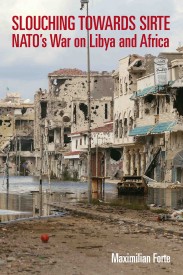
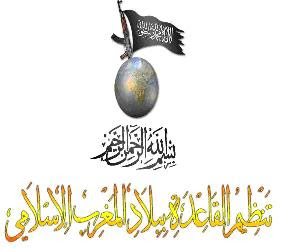


 What's Left