How Aid to Ukraine Harms Most Canadians (and Most Citizens of Other NATO States) and What to Do About It

4 December 2025

By Stephen Gowans

Canada has shelled out $22-billion of taxpayer money on assistance to Ukraine since Russia invaded the country in February, 2022. [1] Might our money have been better spent on other matters?

For example, 20 percent of Canadian adults do not have a family doctor. [2] Could this money have been used to help provide Canadians with access to physicians and nurse practitioners?

“Affordable housing,” according to The Globe and Mail, “is out of reach everywhere in Canada.” [3] Could Ottawa’s generous aid to Ukraine have been spent instead on helping to solve Canada’s housing and rental crisis?

Ottawa plans to cut over 11 percent of the federal public service, a move which, on top of increasing the jobless rate—already near 7 percent—will likely mean longer wait times for unemployment benefits, passports, and government assistance programs. [4] Might future outlays slated for aid to Ukraine be better spent on maintaining public services for Canadians?

According to the government’s own statistics agency, “Over one in four Canadians live in a household experiencing financial difficulties.” [5] Could $22 billion have helped relieve these Canadians of their financial burdens?

Prime Minister Mark Carney says that “Canada will always stand in solidarity with Ukraine.” [6] In practice, helping Ukraine means doing less for Canadians. It means poorer public services, under-funded health care, less affordable housing, and more economic insecurity. Carney doesn’t say why Canadians must make sacrifices to stand with Ukraine, but knowing why is important if pressing domestic needs are to be ignored. Is the diversion of funds that could be used to meet Canadians’ needs justified?

To answer that question, we must first understand why Ottawa is backing Ukraine. The answer has a lot to do with Canada’s place in the informal US empire.

Canada is part of a US-led alliance that regards Russia as a “revisionist” power—that is, as a country which challenges the US-led world order—an order which naturally puts the United States at the top. The war in Ukraine is a contest between Washington, on one side, and Moscow, on the other. Russia is one of two states (along with China) powerful enough to challenge US ‘leadership’, or, to put it less euphemistically, US tyranny. While the word tyranny seems harsh, what else would one call a US-led global defined by Washington to, by its own admission, put US interests above all others? [7] Napoleon’s order in Europe was summed up by the watchword France avant tout, while Nazi Germany sought to create an order in Europe defined by the phrase Deutschland uber alles. Implicitly, Washington predicates its own global order on the idea of the United States above all others, or, America First.

Russia, Washington says, wants to revise the US-led world order. There’s no question that Moscow wants to do this. It has no intention of acquiescing to the will of Washington, and because it’s strong enough—unlike most other states—to challenge US primacy, it resists integration into the informal US empire. Russia prefers to carve out its own empire, where its own billionaires exercise influence and monopolize profit-making opportunities. The war is, thus, au fond, a contest over which country’s billionaires will get to exploit the profit-making opportunities Ukraine has to offer—the United States’ or Russia’s?

On a broader level, the war is being fought—with Ukraine as the tip of the US spear, or proxy—over the question of who will dominate parts of Eastern Europe that have historically fallen under Russian, or Soviet, domination. Will it be Russia or the United States? Ukraine, being the largest and most significant part of the contested territory, is the cockpit of the current struggle. The prize for the winner is lucrative investment opportunities and strategic territory, vital to the questions of a) whether the United States will continue to lead a world order as rex, and b) whether Russia will successfully resist US efforts to make it bow to US pre-eminence.

In disbursing $22 billion to the US side of the contest, instead of using the funds to improve the lives of Canadians at home, Ottawa is playing a vassal role to US investor and corporate interests and aiding, what in the end, is a project of furnishing US billionaires with investment opportunities at the expense of Russian magnates.

Defenders of Ottawa’s decision to aid Ukraine will point to a moral obligation on the part of Canadians to defend a victim of illegal aggression. To be sure, the Russian invasion of Ukraine is both a contravention of international law and an aggression.

However, Canada does not aid all, or even many, countries that fall prey to the aggression of imperialist marauders. If it did, it would soon fall out with its patron, the United States, the world’s imperialist marauder par excellence. If Ottawa genuinely stands with the victims of aggression as a matter of principle, it would have funneled military and other aid to Iran (only recently the target of a blatant and flagrantly unlawful US-Israeli aggression); to Syria, when Washington was bankrolling Al-Qaeda to bring down the Arab nationalist state (which it did do, successfully); to Cuba, the victim of a cruel six-decade-long campaign of US economic warfare aimed at ensuring that an alternative to the capitalist order will never thrive; to Venezuela today, the target of a US military pressure campaign whose object is to install a puppet regime in Caracas to better loot the country’s land, labor, and resources, especially its oil; and on and on, ad nauseum.  Need I mention Korea, Vietnam, Granada, Panama, Yugoslavia, Iraq, Afghanistan, and Libya?

Which brings us to the Palestinians. If the Canadian government was really motivated to defend the victims of expansionary rogue regimes that flagrantly violate international law, it would have provided aid to the Palestinian national liberation movement long ago. Palestinians are the principal victims of Israel, a notorious practitioner of rapine, aggression, territorial expansion, and contempt for the UN Charter. Instead, Canada has faithfully assisted the Zionist state to carry out what the United Nations, countless human rights organizations, and top genocide scholars, have called a genocide. Ottawa has sent arms to Israel; banned Canadians from sending aid to Palestinians standing up to the aggression and demonized Palestinian freedom fighters as terrorists; lavished diplomatic support on the Zionist state; and has refused to take meaningful action to pressure Tel Aviv to abide by the countless UN resolutions directing Israel to end its illegal occupations of the West Bank, Gaza, East Jerusalem, and the Golan Heights.   

So, no, Ottawa isn’t sending billions of dollars to Kyiv because it deplores aggression, champions international law, and feels morally bound to stand with the victims of Russian imperialism. To believe this is to close one’s eyes to Canada’s record as faithful backer of US and Israeli imperial aggressions. The reality is that Canada is furnishing Kyiv with generous aid because Ottawa’s standard operating procedure is to support—or at the very least, not get in the way of—the foreign policy preferences of its US master. If backing Washington and its proxies in West Asia (Israel) and Eastern Europe (Ukraine) means skimping on satisfying the needs of ordinary Canadians, then, from Ottawa’s perspective, so be it.

While this is bad enough, it’s about to get much worse.  Ottawa has committed, along with other NATO countries, to significantly increasing its military spending to five percent of GDP from a little over one percent today.  This is part of a Pentagon strategy to shift responsibility for confronting Russia from the United States to Washington’s NATO subalterns, so the US military can either turn its full attention to intimidating China [8], by one plan, favored by so-called prioritizers in the US state, or concentrate on shoring up US hegemony in the Western Hemisphere, advocated by so-called restrainers [9].

The problem here is that there is no compelling rationale to increase military spending almost five-fold. The ostensible reason for the increase is to ‘deter’ Russia from further aggression in Europe. But no serious observer believes Russia is able to take on NATO, even at NATO’s allegedly paltry current levels of spending.  Recently, The Wall Street Journal reported that “A senior NATO official said Russia doesn’t have the troop numbers or military capability to defeat the North Atlantic Treaty Organization in Europe.” [10]

The idea that the United States carries the burden of defending Europe and that Europe could not defend itself without US assistance—and that therefore Washington’s NATO subalterns must significantly boost their military outlays—is false. In point of fact, the United States contributes much less to the defense of Europe than Europe does itself. Table 1 shows that the United States spends $50 billion annually on military operations in Europe, overshadowed by the $476 billion that Europe’s NATO members spend yearly. Whereas 100,000 US troops serve in Europe, the alliance’s European members contribute over 2 million infantry, air crew, and sailors to the continent’s defense.

Table 1. Russia vs. NATO in Europe
 Military spending ($B)Military personnel
Russia$1421,200,000
European NATO members$4762,041,300
US contribution to Europe$50100,000
European NATO members + US contribution$5262,141,300
(Europe + US contribution) / Russia3.71.8
Sources:
Russian military spending: Robyn Dixon, “Russian economy overheating, but still powering the war against Ukraine,” The Washington Post, October 27, 2024.
Russian military personnel: CIA World Factbook. NATO military expenditures and personnel: “Defence Expenditure of NATO Countries (2014–2024)” NATO. March 2024.
US military spending in Europe: Steven Erlanger, “NATO Wants a Cordial Summit, but Trump or Zelensky Could Disrupt It,” The New York Times, May 26, 2025.
US military personnel: Daniel Michaels, Nancy A. Youssef and Alexander Ward, “Trump’s Turn to Russia Spooks U.S. Allies Who Fear a Weakened NATO,” The Wall Street Journal, Feb. 20, 2025.

What’s more, together, NATO’s European members spend over three times as much on their militaries as Russia does on its armed forces, while the number of NATO personnel in Europe, excluding the US contribution, is almost double Russia’s (Table 2).  Were Europe’s NATO members to meet Trump’s five percent target, they would exceed Russia’s military spending by a factor of eight. To be sure, this would deter a Russian offensive in Europe, but it would be overkill. When the idea of the five percent target was first broached by the incoming Trump administration, former U.S. Ambassador to NATO Ivo Daalder dismissed it as “a made-up number with no basis in reality.” He said that “European NATO members now spend three times as much as Russia does on defense, and at five percent Europe would outspend Russia by $750 billion annually, spending roughly 10 times what Russia spends.” [11] Daalder’s numbers and those of Table 2, while differing slightly in some respects, point to the same conclusion: the five percent target is far too high.

Table 2. Russia vs. NATO (European members)
RussiaEuropean NATO membersEurope / Russia
Population143,800,000592,872,3864.1
GDP ($B)$2,021$23,02311.4
Military spending ($B)   
   At current levels$142$4763.4
   At 5% of GDP (NATO) $1,1518.1
Military personnel1,200,0002,041,3001.7
Sources:
NATO population: CIA World Factbook.
NATO GDP, military expenditures, and personnel: “Defence Expenditure of NATO Countries (2014–2024)” NATO. March 2024.
Russian military spending: Robyn Dixon, “Russian economy overheating, but still powering the war against Ukraine,” The Washington Post, October 27, 2024.
Russian military personnel: CIA World Factbook.
Russian population and GDP:  World Bank.

Russia is militarily incapable of territorial expansion beyond Ukraine, and even in Ukraine—a country with only one-quarter of Russia’s population—its capabilities are severely tested.  Russia is no match for an alliance, whose European members alone, have four times its population and over 11 times its GDP. The idea that Russia has the capability to invade a NATO-alliance member is—to use a favorite phrase of US international relations specialist John Mearsheimer—“not a serious argument.”

Despite these realities, various NATO governments, Canada among them, are trying to foster the illusion that Russia threatens Europe. They are doing so in order to manufacture consent for a stepped-up level of military spending that is far in excess of what is necessary to defend the continent from a Russian invasion.  Not only is military spending at this level unnecessary, it will harm the interests of the vast majority of Europeans and Canadians. Higher defense spending will almost certainly mean cuts to public services. During a visit to Britain, the NATO secretary general warned British citizens that if they chose to funnel public-spending into maintaining the National Health Service and other public services, rather than meeting Trump’s arbitrary five percent target, they had “better learn to speak Russian.” [12] The message is clear: Important pubic services that benefit most of us, must be sacrificed in order to squander public funds on the military to meet a spurious threat. “Ramping up to 5 percent would necessitate politically painful trade-offs”, warns the New York Times. [13] Painful trade-offs mean painful for all but business owners and the wealthy. Within the current climate, the idea that higher military outlays will be underwritten by higher taxes on the rich and big business is unthinkable. Instead, the formula is: gull the public into believing a Russian offensive is imminent so they’ll accede to the gutting of public services.

Why would NATO countries commit to spending far more than necessary? There are three reasons that suggest themselves as hypotheses.

  1. The expenditures are intended for offense rather than defense. You don’t spend 8 to 10 times as much as your rival on weapons and troops to defend yourself. Doing so would be wasteful. But you do vastly outspend your rival if your intentions are intimidation and aggression, or your aim is to arms-race your opponent into bankruptcy and submission.
  2. Punishingly high military expenditures offer a pretext for NATO governments to ween people off public services. Public services are increasingly starved of adequate funding, often to fund tax cuts for the wealthy and increases in military expenditures. That governments routinely make these trade-offs show that they favor the wealthy, who rely little, if at all, on public services, but benefit from tax cuts. The wealthy also benefit from robust military spending, inasmuch as it provides investment opportunities in arms industries and underwrites hard-power which can be used to defend investments and trade routes and exact trade and investment concessions around the world.
  3.  Much of the increased spending will flow into the coffers of US weapons makers, to the greater profit of investors who have stakes in the arms industry, while improving the balance of US trade, a major Trump administration obsession. By diverting public funds from public services to US arms dealers, NATO’s non-US members are submitting to US economic coercion and arm-twisting in order to placate their master.

Given that the accelerated spending increases will almost certainly be financed by budget cuts to public services, Canadians will see their healthcare, education, and pensions suffer—even more than they already do—so US arms manufacturers can enjoy generous profits. Canadians, perhaps, should have expected no less for having recently elected as prime minister the former head of Brookfield, a leading global investment firm. But even if they hadn’t, Canada, like all other capitalist countries, is so thoroughly under the sway of the leading lights of the business community—as a result of the community’s lobbying and other direct efforts to influence the government and its policies, but also as a consequence of the power the community wields by virtue of its ownership and control of the economy—that it doesn’t matter who is prime minister. With or without Carney, the policy and direction of the government would be the same.  The only way it is going to change is if the power of private business to dominate government and public policy is ended by bringing private industry and private investment under democratic control.

NATO governments are presenting their citizens with a spuriously inflated threat as a pretext to significantly increase military expenditures.  We’re expected to believe that over 590 million Europeans are unable to defend themselves against 144 million Russians who, after almost four years, still can’t defeat 40 million Ukrainians. (Of course, a big reason they can’t defeat Ukraine is because they’re also fighting the United States and its NATO lackeys, Canada included, who furnish Ukraine with training, weapons, and intelligence.) We’re expected to believe that even though Europe’s NATO members spend three times as much on the military as Russia does, and have almost twice as many troops, that the alliance is vulnerable to a Russian invasion. These military spending increases—totally unnecessary for self-defense—will not come without a cost. Already, officials of various NATO governments have initiated a discourse on the necessity of making painful cuts to public services. The Russia threat is spurious—a stalking horse for advancing the sectoral interests of wealthy investors. If we allow this deception to stand and meekly submit to runaway militarism, all but the superrich—friends and class cohorts of the Trumps, the Carneys, the Merzs, the Macrons, and the Starmers—will pay a heavy price.

With one in five Canadians without a family doctor, one in four households in financial straits, 40,000 public servants on the chopping block, and the housing and rental markets in crisis, we are already paying a price. Unless we act now—by withdrawing from the war over Ukraine for billionaire profits, prioritizing the needs of Canadians, and bringing industry and investment decisions under democratic control—the price will grow larger still.

 1. Steven Chase, “Canada buying $200-million in weapons for Ukraine from U.S. stockpile,” The Globe and Mail, 3 December 2025.

2. Tia Pham and Tara Kiran, “More than 6.5 million adults in Canada lack access to primary care,” Healthy Debate, 14 March 2023.

3. Steven Globerman, Joel Emes, and Austin Thompson “Affordable housing is out of reach everywhere in Canada,” the Globe and Mail, 2 December, 2025.

4. https://www.youtube.com/watch?v=FQHljrFMbfA&t=46s

5. Labour Force Survey, October 2025, Statistics Canada, https://www150.statcan.gc.ca/n1/daily-quotidien/251107/dq251107a-eng.htm

6. Bill Curry and Melissa Martin “Carney pledges support for Ukraine, unveils defence aid details at Independence Day visit,” The Globe and Mail August 24, 2025.

7. John McCain once wrote that “We are the chief architect and defender of an international order governed by rules derived from our political and economic values. We have grown vastly wealthier and more powerful under those rules.” John McCain, “John McCain: Why We Must Support Human Rights,” The New York Times, 8 May 2017.

8.  Michael R. Gordon and Lara Seligman, “Pentagon Official at Center of Weapons Pause on Ukraine Wants U.S. to Focus on China,” The Wall Street Journal, 13 July 2025.

9. Yaroslav Trofimov, “A Newly Confident China Is Jockeying for More Global Clout as Trump Pulls Back, The Wall Street Journal, 2 December 2025.

10. Matthew Luxmoore and Robbie Gramer, “Marathon Russia-U.S. Meeting Yields No Ukraine Peace Deal”, The Wall Street Journal, 2 December 2025.

11. Daniel Michaels, “Trump’s NATO Vision Spells Trouble for the Alliance,” The Wall Street Journal, 8 January 2025. 

12. Mark Landler, “NATO Chief Urges Members to Spend Far More on Military,” The New York Times, 9 June 2025. 

13. Landler.
The US does to Canada, what Canada has helped the US try to do to other countries for decades: Rob them of their sovereignty

The United States has been dropping economic atom bombs on designated enemies for decades, in order to pressure them into giving up their sovereignty and becoming US vassals—often with Canada’s assistance. Now Washington has dropped an economic atom bomb on its “closest friend and ally,” seeking its annexation.

March 12, 2025

By Stephen Gowans

Canadians like to think of their country as the United States’ closest friend and ally. They’re now coming to the conclusion that the aphorism, “countries don’t have allies, only interests,” is true. US president Donald Trump has repeatedly said that Canada needs to become the fifty-first US state, and that he’ll use economic coercion to ensure it does. His plan is to use tariffs to severely weaken Canada’s economy, until Canadians cry uncle, and beg to be annexed.

So far, Trump has offered a dizzying array of pretexts for his tariff action, but the key one is that Canada has been allowing illegal immigrants and fentanyl to pour across the border. Trump has invoked this false motivation in order to secure a legal foundation for his tariff measures. Its falsity, however, is obvious. Few illegal migrants and little fentanyl actually flow south across the US border. What’s more, the Canadian government has taken significant steps to reduce what began as a trickle and has become a mini-trickle.

Last week, Justin Trudeau, the outgoing prime minister, decried Trump’s fentanyl reason for imposing tariffs on Canada as “completely bogus.” He’s right. Trump’s response has been to double down on the necessity of Canada becoming the fifty-first US state. The only way Canadians can avoid tariffs (and the massive economic pain they’ll bring), he warns, is to allow their country to be annexed.

If Canadians fail to capitulate, they’ll pay a hefty price. The governor of Canada’s central bank, Tiff Macklem, has just lowered interest rates as a way of providing some protection against the coming economic storm. Canadians, he said, are “facing a new crisis” and, depending “on the extent and duration of new U.S. tariffs, the economic impact could be severe.” Trudeau has gone so far as to say that Trump wants to destroy the Canadian economy, “because that’ll make it easier to annex us.”

Evan Dyer, a veteran journalist with the publicly-owned Canadian broadcaster, the CBC, has recently posted an article titled “The U.S. has covertly destabilized nations. With Canada, it’s being done in public.” Dyer talked to former members of the Canadian intelligence community to find out how US destabilization efforts work, and how Trump’s destabilization will affect Canada.

Neil Bisson, a former intelligence officer who teaches at the University of Ottawa, told Dyer that “If you have individuals who are concerned about where their next meal is coming from or if they’re going to get a roof over their head, that supersedes [their commitment to] sovereignty.” These people will be inclined to pressure Ottawa to accede to US demands for annexation. Bisson also told Dyer that “there will be individuals within Canada who could potentially be co-opted to push [the] narrative forward” of US “citizenship as the answer to [the country’s] economic woes.”

Ward Elcock, who headed Canada’s intelligence agency for a decade, told Dyer that Trump “intends clearly to try and destabilize our economy. The reality is that if Canada is really impoverished, people may start to think about it. That’s always the possibility — that not all Canadians are going to be willing to endure economic deprivation. And so, some may start to think about it as time goes along.”

It’s revealing that Dyer approached former intelligence officials, who will have worked closely with their US counterparts on destabilization operations around the world, for insight into what the United States is up to. The United States has destabilized countries economically for decades, including Arab nationalist Iraq, communist Cuba and North Korea, Islamic nationalist Iran, and Arab nationalist Syria, among others. All these countries had one thing in common: They had their own developmental agenda which excluded their becoming vassals of the United States. For that, they were punished.

Significantly, US operations against these countries shared three key features with the current operation to destabilize Canada.

  • They aimed at destroying the target country’s economy in order to cause enough pain that the country’s citizens would pressure their government to accede to US demands.
  • The overarching goal of the operations was to bring the target country under US control.
  • The real motivation was hidden behind a false reason given to justify the action (fentanyl in Canada, WMDs in Iraq), as well as the claim that the country’s economic difficulties were due to the government’s economic mismanagement.   

Cuba is a paradigmatic case.  In the wake of the 1959 Cuban revolution, Deputy Assistant Secretary of State Lester Mallory, concluded that the only way to bring Cuba back under US supervision was to alienate internal support for the government by wrecking Cuba’s economy to cause disenchantment and disaffection among the Cuban people. The key was to make sure the blame for economic hardship was misdirected to the government’s socialist economic policies and away from US destabilization operations.

As historian Louis A Perez Jr. explained,

Mallory recommended that ‘every possible means should be undertaken promptly to weaken the economic life of Cuba’ as a means ‘to bring about hunger, desperation and [the] overthrow of the government’. Assistant Secretary Rubottom similarly outlined the approach by which ‘the United States use judiciously elected economic pressures … in order to engender more public discomfort and discontent and thereby to expose to the Cuban masses Castro’s responsibility for mishandling their affairs.’

The expansion of the embargo was designed to deepen Cuban economic distress as a means of political change, once more an effort to use hardship as a way to foment rebellion among the Cuban people. The Torricelli and Helms-Burton laws were particularly harsh, both in timing and in kind, for they sought to visit upon the Cuban people unrelieved punishment, to make daily life in Cuba as difficult and grim as possible, to increase Cuban suffering in measured but sustained increments, at every turn, at every opportunity at a time when Cubans were already reeling from scarcities in goods and the disruptions of services in the wake of the Soviet collapse. Cubans faced a new round of shortages, increased rationing, declining services, and growing scarcities, where the needs of everyday life in their most ordinary and commonplace form were met often only by Herculean efforts. Representative Torricelli proclaimed his intention succinctly: ‘My objective is to wreak havoc in Cuba … My task is to bring down Fidel Castro.’ [1]

Now, the economic warfare used to destabilize Cuba, as well as North Korea, Iraq, Iran, Syria, Zimbabwe, and Venezuela, is being turned on Canada. The irony is that Canada itself participated in US operations to destabilize many of these same countries, eagerly contributing to the immiseration of peoples who wanted to safeguard their own sovereignty, in order to soften them up for US domination. Canadians weren’t so concerned about sovereignty when that of other peoples was at stake and they were helping to undermine it. Now that the tables have turned, they’re beginning to discover that their neighbor to the south has no friends and allies, only interests—and that it doesn’t care a fig about their sovereignty.

Canadians’ outrage at Trump’s efforts to bully them into ceding their independence calls to mind Aime Cesaire’s analysis. He argued that Europeans were outraged at Hitler, not because of his Nazism, but because he had turned what Europeans collectively had done in Africa, Asia, and South America onto Europeans themselves. What the European “cannot forgive Hitler for,” wrote Cesaire, “is not the crime in itself, the crimes against man, it is … the fact that he applied to Europe colonialist procedures which until then had been reserved exclusively for the Arabs of Algeria, the ‘coolies’ of India, and the ‘niggers’ of Africa.” [2] Likewise, Canadians are outraged that what they have helped their “friend and neighbor” do to the Arab nationalists of Syria and Iraq, the communists of North Korea, and the economic nationalists of Venezuela, is now being done to themselves.

Finally, an explanation as to why I said the United States is dropping an economic atom bomb on Canada. The effects of economic warfare on countries are often more lethal than the consequences of conventional military coercion. Writing in Foreign Affairs, the unofficial journal of the US State Department, John Mueller and Karl Mueller showed that US economic warfare on Iraq during the 1990s produced more deaths than all the weapons of mass destruction in history, including all the chemical weapons used in the First World War and the atomic bombings of Hiroshima and Nagasaki. Indeed, the political scientists found sanctions to be so devastating to qualify as instruments of mass destruction, even more injurious to civilian populations that weapons of mass destruction. For this reason, some began to talk of economic warfare as an “economic atom bomb”—a way to achieve atom-bomb levels of destruction in human terms, without incurring the opprobrium of actually dropping one.

1) Louis A Perez Jr, “Fear and loathing of Fidel Castro: Sources of US policy toward Cuba,” Journal of Latin American Studies, 34, 2002, 237-254.

2) Aime Cesaire, “Discourse on Colonialism,” Monthly Review Press,2000, p. 36.

On Canada’s Sesquicentennial, What Does Humanity Have To Look Forward To? Not What Canada Represents

July 1, 2017

Today is Canada Day, an annual fete in Canada to honour the birth of the country. In Ottawa, the capital, Canadians dress in the red and white of their country’s flag, set baseball caps with CANADA emblazoned across the front atop their heads, clutch mini Canadian flags in their hands, and make their way to the annual Parliament Hill spectacle, which features massive flags, marching soldiers, and Canadian war planes roaring overhead—the same ones that engaged in foreign bombing missions, including in Libya, where Canadian pilots quipped facetiously but accurately that they were al-Qaeda’s air force.

Canadians have been led to believe by the people who foster mindless patriotism that their country stands for peace, democracy, human rights and freedom. This is eye wash.

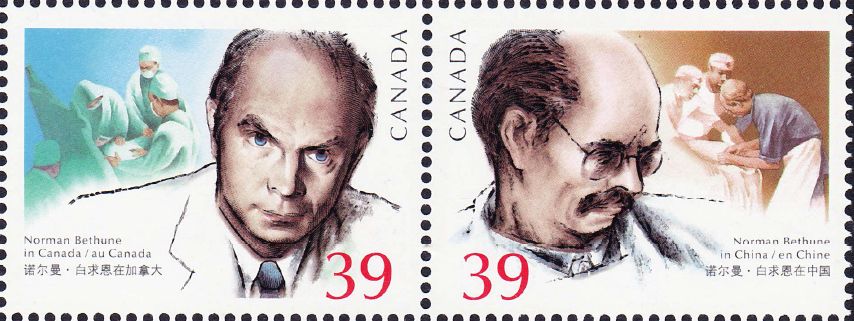
A Canada that embraced the commitments of Norman Bethune, who fought fascism in Spain, helped overcome feudalism and colonialism in China, and pioneered the fight for universal healthcare in Canada, might provide a model of a world that humanity could look forward to, in contrast to a Canada that hammers out arms deals with medieval tyrannies and whose pilots fly bombing missions for al-Qaeda.
Consider a recent departure from the country’s self-declared but infrequently adhered to values. The Trudeau government, the latest in a long line of governments committed to facilitating the profit-making of the country’s substantial citizens, no matter what the consequences are for peace, democracy, human rights and freedom, is forging ahead with a $15 billion arms deal secured by the previous Harper government to sell light armoured vehicles to an oil rich medieval monarchy in the Middle East. Named after its ruling Saud family, this Arab tyranny abhors peace, democracy and fundamental human rights, leads an illegal unprovoked war on Yemen, and is one of the main arms supplier to al-Qaeda and its allies in Syria—the backward sectarian militants who carry out terrorists attacks which, on the occasions they spill over into Europe, provoke great outcries of indignation, but which occur on an almost daily basis in Syria, typically without comment in Canada.

Add to this the deplorable realities that the tyranny’s retrograde and hate-filled version of Islam is the ideological inspiration for al-Qaeda and Islamic State, and that, difficult as it is to credit, the kingdom’s male despots refuse to allow women to drive automobiles or to exercise much autonomy at all, and you would think that a country that prides itself as standing for peace, democracy, human rights and all that is virtuous, would regard its client as so noxious as to steer a wide berth around any business transactions with it.

Diderot once remarked that humanity would never be free until the last monarch was strangled with the entrails of the last cleric, which may sound anachronistic, considering that Europe was delivered from the oppressions of aristocracy at the end of World War I, or soon after. But the vile institution persists in the Arab world, concentrated among Canada’s principal Arab allies, and Diderot’s words hardly seem anachronistic or harsh to anyone who still has to bear monarchy’s oppressive weight. How could ostensibly democracy-loving Canada be so committed to such vigorously anti-democratic allies?

Ottawa has “recently hammered out” a deal with six Arab Gulf monarchies, including the aforesaid Saudi tyranny, “that spells out how Canada might deepen its relationship with these countries in coming years,” reports the Globe and Mail’s Steve Chase. To repeat: Ottawa plans to deepen its relationship with these vampires, not eschew them as affronts against humanity, as one might expect a country would which professes to be deeply devoted to progressive humanitarian values.

“The Joint Action Plan,” writes Chase “sets out areas of co-operation between Canada and Arab Gulf states on everything from politics and security dialogue to trade and investment, energy, education and health.”

And to ensure that Canadians continue to be deceived by twaddle about how their country is a paladin of so many virtues, Ottawa won’t let them see what’s in the agreement.

The key to Ottawa’s commitment to deepening its relationship with the Arab Gulf royal dictatorships is the promise of a cornucopia of profits for Canadian investors, banks and corporations. And in Canada, as in all countries where wealthy investors, banks and corporations use their wealth to dominate politics and the state, the decisive organizing principle of the society is not peace-keeping, or democracy, or human rights, but what matters to banks, wealthy investors and major corporations, namely, profit-making.

In the pursuit of private, profit-making, interests, Canada has generally been on the wrong side of history since its founding 150 years ago. And when it has been on the right side, it has been on the right side, for the wrong reasons.

My first rebellion against the cult of Canadian patriotism occurred more than 30 years ago when on a visit to the country’s war museum I came upon a celebratory reference to Canada’s 1918-1919 military intervention in Russia. The glorified Canadian military intervention was directed against a social revolution engendered by centuries of a Tsarist tyranny and the chaos, destruction and disorganization wrought by World War I. How was an intervention to quash a movement which authentically embodied the Enlightenment values of liberty, equality and fraternity, worthy of celebration? And what business was it of Canada’s to intervene militarily in the affairs of another people who posed not the slightest threat to Canada? Ottawa was terrified that the Bolsheviks were a source of inspiration to Canadians who might seek to replicate in Canada what was underway in Russia; that Canada might be made to stand for something meaningful to ordinary people, like: jobs for all; free education at all levels; universal public health care; public day care; inexpensive public transportation; an end to the exploitation of man by man; and recognition of the humanity of all people, regardless of color, ethnicity, religion and sex; in other words, all the virtues the Bolsheviks ended up bringing to the former Tsarist empire, and for which they are almost never recognized and to which Canada tried to put a stop. To paraphrase Victor Hugo’s remarks about the French Revolution, the Bolshevik Revolution may have been a great blow to the Russian aristocracy and the substantial citizens of Canada, but it was a warm caress for humanity.

Canada’s participation in the imperialist charnel house of World War I—a kind of holocaust against the working people of Europe and the colonial slaves whom the European elites threw into the conflagration—is in no way defensible, and was a reflexive, unthinking commitment to a mother country whose reason for entering the war had nothing whatever to do with the rights of small countries, as it was mendaciously professed to be, and everything to do with preserving the access of the British land-owning, industrial and financial elites to markets, investment opportunities and raw materials in competition with their German rivals.

In 1950, my maternal grandfather, who had enlisted in the Canadian Army during the Great Depression through a kind of economic conscription, joined other Canadians in the UN-denominated US-led “police action” in Korea—an indefensible meddling in someone’s else civil war, on the side of maintaining a US puppet state on the Korean peninsula, to provide Washington with a geostrategic perch from which to dominate East Asia on behalf of Wall Street financiers. The Americans, who arrived on the peninsula in 1945, and immediately swept away the People’s Committees, the first independent Korean government in decades, are still there.

Ever since, Canada has been willing to help the United States fight most of its subsequent neo-colonial wars of domination—in Iraq, Yugoslavia, Afghanistan, and now in Syria.

As for World War II, Canada was on the right side of that conflict, but for the wrong reason. The country entered the war, because Britain did, and not to fight fascism or the Nazi persecution of communists, socialists, trade union leaders, Slavs, Jews, Roma, homosexuals, and the disabled, or to defend the Soviet Union, or to give teeth to the Atlantic Charter, which promised sovereign rights and self-government, but which, as Churchill made clear, would only apply in practice to people under the Nazi yoke, not the British yoke, which included the hundreds of millions of Indians subjugated by Britain. Indeed, Britain’s great colony of India, along with the conquered space of the American West, were models Hitler sought to emulate for Germany. He would build Germany’s West, or its East Indies, in Eastern Europe. And if the project was carried out on a mountain of corpses it would hardly be without precedent. “We eat Canadian wheat,” remarked Hitler, “and don’t think about the Red Indians.”

Mackenzie King, Canada’s  prime minister during WWII, admired Hitler, and hated Jews. Before the war, Churchill also admired Hitler, and sang paeans to Mussolini. The fascist dictators were admired, not only by King and Churchill, but by large parts of the British and North American establishment, for their ardent anti-communism.
Mackenzie King, Canada’s wartime prime minister, admired Hitler, and hated Jews. Before the war, Churchill also admired Hitler, and sang paeans to Mussolini. The fascist dictators were admired, not only by King and Churchill, but by large parts of the British and North American establishment, for their ardent anti-communism.
Canada’s prime minister at the time, Mackenzie King, who had worked as head of industrial relations research for the Rockefeller Foundation to develop methods for big business to co-opt organized labor, was sympathetic to Hitler’s virulent antipathy to Jews (and communists.) King, who met Hitler, and expressed admiration for the Fuhrer in his diary, wrote that “I would have loathed living in Berlin with the Jews, and the way in which they had increased their numbers in the City, and were taking possession of it in the most important way…It was necessary to get them out, to have the German people really control their own City and affairs.”

Neither did Ottawa have trouble with fascists, so long as they confined their attention to fighting communists and organized labour and focussed their wrath on the citadel of communism, the Soviet Union. So-called premature anti-fascists, like Canada’s Norman Bethune, who travelled to Spain to fight Franco’s reaction to the country’s democratically elected Popular Front government, were looked upon with suspicion, and Ottawa erected legal impediments to Canadians traveling abroad to join the fight. Following World War II, Canada found that it could get along quite well with anti-democratic regimes in Spain and Portugal, to say nothing of the police state dictatorship it helped to defend on the Korean peninsula, or apartheid South Africa.

Behind Parliament, on a small island in the Ottawa River, sits a mock village of the indigenous people on whose land the capital—and country—has been built, an unintentional reminder (lost on most Canadians) that Canada was founded on the dispossession and genocide of the land’s aboriginal people. Canada is, after all, an expression of British colonialism, one of the most vile, destructive, brutal, sanguinary forces, in human history. The sun, it has been said, never set on the British Empire. But nor did the blood ever dry on it either. As Richard Gott has written,

“Wherever the British sought to plant their flag, they were met with opposition. In almost every colony, they had to fight their way ashore. While they could sometimes count on a handful of friends and allies, they never arrived as welcomed guests, for the expansion of empire was invariably conducted as a military operation.”

The British hacked, cut, pushed and slaughtered their way into other people’s lands to plant their flag, and to steal the natural resources of the natives, exploit their labour, and dominate their markets. Canada, a country founded by these colonizers, was no exception.

It’s consistent, then, that Ottawa should maintain an unwavering commitment to the Jewish colonization of Palestine, made possible by Britain’s conspiring with France and Tsarist Russia during the Great War to carve up the dying Ottoman Empire, and turn over Palestine to a British League of Nations mandate, in which was ensconced a commitment to create a Jewish homeland in the country of a third people, the Palestinians. Canada, not surprisingly, allies itself with the Jewish colonizers of Palestine, and therefore against its indigenous people, the Palestinians, and was opposed to the efforts of the autochthonous peoples of Zimbabwe to take back their land from the descendants of the British settlers who hacked, cut, pushed, and slaughtered their way into land they dubbed Rhodesia, after the great paladin of British imperialism, Cecil Rhodes. Rhodes once said “I would annex the planets if I could.” Rhodes is to the indigenous people of southern Africa what Hitler is to the Slavs and Jews.

The Bolsheviks, who were reviled in Ottawa, established suffrage for all, including for national minorities, long before Canada did. Canada didn’t offer universal suffrage, even Herrenvolk (master race) suffrage until after WWI, and true universal suffrage had to wait until 1960, when aboriginal Canadians, the dispossessed original inhabitants of the land, were belatedly allowed to vote.

The United States, another Herrenvolk democracy, didn’t effectively achieve universal suffrage until as late as 1965, when its regime of white supremacy was formally dismantled and the civil and political liberties of black Americans were finally formally secured throughout the country. This late and grudging surrender of white supremacy was partly due to Washington’s need to compete ideologically with the Soviet Union, where racial discrimination—and the idea of a master race—were unthinkable.

What many of us in the United States, Canada and Western Europe hold to be the great social achievements of our countries—the mitigation of discrimination on the basis of sex and religion and racial and national origin, and the development of the welfare state—owe much to the pressures Western elites felt to compete ideologically with the Soviet Union, where discrimination on these grounds was inconceivable and where a robust social welfare state prevailed. With the USSR now defunct, a suicide carried out by the country’s last president, Mikhail Gorbachev—who, for obvious reasons is celebrated in the West, but is widely reviled in Russia—the ideological competition has ceased, and with it, large parts of the welfare state have been dismantled and continue to be demolished.

The French novelist Henri Barbusse, once wrote that the burning question of all time is what is the future of the human race, so martyred by history. To what, he asked, have human beings to look forward to?

Not $15 billion arms deals with monarchs whom Diderot, where he alive, might say ought to be strangled by the entrails of the last Wahhabi cleric; not the dispossession of peoples of their land by usurping settlers from abroad; not denial of self-determination; not wars of neo-colonial re-conquest; not acting as al-Qaeda’s air force to re-colonize the world on behalf of the planet’s dominant imperialist power.

If Canada offered something for the human race, so martyred by history, to look forward to, I would celebrate its founding, or at least, the moment it changed course, and set itself to the service of humanity. But alas, Canada offers nothing but more of the same that has martyred the human race throughout history; not the liberation that Diderot foresaw, but the tyranny he opposed.