The real story on North Korea and its healthcare

By Stephen Gowans

The United States has announced that it is adding a new tranche to the Himalaya of sanctions it has built up since 1950 against North Korea, sanctions I outlined in my last article Amnesty International botches blame for North Korea’s crumbling healthcare. Calling the new sanctions “measures” – perhaps to escape the disfavor the word has fallen into after sanctions wiped out the lives of half of million Iraqi children in the 1990s — US secretary of state Hillary Clinton purred reassuringly that the new “measures are not directed at the people of North Korea.” [1] She didn’t predict, however, whether they would add to the misery the previous umpteenth round of sanctions has already visited upon the lives of North Koreans, even if she says they aren’t directed at them, but we can be pretty sure they will.

At the same time preparations were underway to launch Operation Invincible Spirit, a four day joint US-South Korea military exercise to take place in the Sea of Japan, involving 8,000 troops, 200 warplanes and an armada of warships led by the aircraft carrier USS George Washington. The point of the exercise, according to the US commander in the Pacific, Robert Willard, is to “send a strong signal to Pyongyang and Kim Jong-il regarding the provocation that Cheonan represented” [2](the Cheonan being the South Korean warship that sunk in disputed waters in May.) Inasmuch as the Cheonan’s sinking appears to be a replay of the Gulf of Tonkin incident [3] – the alleged attack on a US Navy destroyer by North Vietnamese patrol boats used by US president Lyndon Johnson as a pretext to step up war on Vietnam – the military exercises represent the second stage of what looks like a plan to increase pressure on Pyongyang, with a view to producing what US policy has been trying to produce north of the 38th parallel for the last 60 years: the collapse of the anti-imperialist governments led by Kim Il-sung and now Kim Jong-il. The first part of the plan was to blame North Korea for the Cheonan’s sinking. The second part is to launch military exercises using the pretext of the first.

US secretary of war Robert Gates: Neglects to mention that North Korea’s “stagnation and isolation” may have more than a little to do with US economic warfare and the unrelenting threat of US military intervention.

China calls the exercises, scheduled to begin this Sunday, provocative. And University of Chicago historian Bruce Cumings points out that the North Koreans become agitated whenever the United States and South Korea carry out joint military exercises, because they “see them as a prelude to a possible attack.” [4] Indeed, since it is impossible to distinguish troops, warships and warplanes massing on one’s borders for the purposes of conducting war games from troops, warships and warplanes massing on one’s borders for the purposes of an invasion, it is hardly surprising that the North Koreans are agitated. And that’s the point: keep the DPRK on a continual war-footing, so that it diverts its sanctions-starved economy into military preparedness and away from productive investments and provision of healthcare, education, housing and so on. Joint US-South Korea military exercises aren’t just a sometimes thing. They happen every year, and Operation Invincible Spirit adds another provocation to the annual cycle.

Forcing its ideological opponents to spend heavily on defense — when they always start off poorer and weaker than the United States and can therefore ill-afford to do so if they’re ever going to progress — is a tactic Washington has been using for decades to contain, cripple and ultimately defeat countries that offer a humane and progressive alternative to integration into a worldwide capitalist system of imperial relations.

On top of the advantages of this tactic abroad, at home the defense spending needed to threaten target countries transfers wealth upwards, from working Americans through their taxes to the investors and businesspeople in the armaments industry who benefit in two ways: first, from the profits they reap from arms contracts and second from interest on the bonds they buy to finance US defense spending. The tab is picked up by US taxpayers with their labor and, if a war is waged against their country, by foreigners with their lives, or with crippled standards of living, if their governments are forced to skimp on civilian spending to build a credible defensive force to deter the threat of US military intervention. As the dues-payers for the US warfare economy along with its foreign victims, US citizens have more in common with the citizens of official enemy countries than they think. Who’s the real enemy?

The tactic of spending ideological opponents into bankruptcy has two dimensions: a physical one, of suffocating an alternative economy until it either breaks down or is left staggering under the weight of economic warfare and the costs of preparing to repel the unrelenting ominous threat of military intervention, and an ideological one, of attributing the break-down to the inherent characteristics of the alternative system itself. In this way a warning is sent on two levels: a surface one aimed at ordinary people, which says, while this alternative may seem like a good idea, it doesn’t work and only leads to disaster. To work, this necessitates the cover up of the real causes of the break down.

William Blum: Every socialist experiment has “had life made impossible for it, by the United States and its allies.”

At the demilitarized zone separating the two Koreas yesterday, both Clinton and US secretary of war [5] Robert Gates, played up the message that North Korea’s dire straits are endogenous, and not the product of a systematic campaign of breaking the country’s back. Gates said: “It is stunning to see how little has changed up there (in the North) and yet how much South Korea continues to grow and prosper. The North by contrast, stagnates in isolation and deprivation.” [6] Clinton said much the same. Of course, neither mentioned that sanctions, and the continual harassment of North Korea by US forces, might have something to do with North Korea’s isolation and stagnation. On a deeper level, a warning is sent to would-be leaders of oppressed classes and peoples: try to break free from the US imperial orbit, and this will happen to you, too.

Forty years ago, Felix Greene outlined how Washington had used this tactic against China and Cuba, but his description also fits North Korea today.

“The United States imposed a 100 percent embargo on trade with these countries; she employs great pressure to prevent her allies from trading with them; she arms and finances their enemies; she harasses their shipping; she threatens them with atomic missiles which she announces are pre-targeted and pre-programmed to destroy their major cities; her spy ships prowl just beyond these countries’ legal territorial waters; her reconnaissance planes fly constantly over their territory. And having done all in their power to disrupt these countries’ efforts to rebuild their societies by means of blockades to prevent essential goods from reaching them, any temporary difficulties and setbacks these countries may encounter are magnified and exaggerated and presented as proof that a socialist revolutionary government is ‘unworkable’.” [7]

Author William Blum, who writes an Anti-Empire Report monthly, elaborates on Greene’s point:

“…every socialist experiment of any significance in the twentieth century — without exception — was either overthrown, invaded, corrupted, perverted, subverted, destabilized, or otherwise had life made impossible for it, by the United States and its allies. Not one socialist government or movement — from the Russian Revolution to the Sandinistas in Nicaragua, from Communist China to the FMLN in El Salvador — not one was permitted to rise or fall solely on its own merits; not one was left secure enough to drop its guard against the all-powerful enemy abroad and freely and fully relax control at home. It’s as if the Wright brothers’ first experiments with flying machines all failed because the automobile interests sabotaged each test flight. And then the good and god-fearing folk of the world looked upon these catastrophes, nodded their heads wisely, and intoned solemnly: Humankind shall never fly.” [8]

Disputed Territory

Cumings offered insight into the context surrounding the Cheonan affair in a May 27, Democracy Now interview. The incident, Cummings observed:

“happened very close to the North Korean border, we’ve had incidents like this, somewhat different ones, but with large loss of life, going back more than ten years. In 1999, a North Korean ship went down with thirty sailors lost and maybe seventy wounded. That’s a larger total of casualties than this one. And last November, a North Korean ship went down in flames. We don’t know how many people died in that. This is a no man’s land, or waters, off the west coast of Korea that both North and South claim. And the Cheonan ship was sailing in those waters…” [9]

University of Chicago historian Bruce Cumings: “The US and South Korea demarcated a so-called Northern limit line unilaterally.” An incident waiting to happen.

The hypocrisy need not be pointed out. When North Korean ships are sunk, there’s no provocation, except to North Koreans, who, in the view of Western governments and the propaganda apparatus of private-sector mass media, don’t matter (in the same way Israeli soldier Gilad Shalit, who was kidnapped by Hamas, matters to Western governments and Western mass media while the countless Palestinians who have been kidnapped by Israeli soldiers in the West Bank and Gaza and have since disappeared into the bowels of Israeli prisons are invisible.) But when a South Korean ship is sunk in the same disputed waters, North Korea is immediately blamed (by the politicians of South Korea’s ruling Grand National Party, though not by the South Korean military, which for weeks, said it had no evidence of North Korean involvement.) And the sinking is used to justify more sanctions and more military exercises to ratchet up the pressure.

Cumings went on to explain that the waters in which the South Korean warship went down in May “is a no man’s land, where the US and South Korea demarcated a so-called Northern limit line unilaterally. The North has never accepted it. The North says that this area is under the joint jurisdiction of the North and South Korean militaries. So you have an incident waiting to happen.” [10] Into this cauldron of roiling waters waiting for an incident to happen will soon be tossed Operation Invincible Spirit.

The World Health Organization Weighs In

While the Western media lighted on Amnesty International’s portrayal of North Korea’s healthcare system as a horror show with the eagerness of flies on road-kill, the World Health Organization had a more sober assessment of the rights organization’s Cold War-era hatchet job. WHO spokesman Paul Garwood faulted the report for being “mainly anecdotal, with stories dating back to 2001, and not up to the UN agency’s scientific approach to evaluating healthcare.” [11]

“All the facts are from people who aren’t in the country,” Garwood said. “There’s no science in the research.” [12]

In contrast, WHO chief Margaret Chan visited North Korea in April and returned with an assessment that makes Amnesty’s report look like it was written to cater to US foreign policy propaganda requirements.

Chan noted that:

“The health system requires further strengthening in order to sustain the government policy of universal coverage and, of course, to improve the quality of services. More investments are required to upgrade infrastructure and equipment and to ensure adequate supplies of medicines and other commodities, and to address the correct skill mix of the health workforce.” [13]

WHO chief Margaret Chan: Her assessment of North Korea’s healthcare system makes Amnesty’s look like a Cold War-era hatchet job.

All of this is consistent, in a way, with what Amnesty says. Of course, the ability of the government to invest in infrastructure, upgrade equipment, and secure adequate supplies of medicines, is severely hampered by the US-led campaign of economic warfare and by Pyongyang’s need to raid its civilian budget to secure it borders against incessant US military harassment. Lifting sanctions and removing the military sword of Damocles that dangles menacingly above North Koreans’ collective heads (I wonder whether the US nuclear missiles targeted on Pyongyang are, as Clinton claims with sanctions, not directed at the North Korean people) would go far to improving the provision of healthcare in North Korea. Which is one big reason it will never happen. The point of sanctions and unremitting military threat is to destroy what the US government calls North Korea’s Marxist-Leninist system (inaccurately) and its non-market economy, not to make life better, healthier and happier for North Koreans.

Despite these challenges, DPR Korea appears to have secured what Chan describes as “advantages over other developing countries,” including:

o No shortage of doctors and nurses.
o No brain drain of healthcare professionals (a particularly acute problem in Africa.)
o An elaborate health infrastructure and a developed network of primary health care physicians. [14]

Chan also noted that “the government has done a good job in areas such as immunization coverage, effective implementation of maternal, newborn and child interventions, in providing effective tuberculosis treatment and in successfully reducing malaria cases.” [15]

Perhaps, the real story about North Korean healthcare isn’t the challenges it faces, or the systematic efforts of the United States to make it collapse, but the fact that it hasn’t collapsed despite these challenges, and has managed to earn the praise of the WHO as the envy [16] of many developing nations.

1. Justin McCurry, “US announces fresh North Korea sanctions”, The Guardian (UK), July 21, 2010.
2. Ibid.
3. Stephen Gowans, “The sinking of the Cheonan”, PSLweb.org, May 27, 2010. http://www.pslweb.org/site/News2?page=NewsArticle&id=14044&news_iv_ctrl=2801
4. “Historian Bruce Cumings: US Stance on Korea Ignores Tensions Rooted in 65-Year-Old Conflict; North Korea Sinking Could Be Response to November ’09 South Korea Attack”, Democracy Now, May 27, 2010. http://www.democracynow.org/2010/5/27/nk
5. The US military is all about offense not defense, unless defense refers to the defense of capital accumulation within a system of imperial relations. Calling Gates the secretary of defense stupidly reinforces this deception. No one, but the Japanese and its Axis allies, would have called Japan of the 1930s and 1940s the liberator of Asia from Western imperialism, even though Japan bestowed the self-serving and misleading title upon itself. Why, then, should we refer to Gates by the equally self-serving and misleading title of secretary of defense?
6. McCurry
7. Felix Greene, The Enemy: What Every American Should Know about Imperialism, Vintage, New York, 1970, p. 292.
8. William Blum, “The Anti-Empire Report,” September 2, 2009. http://killinghope.org/bblum6/aer73.html
9. Cumings: Democracy Now
10. Ibid.
11. Bradley S. Klapper, “WHO criticizes Amnesty report into NKorea health”, The Associated Press, July 16, 2010.
12. Ibid.
13. Lisa Schlein, “WHO chief notes N. Korean achievements in public health care”, Voice of America News, April 30, 2010.
14. Ibid.
15. Ibid.
16. Klapper

Amnesty International botches blame for North Korea’s crumbling healthcare

“Economic sanctions are, at their core, a war against public health.”
–The New England Journal of Medicine [1]

By Stephen Gowans

Amnesty International has released a report condemning the North Korean government for failing to meet “its obligations to respect, protect and fulfil the right to health of its citizens”, citing “significant deprivation in (North Koreans’) enjoyment of the right to adequate care, in large part due to failed or counterproductive government policies.” The report documents rundown healthcare facilities which “operate with frequent power cuts and no heat” and medical personnel who “often do not receive salaries, and many hospitals (that) function without medicines and essentials.” Horrific stories are recounted of major operations carried out without anaesthesia. Blame for this is attributed solely to the North Korean government. [2] While unstated, the implication is that DPR Korea is a failed state, whose immediate demise can only be fervently wished for (or worked toward.)

The attack is joined by Barbara Demick, the Beijing bureau chief for the Los Angeles Times and author of Nothing to Envy: Ordinary Lives in North Korea, writing in the British newspaper, The Guardian. She acknowledges the DPR Korea’s considerable social achievements – an acknowledgement that would never have been permitted in the pages of a major Western newspaper in the depths of the Cold War – but does so only in order to show how far the country has regressed.

If we recognize that “economic sanctions are, at their core, a war against public health” and acknowledge, as a former US president has, that North Korea is “the most sanctioned nation in the world,” it is difficult not to draw the obvious conclusion: that the crumbling of North Korea’s healthcare system is due to sanctions. How is it, then, that a new Amnesty International report blames Pyongyang’s “failed or counterproductive” policies, while saying not a word about sanctions?

“The country once had an enviable healthcare system,” Demick writes, “with a network of nearly 45,000 family practioners. Some 800 hospitals and 1,000 clinics were almost free of charge for patients. They still are, but you don’t get much at the hospital these days.” Demick continues: “The school system that once allowed North Korea’s founder Kim Il-Sung (father of the current leader) to boast his country was the first in Asia to eliminate illiteracy has now collapsed. Students have no books, no paper, no pencils.” [3]

Nowhere is the role of sanctions mentioned in Demick’s account of North Korea’s “giant leap backwards” [4] or in Amnesty’s condemnation of Pyongyang for failing to safeguard the basic healthcare rights of its citizens. Instead, Demick and Amnesty point to a botched currency reform, as if it alone accounts for the country’s deep descent into poverty. Neither mention that no country has been subjected to as long and determined a campaign of economic warfare as North Korea, or that in recent years, a UN sanctions regime little different from the one that destroyed the healthcare system of Iraq in the 1990s, and led to the deaths of half a million Iraqi children under the age of five from 1991 to 1998 [5], has been imposed on a country that has struggled with food shortages since the collapse of the Soviet-led socialist trading community and as a result of a series of natural calamities. No mention either is made of Washington’s efforts to “squeeze North Korea with every financial sanction possible” with the aim of bringing about the collapse of the country’s economy, [6] and with it, its public healthcare and educational systems. What’s more, while Demick acknowledges that South Korea and other countries have sharply reduced food aid to the North, she blames North Korea’s leadership for refusing to dismantle its nuclear program and for “provocations” against the South, for inviting the aid reduction. (The provocations Demick refers to include the sinking of a South Korean corvette in March, attributed, with not a lot of evidence – and over the initial denials of the South Korean military [7] – to a North Korean submarine.) Demick and Amnesty could have condemned South Korea and the United States for using food as a weapon. Instead, Demick censures North Korea for putting itself in the position of being sanctioned, while Amnesty counsels major donors not to base food aid on political considerations, without acknowledging that this is exactly what major donors have done.

Both Amnesty and Demick operate within the framework of Western propaganda. As the North Korea specialist Tim Beal points out, Western propaganda invokes economic mismanagement as the explanation for North Korea’s collapsing economy, despite an obvious alternative explanation: sanctions. “The results — those malnourished babies,” Beal wrote prophetically three years ago, “can be blamed on the Koreans, which in turn is produced as evidence that the sanctions are desirable and necessary.” [8]

Sanctions of Mass Destruction

“In contrast to war’s easily observable casualties, the apparently nonviolent consequences of economic intervention seem like an acceptable alternative. However, recent reports suggest that economic sanctions can seriously harm the health of persons who live in targeted nations.” [9] This has been well established and widely accepted in the cases of Iraq in the 1990s and the ongoing US blockade of Cuba. Political scientists John Mueller and Karl Mueller wrote an important paper in Foreign Affairs, in which they showed that economic sanctions “may have contributed to more deaths during the post-Cold War era than all weapons of mass destruction throughout history.” [10]

While unstated, the implication of Amnesty International’s new report on North Korea’s healthcare is that DPR Korea is a failed state, whose immediate demise can only be fervently wished for (or worked toward.) The rights organization covers up the role played by the United States and its allies in undermining the conditions that would allow Pyongyang to fulfill the healthcare rights of North Koreans, and then blames the disaster on Pyongyang.

“The dangers posed today by such enfeebled, impoverished, and friendless states as Iraq and North Korea are minor indeed”, they wrote in 1999. It might be added that the dangers posed by North Korea to the physical safety of US citizens are not only minor but infinitesimally small. Notwithstanding the fevered fantasies of rightwing commentators, North Korea has neither the means, nor the required death wish, to strike the United States. However, the danger the country poses to the idea of US domination – and hence, to the banks, corporations, and major investors who dominate US policy-making – are admittedly somewhat greater.

“Severe economic sanctions”, the Muellers contend, ought to be “designated by the older label of ‘economic warfare’”. “In past wars economic embargoes caused huge numbers of deaths. Some 750,000 German civilians may have died because of the Allied naval blockade during World War I.” [11]

“So long as they can coordinate their efforts,” the two political scientists continue, “the big countries have at their disposal a credible, inexpensive and potent weapon for use against small and medium-sized foes. The dominant powers have shown that they can inflict enormous pain at remarkably little cost to themselves or the global economy. Indeed, in a matter of months or years whole economies can be devastated…” [12] And with devastated economies, come crumbling healthcare systems and failure to provide for the basic healthcare rights of the population.

Sixty Years of Sanctions

From the moment it imposed a total embargo on exports to North Korea three days after the Korean War began in June 1950, the United States has maintained an uninterrupted regime of economic, financial, and diplomatic sanctions against North Korea. [13] These include:

o Limits on the export of goods and services.
o Prohibition of most foreign aid and agricultural sales.
o A ban on Export-Import Bank funding.
o Denial of favourable trade terms.
o Prohibition of imports from North Korea.
o Blocking of any loan or funding through international financial institutions.
o Limits on export licensing of food and medicine for export to North Korea.
o A ban on government financing of food and medicine exports to North Korea.
o Prohibition on import and export transactions related to transportation.
o A ban on dual-use exports (i.e., civilian goods that could be adapted to military purposes.)
o Prohibition on certain commercial banking transactions. [14]

In recent years, US sanctions have been complemented by “efforts to freeze assets and cut off financial flows” [15] by blocking banks that deal with North Korean companies from access to the US banking system. The intended effect is to make North Korea a banking pariah that no bank in the world will touch. Former US President George W. Bush was “determined to squeeze North Korea with every financial sanction possible” until its economy collapsed. [16] The Obama administration has not departed from the Bush policies of financial strangulation.

Washington has also acted to broaden the bite of sanctions, pressing other countries to join its campaign of economic warfare against a country it faults for maintaining a Marxist-Leninist system and non-market economy. [17] This has included the sponsoring of a United Nations Security Council resolution compelling all nations to refrain for exporting dual-use items to North Korea (a repeat of the sanctions regime that led to the crumbling of Iraq’s healthcare system in the 1990s.) Washington has even gone so far as to pressure China (unsuccessfully) to cut off North Korea’s supply of oil. [18]

Dual-Use Sanctions: 1990s Iraq Redux

The Amnesty report blames Pyongyang for a shortage of syringes at hospitals. Yet in the 1990s Iraq suffered from a similar shortage, not due to failed government policies, but because “the importation of some desperately needed materials [had] been delayed or denied because of concerns that they might contribute to Iraq’s WMD programs. Supplies of syringes were held up for half a year because of fears they might be used in creating anthrax spores.” [19] Like Iraq in the 1990s, North Korea is under sanctions that ban dual use items – goods that have important civilian uses but might also be used in the production of weapons. “Medical diagnostic techniques that use radioactive particles, once common in Iraq, [were] banned under the sanctions, and plastic bags needed for blood transfusions [were] restricted.” [20] On October 14, 2006 the United Nations Security Council banned the export to DRP Korea of any goods, including those used for civilian purposes, which could contribute to WMD-related programs – the very same sanctions that led, at minimum, to hundreds of thousands of deaths in 1990s Iraq when the export of potentially weapons-related material, also essential to the maintenance of sanitation, water treatment and healthcare infrastructure, was held up or blocked. Not a word of the escalating sanctions regime against North Korea is mentioned in the Amnesty report, an omission so glaring as to resemble a report on the post-World War II devastation of Europe that says nothing of the string of Nazi aggressions that caused it.

Kaesong, the vast industrial park of South Korean factories employing North Korean workers situated near the South Korea-North Korea border, provides an example of how ridiculously wide the dual-use sanctions net can be cast. “U.S. officials blocked the installation of a South Korean switchboard system at Kaesong on grounds that the equipment contained components that could have been adapted for military use. As a result…the 15 companies operating at Kaesong share a single phone line, and messages must often be hand-delivered across the border.” [21] While dual-use sanctions may appear to be targeted, just about any item required for the provision of basic healthcare, sanitation, and educational rights – chlorine, syringes, x-ray equipment, medical isotopes, blood transfusion bags, even graphite for pencils – can be construed to have military uses and therefore banned for export.

Most of North Korea’s trade after the fall of the Soviet Union was with China, Japan and South Korea. In 2002, Japan banned the export of rice to North Korea and effectively prohibited North Korean ships from using Japanese ports. [22] In 2009, Tokyo went further, imposing a total ban on exports to the beleaguered country. [23] No wonder former US President George W. Bush called North Korea “the most sanctioned nation in the world”. [24]

Food as a Weapon

The Amnesty report recommends that “major donors and neighbouring countries…ensure that the provision of humanitarian assistance in North Korea is based on need and is not subject to political conditions”. In making this recommendation, the rights organization tacitly acknowledges that humanitarian assistance has indeed been subject to political conditions. (If this practice was unheard of, why make the recommendation?) In fact, the United States, Japan and South Korea have used food aid as a weapon. “After Pyongyang test-fired missiles in July (2006), South Korea announced plans to eliminate the 500,000 tons in annual food aid it provides directly to North Korea.” At the same time, food aid from China dropped one-third. [25] And in 2005, the Bush administration cut off all food aid to North Korea. [26] In all instances, humanitarian assistance was withheld to exact concessions from Pyongyang.

Amnesty International and Imperialism

The United Nations Committee on Economic, Social and Cultural Rights recognized in 1997 that sanctions “often cause significant disruptions in the distribution of food, pharmaceuticals and sanitation supplies, jeopardize the quality of food and the availability of clean drinking water, severely interfere with the functioning of basic health and educational systems, and undermine the right to work.” [27] These disruptions were evident in Iraq in the 1990s, and led to the crumbling of the country’s healthcare system, contributing to what the UN Humanitarian Coordinator in Iraq, Denis Halliday, called “a de facto genocide.” [28] Additionally, the deleterious effects of US economic warfare on the Cuban healthcare system are uncontested except by anti-Castro émigrés and the US government. [29] If we recognize that “economic sanctions are, at their core, a war against public health” and acknowledge, as a former US president has, that North Korea is “the most sanctioned nation in the world,” it is difficult not to draw the obvious conclusion: that North Korea’s crumbling healthcare system and “great leap backwards” are not due in large measure to Pyongyang’s “failed or counterproductive” policies, but to the inhumane policies of the United States, Japan and South Korea.

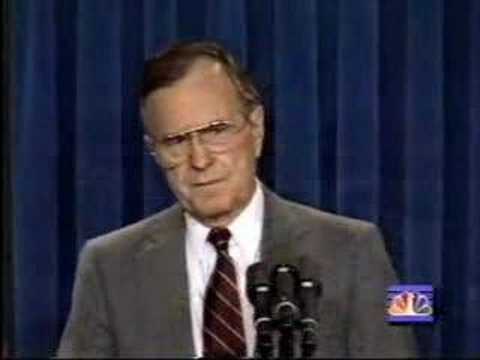
Amnesty International’s contributions to US imperialism are not unprecedented. In 1991 the rights organization claimed that Iraqi soldiers had thrown Kuwaiti babies from incubators, a hoax, perpetrated by the daughter of the Kuwaiti ambassador to the United States. When US President George H.W. Bush appeared on television to announce that he was readying for war on Iraq, he had a copy of the Amnesty report in his hands.

Amnesty’s failure to point to the role played by the United States and its allies in undermining the conditions that would allow Pyongyang to fulfill the healthcare and other rights of North Koreans, and its willingness to play a part in legitimizing Washington’s foreign policy agenda, is not without precedent. While Amnesty was critical of the human rights record of apartheid South Africa, it alone among human rights organizations refused to denounce apartheid itself. [30] The organization also refused to condemn the 1999 NATO bombing of Yugoslavia [31], even though it was an exercise in imperial predation that denied the rights of many innocent Yugoslavs to life, security of the person and employment. Amnesty excused its inaction on grounds that it is not an antiwar organization, as if war and human rights are not often inextricably bound. The war on Yugoslavia certainly was, at least rhetorically, since NATO invoked the language of human rights to justify its attack. But Amnesty’s most egregious service to the propaganda requirements of US foreign policy came in 1991, when the rights group released a report in the run-up to the Gulf War claiming that Iraqi soldiers had thrown Kuwaiti babies from incubators. This was a hoax, perpetrated by the daughter of the Kuwaiti ambassador to the United States, orchestrated by the public relations firm Hill & Knowlton, which had been hired to launch a propaganda campaign to galvanize public support for a US war on Iraq. When US President George H.W. Bush appeared on television to announce that he was readying for war on Iraq, he had a copy of the Amnesty report in his hands. [32]

Conclusion

A Western-based organization, Amnesty has proven itself time and again to be incapable of operating outside the propaganda system of Western governments, and at times has acted to justify the imperialism of dominant powers or turned a blind eye to it. In its latest North Korea report it has made an invaluable contribution to the campaign of the United States and its East Asian allies to bring down one of the world’s few remaining top-to-bottom alternatives to capitalism and Third World dependency on the United States and former colonial powers. It has done so by fulfilling the two requirements needed for an anti-North Korea propaganda campaign to work: First, to cover up the role played by the United States, Japan and South Korea in starving the country’s healthcare and educational systems of necessary inputs, and second, to blame the ensuing chaos on the North Korean government. The action of Amnesty in misdirecting responsibility for this tragedy is no less shameful than that of the governments that have perpetrated it.

1. Eisenberg L, “The sleep of reason produces monsters—human costs of economic sanctions,” New England Journal of Medicine, 1997; 336:1248-50. http://content.nejm.org/cgi/content/short/336/17/1247
2. Amnesty International, “The crumbling state of health care in North Korea”, July 2010. http://www.amnesty.org/en/library/asset/ASA24/001/2010/en/13a097fc-4bda-4119-aae5-73e0dd446193/asa240012010en.pdf
3. Barbara Demick, “North Korea’s giant leap backwards”, The Guardian (UK), July 17, 2010. http://www.guardian.co.uk/world/2010/jul/17/north-korea-famine-fears
4. Ibid.
5. “Iraq surveys show ‘humanitarian emergency’”, UNICEF.org, August 12, 1999. http://www.unicef.org/newsline/99pr29.htm
6. The New York Times, September 13, 2006.
7. Stephen Gowans, “The sinking of the Cheonan”, PSLweb.org, May 27, 2010. http://www.pslweb.org/site/News2?page=NewsArticle&id=14044&news_iv_ctrl=2801
8. Tim Beal, “Invisible WMD- the effect of sanctions”, Pyongyang Report, Volume 9, Number 4, October 2007. http://www.vuw.ac.nz/~caplabtb/dprk/pyr9_4.mht
9. Karine Morin and Steven H. Miles, “Position paper: The health effects of economic sanctions and embargoes: The role of health professionals”, Annals of Internal Medicine, Volume 132, Number 2, 18 January 2000. http://www.annals.org/content/132/2/158.abstract
10. John Mueller and Karl Mueller, “Sanctions of mass destruction”, Foreign Affairs, Volume 78, Number 3, May/June 1999.
11. Ibid.
12. Ibid.
13. Dianne E. Rennack, “North Korea: Economic sanctions”, Congressional Research Service, October 17, 2006. http://www.au.af.mil/au/awc/awcgate/crs/rl31696.pdf
14. Ibid.
15. Mark Landler, “Envoy to coordinate North Korea sanctions”, The New York Times, June 27, 2009. http://www.nytimes.com/2009/06/27/world/americas/27diplo.html?partner=rss&emc=rss
16. The New York Times, September 13, 2006.
17. According to Rennack, the following US sanctions have been imposed on North Korea for reasons listed as either “communism”, “non-market economy” or “communism and market disruption”: prohibition on foreign aid; prohibition on Export-Import Bank funding; limits on the exports or goods and services; denial of favorable trade terms.
18. The Washington Post, June 24, 2005.
19. Mueller and Mueller.
20. Ibid.
21. The Washington Post, November 16, 2005.
22. Rennack.
23. “KCNA dismisses Japan’s frantic anti-DPRK racket”, KCNA, June 23, 2009.
24. U.S. News & World Report, June 26, 2008; The New York Times, July 6, 2008.
25. The Los Angeles Times, October 25, 2006.
26. The Washington Post, May 16, 2008.
27. United Nations Economic and Social Council, “The relationship between economic sanctions and respect for economic, social and cultural rights”, December 12, 1997. http://www.unhchr.ch/tbs/doc.nsf/0/974080d2db3ec66d802565c5003b2f57?Opendocument
28. Denis J. Halliday, “The Deadly and Illegal Consequences of Economic Sanctions on the People of Iraq”, Brown Journal of World Affairs, Winter/Spring 2000 – Volume VII, Issue 1. http://www.watsoninstitute.org/bjwa/archive/7.1/Essays/Halliday.pdf
29. Richard Garfield and Sarah Santana, “The Impact of the Economic Crisis and US Embargo on Health in Cuba”, American Journal of Public Health, January 19997, Volume 87, Number 1. http://www.ncbi.nlm.nih.gov/pmc/articles/PMC1380757/
30. Francis A. Boyle and Dennis Bernstein, “Interview with Francis Boyle. Amnesty on Jenin”, Covert Action Quarterly, Summer, 2002. http://cosmos.ucc.ie/cs1064/jabowen/IPSC/php/art.php?aid=4573
31. Alexander Cockburn, “How the US State Dept. Recruited Human Rights Groups to Cheer On the Bombing Raids: Those Incubator Babies, Once More?” Counterpunch, April 1-15, 1999. http://cosmos.ucc.ie/cs1064/jabowen/IPSC/articles/article0005098.html
32. Boyle and Bernstein.

It’s the regime change agenda all the time

The United States, Canada and Australia are abusing the Kimberly Process, an initiative to prevent the sale of “blood” diamonds, in order to frustrate Zimbabwe’s efforts to establish a multi-billion dollar annual revenue stream from its rich Marange diamond fields. The aim is to keep up economic pressure on the country to undermine popular support for Robert Mugabe and his land reform and economic indigenization programs.

By Stephen Gowans

Zimbabwe’s Marange diamond fields hold out the promise of billions of dollars per year in diamond sales [1], a bounty that could help the southern African country develop economically, and place it among the world’s top diamond producers.

But if the United States, Canada and Australia have their way, Zimbabwe will have to find a way to sell its diamonds without a seal of approval from the Kimberly Process, “a joint governments, industry and civil society initiative to stem the flow of conflict diamonds – rough diamonds used by rebel movements to finance wars against legitimate governments.” [2]

Abbey Chikane, a South African businessman appointed by the Kimberly Process to monitor the Marange fields, recommended that the diamonds be certified. He also recommended that Zimbabwe’s army, which has guarded the fields from the anarchy of illegal diamond diggers hoping to strike it rich, continues to do so until the police are in a position to maintain order. [3]

Most African countries — including Zimbabwe’s neighbors South Africa, Botswana, Angola and Tanzania — backed up Chikane’s recommendation, as did India, China and Russia, which together represent the bulk of humanity. But the United States, Canada and Australia blocked certification.

The three countries, among the world’s richest, point to claims made by two ostensibly independent nongovernmental organizations, Global Witness and Partnership Africa Canada, to justify their decision. They say the Zimbabwe military is committing human rights abuses at the Marange fields and running a smuggling operation. [4]

So why did the Kimberly Process auditor recommend certification, despite allegations of human rights abuses and smuggling? First, the Kimberly Process seeks to prevent the sale of rough diamonds to finance rebel wars, not to prevent human rights abuses and smuggling. Second, Kimberly Process chairman Bernard Esau says there is “no proof of alleged human rights violations at the Marange diamond fields.” [5]

The United States, Canada and Australia, along with Britain and the European Union, have been actively seeking to drive Robert Mugabe and Zanu-PF from power for the last decade. Their regime change efforts are dressed up as “democracy promotion”, but Washington’s own documents make clear that “democracy promotion” is nothing more that helping the Western-backed, -conceived and -funded Movement for Democratic Change (MDC), which currently shares power with Zanu-PF, govern alone. The MDC would end, and possibly reverse, Zanu-PF’s policies of land redistribution and economic indigenization [6] — policies which are giving substantive meaning to the country’s hard fought for independence.

In order to undermine popular support for Zanu-PF and its policies, the United States, Canada and Australia, along with other Western countries, have imposed sanctions which have had a crippling effect on the economy. While they deny that the sanctions are anything other than targeted, and that they’re aimed only at top Zanu-PF leaders, the Zimbabwe Democracy and Economic Recovery Act, a US law passed in 2001, blocks Zimbabwe’s access to international lines of credit. Explicitly taking aim at Zimbabwe’s land redistribution program, the law has cruelly undercut economic development.

Zimbabwe’s land reform and economic indigenization programs remain an inspiration to poor and landless Africans of neighboring countries, who decades after liberation from European colonialism, apartheid and white settler rule, have yet to see any substantive change in their conditions. The economic indigenization program, which mirrors similar policies that South Korea, Japan, Venezuela, Canada and other countries have once used or currently use to promote domestic economic development, [7] requires that at least 51 percent of Zimbabwe’s economy be placed in the hands of Zimbabweans who were disadvantaged by colonial oppression and white minority rule.

While it’s true that Global Witness and Partnership Africa Canada are nongovernmental organizations, they are hardly independent of the Western governments that have worked for regime change in Zimbabwe. Global Witness is funded by the Canadian Department of Foreign Affairs and International Trade, Britain’s Department for International Development, the European Commission, Ireland’s Department of Foreign Affairs, the Netherlands Ministry of Foreign Affairs, the Swedish International Development Co-operation Agency and Norad. [8] Partnership Africa Canada receives its funding from many of the same organizations, including a Canadian government department (Foreign Affairs and International Trade) and agency (the Canadian International Development Agency.) [9]

Many NGOs active in Africa create the illusion of being independent of the Western governments that have historically despoiled the continent, while relying on the same governments to provide their funding. It’s highly unlikely that organizations whose existences depend on the support they can get from Western governments stray far from their funders’ interests and foreign policy imperatives. The implication that NGOs are independent of governments is deliberately deceptive.

The Marange diamond fields, then, present a problem to Western governments that have been working to undermine popular support for Zanu-PF and its policies. How can sanctions work if they’re offset by billions of dollars per year in diamond sales?

The answer, of course, is that a rich flow of diamond revenues, and anything else that promises to make life better for Zimbabweans, counters the aims of the sanctions, and therefore, under the logic of Western foreign policy, must be blocked.

To frustrate Zimbabwe’s efforts to benefit from the Marange fields, the United States, Canada and Australia have abused the Kimberly Process. The initiative is intended to prevent rebel movements using rough diamonds to finance wars against legitimate governments. Is there any evidence this is happening in Zimbabwe? None at all.

But the flaw in the Kimberly Process is that it operates on the principle of consensus. That means that participants who seek to deny certification can, for their own mischievous political reasons, withhold their approval and therefore prevent consensus, invoking some unrelated humanitarian principle as justification.

“We want to be orderly, to do like what other countries in the region are doing,” said Mugabe last May, “but countries like the US, Britain, Australia and Canada want to take advantage of us by ensuring the process creates the same effect like sanctions on us; that we should not be allowed to sell our diamonds.”

“They have been heard saying what happens to our sanctions if Zimbabwe sells its diamonds? It is the regime change agenda all the time.” [10]

1. Celia W. Dugger, “Report on Zimbabwe diamond trade angers rights groups”, The New York Times, June 8, 2010.

2. http://www.kimberleyprocess.com/
Accessed June 25, 2010.

3. Celia W. Dugger, “Report on Zimbabwe diamond trade angers rights groups”, The New York Times, June 8, 2010.

4. Celia W. Dugger, “Zimbabwe diamonds fail to get conflict-free approval”, The New York Times, June 24, 2010.

5. “No proof of diamond fields human rights violations: KP,” The Herald (Zimbabwe), June 28, 2009.

6. Stephen Gowans, “US Government Report Undermines Zimbabwe Opposition’s Claim of Independence”, what’s left, October 4, 2008, https://gowans.wordpress.com/2008/10/04/us-government-report-undermines-zimbabwe-opposition%e2%80%99s-claim-of-independence/

7. Ha-Joon Chang, Bad Samaritans: The Myths of Free Trade and the Secret History of Capitalism, Bloomsbury Press, 2008. The author, a South Korean who teaches economics at the University of Cambridge, is hardly a favorite of the South Korean Ministry of National Defense. In July, 2008 the ministry banned from military barracks Bad Samaritans, along with 23 other books, labeled anti-capitalist, anti-American and pro-North Korean. Also included were books by Noam Chomsky. “Military expands book blacklist”, The Hankyoreh, July 31, 2008; Chose Sang-Hun, “Textbooks on Past Offend South Korea’s Conservatives,” The New York Times, November 18, 2008.

8. http://www.globalwitness.org/pages/en/our_funders.html
Accessed June 25, 2010.

9. http://www.pacweb.org/partners-e.php
Accessed June 25, 2010.

10. Takunda Maodza, “President slams KPCS”, The Herald (Zimbabwe), May 28, 2010.

From one apartheid state to another: Israel’s secret military alliance with apartheid South Africa

By Stephen Gowans

Israel has been called an apartheid state. Now its links to the original apartheid state have been brought to light. In a new book, The Unspoken Alliance, Sasha Polakow-Suransky, a senior editor at Foreign Affairs, the principal journal of the US foreign policy establishment, cites declassified South African documents that reveal that Israel forged a secret military alliance with South Africa in the 1970s, and offered to sell the apartheid state nuclear weapons. (1)

From its founding in 1948 until the mid 1970s, Israel was critical of South Africa’s apartheid, and sought allies among the newly independent black African states. But for many African countries, Israel was the replication in Palestine of the same European colonial settler model they had struggled to break free from. They weren’t going to become allies of a colonial power.

Then Israeli defense minister (and now president) Shimon Peres, accompanied South African prime minister John Vorster, a Hitler-admirer who had been jailed during WWII for supporting the Nazis and belonging to the fascist Ossewabrandwag, on a 1975 visit to the Holocaust memorial. Peres signed an agreement with Vorster’s government to establish a secret military alliance, and offered to sell Pretoria nuclear warheads.

South Africa, a white racist state, proved to be more amenable to Israel’s offers of alliance, seeing in the Zionist state a kindred country of European settlers “situated in a predominantly hostile world inhabited by dark people.”

The cementing of the alliance was helped along by an existing relationship: South Africa was already shipping yellow cake to Israel. Now, safeguards against nuclear proliferation were lifted, allowing the Israelis to divert the yellow cake to their nuclear weapons program.

The strength of the new relationship was signalled by the 1976 visit to Jerusalem of South Africa’s prime minister, John Vorster. Accompanied by Yitzhak Rabin and then defense minister (now president) Shimon Peres, Vorster visited the Holocaust memorial, a grotesque spectacle considering the South African prime minister was a Hitler-admirer who had been jailed during the war for supporting the Nazis and belonging to the fascist Ossewabrandwag.

In 1975, South Africa’s defense minister, P.W. Botha met with Peres to buy Israeli nuclear warheads. While the deal fell through – the South Africans thought the asking price too high – the two men signed an agreement to establish a secret military alliance. Israel also arranged to send Pretoria 30 grams of tritium, which South Africa later used to build a number of atomic bombs.

Alon Liel, a former Israeli ambassador to South Africa, told the British newspaper The Guardian that South Africa used its mineral wealth (based on the exploitation of oppressed black miners) to fund joint military projects while the Israelis provided the technical know-how. South Africa would soon become Israel’s largest arms customer. According to Liel, “After 1976, there was a love affair between the security establishments of the two countries and their armies. We were involved in Angola as consultants to the [South African] army. You had Israeli officers there cooperating with the army. The link was very intimate.”

Israel regarded the relationship as based on more than just convenience, but on a common position as colonial oppressor, under pressure from national liberation movements. The two countries shared “unshakeable foundations of…common hatred of injustice and…refusal to submit to it,” wrote Peres to South Africa’s information minister, Eschel Rhoodie. The “injustice” each refused to submit to was ending apartheid (South Africa) and reversing the Nakbah (Israel), in both cases the subordination of indigenous people to the interests of settlers from Europe. Rafael Eitan, Israel’s then military chief of staff and Ariel Sharon, a future prime minister, sympathized with the “plight” of the South Africa’s apartheid regime, presumably seeing in it a reflection of the difficulties faced by Israel in enforcing its own racist regime.

By the late 1980s, the apartheid regime in Pretoria was bleeding support, and it was no longer tenable to back South Africa. Israel decided that it would “have to switch from white to black.” The security estblishment balked, pointing out that South Africa, as Israel’s chief arms customer, had “saved Israel,” a conclusion Liel says is “probably true.”

Chris McGreal, a reporter at The Guardian who has written a series of articles on the revelations in Polakow-Suranky’s book, points out that the fact that Israel was willing to act as a nuclear proliferator “undermines Israel’s attempts to suggest that, if it has nuclear weapons, it is a ‘responsible’ power that would not misuse them, whereas countries such as Iran cannot be trusted.”

But how responsible was France? It probably played a role in Israel’s development of nuclear weapons, transferring technology to Israel in return for its role in the attempted 1956 British-French take-over of Egypt (the Suez Canal crisis.) (2) How responsible, for that matter, is the United States, which dropped atomic bombs on Hiroshima and Nagasaki during WWII, despite the reality that a Japanese surrender was imminent, and, even if it weren’t, could have been obtained easily without the use of atomic bombs? (3) What’s more, the United States continues to threaten to use nuclear weapons against non-nuclear states (4) – hardly the acts of a responsible nuclear power, and nothing less than nuclear terrorism.

Polakow-Suransky’s book, and McGreal’s reporting, reveal that Israel entered into a military alliance with an overtly racist regime – and aided South Africa in its attempt to smash Angola’s national liberation movement — the foundations of the alliance all the stronger for being based on shared problems related to the maintenance of oppressive rule over dispossessed indigenous majorities.

1. The bulk of this article is based on Chris McGreal’s articles for The Guardian: “Israel and apartheid: a marriage of convenience and military might” May 23, 2010; “Revealed: how Israel offered to sell South Africa nuclear weapons”, May 24, 2010.
2. See Richard Becker, “A turning point in the Middle East balance of forces”, PSLWeb.org, November 1, 2006.
3. See Jacques R. Pauwels, The Myth of the Good War: America in the Second World War, James Lorimer & Company Ltd., Toronto, 2002, p 172-173
4. Stephen Gowans, “Nuclear Posture Review 2010“, what’s left, April 10, 2010.

The sinking of the Cheonan: Another Gulf of Tonkin incident

By Stephen Gowans

While the South Korean government announced on May 20 that it has overwhelming evidence that one of its warships was sunk by a torpedo fired by a North Korean submarine, there is, in fact, no direct link between North Korea and the sunken ship. And it seems very unlikely that North Korea had anything to do with it.

That’s not my conclusion. It’s the conclusion of Won See-hoon, director of South Korea’s National Intelligence. Won told a South Korean parliamentary committee in early April, less than two weeks after the South Korean warship, the Cheonan, sank in waters off Baengnyeong Island, that there was no evidence linking North Korea to the Cheonan’s sinking. (1)

South Korea’s Defense Minister Kim Tae-young backed him up, pointing out that the Cheonan’s crew had not detected a torpedo (2), while Lee Ki-sik, head of the marine operations office at the South Korean joint chiefs of staff agreed that “No North Korean warships have been detected…(in) the waters where the accident took place.” (3)

Notice he said “accident.”

Soon after the sinking of the South Korean warship, the Cheonan, Defense Minister Kim Tae-young ruled out a North Korean torpedo attack, noting that a torpedo would have been spotted, and no torpedo had been spotted. Intelligence chief Won See-hoon, said there was no evidence linking North Korea to the Cheonan’s sinking.

Defense Ministry officials added that they had not detected any North Korean submarines in the area at the time of the incident. (4) According to Lee, “We didn’t detect any movement by North Korean submarines near” the area where the Cheonan went down. (5)

When speculation persisted that the Cheonan had been sunk by a North Korean torpedo, the Defense Ministry called another press conference to reiterate “there was no unusual North Korean activities detected at the time of the disaster.” (6)

A ministry spokesman, Won Tae-jae, told reporters that “With regard to this case, no particular activities by North Korean submarines or semi-submarines…have been verified. I am saying again that there were no activities that could be directly linked to” the Cheonan’s sinking. (7)

Rear Admiral Lee, the head of the marine operations office, added that, “We closely watched the movement of the North’s vessels, including submarines and semi-submersibles, at the time of the sinking. But military did not detect any North Korean submarines near the country’s western sea border.” (8)

North Korea has vehemently denied any involvement in the sinking.

So, a North Korean submarine is now said to have fired a torpedo which sank the Cheonan, but in the immediate aftermath of the sinking the South Korean navy detected no North Korean naval vessels, including submarines, in the area. Indeed, immediately following the incident defense minister Lee ruled out a North Korean torpedo attack, noting that a torpedo would have been spotted, and no torpedo had been spotted. (9)

The case gets weaker still.

It’s unlikely that a single torpedo could split a 1,200 ton warship in two. Baek Seung-joo, an analyst with the Korea Institute for Defense Analysis says that “If a single torpedo or floating mine causes a naval patrol vessel to split in half and sink, we will have to rewrite our military doctrine.” (10)

The Cheonan sank in shallow, rapidly running, waters, in which it’s virtually impossible for submarines to operate. “Some people are pointing the finger at North Korea,” notes Song Young-moo, a former South Korean navy chief of staff, “but anyone with knowledge about the waters where the shipwreck occurred would not draw that conclusion so easily.” (11)

Contrary to what looks like an improbable North-Korea-torpedo-hypothesis, the evidence points to the Cheonan splitting in two and sinking because it ran aground upon a reef, a real possibility given the shallow waters in which the warship was operating. According to Go Yeong-jae, the South Korean Coast Guard captain who rescued 56 of the stricken warship’s crew, he “received an order …that a naval patrol vessel had run aground in the waters 1.2 miles to the southwest of Baengnyeong Island, and that we were to move there quickly to rescue them.” (12)

Some members of South Korea’s opposition parties – which have been highly critical of the government for blaming North Korea for the disaster– “contend that the boat was sunk either by a ‘friendly fire’ torpedo during a training exercise or that it broke part while trying to get off a reef.” (13) Whatever the cause, they don’t believe the findings of the official inquiry.

So how is it that what looked like no North Korean involvement in the Cheonan’s sinking, according to the South Korean military in the days immediately following the incident, has now become, one and half months later, an open and shut case of North Korean aggression, according to government-appointed investigators?

South Korean president Lee Myung-bak is a North Korea-phobe who prefers a confrontational stance toward his neighbor to the north to the policy of peaceful coexistence and growing cooperation favored by his recent predecessors. His foreign policy rests on the goal of forcing the collapse of North Korea.

The answer has much to do with the electoral fortunes of South Korea’s ruling Grand National Party, and the party’s need to marshal support for a tougher stance on the North. Lurking in the wings are US arms manufacturers who stand to profit if South Korean president Lee Myung-bak wins public backing for beefed up spending on sonar equipment and warships to deter a North Korean threat – all the more likely with the Cheonan incident chalked up to North Korean aggression.

Lee is a North Korea-phobe who prefers a confrontational stance toward his neighbor to the north to the policy of peaceful coexistence and growing cooperation favored by his recent predecessors (and by Pyongyang, as well. It’s worth mentioning that North Korea supports a policy of peace and cooperation. South Korea, under its hawkish president, does not.) Fabricating a case against the North serves Lee in a number of ways. If voters in the South can be persuaded that the North is indeed a menace – and it looks like this is exactly what is happening – Lee’s hawkish policies will be embraced as the right ones for present circumstances. This will prove immeasurably helpful in upcoming mayoral and gubernatorial elections in June. (14)

What’s more, Lee’s foreign policy rests on the goal of forcing the collapse of North Korea. When he took office in February 2008, he set about reversing a 10-year-old policy of unconditional aid to the North. He has also refused to move ahead on cross-border economic projects. (15) Lee’s goal, as Selig Harrison, the US establishment’s foremost liberal expert on Korea describes it, is to “once again [seek] the collapse of the North and its absorption by the South.” (16) Forcing the collapse of North Korea was the main policy of past right-wing and military governments to which Lee’s government is historically linked. The claim that the sinking of the Cheonan is due to an unprovoked North Korean torpedo attack makes it easier for Lee to drum up support for his confrontational stance.

But it does more than that. It also helps Lee move ahead with his goal of re-unifying the Korean peninsula by engineering the collapse of the North. Lee has used the Cheonan incident to: cut off trade with the North; block the North’s use of the South’s shipping lanes; argue for stepped up international sanctions against Pyongyang; call for the beefing up of the South’s military; and issue a virtual declaration of war, branding North Korea the South’s principal foe and announcing that “It is now time for the North Korean regime to change.” (17) Seoul already spends $20 billion per year on its armed forces, almost three times more than the $7 billion Pyongyang allocates to military spending. South Korea has one of the most miserly social welfare systems in the industrialized world, in part because it spends so much on defense. (18) Only 28 percent of the South’s working population is covered by a government pension plan, a state of affairs that has given rise to “’silver’ job fairs, established to find jobs for people aged 60 and over.” (19) Even so, the South’s military spending as a percentage of its GDP is a drop in the bucket compared to the North’s. With a smaller economy, North Korea struggles (and fails) to keep up with its more formidably armed neighbor, channeling a crushingly large percentage of its GDP into defense. It is caught in a difficult bind in which it not only has to defend its borders against South Korea, but against the 30,000 US troops stationed on the Korean peninsula and twice as many more in nearby Japan. By expanding the South’s military budget, and using the Cheonan affair to put the country on a virtual war footing, Lee forces the North to either divert even more of its limited resources to its military – a reaction which will ratchet up the misery factor inside the North as guns take even more of a precedence over butter – or leave itself inadequately equipped to defend itself.

This meshes well with calls from the RAND Corporation for South Korea to buy sensors to detect North Korean submarines and more warships to intercept North Korean naval vessels. (20) An unequivocal US-lackey – protesters have called the security perimeter around Lee’s office “the U.S. state of South Korea” (21) – Lee would be pleased to hand US corporations fat contracts to furnish the South Korean military with more hardware. Lee’s right-wing party and US military contractors win, while North Koreans and the bulk of Koreans of the south are sacrificed on the altar of South Korean militarism.

The United States, too, has motivations to fabricate a case against North Korea. One is to justify the continued presence, 65 years after the end of WWII, of US troops on Japanese soil. Many Japanese bristle at what is effectively a permanent occupation of their country by more than a token contingent of US troops. There are 60,000 US soldiers, airmen and sailors in Japan. Washington, and the Japanese government – which, when it isn’t willingly collaborating with its own occupiers, is forced into submission by the considerable leverage Washington exercises — justifies the US troop presence through the sheer sophistry of presenting North Korea as an ongoing threat. The claim that North Korea sunk the Cheonan in an unprovoked attack strengthens Washington’s case for occupation. Not surprisingly, US Secretary of State Hilary Clinton has seized on the Cheonan incident to underline “the importance of the America-Japanese alliance, and the presence of American troops on Japanese soil.” (22)

Given these political realities, it comes as no surprise that from the start members of Lee’s party blamed the sinking of the Cheonan on a North Korean torpedo, (23) just as members of the Bush administration immediately blamed 9/11 on Saddam Hussein, and then proceeded to look for evidence to substantiate their case, in the hopes of justifying an already planned invasion. (Later, the Bush administration fabricated an intelligence dossier on Iraq’s banned weapons.) In fact, the reason the ministry of defense felt the need to reiterate there was no evidence of a North Korean link was the persistent speculation of GNP politicians that North Korea was the culprit. Lee himself, ever hostile to his northern neighbor, said his “intuition” told him that North Korea was to blame. (24) Today, opposition parties accuse Lee of using “red scare” tactics to garner support as the June 2 elections draw near. (25) And leaders of South Korea’s four main opposition parties, as well as a number of civil groups, have issued a joint statement denouncing the government’s findings as untrustworthy. Woo Sang-ho, a spokesman for South Korea’s Democratic Party has called the probe results “insufficient proof and questioned whether the North was involved at all.” (26)

Lee announced, even before the inquiry rendered its findings, that a task force will be launched to overhaul the national security system and bulk up the military to prepare itself for threats from North Korea. (27) He even prepared a package of sanctions against the North in the event the inquiry confirmed what his intuition told him. (28) No wonder civil society groups denounced the inquiry’s findings, arguing that “The probe started after the conclusions had already been drawn.” (29)

Jung Sung-ki, a staff reporter for The Korean Times, has raised a number of questions about the inquiry’s findings. The inquiry concluded that “two North Korean submarines, one 300-ton Sango class and the other 130-ton Yeono class, were involved in the attack. Under the cover of the Sango class, the midget Yeono class submarine approached the Cheonan and launched the CHT-02D torpedo manufactured by North Korea.” But “’Sango class submarines…do not have an advanced system to guide homing weapons,’ an expert at a missile manufacturer told The Korea Times on condition of anonymity. ‘If a smaller class submarine was involved, there is a bigger question mark.’” (30)

“Rear Adm. Moon Byung-ok, spokesman for [the official inquiry] told reporters, ‘We confirmed that two submarines left their base two or three days prior to the attack and returned to the port two or three days after the assault.’” But earlier “South Korean and U.S. military authorities confirmed several times that there had been no sign of North Korean infiltration in the” area in which the Cheonan went down. (31)

“In addition, Moon’s team reversed its position on whether or not there was a column of water following an air bubble effect” (caused by an underwater explosion.) “Earlier, the team said there were no sailors who had witnessed a column of water. But during [a] briefing session, the team said a soldier onshore at Baengnyeong Island witnessed ‘an approximately 100-meter-high pillar of white,’ adding that the phenomenon was consistent with a shockwave and bubble effect.” (32)

The inquiry produced a torpedo propeller recovered by fishing vessels that it said perfectly match the schematics of a North Korean torpedo. “But it seemed that the collected parts had been corroding at least for several months.” (33)

Finally, the investigators “claim the Korean word written on the driving shaft of the propeller parts was the same as that seen on a North Korean torpedo discovered by the South …seven years ago.” But the “’word is not inscribed on the part but written on it,’ an analyst said, adding that “’the lettering issue is dubious.’” (34)

On August 2, 1964, the United States announced that three North Vietnamese torpedo boats had launched an unprovoked attacked on the USS Maddox, a US Navy destroyer, in the Gulf of Tonkin. The incident handed US president Lyndon Johnson the Congressional support he needed to step up military intervention in Vietnam. In 1971, the New York Times reported that the Pentagon Papers, a secret Pentagon report, revealed that the incident had been faked to provide a pretext for escalated military intervention. There had been no attack.

The Cheonan incident has all the markings of another Gulf of Tonkin incident. And as usual, the aggressor is accusing the intended victim of an unprovoked attack to justify a policy of aggression under the pretext of self-defense.

1. Kang Hyun-kyung, “Ruling camp differs over NK involvement in disaster”, The Korea Times, April 7, 2010.
2. Nicole Finnemann, “The sinking of the Cheonan”, Korea Economic Institute, April 1, 2010. http://newsmanager.commpartners.com/kei/issues/2010-04-01/1.html
3. “Military leadership adding to Cheonan chaos with contradictory statements”, The Hankyoreh, March 31, 2010.
4. “Birds or North Korean midget submarine?” The Korea Times, April 16, 2010.
5. Ibid.
6. “Military plays down N.K. foul play”, The Korea Herald, April 2, 2010.
7. Ibid.
8. “No subs near Cheonan: Ministry”, JoongAng Daily, April 2, 2010.
9. Jean H. Lee, “South Korea says mine from the North may have sunk warship”, The Washington Post, March 30, 2010.
10. “What caused the Cheonan to sink?” The Chosun Ilbo, March 29, 2010.
11. Ibid.
12. “Military leadership adding to Cheonan chaos with contradictory statements”, The Hankyoreh, March 31, 2010.
13. Barbara Demick, “In South Korea, competing reactions to sinking of warship”, The Los Angeles Times, May 28, 2010.
14. Framing the Cheonan sinking as an act of unprovoked north Korean aggression did not benefit Lee Myung-bak and his GNP party as much as Lee and the party may have hoped. Indeed, the GNP was disappointed with its showing in the June 2 elections. Even so, on the eve of the election, Martin Fackler, writing in the New York Times of June 1, 2010 (Ship sinking aids ruling party in S. Korean vote) noted that:

“Soon after taking office two years ago, Mr. Lee appeared at risk of losing public support, as he faced mass demonstrations on the streets of Seoul against the import of United States beef. Now, political experts are talking about the “Cheonan effect,” as polls show that more than half of expected voters approve of the president and his tougher line toward the North.

“Nowhere is the current upwelling of popular support more apparent than in polling for the local elections to be held across South Korea on Wednesday. Mr. Lee’s Grand National Party, whose candidates once faced tight races in some districts, now appears poised to sweep the most important races, including hotly contested mayoral elections in Seoul and the nearby port of Incheon.

“Kim Moon-soo, the conservative governor of a province outside Seoul, just two weeks ago was in an uphill battle for re-election against a liberal opponent. Now, polls show him with a comfortable 15 percentage point lead. ”

Fackler continued:

“Politicians and political analysts agree that voters decisively turned to the Grand National Party after the announcement on May 20 of the results of an international inquiry into the sinking that found North Korea responsible. Political analysts said the results were enough to persuade many undecided voters to swing to the conservatives, who are seen as stronger on defense.”

http://www.nytimes.com/2010/06/02/world/asia/02seoul.html?ref=world

15. Blaine Harden, “Brawl Near Koreas’ Border,” The Washington Post, December 3, 2008.
16. Selig S. Harrison, “What Seoul should do despite the Cheonan”, The Hankyoreh, May 14, 2010.
17. “Full text of President’s Lee’s national address”, The Korea Times, May 24, 2010.
18. Selig S. Harrison, “What Seoul should do despite the Cheonan”, The Hankyoreh, May 14, 2010.

According to Thom Shanker and David E. Sanger, writing in The New York Times of May 30, 2010 (“U.S. aid to South Korea with naval defense plan”), there are 28,500 US troops in south Korea. South Korea has between 600,000 and 700,000 troops. The North has 1.2 million active-duty military personnel, but “many are poorly trained, or put to work building housing.” The core of the north Korean military is comprised of 80,000 special operations forces.

Hence, there are about 1 million combat ready US and south Korean troops on the Korean peninsula posed against slightly more north Korean troops, many of whom are performing non-military functions. The rough equality in number of troops is preponderated by the sophistication of south Korean’s military equipment and its ability to call on US military superiority in the event of a conflict.

19. Su-Hyun Lee, “Aging and seeking work in South Korea,” The New York Times, September 11, 2009.
20. “Kim So-hyun, “A touchstone of Lee’s leadership”, The Korea Herald, May 13, 2010.

Thom Shanker and David E. Sanger, writing in The New York Times of May 30, 2010 (“U.S. aid to South Korea with naval defense plan”) noted that:

(i) senior American officials were surprised “how easily [the Cheonan] was sunk by what an international investigation concluded was a North Korean torpedo fired from a midget submarine”; and

(ii) the waters in which the Cheonan sunk were considered too shallow to allow a submarine to operate and therefore did not warrant close monitoring.

There are two inferences that can be drawn from these observations:

(A) The inquiry’s findings are improbable;
(B) The north Koreans are devious and more formidable than we thought and therefore the south Koreans need to buy monitoring equipment from US arms manufacturers to plug this national security hole.

Predictably, The New York Times reporters opted for inference B. Inference A wasn’t considered, presumably unthinkable in the newspaper’s newsroom.

21. The New York Times, June 12, 2008.
22. Mark Landler, “Clinton condemns attack on South Korean Ship”, The New York Times, May 21, 2010.
23. Kang Hyun-kyung, “Ruling camp differs over NK involvement in disaster”, The Korea Times, April 7, 2010.

According to the JoongAng Daily of May 29, 2010 (“Probe member summoned on false rumor allegations”) Shin Sang-cheol, a member of the taskforce that investigated the sinking of the Cheonan, but who was replaced for “arousing public mistrust in the probe”, “has repeatedly claimed that the sinking was just an accident, and that the South had tampered with evidence to blame the North.” Shin, linked to the opposition Democratic Party, served on a south Korean patrol boat in the Yellow Sea as a Navy second lieutenant. Later he worked for seven years at a shipbuilding firm.

Meanwhile, Park Sun-won, former south Korean president Roh Moo-hyun’s secretary for national security, and now a visiting fellow at the Brooking Institution, has accused the Lee administration of concealing information about the sinking.

Both men are under investigation by south Korean authorities for “spreading false rumors,” clearly an effort by Seoul to deter anyone in the South from pointing out the weaknesses of the inquiry’s findings.

Shin’s and Park’s motivations for calling the probe’s findings into question, however, may be the same as the motivations of GNP politicians for accusing the north Koreans of sinking the warship: partisan political advantage. Both Shin and Park are associated with the Democratic Party, whose electoral fortunes in the impending elections are likely to suffer as a result of the GNP concocting a “red-scare” incident to rally support around. It’s in their partisan interests to poke holes in the inquiry’s findings.

24. “Kim So-hyun, “A touchstone of Lee’s leadership”, Korea Herald, May 13, 2010.
25. Kang Hyun-kyung, “Ruling camp differs over NK involvement in disaster”, The Korea Times, April 7, 2010; Choe Sang-Hun, “South Korean sailors say blast that sank their ship came from outside vessel”, The New York Times, April 8, 2010.
26. Cho Jae-eun, “Probe satisfies some, others have doubts”, JoongAng Daily, May 21, 2010.
27. “Kim So-hyun, “A touchstone of Lee’s leadership”, The Korea Herald, May 13, 2010.
28. “Seoul prepares sanctions over Cheonan sinking”, The Choson Ilbo, May 13, 2010.
29. Cho Jae-eun, “Probe satisfies some, others have doubts”, JoongAng Daily, May 21, 2010.
30. Jung Sung-ki, “Questions raised about ‘smoking gun'”, The Korea Times, May 20, 2010.
31. Ibid.
32. Ibid.
33. Ibid.
34. Ibid.

Most of the articles cited here are posted on Tim Beal’s DPRK- North Korea website, http://www.vuw.ac.nz/~caplabtb/dprk/, an invaluable resource for anyone interested in Korea.

Updated June 3, 2010.

Russ Feingold: Defending the top one percent from the bottom 99

US Senator Russ Feingold is displeased. The legislation he helped draft in 2001 to cripple Zimbabwe’s economy as punishment for the country’s land reform program, which redistributed the land of 4,000 settlers to 300,000 landless indigenous families, has been exposed for what it is: a major instrument in a program of economic warfare designed to restore the property of expropriated farmers and drive the land reform program’s champions, Zanu-PF, from government. Feingold is counterpunching with new legislation which he hopes will prove less of a liability to US propaganda, which has misdirected blame for Zimbabwe’s economic meltdown to Zanu-PF policies. At the same time, the new legislation aims to strengthen the West’s agent on the ground, the Movement for Democratic Change.

By Stephen Gowans

New US legislation introduced by US Senator Russ Feingold to update a 2001 bill that has been used to cripple Zimbabwe’s economy is aimed at supporting members of Zimbabwe’s coalition government who support US goals of restoring the property rights of settlers, while pressuring land reform champions to step down from government posts.

The current legislation, ZDERA, the Zimbabwe Democracy and Economic Recovery Act, was passed into law in 2001 as an instrument to be employed in the program of ousting the Zanu-PF government. Zanu-PF, a merger of forces that had played the leading role in the country’s liberation from settler minority rule, provoked Western reaction when it rejected harsh conditions imposed by the IMF in the late 1990s and then introduced a fast-track land reform program. The land reform program expropriated settler farms without compensation, redistributing land to indigenous Zimbabweans. The beneficiaries of the program were over 300,000 previously landless families who were resettled on land previously owned by 4,000 farmers, mostly of British origin.

ZDERA, which blocked Zimbabwe’s access to loans, credits and debt relief from international financial institutions, plunged the country into an economic abyss. To bleed Zanu-PF of popular support, the United States, Britain, the European Union and other Western governments launched a propaganda offensive, blaming the ZDERA-induced economic meltdown on Zanu-PF mismanagement. At the same time, they backed the formation of a new opposition party, the MDC (Movement for Democratic Change), which brought together the settler community, trade unions and non-governmental organizations (NGOs). The MDC and its NGO partners have received generous assistance from Western governments and foundations, and have championed an agenda congruent with overseas investor rights and the interests of the settler community.

US Senator Russ Feingold has introduced new legislation to update a 2001 bill he co-wrote that has been used to cripple Zimbabwe’s economy. Feingold and others have tried to blame the effects of the 2001 bill, known as ZDERA, on Zanu-PF mismanagement.

Since the MDC’s formation in 2000 a virtual low-level civil war has convulsed the country, with the MDC, its civil society allies, and its Western backers seeking to oust Zanu-PF from power through electoral and extra-electoral means. Elections held in 2008 produced a parliament divided roughly evenly between Zanu-PF and the MDC (the MDC having fractured, by this point, into two factions.) Morgan Tsvangirai, leader of the largest MDC faction, won the first round of voting in the presidential election, but failed to obtain a majority, forcing a runoff. Alleging that Zanu-PF partisans were using violence to intimidate his supporters, Tsvangirai withdrew from the ensuing runoff, effectively conceding the presidency to Robert Mugabe, the Zanu-PF candidate. This left the country divided, with neither party able to convincingly command the support of a majority. To avoid paralysis, the parties agreed to the formation of a coalition government. Mugabe would serve as president and Tsvangirai as prime minister.

For the MDC’s Western backers, the outcome was neither as good as desired, nor as bad as it could have been. MDC members were part of the cabinet, and therefore could affect policy, but Zanu-PF controlled the police and military, and therefore was in a position to block any attempted roll back of the party’s land reform program, as well as its (newly introduced) economic indigenization agenda. And it was precisely land reform and economic indigenization (a policy mandating majority ownership of the country’s enterprises by indigenous Zimbabweans) that Western governments bristled against.

Another minus from Washington and London’s point of view was the coalition government requirement that all members call for the lifting of sanctions. The official Western position, mimicked by the MDC, was that there were no sanctions, only targeted “restrictive measures” that exempted the population at large and punished a few key members of Zanu-PF. By denying the existence of sanctions, the West could blame Mugabe for the country’s economic turmoil, thereby providing Zimbabweans with a reason to turf Zanu-PF from government.

However, the West’s story wasn’t believable. ZDERA, with its obvious punitive implications for Zimbabwe’s economic welfare, could be pointed to as evidence of Washington’s hostility to Zimbabwe’s agenda of investing its liberation struggle with substantive content. (Zimbabweans want more than their own flag. They want control of their land and resources, too.) The ZDERA bill was readily available for all to see, in black and white, tangible evidence of the sanctions regime the United States denied existed. Requiring the MDC to climb aboard the anti-sanctions bandwagon, which already included the South African Development Community and the African Union, made the task of crippling Zimbabwe’s economy and blaming it on Mugabe all the more difficult.

Zimbabweans want more than their own flag. They want control of their land and resources, too.

All of this has given rise to the need to discard the discredited ZDERA, to remove an obvious target that critics of US foreign policy have been able to point to, to mobilize opposition to US economic warfare against Zimbabwe. The success of these critics has rankled Feingold, who whines that the attacks on ZDERA are nothing more than ”Mugabe’s propaganda” which allow Zanu-PF “to win local regional support.”

At the same time, the United States wants to step up assistance to the MDC, which, while part of the coalition government, is not in a strong enough position to roll back Zanu-PF’s land reforms. With the MDC now controlling some levers of government, the United States has the option of directing advice, material assistance and loans and credit to MDC-controlled ministries, freezing out ministries under Zanu-PF control.

Out of these requirements has come the Zimbabwe Transition to Democracy and Economic Recovery Act. The aim is to do exactly what ZDERA (which Feingold had had a hand in drafting) aims to do: strengthen the MDC and weaken Zanu-PF, in order to clear the way for the MDC to come to power to carry out the US agenda of restoring property rights.

It is no accident that Feingold’s new bill, and the statement accompanying its introduction, dwell on Zanu-PF’s “continued disrespect…for property rights,” a reference to the expropriation of settler farms and their redistribution to landless indigenous Zimbabweans. It’s no accident because that’s precisely what the new act, and ZDERA as well, is intended to overturn: the negation of private property rights to serve public policy goals, in this case, redress of an historical iniquity and recovery of indigenous sovereignty.

As the world’s hegemonic power, the United States has taken on the role of policing the globe to keep it safe for investors, bankers, bondholders and transnational corporations. In keeping with the domination of the US state by corporate executives, corporate lawyers, and investment bankers (i.e., people who own and control productive property), US foreign policy aims to keep the world open to foreign investment and trade and its riches in the hands of those who are already wealthy. This means, among other things, upholding private ownership claims to productive property, and defining as intolerable, even criminal, any violation of this principle. Expropriation of productive property, including of settler farms, especially where it is done without compensation, is a clear violation, (though the original expropriation of indigenous farmland at the point of a gun by European settlers merits no indemnification, apology, or corrective action by the global hegemon. Since Britain and the United States refused to assist in the redress of the original colonial expropriation — indeed, did all they could to hinder it — Zimbabweans took it upon themselves to remedy the wrong themselves. The United States polices the world on behalf of the property rights of those who are wealthy, not the dispossessed the wealthy robbed.)

US policy, then, brooks no abridgment of the right of individuals who currently hold productive property to continue to enjoy that property, and acts to vouchsafe their property against its being brought under public control, as socialist or communist governments may do, or being transferred to local business people (including landless families), as economic nationalist governments may do. The violation of the principle of private property by the 99 percent of the world that has none, has always been sufficient to arouse the hostility of the US government, which has always acted on behalf the remaining one percent. Feingold’s new bill is a continuation of this tradition.

A failed system’s failed promises

By Stephen Gowans

With Communism’s demise, and the return of Warsaw Pact countries to the capitalist fold, the world was promised a new age of peace and prosperity. The shadow of war would lift. Military expenditures would be cut back, and troops would be brought home from Cold War postings. There would be more money for new wars — on poverty and homelessness, this time. And capitalism, the single sustainable model of success (it had, after all, emerged triumphant in a decades-long battle with Communism) would deliver the poor from poverty, and bless the world with a bonanza of consumer goods.

Talk about failed predictions.

In place of peace, we got the lone remaining superpower waging war to sweep up the few remaining stragglers that continued to resist integration into the US dominated global economy. Iraq was conquered, at the expense of countless dead, homeless, mangled and ruined; campaigns of intrigue and bombing in the former Yugoslavia pushed the region into the US orbit; and a war on Afghanistan continues to blast away thousands of peasants but cements a US military presence in a Central Asia pregnant with the promise of oil and gas wealth. Wars on Iran and north Korea are real possibilities.

Today, the United States is asserting its military might over the face of the globe more audaciously than ever. There are 368,000 US troops deployed in nearly 130 countries around the world. (1) US citizens think their military protects their interests abroad and defends host countries from threats. They rarely pause to wonder whether what’s called “their” interests are really their own personal interests or those of people who live in bigger houses and get bigger tax breaks and have sizeable investment portfolios. Nor do they make a habit of wondering how it is that with the US exercising a virtual military monopoly over the world, host countries could be under a threat so imminent they would require a US force presence. Exactly which of the tiny collection of countries not hosting US troops are threatening the remaining 130?

Could it be that US troops gird the globe to enforce the access of US firms and investors to the land, labor, markets and resources of others? Do “our” interests equate to Iraq’s oil, Indochina’s tin, Central Asia’s natural gas, Kosovo’s mines, the Balkan’s pipeline routes, Africa’s treasure trove of minerals and oil, and Indonesia’s sweatshops? “A lot of people forget,” remarked Alexander Haig, former Supreme Commander of NATO and Secretary of State in the Reagan administration, that the presence of US troops in Europe is “the bona fide of our economic success…it keeps European markets open to us. If those troops weren’t there, those markets would probably be more difficult to access.” (2) A lot of people forget, because they were told something quite different: That US troops were stationed in Europe to deter a Soviet invasion, not to put a gun to the head of Europeans to keep their markets invitingly open to US firms and investors. The obvious question, With the threat of a Soviet invasion long passed, why are US troops still there?, is rarely asked. So it doesn’t really matter that we’ve forgotten. The most blatant of Washington’s latest exercises in imperialism run amok has a similar character. It was said that the Iraqi government of Saddam Hussein was hiding banned weapons. None were found. But US forces stay in Iraq anyway, to ensure the conquered country remains the refashioned paragon of free markets and free trade Washington’s policy makers have turned it into.

Which is to say, the emergence of US capitalism triumphant hasn’t given us peace, as promised; it has given us a bold US military prepared to wage war. And it seems to be waging war to facilitate US capital settling everywhere, nestling everywhere and establishing connections everywhere, to paraphrase a shockingly topical passage from the Communist Manifesto of Karl Marx and Friedrich Engels, a document whose irrelevance was said to have been established beyond a shadow of a doubt when the Berlin Wall was razed to the ground. Yet, today, it seems to be more relevant than ever; certainly more relevant than when a competing ideology forced the stewards of capitalism to tidy up the image of their vaunted system lest the rabble get it into their heads that they could do better. It’s said in newspapers and on TV that Washington’s wars have to do with fighting terrorism, but the documents which define the US national security strategy are long on paeans to free markets and free trade and capitalism and short on concrete measures to protect the lives of US citizens from attacks by radicalized West Asians bearing legitimate grievances against the United states. On the contrary, the strategy is a recipe for provoking terrorist attacks.

Marx and Engels: While the irrelevance of Communist Manifesto was said to have been established beyond a shadow of a doubt when the Berlin Wall was razed to the ground, today it seems to be more relevant than ever

Bourgeois society,” to use Marx’s and Engels’ phrase, hasn’t given us prosperity either, unless by “us,” you mean the people who own and control the economy. For the bulk of humanity things are a lot worst materially than they were when communists, socialists, and nationalists kept upsetting the capitalist apple cart by bringing vast tracks of national economies under public control, and putting the public welfare ahead of the profit interests of bondholders and investors.

According to the United Nations, 54 countries are poorer today than they were in 1990, about the time Communism was declared failed, and capitalism lionized as the single sustainable model of success. More children under the age of five are dying in 14 countries, and enrollment in primary schools is down in 12. Extreme poverty remains the fate of over one billion people. And in former Soviet republics — cradle to what has been dismissed as a failed system — poverty had tripled one decade into their liberation from Communism. Seventeen countries in Eastern Europe and the countries that made up the former Soviet Union have hardly become dynamos of prosperity, which should leave anyone with an ounce of gray matter wondering by what standard success is measured; surely not by the majority’s well-being. (3)

After having been demonized for decades by a capitalist establishment bent on making Communism radioactive (along with anyone so cavalier about their standing in polite society to utter a kind word about it) it’s sometimes forgotten, if ever apprehended in the first place, how impressive Communism’s economic achievements were…and still are, considering the barren and poisoned ground in which the lone holdouts have been forced to eke out precarious existences.

Let’s start with the most reviled of the hold-outs: north Korea. The idea that north Korea is a threat to the United States is about as believable as the idea that a colony of ants is a threat to the elephant whose foot hovers three inches over its hill. North Korea hasn’t a single solider stationed outside its borders. Washington, on the other hand, has 37,000 troops deployed, on, or near, the north Korean border, 65,000 troops stationed in nearby Japan, the Seventh Fleet lurking in nearby waters, and bombers within striking distance. It has dismissed Pyongyang’s pleas to sign a nonaggression treaty, declaring bizarrely that it will not succumb to blackmail. And what has north Korea done to threaten the United States (or to blackmail the country)? It has fired up a mothballed nuclear reactor capable of producing weapons grade material, and withdrawn from the Nuclear Nonproliferation Treaty, but only after Washington reneged on an agreement to build light water reactors and provide fuel oil shipments. And only after Washington issued a virtual declaration of war, designating north Korea part of “an axis of evil.”

Could a north Korea with one or two crude nuclear bombs pose much of a threat to the United States poised to strike with overwhelming force? Quite the other way around. Indeed, north Korea’s pursuit of nuclear weapons can be said to be a rational response to an overwhelming US threat. And there have been plenty of signs the threat is real.

“This is just the beginning,” a Bush administration official told the New York Times, after US and British troops marched on Baghdad. “I would not rule out the same sequence of events for Iran and north Korea as for Iraq.” (4) The Pak Tribune cited CIA sources that revealed a “list of countries where replacement of government has been declared essential.” (5) The list included north Korea. US undersecretary of state for arms control and international security, John Bolton, warned Pyongyang to “draw the appropriate lesson from Iraq.” (6) It has. “The DPRK (north Korea) would have already met the same miserable fate as Iraq’s had it compromised its revolutionary principle and accepted the demand raised by the imperialists and its followers for ‘nuclear inspection’ and disarmament,” declared the official daily of the ruling Korean Workers Party, Rodong Sinmun. (7) Later, the government issued this statement: “The Iraqi war teaches a lesson that in order to prevent a war and defend the security of a country and the sovereignty of a nation it is necessary to have a powerful physical deterrent.” (8)

Washington ultra-hawk, Paul Wolfowitz, anticipating similar words US Secretary of state Hilary Clinton would utter seven years later, warned, “north Korea is headed down a blind alley. Its pursuit of nuclear weapons will not protect it from the real threat to its security, which is the (internal) implosion brought about by the total failure of its system. Indeed the diversion of scarce resources to nuclear weapons and other military programs can only exacerbate the weakness of the (government).” (9) So what’s the choice? Head down a blind alley, or turn over the country to Washington, and the multinational corporations it represents? Who’s the blackmailer?

History has not been kind to the tiny country. The mountainous north was once the center of the peninsula’s heavy industry, the south its breadbasket. The Korean War, which saw US bombers destroy every building in the north over one story, changed that. The north was reduced to rubble. But it rebuilt, and until the 1980s, outpaced the south economically. By 1961, it was self-sufficient in agriculture. North Korean children were better vaccinated than their counterparts in the United States, according to the World Health Organization and United Nations, who commended the country for its delivery of health care. And life expectancy was higher than in the capitalist south. (10)

Then disaster struck. The socialist trading bloc collapsed, depriving Pyongyang of its major trading partners. Oil subsidies from Russia ended. And if that weren’t enough, floods and droughts ravaged crops. Famine followed. But, for a time, the country had enjoyed impressive material gains, an affirmation of what can be achieved outside the capitalist system, even where resources are diverted to defense against an unrelenting foe than remains poised on your borders to strike. Imagine what the country could have achieved without the United States breathing fire down its neck.

Cuba, in many respects, fits the same mold: Astonishing social and economic gains under a communist government, the implacable and unrelenting hostility of the United States, and some backsliding after the collapse of its major trading partners. (The United States has maintained an economic blockade for half a century.) Still, despite these challenges, Cuba is a much kinder and egalitarian place today than it was before the revolution, under the rule of the US-backed Batista regime, when the country’s economy was an appendage of that of the United States. The United States fears Cuba, journalist Seamus Milne observes, not because it is a threat to the safety of US citizens, but because it’s an example of what can be accomplished outside the US dominated capitalist model. (11 )

In 1953, the illiteracy rate in Cuba exceeded 22 percent. Today it is under one percent. Three percent of those over the age of 10 had a secondary school education. Today, almost 60 percent do. Back then, at the height of the sugar harvest, when unemployment was lowest, eight percent were jobless. Today, the unemployment rate is three percent, making Cuba one of the few countries in the world to boast full employment.

Well over 80 percent own their own homes, and pay no taxes. The remainder pays a nominal rent.

No other country has as many teachers per capita. Education is free through university. The country also provides free university educations to 1,000 Third World students every year. And classroom sizes put those of Western industrialized countries to shame.

Health care is free. And while the United States has deployed over 300,000 troops in almost 130 countries to keep markets open to US investment, Cuba has sent 50,000 doctors to work for free in 93 Third World countries to heal the sick. (12)

Infant mortality is lower than in any other Third World country and even some Western capitalist countries (it’s higher in Washington, DC.) Life expectancy is 76 years, and is expected to rise. (13) By comparison, the return of capitalism has pushed life expectancy down in former communist countries.

These gains, seldom mentioned in the United States, place the country head and shoulders above other Latin American countries firmly ensconced in the US orbit, for which Washington’s single sustainable model of success continues to deliver grinding poverty, misery, and gross inequality, but the profits necessary to keep the capitalist system afloat and the capitalist class awash in mansions, retinues of servants, stables of luxury cars, exclusive schools and private clubs.

There are elections, and, contrary to Washington’s anti-Cuba propaganda, Cubans do vote. But they don’t choose among two largely identical parties, as in the United States, where the parties, and their candidates, are almost invariably in thrall to, or are representatives of, the capitalist class. As for human rights, Cuba stands as a model of what can be achieved by way of economic and social rights, the basic rights to food, housing, clothing, health care, education and jobs, enshrined in the Universal Declaration of Human Rights, but not recognized as human rights in the United States. (14) Washington, on the other hand, has made a fetish of civil and political liberties, which, in the case of its relations with Cuba, has everything to do with giving its agents in the country, mistakenly called “independent” journalists and “independent” librarians (they’re not independent of Washington, which bankrolls their activities), room to maneuver to organize destabilization, with the object of overthrowing the revolution and banishing economic and social rights in favor of investors’ rights. That Cuba, a poor country, has been able to guarantee the right to food, clothing, shelter, health care, education and jobs, despite trying economic circumstances and US hostility, can be seen as extraordinary, or simply what can be readily accomplished outside the strictures of capitalism. If a poor Third World country, harassed by a powerful neighbor, can deliver high quality health care and education for free, why can’t the world’s richest country do the same? The answer: Capitalism drives towards better profits, not better lives.

Ever since the US-dominated global economy has, with the collapse of Eastern Bloc Communism over 10 years ago, more boldly sought purchase everywhere, US military imperialism has run amok, wars of aggression have been started, and poor, and formerly communist, countries have become poorer. The leaders of the Western world declare capitalism to be the single sustainable model of success, but countries that rejected capitalism, and committed to egalitarianism, have done better in terms of guaranteeing economic and social rights than comparison countries, despite difficult circumstances. Meanwhile, those that have rejected egalitarianism in favor of a return to capitalism have regressed. The promises of peace and prosperity that attended Communism’s collapse were a fraud based in the self-interest of a narrow band of wealthy people in the world’s richest countries. That it is a fraud is richly evident in the failed promises and dismal record of the post-communist era.

1. “Where are the Legions? Global Deployments of US Forces,” GlobalSecurity.Org, http://www.globalsecurity.org/military/ops/global-deployments.htm)
2. UPI, January 7, 2002.
3. “UN report says one billion suffer extreme poverty,” World Socialist Web Site, July 28, 2003.
4. “Pre-emption: Idea With a Lineage Whose Time Has Come,” The New York Times, March 23, 2003.
5. “Iran to be US next target: CIA report,” Pak Tribune (Online) March 24, 2003.
6. “U.S. Tells Iran, Syria, N. Korea ‘Learn from Iraq,” Reuters, April 9, 2003.
7. “North Korea vows to make no concessions,” Agence France-Presse, March 29, 2003.
8. “Administration Divided Over North Korea,” The New York Times, April 21, 2003.
9. “Wolfowitz Visits US Military Base In Korean Buffer Zone,” AFP, June 1, 2003.
10. “Peace, the real resolution to famine in North Korea, ZNet, July 23, 2003.
11. “Why the US fears Cuba,” The Guardian, July 31, 2003.
12. Ibid.
13. Speech by Fidel Castro on the 50th anniversary of the attack on the Moncada barracks, July 26, 2003.
14. Karen Lee Wald, “Democracy, Cuba-Style,” Canadian Dimension, July/August, 2003.

Originally written in August 2003, revised and updated May 2010.

Dual injustice: Is Canada outsourcing torture in an unjust war?

By Stephen Gowans

There are two questions about the justice of any war. Are the reasons for fighting it just? Is it fought in a just way? When it comes to Canada’s involvement in the war on Afghanistan, it looks like the country fails on both counts.

Let me defer to the end the question of whether Canada’s participation in the US-led war on Afghanistan is just, noting only at this point that an April public opinion poll by the Canadian pollster Angus Reid shows that only 39 percent of Canadians support their country’s military mission in Afghanistan. [1] Take away an enormous propaganda effort to rally Canadians to support the war and these numbers would be smaller still. The propaganda effort has included a “wear red on Friday” campaign to “support our troops”, bumper stickers warning that anyone who doesn’t stand behind the troops shouldn’t dare stand in front of them, and the first intermission of the popular Hockey Night in Canada TV broadcast being transformed into an ongoing PR campaign for the Canadian Forces’ role in Afghanistan.

Hockey Night in Canada’s first intermission revolves around former National Hockey League coach Don Cherry, a pugnacious, inarticulate and bigoted blowhard, whose jingoist leitmotif is that Canada distinguishes itself on the world stage in two ways: by producing the world’s best hockey players and the world’s best soldiers. He has, ever since Canadian soldiers shipped out to Afghanistan, turned his Coach’s Corner segment into a platform for promoting unquestioning support of the Canadian military.

Don Cherry, a pugnacious, inarticulate and bigoted blowhard, whose jingoist leitmotif is that Canada distinguishes itself on the world stage in two ways: by producing the world’s best hockey players and the world’s best soldiers. He has, ever since Canadian soldiers shipped out to Afghanistan, turned his Hockey Night in Canada Coach’s Corner segment into a platform for promoting unquestioning support of the Canadian military’s role in Afghanistan.

The more immediate question is whether Canadian troops have conducted themselves justly in the war, and specifically, whether they’ve been complicit in the torture of the Afghan militants they’ve captured. We do know that Afghan authorities have tortured prisoners. The question is: Did Canadian troops know that the captives they transferred to Afghan authorities would be abused? While we can’t at this point say for sure that that they did, what we do know fails to support Ottawa’s denials that they did.

Canadian troops have detained Afghans for years. They haven’t held the detainees in a Canadian detention facility, because no Canadian detention facility exists. No facility exists because Canada refuses to build one. Several countries and branches of the Afghan government have urged Ottawa to build its own prison in Afghanistan to get the notorious Afghan National Directorate of Security (NDS) out of the business of holding detainees. [2]

Numerous concerns have been raised about the NDS, and it is hardly a secret that the organization has a reputation for torturing prisoners.

In “September, 2006, near the beginning of the Canadian and British military operations in the south…a memo from [British] military lawyers describe[d] efforts to have a NATO-monitored prison facility opened and run in order to get the NDS out of the detainee-handling chain. The memo [said] that a desirable option would be to build a facility in an unused building in Kandahar, but… that the ‘proposal is meeting resistance from the Canadians and the Dutch.’” [3]

Documentation drawn from British military files alleged that “in six known cases in which Afghan captives [were] handed by British forces to the [NDS] prisons, including one in Canada’s military jurisdiction in Kandahar,” detainees had been “tortured using electric shocks, beatings with wires, whips and metal rods, sleep deprivation and cuts, between early 2007 and late 2008.” [4]

In 2007, both an Amnesty International report and investigation by the Toronto newspaper The Globe and Mail warned that the NDS was torturing captives turned over to them by Western forces. [5]

Richard Colvin, a Canadian diplomat who was posted to Afghanistan for 17 months, testified before a complaints commission that he had warned Ottawa that “the NDS tortures people. That’s what they do, so if we don’t want detainees tortured we shouldn’t give them to the NDS.” [6] The commission, known as the Military Police Complaints Commission, was established after the Canadian military tried to cover up the torture of Somali captives by Canadian troops. Canada sent a military mission to Somalia in 1993.

Earlier, Colvin had told the Canadian parliament that he had informed Ottawa as early as May 2006 that the NDS was torturing prisoners. “According to our information, the likelihood is that all the Afghans we handed over were tortured. For interrogators in Kandahar, it was standard operating procedure.” [7]

Richard Colvin, Canadian diplomat who served 17 months in Afghanistan: “According to our information, the likelihood is that all the Afghans we handed over were tortured.”

But neither Colvin’s bosses nor the Canadian military were interested. It took a whole year before Ottawa changed its prisoner-transfer policy to allow “for follow-up visits to ensure detainees weren’t tortured.” [8] “But on February 11, 2009, Canada signed a letter along with the United Kingdom and the Netherlands” offering “to provide (NDS) intelligence chief Amrullah Saleh advance warning of monitoring trips to detention facilities.” [9] The advance warning would give the NDS time to cover up evidence of torture, allowing Ottawa to claim it had no evidence the NDS was abusing the captives Canadian troops were transferring to NDS custody. And when “the Red Cross tried to raise concerns about detainees with the Canadian army, the ‘Canadian Forces in Kandahar wouldn’t even take their phone calls.’” [10] As further evidence that Ottawa was deliberately turning a blind eye, Colvin said “the Canadian government responded to his frequent warnings by telling him to stop writing these concerns into reports.” [11]

Earlier this month, Ahmadshah Malgarai, a Canadian citizen born in Afghanistan who worked as an interpreter for the Canadian army in Afghanistan, testified that “the (Canadian) military used the NDS as subcontractors for abuse and torture.” [12]

He said that Canadian soldiers transferred prisoners to Afghan officials knowing they would be tortured. “I saw Canadian military intelligence sending detainees to the NDS when the detainees did not tell them what they expected to hear.” He added that “If the [Canadian] interrogator thought a detainee was lying, the military sent him to NDS for more questions, Afghan style. Translation: abuse and torture.” [13]

The response of the Canadian government to these allegations has been to stonewall requests for pubic access to documents that would show whether the Canadian military did indeed turn over prisoners to the NDS knowing they would be tortured.
Canada’s Parliament has demanded that the government make public thousands of pages of heavily censored documents. But the government refuses.

While it says it can’t publically disclose the documents for national security reasons, there are other reasons Ottawa might be reluctant to comply with Parliament’s order. Twenty-three years ago, Canada wrote the United Nations Convention against Torture into its criminal code. The convention prohibits the transfer of a prisoner to a state “where there are substantial grounds for believing that he would be in danger of being subjected to torture.” [14]

Ahmadshah Malgarai, a Canadian citizen born in Afghanistan who worked as an interpreter for the Canadian army in Afghanistan: “If the interrogator thought a detainee was lying, the military sent him to NDS for more questions, Afghan style. Translation: abuse and torture.”

Given that there are substantial grounds for believing the NDS is torturing prisoners, and that Ottawa has received ample (though apparently unwelcome) warning that prisoners transferred by Canadian soldiers to the NDS were being abused, public disclosure of the documents could open senior members of the Canadian government and top military brass to war crimes charges.

As Toronto Star columnist Thomas Walkom points out, “Technically, there seem to be grounds for charging Prime Minister Stephen Harper, former defence minister Gordon O’Connor, current Defence Minister Peter MacKay, former chief of defence staff Rick Hillier and various others under both Section 269.1 of the Criminal Code and Canada’s Crimes against Humanity and War Crimes Act.” [15]

On top of complicating efforts to determine whether the Canadian government and military have committed war crimes, the Harper government’s refusal to comply with Parliament’s directive tramples “centuries of precedent [which] dictate[s] that Parliament is supreme in holding the government to account.” If Canada’s parliamentary speaker rules that the government is in contempt of Parliament, and the government continues to refuse to disclose documents in its possession, Canada’s whole system of government will have been undermined, according to University of Ottawa law professor, Errol Mendes. “The executive would no longer be accountable to the House of Commons.” [16]

Here, then, is what we know. Canadian troops are in the business of detaining and interrogating Afghan militants. They don’t hold the militants in Canadian-run detention facilities. There are none. Canada has been asked by several countries and Afghan government departments to build its own detention facilities in order to protect detainees from torture at the hands of the NDS. Canada refuses. Instead, the Canadian military transfers captives to the NDS, despite the organization’s notorious reputation for abusing prisoners. “If we don’t want detainees tortured we shouldn’t give them to the NDS,” warns diplomat Richard Colvin. An Afghan who worked as a Canadian army interpreter testifies that Canadian interrogators transferred detainees they suspected of lying to the NDS, knowing the NDS would use torture. The Canadian government stonewalls demands for public disclosure of documents that could show whether the government and military were complicit in torture. The stonewalling places the government in contempt of Parliament. The fundamental principle of parliamentary democracy — that the executive is answerable to parliament — has been undermined. Does it seem likely, given this, that Ottawa and the Canadian military are innocent of all charges?

NDS intelligence chief Amrullah Saleh: Canada offered to provide him with advance warning of monitoring trips to his detention facilities. Advanced warning would allow the NDS to cover up evidence of torture before Canadian monitors arrived.

The justification for Canada’s involvement in the war on Afghanistan has never been strong. The US attack on Afghanistan in 2001 was carried out in violation of international law. The claim that Afghanistan must be made safe against the return of al Qaeda holds no water. Al Qaeda’s operations can be planned practically anywhere, and have been. Crushing the Taliban, if that’s even possible, won’t stop al Qaeda. On the contrary, Western wars of aggression on Afghanistan and Iraq, and now Pakistan, Somalia and Yemen, on top of military and diplomatic support for the ethnic cleansing of Palestine by Zionist forces, simply enrage more southwest Asians and north Africans, making it more likely they will be galvanized into action against Western aggression under the banner of Islamic fundamentalism or, in Afghanistan and Iran, under the banner of liberation from foreign occupation. For example, “There is no doubt among (US) intelligence officials that the barrage of attacks by CIA drones over the past year have made Pakistan’s Taliban…increasingly determined to seek revenge by finding any way possible to strike at the United States.” [17] The failed attempt of Faisal Shahzad to carry out a car bomb attack in Times Square is now seen as a possible revenge attack.

Canada’s Afghan mission represents complicity with the United States in predatory wars which do nothing to prevent the aggrieved of southwest Asia from striking out against the West and everything to increase the number of aggrieved.

And while Canadians have looked askance at the US-led war on Iraq, the minority that continues to support Canada’s Afghan mission should recognize that the mission they support – and the troops they support who carry out the mission — have assisted the United States by freeing up US troops to serve in Iraq. Canada, then, has made its own (indirect) contribution to an Iraq war which is unjustifiable on moral and legal grounds and, far from promoting or defending the interests of ordinary people in the United States, does the opposite. It is ordinary Americans who carry the burdens of fighting the wars and paying for them through their taxes and who bear the burdens of the retaliation the wars inevitably provoke.

Finally, while Canada’s Afghan mission is sometimes justified as necessary to defend the Karzai regime, who wants to defend a regime that beats prisoners with wires, whips and metal rods and hooks their genitals up to car batteries? Apparently the Canadian government does, and worse, appears to count on the Karzai regime’s torturers to act as an outsourced shop for torturing prisoners who don’t bend under the interrogation of the Canadian military.

Canadian Prime Minister Stephen Harper: Technically, there seem to be grounds for charging him, along with former defence minister Gordon O'Connor, current Defence Minister Peter MacKay, former chief of defence staff Rick Hillier and various others under both Section 269.1 of the Criminal Code and Canada's Crimes against Humanity and War Crimes Act.

If we consider that it’s not the Karzai government that exercises real power in Afghanistan — it’s the US-led occupation force that calls the shots — a critical question arises. Could the NDS’s regular use of torture continue without the occupation’s implicit support? The answer is obvious. No. That the NDS continues to use torture suggests that the practice is tolerated because it serves a purpose: it offers an outsourced means of torturing recalcitrant prisoners, allowing Western militaries to preserve a carefully cultivated but undeserved pristine image for conducting themselves justly in war. “We would never stoop to the brutality of torturing prisoners,” the Canadian military seems to say, (ignoring the 1993 torture of Somalis by Canadian troops) “but we’re perfectly willing to outsource torture to the NDS” (and provide advance notice of our monitoring visits to allow evidence of torture to be covered up.) [18]

On top of becoming embroiled in a conflict with no justification, and one which depletes the public purse of funds that could otherwise be used for humane purposes, it appears that Ottawa and the Canadian military are complicit in the torture of Afghans. Considering that the occupation’s rational is indefensible and that Afghans therefore have every right to resist the foreign troops who exercise the occupation, Canada’s probable complicity in the abuse of Afghans puts the Canadian government even more decisively on the wrong side of justice, morality and history. The war is doubly unjust. There are no defensible grounds for it, and the actions of Canada’s military in it, appear on the basis of what we know, to be criminal.

1. “Support for Afghanistan Mission Falls Markedly in Canada,” http://www.visioncritical.com/2010/04/support-for-afghanistan-mission-falls-markedly-in-canada/
2. Doug Saunders, “British officers recorded claims of detainee torture, memos reveal”, The Globe and Mail (Toronto), April 20, 2010.
3. Doug Saunders, “Detainee-torture allegations spread to Britain”, The Globe and Mail (Toronto), April 19, 2010.
4. Saunders, April 20.
5. Saunders, April 19.
6. Ibid.
7. Steven Chase, “Canada complicit in torture of innocent Afghans, diplomat says,” The Globe and Mail (Toronto), November 18, 2009.
8. Ibid.
9. Steven Chase, “Afghan detainee monitoring not undermined by offer of advanced notice, Ottawa insists”, The Globe and Mail (Toronto), April 22, 2010. Ottawa says the letter was a “slip-up” and that the offer was retracted.
10. Chase, November 18.
11. Ibid.
12. Steven Chase, “Soldiers did not unlawfully shoot unarmed Afghan: Natynczyk”, The Globe & Mail (Toronto), April 16, 2010.
13. Ibid.
14. Thomas Walkom, “Walkom: Only the losers need to fear war-crime laws,” The Toronto Star, November 21, 2009.
15. Ibid.
16. John Ibbitson, “Historic ruling to decide who holds real power in Ottawa”, The Globe and Mail (Toronto), April 20, 2010.
17. Mark Mazzetti and Scott Shane, “Evidence mounts for Taliban role in car bomb plot”, The New York Times, May 5, 2010.
18. The US-led occupation is also the de facto authority in Iraq. How is that, as Steven Lee Myers reported in the April 21, 2010 edition of The New York Times that “Torture and other abuses of prisoners are pervasive in Iraq”? (“Secret Baghdad jail held Sunnis from the north”). Myers reports that “An Iraqi security force under Prime Minister Nuri Kamal al-Maliki’s direct command held hundreds of detainees from northern Iraq in an undisclosed prison in Baghdad, torturing dozens of them” and that 505 cases of torture were recorded in 2009 alone. This raises questions about why the United States is supporting a government known to practice torture, and whether it tolerates the practice in order to use Iraqi security forces as an outsourced shop for the coercive extraction of information from captives through maltreatment.

The Guardian’s (UK) Mark Tran reported on April 28, 2010 (“Iraqis tortured at secret Baghdad prison, says watchdog”) that Human Rights Watch “had interviewed 42 men who were among about 300 detainees transferred from (a) secret facility” that “was under the jurisdiction of Maliki’s military office.”

According to the rights organization,

“The jailers suspended their captives handcuffed and blindfolded upside down by means of two bars, one placed behind their calves and the other against their shins. All had terrible scabs and bruising on their legs. The interrogators then kicked, whipped and beat the detainees. Interrogators also placed a dirty plastic bag over the detainee’s head to close off his air supply. Typically, when the detainee passed out from this ordeal, his interrogators awakened him with electric shocks to his genitals or other parts of his body.”

Wasn’t putting an end to ‘Saddam’s rape rooms and torture chambers’ one of the US pretexts for the invasion of Iraq? Perhaps an end has been put to Saddam’s torture chambers, but torture continues, now under the direction of a new local puppet. How is it that torture persists in the lands the US has ostensibly liberated in the name of human rights, if not through its complicity and (in Afghanistan) that of Canada and other errand-boys of US foreign policy?

Last updated May 6, 2010.

The Nuclear Posture Review

Brendan Stone and Stephen Gowans discuss the Obama administration’s Nuclear Posture Review on Unusual Sources radio.

Phil Taylor and Stephen Gowans discuss the same subject on The Taylor Report.