

Subscribe to continue reading
Subscribe to get access to the rest of this post and other subscriber-only content.
Subscribe to get access to the rest of this post and other subscriber-only content.
Know yourself, know your enemies. A thousand battles, a thousand victories. — Sun Tzu
By Stephen Gowans
March 1, 2022
Few people read Mein Kampf, Hitler’s autobiography, but it ought to be required reading, along with the other canons of conservatism. How can the enemy be fought, without knowing how it thinks or what it seeks or even who it is?
I was thinking about Mein Kampf this morning after reading a New York Times’ story titled “Threats Emerge in Germany as Far Right and Pandemic Protesters Merge.”
Reporter Katrin Bennhold had interviewed a 57-year-old accountant named Betina Schmidt at an anti-Covid restrictions rally in Dresden. Schmidt told Bennhold that “she was not just protesting government plans for a general vaccine mandate — but also a broader conspiracy by powerful globalists to ‘destroy the German nation.’”
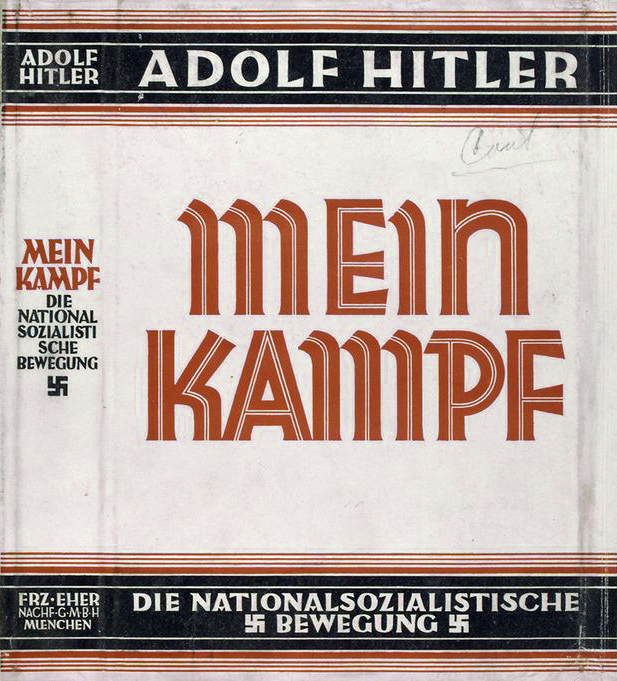
The idea of powerful globalists conspiring to destroy the German nation is straight out of Mein Kampf.
In Hitler’s view, the Jews were the original globalists. They were a nation without a country, a reality that inclined them toward globalism and a preference for one world government. This was before Zionists created a national territory for Jews (or in their parlance “recovered” one) by stealing the land of Arabs in Palestine and parts of Syria (Golan).
As a “nation” without a country, Jews, in the National Socialist leader’s view, gravitated toward and controlled international business, with its globe-girding mission, and also gravitated toward and controlled Marxism, with its bold declaration that “The working men have no country” and its call for workers to unite across national lines.
Globalism, of both the bourgeois and proletarian kinds, was a bugbear for the Fuhrer. The idea of world Jewry controlling the globalization of business and, through its Marxist apostles in the working class movement, undermining the proletariat’s attachment to patriotism, fit into a theory that Jews were secretly conspiring to create a world government over which they would rule.
The idea among Covid-denialists that globalists are plotting to create a world government and destroy nations is “the clearest indication yet,” reported Bennhold, “that a protest movement against Covid measures that has mobilized tens of thousands in cities and villages across [Germany is] increasingly merging with the far right, each finding new purpose and energy and further radicalizing the other.”
But the merger of Covid-denialism with the far-right isn’t a purely German phenomenon.
“The dynamic is much the same whether in Germany or Canada, and the protests in various countries have echoes of one another. On the streets of Dresden one recent Monday, the signs and slogans were nearly identical to those on the streets of Ottawa: ‘Freedom,’ ‘Democracy’ and ‘The Great Resist.’”
Bennhold continues:
“Like many others, Ms. Schmidt cited ‘The Great Reset,’ a book by Klaus Schwab, the founder of the World Economic Forum in Davos, which Ms. Schmidt says reads like ‘a script for how a group of powerful globalists plan to destroy the German nation and create a mishmash of people that can be led easily.’”
I recall watching a pandemic protester in Ottawa earnestly tell a police officer that “this has all been planned—it’s called the Great Reset.”
Not only is the idea of a global conspiracy to destroy nations and create a mishmash of people straight out of Mein Kampf, it’s also straight out of a small online publication by Michel Chossudovsky, titled The 2020-22 Worldwide Corona Crisis: Destroying Civil Society, Engineered Economic Depression, Global Coup d’État and the “Great Reset.”
It’s very likely that Chossudovsky’s writings inspired the Ottawa pandemic protester who thought he could bring the police to his side by citing a Klaus Schwab paper. The former University of Ottawa economics professor has dedicated his pamphlet to what he calls a “Freedom Convoy”, whose collection of white nationalists, Islamophobes, and far right People’s Party supporters denied Ottawa residents their freedom for three weeks last month, blocking roadways, refusing to comply with public health rules, browbeating residents who wore masks, and forcing the shutdown of businesses.
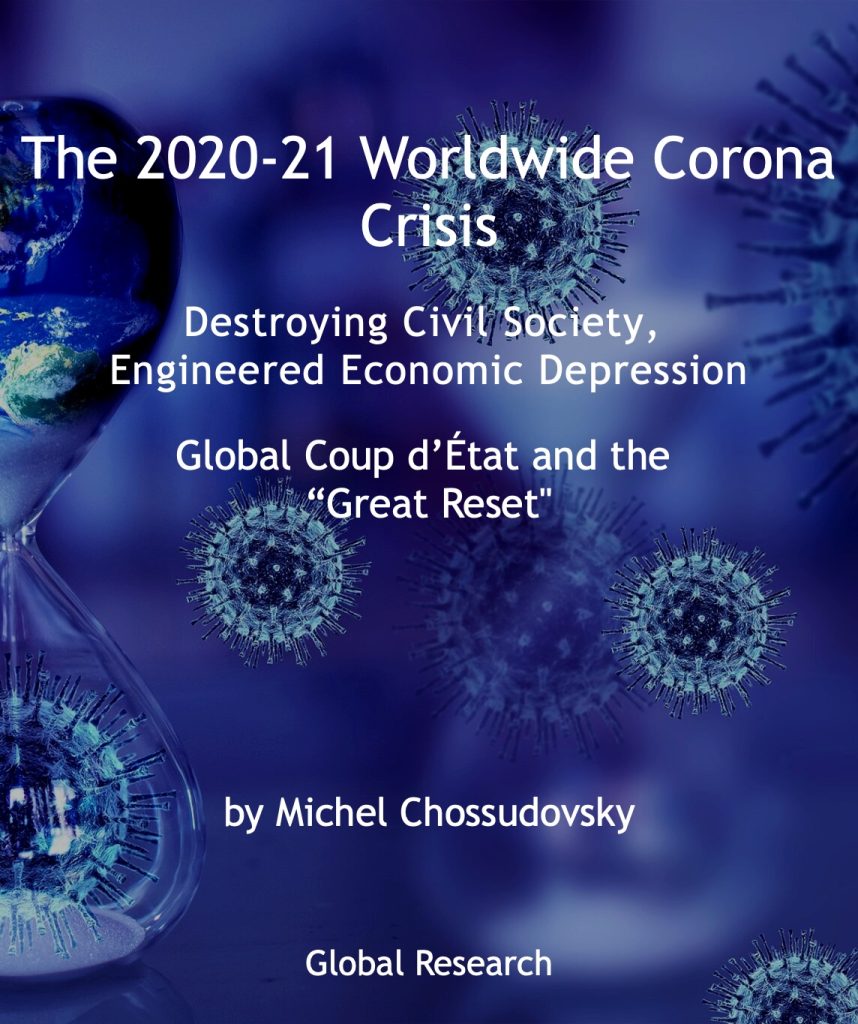
Chossudovsky makes Hitler’s globalist conspiracy theory palatable by giving it a 21st century gloss and removing its anti-Semitism. Gone are the Jews, replaced by a conspiracy of billionaires, led by the “diabolical” Klaus Schwab (yes, Chossudovsky really uses that word.) Whereas in Hitler’s febrile imagination, the Jews controlled both the international bourgeoisie and their opposition (the trade unions and Marxist political parties), in Chossudovsky’s conspiratorial delirium, it is a cabal of World Economic Forum billionaires that does the same. Covid-19, along with climate change, and identity politics, are presented by Chossudovsky as fabricated crises and plots to divide people, engineered by a complot of billionaires to carry out “a diabolical project of Global Capitalism.”
Reading Chossudovsky is like reading what I imagine Mein Kampf would be like had it been published by The Weekly World News. “The World Economic Forum’s Great Reset consists in installing a Worldwide totalitarian regime,” thunders Chossudovsky. “What is contemplated is a system of ‘Global Governance’,” he rails, shouting out for a string of exclamation marks, suitably in bold. “190+ UN member nation states are slated to be weakened and undermined.” Note the word “slated,” as in, this has all been planned by a cabal of Jews (1925) or cabal of billionaires (2022).
If you’re alarmed, there’s cause for more alarm. The “diabolical plot” won’t be stopped by the Left. That’s because the Left is controlled by the globalist billionaires, just as, to Hitler, it was controlled by the globalist Jews. The unions, community organizations, and communist and socialist parties that have organized against the truckers’ convoys—the “lockdown Left” as a Chossudovsky-simpatico Max Blumenthal calls it—are mere tools of the diabolical Schwab and his coterie of ultrarich globalists.
Unfortunately, Hitler is understood these days as an aberration, yet he is anything but. Mein Kampf, beyond the biographical details, is a synthesis of ideas culled from the Western conservative tradition dating to Burke and de Maistre and shared by the moustachioed Austrian’s conservative contemporaries, including Churchill. Because so few have taken the time to acquaint themselves with Hitler’s thought, and because his thinking is erroneously understood today as sui generis, it’s impossible to use the shorthand “this idea is straight out of Mein Kampf” without being accused of resorting to rhetorical hyperbole.
All the same, the reality is that one of the central ideas that animates the Covid-denialist movement comes straight out of Hitler’s autobiography, though with a few nips and tucks here and there to bring the style up to date. Small wonder, then, that as Chossudovsky supplies pandemic protesters with a Hitler-inspired conspiracy theory, a movement calling itself patriotic socialism—evoking obvious parallels with the national socialism of Hitler—rhapsodizes about the truckers’ convoys, celebrates Russia’s war of aggression on Ukraine, and promotes the thought of Russian reactionary Alexander Dugin.
Know your enemies.
By Stephen Gowans
February 28, 2022
The Japanese attack on Pearl Harbor was the culmination, to that point, of the struggle between the United States and Japan for control of China and the Pacific. Pearl Harbor, a naval base located at the US colony of Hawaii (Hawaii did not become a state until 1959), is a synecdoche for a larger Japanese attack on US and British colonial possessions in East Asia and the Pacific. Not only did Japan attack Hawaii on December 7, 1941, home to the US Pacific Fleet, it also attacked the US colonies of Philippines, Guam, Midway Island, Wake Island and the British colonies of Malaya, Singapore, and Hong Kong.

The United States, Britain, the Netherlands, and other Western powers had increasingly encroached on Japan’s backyard, creating colonies and spheres of influence that not only threatened Japan’s access to the markets and raw materials of East Asia, but also stood as potential threats to Japan’s own sovereignty and territorial integrity.
“In Japanese eyes,” wrote historian John Dower, “it was the non-Axis West that aimed at world domination and had been engaged in that quest, with conspicuous success, for centuries; and it was the value system of the modern West…that explained a large part of its bloody history of war and repression, culminating in the current world crisis.” Later, “the American bombing of Japanese cities was offered as proof beyond any conceivable question of the bestial nature of the enemy.”
In August 1941, Japan laid the ideological groundwork for its impending attack. In a manifesto titled The Way of the Subject, Tokyo pointed to what it saw as a crisis that was enveloping East Asia, one traceable to the value system of the West. Western values included ways of thinking that “regard the strong preying on the weak as reasonable…and stimulate the competition for acquiring colonies and securing trade, thereby leading the world to a veritable hell of fighting and bloodshed.”
If war was to ensue, Japan warned, it would only be because the West had pushed it inevitably along war’s path.
Japan’s neighborhood, East Asia, was teeming with Western military bases and shot through with Western influence. It was a place, complained the Japanese, “where a half million British ruled 350 million Indians, and another few score thousands of Englishmen ruled 6 million Malayans; where two hundred thousand Dutchmen governed a native population of 60 million in the East Indies; where twenty thousand Frenchmen controlled 23 million Indochinese, and a few tens of thousands of Americans ruled over 13 million Filipinos. Eight hundred thousand white men, the tally went, controlled 450 million Asians.”
Tokyo noted that Japan, unlike the United States, Britain, France, and the Netherlands, was linked to the region by natural ethnic and geopolitical ties. As such, and as an avowed opponent of Western imperialism, Japan had an historical mission: to liberate its ethnic brethren—one Asian people—from the yoke of Western colonialism and fold them into a Greater East Asia Co-Prosperity Sphere under Japanese leadership.
As Japan pushed into China in pursuit of its vision, upsetting Washington’s own designs on the country, the United States imposed an oil embargo. Dependent on the United States for oil, Tokyo cast its gaze upon the oil rich Dutch East Indies, which produced enough oil to satisfy Japanese needs. But Japan would first have to knock out the US fleet in the Pacific, based at Pearl Harbor, if it was to achieve its aim. The result would be the December 7 attack.
Some have argued that Washington deliberately provoked Tokyo to war and welcomed the attack, since it provided a justification for US entry into the war. Public opinion in the United States was against foreign entanglements and Japanese aggression would surely rally US Americans around the flag.
Historical parallels
There are parallels between the US and Japanese struggle over East Asia, and the current US and Russian struggle over Eastern Europe.
Japan was a weak imperialist power, with limited colonial possessions, surrounded by strong Western powers which had pushed into Japan’s neighborhood over many decades. Tokyo had a number of grievances against its stronger imperialist rivals, and believed that as a Pacific country it had a geopolitical and ethnic affinity with the region. What’s more, Western rivalry threatened Japan’s economic success, since the country depended on access to raw materials and markets that Western powers either controlled, or could soon control. The Japanese, posing as anti-imperialists of the first order, lambasted the West for its imperialism in East Asia—an imperialism which, through successive waves, had pushed right up to Japan’s borders.
Japan’s critique of Western imperialism, did not, however, make Japan any less of an imperialist power itself, however much it might have wanted the world to believe otherwise. Nor did Tokyo’s Greater East Asia Co-Prosperity Sphere liberate the peoples of Asia from imperialism. It only liberated them for a time from Western imperialism, but visited upon them a Japanese imperialism that was even more vicious in some places and at some times than what it replaced.
We cannot know how antiwar organizations operating under principles that guide many North American antiwar organizations today would have responded to the events of December 7, 1941, but we can make a guess, based on the following principles and beliefs that appear to guide these organizations.
In regards to Pearl Harbor, today’s North American antiwar organizations would likely have quite fittingly condemned Washington for its imperialism and provoking a Japanese escalation to war, but at the same time, would likely have either apologized for the Japanese attacks as an unavoidable response to US provocation or would have simply ignored them. A demand would be made that the United States, Britain, the Netherlands, and other Western powers dismantle their colonies and renounce their spheres of influence, but no call would be made for Japan to cease its military operations or refrain from imposing its rule on the territories it attacked.
None of this would comprise an authentic anti-war analysis and set of demands, but would represent a one-sided, anti-Western-war view, that would happily leave Japan off the hook for its imperialism and for initiating a war of aggression.
An organization that is only against the wars of its own country and not those of other countries, is not antiwar, anymore than an organization that is only against the wars of other countries and not its own, has a tenable claim to the title of peace organization.
The War in the Pacific was an inter-imperialist struggle. If North American antiwar organizations operating under their current principles had shaped the view of that war, the story of Japan as a vicious, imperialist power, committed to aggressive war to achieve its aims, would never be told.
February 25, 2022
By Stephen Gowans
The “military operation” announced by Russian president Vladimir Putin on February 24, is the latest episode in a struggle between two powers, the United States and Russia, for control of Ukraine. There is little good that can be said about either of these powers.
Russia is no more a progressive state than is the United States, and, indeed, is a good deal less so. The country’s president, Vladmir Putin, an anti-Bolshevik apostle of “traditional values”, i.e., homophobia, misogyny, and religious superstition, is admired by the Tucker Carlsons and Donald Trumps of the world, as well as some supporters of the trucker convoys, for his “anti-woke stance.” Trump thinks the world of Putin, much as US reactionaries of another time admired Hitler and Mussolini for their “strong” leadership and anti-Bolshevism. Putin has little good to say about Lenin and Stalin, disapproving of the Bolsheviks’ nationalities policies and criticizing Stalin for not pre-emptively attacking Nazi Germany. Putin proudly announced that he wouldn’t make in connection with Ukraine what he sees as Stalin’s mistake in connection with Germany.
Nor is Russia any less an imperialist state than the United States, though it is, to be sure, much less powerful than its US rival, far less dangerous, and its domains far less extensive. But it is imperialist, all the same, however much it is opposed to the prospect of its own domination by the United States. For all its anti-hegemonism, Moscow is not opposed to subjugating other countries. Russia intervened militarily in Syria in 2015, not out of a selfless commitment to rescuing the government in Damascus, but to advance Russian aims. Syria is a vassal of Moscow, and while Damascus may (or may not) find the terms of its vassalage preferable to those the United States would impose, it remains a Russian vassal state all the same.
As to Ukraine, it has the unfortunate fate of finding itself in the middle of an inter-imperialist struggle. Through subterfuge and machination, the United States in 2014 installed a pro-US, anti-Russian puppet government in Kyiv. That government has acted to integrate the territory, people, military, and markets of Ukraine into the United States’ informal empire. In insisting on membership in NATO, participating with NATO forces in military exercises along Russia’s borders, refusing to implement the Minsk II agreement, vigorously engendering opposition to the Nord Stream 2 pipeline, and proclaiming its intention to reclaim Crimea, home to the Russian Black Fleet, the US puppet government in Kyiv has done much to provoke Russian aggression. Indeed, it is difficult to conclude that this wasn’t its aim, since Kyiv played it cards as if it was. Moscow would rather Ukraine be integrated into its own informal empire, the Eurasian Economic Union, though faute de mieux, it has been prepared to accept Ukraine neutrality. An independent Ukraine, one not under the de facto control of Washington, would likely have opted to join neither the (vast) informal empire of the United States nor the (much smaller) informal empire of Russia. But a Ukraine under the informal control of the United States has recklessly crossed so many Russian red lines.
On a moral and legal plane, Russia’s invasion of Ukraine is indefensible. Putin’s invoking Article 51, Chapter VII of the UN Charter, (the right of self-defense in response to an attack) is a total farce, as is Putin’s claim that the Kyiv government is a neo-Nazi government and that Kyiv is carrying out a genocide against Russians. These claims demonstrate that Moscow can stoop as low as Washington in inventing totally ridiculous pretexts for wars of aggression. To be clear, there are neo-Nazis in Ukraine, a few in government, and more than a few in the military, but they tend to be Russophobes first and neo-Nazis second; that is, they’re neo-Nazis because they hate Russians—as in, the greatest enemy (the Nazis) of my enemy (Russia) is my greatest friend. That’s not to defend Russophobia, but the neo-Nazi reference is frequently invoked, not out of respect for the truth, but because its utility in shaping public opinion against Ukraine is greater, at least in the West, than pointing out that there are many Ukrainian nationalists who dislike Russia for its history of dominating Ukrainians, some of whom are neo-Nazis, and others who are not. Moreover, the presence of neo-Nazis in government and in the military is hardly unique to Ukraine.
As to Ukraine carrying out a genocide against its ethnic Russian population, this is only true if we accept the kind of infinitely flexible definition of genocide that the United States, in the person of Adrian Zenz, is infamous for deploying against China as an exercise in mobilizing public opinion against a rival. To be sure, the Ukrainian nationalist Russophobes in Kyiv have hardly sought to find an amicable way to co-exist with their ethnic Russian compatriots, but when Putin likens this behavior to genocide, he takes a page from the execrable Adrian Zenz, and shows himself to be just as execrable for doing so.
The Russian president says he has no plans to occupy Ukraine, and this may be true. Certainly, it would ill-serve Russia to become bogged down in a second Afghanistan. But Moscow says it intends to de-Nazify and de-militarize Ukraine, which means, it intends to install its own puppet government in Kyiv, after it jails or murders the Ukrainian nationalists who, whether neo-Nazi or not, are painted with a broad neo-Nazi brush. Thereafter, the Russian president will try to persuade ethnic Ukrainians that they’re part of the same Russian family, and should feel at home with their pro-Russian Quisling government.
The United States’ role in this tragedy is as much about its relationship with its former imperial rivals, Germany, Italy, and France, as it is about its attempts to weaken Russia. These three powers, and the Europe they lead, incessantly threaten to spin out of the US orbit. Increasingly, they talk of strategic autonomy, while pursuing economic integration with Russia and China, to US dismay. Russian aggression provides the occasion to bind Europe more firmly to the United States, by rallying Europe against Russia through the US instrument of NATO, and pressing the continent to sever some economic ties with Russia. Germany will be expected to cancel the Nord Stream 2 pipeline, to its great disadvantage, since it will lose an inexpensive source of energy, and to the great advantage of the US liquid natural gas industry, which will fill the void with a more expensive product. While certification of the pipeline has only been suspended for now, Washington will continue to pressure Germany to cancel the pipeline altogether. The benefits of Russian aggression against Ukraine for the US investor class are so numerous, that champagne bottles must have popped in Washington and on Wall Street when the Russian president announced the beginning of his country’s military operation in Ukraine. European drift toward the Russian economy is eclipsed. NATO is strengthened, with indubitable benefits in new orders from NATO countries for arms from US weapons makers. Calls for more weapons purchases to bolster the US military will escalate; yesterday, for example, a Wall Street Journal op-ed demanded a naval build up. And the arms industry will run at full-tilt pumping weapons into Ukraine to fuel an insurgency, as Washington fights Russia to the last Ukrainian. Wars for which the United States has not participated except to act as an arms supplier have always been kind to the country’s investors; this one promises to be the same. Finally, Russian military operations, along with Western sanctions, will drain the Russian economy, weakening Russia, or at least stifle its growth, and make it less a formidable US rival. How could Wall Street not look with pleasure upon the prospects?
Information warfare
Most Left pundits and “anti-imperialists” thought Russia wouldn’t invade, and that Washington’s warning that an invasion was imminent was utter nonsense, along the lines of the Iraqi WMD scare. Patrick Cockburn, though hardly alone, dismissed the possibility of a Russian invasion, arguing that Russia had assembled too few troops along its borders to invade Ukraine. This was just Washington hype and war hysteria, he wrote. Others took as gospel the words of Russia’s Foreign Ministry spokeswoman, Maria Zakharova. “It’s been a while since I’ve seen so many fakes, disinformation, leaks, slander and lies” she said—a self-referential statement, it turns out. The lesson here is that governments lie but sometimes they don’t, and that it is unwise to assume that governments always lie or that ones that are in the cross-hairs of US aggression don’t. Putin talked of a US empire of lies. He omitted mention of a Russian empire of lies.
Before leaving the topic of information warfare, something ought to be said about RT (Russia Today). RT exists in the first instance to serve Russian ends, and specifically to propagate information favorable to the attainment of the goals of the Russian state. The modus operandi of RT’s US network is to act as a platform for anyone with a compelling critique of US policy or who will go to bat to defend Russia. There may be a partial overlap between the pursuit of Russian state aims, and the provision of progressive discourse and analysis, but no one should be mistaken that RT’s raison d’etre is to promote a progressive point of view. It is doubtful that RT would long provide a platform to persons whose critique of US society and foreign policy was matched by an equally rigorous critique of the Russian side. I may be wrong, but we may soon find out if this is true if anyone tries to advance, on RT, the kind of analysis I’m presenting here.
What ought to be done?
First, Ukraine should be neither the means to US ends nor the means to Russian ends. Ukraine ought to be the means to Ukrainian ends. The country must be allowed to develop independently and to choose its own government freely, without foreign interference or involvement. The country’s leaders must be answerable to the people of Ukraine, not to the president of the United States, nor the president of Russia. To achieve this, Russia must immediately withdraw its forces from Ukraine and cease interfering in Ukrainian affairs. The United States and its satellites must do the same. Next, the countries of Europe, along with Canada, must withdraw from NATO. NATO is not a defensive alliance. Europe can readily defend itself against Russia. Its military expenditures are four times greater than those of the Russian Federation, (France’s alone are equal to Russia’s), and France has an independent nuclear force. NATO is a cover for the United States to maintain a military presence in Europe, on the territory of its former imperialist rivals. Al Haig, former NATO Supreme Commander and Secretary of State in the Reagan administration, once acknowledged that US troops are in Europe (stationed at what are called NATO bases to hide the fact that US bases are scattered across the continent) to ensure that European markets remain open to US exports and investment. Fourth, the United States and Canada must withdraw their forces from Europe (and from elsewhere abroad.) North American militaries must be re-oriented to self-defense, not power projection. The same demand must be made of all the world’s militaries; they must exist for one reason alone: to defend national sovereignty and territorial integrity.
The struggle against reactionaries who masquerade as anti-imperialists
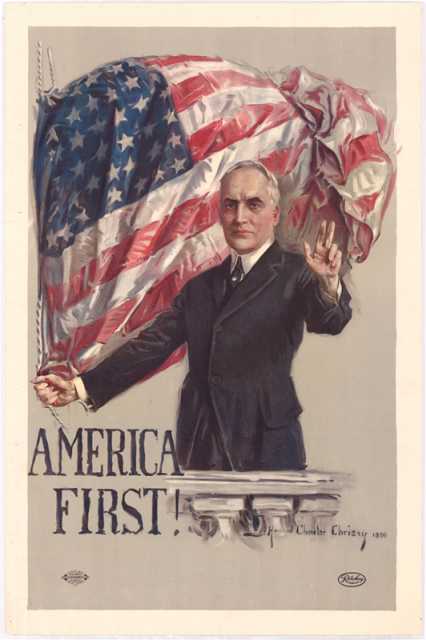
Finally, regarding the variegated group that calls itself anti-imperialists. Anti-imperialists come in many hues. Marxists of various stripes are almost always anti-imperialist but tend to self-identify as Marxists (Marxists, Marxist-Leninists, Communists, socialists, and so on.) It is taken as a given that if you’re a Marxist, you’re anti-imperialist, and, hence, that the anti-imperialist moniker is unnecessary. But the converse isn’t always true—anti-imperialists are not always Marxists. Some people who self-identify as anti-imperialists, but not as Marxists (and I say some, not all), practice an anti-imperialism of a sort favored by Charles Lindbergh and others in the late 1930s and 1940s, and expressed as America First, a name that has resonance with Trump. Supporters of the America First cause admired Hitler and Mussolini, especially their opposition to bolshevism and the “wokeism” of the day, and opposed US war against fascism in Europe. Their intellectual descendants exist today. Some of them can be found on the conspiracy theory web site, Global Research. They admire Putin’s commitment to “traditional values,” including faith, homophobia, misogyny, submission to authority, and strong leadership. While they call themselves anti-imperialist, they’re really only opposed to US imperialism. The imperialism of Russia and few other countries never shows up on their radar. They are, in reality, anti-Marxist conservatives, who falsely identify as anti-imperialists to create a progressive façade to mobilize the energies of Marxist anti-imperialists to a reactionary agenda. These are the same frauds who have celebrated the far-right truckers’ convoys, and are very likely at this very moment denouncing anyone who has an unkind word to say about Vladimir Putin and his imperialist war on Ukraine. In its statement on the Russian aggression, the Party for Socialism and Liberation argued sagely that the role of anti-imperialists “is not to follow the line of countries in conflict with U.S. imperialism, but to present an independent program of peace and solidarity and anti-imperialism.” That is the hallmark of Marxist-inspired anti-imperialism. We can do without the other kind.
February 10, 2022
By Stephen Gowans
Some people believe the occupation of Ottawa is a leftwing, pro-working-class phenomenon, but that’s hardly the view of trade unionists, community organizers, activists and frontline workers here in the city.
We see, feel, hear, and experience the occupation first-hand, on the ground. That might be why we understand the occupation differently: not as a leftwing phenomenon and democratic expression, but as a far-right movement of racists, evangelicals, union-haters, and conspiracy-minded lunatics, inspired and supported by the likes of Donald Trump, Ted Cruz, and Elon Musk.
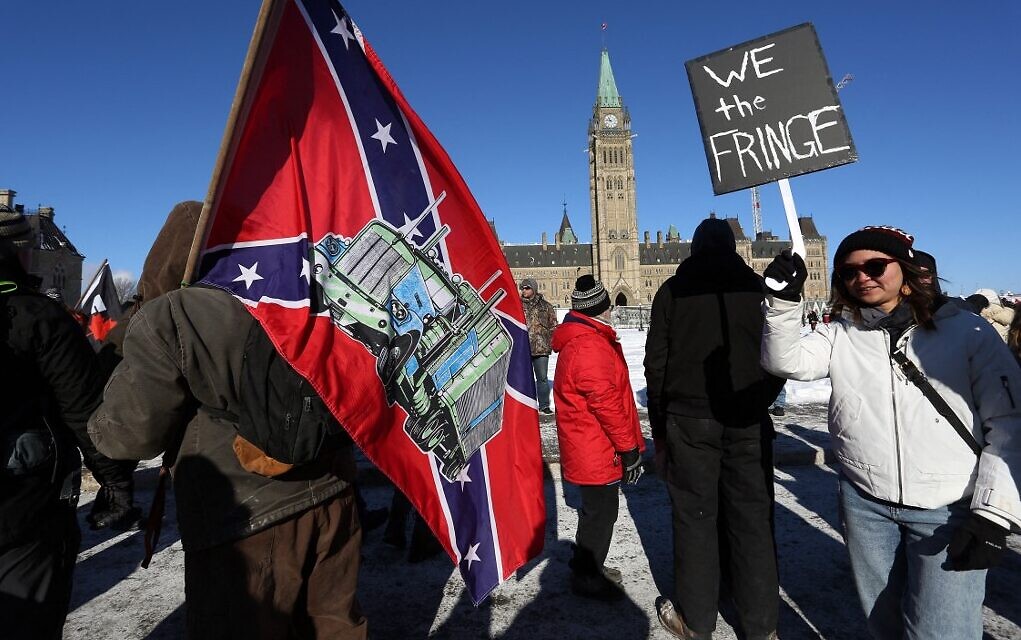
To be sure, you don’t have to live in Ottawa to grasp the true nature of the occupation. Ben Norton, who lives in Nicaragua, is under no illusion about what Occupy Ottawa is all about.
Norton recently tweeted:
I've seen enough right-wing, foreign-funded, astroturfed "protests" in Venezuela, Nicaragua, Cuba, Belarus, Hong Kong, etc. to immediately recognize one in Canada. Yes the neoliberal Trudeau gov't is awful, but allying with even more reactionary right-wingers against it is stupid.
Also…
It's so ridiculous that there are so-called "leftists" insisting we should oppose Canada's largest trucker union, representing actual working-class truck drivers, and instead side with Donald Trump and far-right US billionaires to support the rightwing capitalist convoy in Canada.
Teamsters Canada opposes the occupation and calls Covid-19 “the real enemy of truckers.”
Pierre LeBlanc, a local activist, recently wrote to Matt Taibbi, who has written an substack article describing the occupation as Canadian prime minister Justin Trudeau’s Ceauşescu Moment.
In his response to Taibbi, LeBlanc summed up quite effectively why the Ottawa occupation is an anti-labor, far-right phenomenon.
Dear Matt,
I regularly read you and find much of your writings instructive. This time, you have overreached to cartoonish effect. Attempting to link Trudeau to Ceausescu was gross, baseless hyperbole at its worst. And it seriously erodes your credibility.
I despise Biden, the Clintons and Trudeau as much as you do, and have often said so in my writings, but you totally misrepresent what is going on here.
What is going on here in Ottawa and elsewhere in Canada is a full-on assault on Canadians by organised cadres of the extreme, fundamentalist, rightwing evangelicals, recently or forcefully retired RCMP and other police officers, one of Trump's advisors and a whole raft of Canadian and American conservatives and rightwing wingnuts. Much of it financed by American so-called donors and whipped-up by Fox News and many others. That you should associate your good name with them is sorely disappointing.
Firstly, this is not a truckers' protest. It is a planned insurrection, a version of color revolutions not unlike what went on in Ukraine, Georgia and Bolivia, and the ongoing attempted coups d'État against Venezuela, Nicaragua, Cuba, Peru, Chile and many other countries around the world, and the defense and promotion of Apartheid Israel. As well as the attempted,laughable political and economic throttling of Russia and China.
Real truckers who make their daily living crossing the border are few and far between. Indeed, this occupation is deeply damaging to them and their families - they will be long degraded by this cynical hijacking of their good name and profession. Even at the Ambassador Bridge blockade, there are only 5 transport trucks involved in that blockade. The rest are the same people who have been attacking nurses, doctors and other health workers in front of hospitals for over 2 years, and who have suddenly discovered that using their supped-up half-ton toys, 4X4s, SUVs and tractors as weapons is very effective. Much like Kissinger and Pinochet organized a fringe of truckers in Chile in 1973 to overthrow the Allende regime.
The cadres leading this are the who's who of Canada's supremacist extremists (you know the list) linked up with former RCMP officers (the latest iteration of the spokesman is ex-RCMP). They are holed-up in the luxury of an Ottawa hotel with one of Trump's advisors, linked up with other yahoos of the US oligarchy/billionaire club (Elon Musk, etc., and the military complex deep-state agents). Collectively, they are highly experienced in sabotage, artificially creating infrastructure and economic gridlock to bring a society to its knees and whipping up disaffected and naïve citizens as their film extras, blackshirts and peons.
But you surely know all of this, Matt; you're a student of capitalist/imperialist/fascist history. What I don't understand is what motivates you to such drivel. Unless it is some kind of nihilistic desire to replace Canada's capitalist, racist, colonialist system by any means, even if that means creating an even more fascist state.
You're either naïve, seeking attention or a classic disruptor, consequences and massive suffering be damned.
Pierre LeBlanc
The lunatic far right People’s Party is four-square behind the occupation, as are the interim leader and likely future leader of the country’s Conservative Party. When have anti-union, pro-business, social conservative parties ever embraced an authentic, pro-labor, left-wing movement?
The Ottawa police have done nothing to liberate the city, preferring to avoid confrontation and hob-nob with the occupiers, or avoid them altogether. The city’s chief of police, Peter Sloly, is an endless source of excuses for why he and his officers cannot act. Early on he declared “there may be no policing solution.” The chief’s inaction has led to calls for his resignation, along with that of the city’s mayor, Jim Watson, dubbed Mayor Milquetoast by a local newspaper columnist for offering nothing more than impotent pleas for the occupiers to go home. With what genuine leftwing, pro-worker, movement has the police ever been complicit?
A coalition of local labor unions, community organizations, and residents will hold a rally this Saturday in solidarity with frontline workers and Ottawa residents affected by the occupation.
It will
A majority of Canadians and US Americans support Covid-19 restrictions. Occupy Ottawa is not a grassroots working-class movement, but an astroturfed corruption of far-right billionaires whose aim is to pressure governments to lift all Covid-19 restrictions and return to business-normal. As The Wall Street Journal, the mouthpiece of the hard-right billionaire class put it, “the message of Canada’s trucker protest” is that “it’s time for the pandemic emergency orders to end.” (How many legitimately leftwing, pro-worker, pro-democracy movements were ever endorsed by The Wall Street Journal?) If the far-right elite and its occupation shock-troops have their way, governments will transition from Covid-19 mitigation measures to a ‘living with Covid’ strategy, more aptly dubbed ‘dying with Covid’–over the opposition of a majority of their citizens.
The Journal acknowledged that most Canadians oppose the occupation of their capital. Musk, Trump, the Journal, Canada’s far-right parties, and the occupiers care not a fig for democracy, not one jot for the well-being of others, and not one iota for the welfare of labor. Their sole concern is to lift Covid-19 restrictions, and they appear ready to go to great lengths to achieve their aim, no matter how reactionary their goal and no matter how anti-democratic and thuggish their methods.
Pierre LeBlanc can be reached at pierrealeblanc@rogers.com
Subscribe to get access to the rest of this post and other subscriber-only content.
January 21, 2022
By Stephen Gowans
Joe Biden thinks, or at least says he thinks, that a Russian invasion of Ukraine would “be the most consequential thing that’s happened in the world in terms of war and peace since World War II.” Biden is either delusional, or supremely confident in the power of US propaganda to turn black to white, otherwise he couldn’t possibly summon the chutzpah to utter such arrant nonsense. Unless Russia plans (a) to invade Ukraine and then (b) burn it to the ground, as the United States did to North Korea from 1950 to 1953, or napalm and exfoliate the country, as Washington did to Vietnam, or bomb and sanction it into the stone age, as the Pentagon did to Iraq twice, or spend 20 years killing civilians in drone strikes as four US administrations did to Afghanistan, then Russia could hardly match the United States in producing consequential markers on the record of post-World War II war and peace.
Equally absurd are the remarks of the leader of one of Washington’s favorite lickspittles, the government of Canada. “We are working with our international partners and colleagues to make it very, very clear that Russian aggression is absolutely unacceptable,” intoned the popinjay Justin Trudeau, a man whose servility to US interests is without limit. “We are standing there with diplomatic responses, with sanctions, with a full court press to ensure Russia respects the people of Ukraine.” Too bad Canada hadn’t acted to ensure the United States respected the peoples of Korea, Vietnam, Indonesia, Iraq, and Afghanistan, to say nothing of the peoples of Iran, Cuba, Venezuela, and Palestine, among others.

To avoid the terrible fate of being excommunicated from the church of respectable bourgeois politics, Canada’s peace and love party, the NDP, advocated the use of “sanctions” rather than “war” to deter what is said by governments and respectable (i.e., bourgeois) media in the West to be an anticipated Russian “aggression” against Ukraine, thus accepting as legitimate and propagating two spurious claims: (1) that sanctions—which regularly produce death and misery in excess of what is wrought by bullets, shells, bombs, and missiles—are a peaceful and desirable alternative to war, rather than a means of warfare itself, and a particularly vicious one at that; and that (2) Russian aggression lies at the heart of the dispute over Ukraine.
At its base, the conflict between Russia and the United States pivots on the question of security guarantees. Russia has asked for them and the United States refuses to grant them. Why does Russia feel insecure?
For one thing, the country, along with China, is at the center of the US reticle—Russia constituting what Washington calls a “revisionist power.” “Revisionist”, in US hands, means seeking to revise the international rules-based order—an order based on a set of shifting rules of which the United States alone is the architect and which it invokes whenever convenient, for its own benefit. Revising the international order is refusing to do whatever the US commands. The US president, uncrowned king of the world, or much of it, might as well intone, “The international rules-based order, c’est moi.” US politicians and journalists are quick to use the words “dictator” and “authoritarian” to refer to the targets of US aggression, but, skilled propagandists to a person, refuse to use the words in reference to Washington’s own relationship with the rest of the world. Yet the words fit to a tee. The United States seeks a relationship of prepotency vis-à-vis other countries. Ewan MacColl and Peggy Seeger described the relationship this way, in an amusing 1970s song, sung to the tune Yankee Doodle.
Yankee Doodle came to town
H-bombs in his pocket
Says chum if you don’t toe the line
I’ll blast you with my rockets
To be sure, the dictator’s tools of coercion have always surpassed H-bombs alone and include sanctions (more aptly known as starving people into submission, a favorite of Canada’s “peace-loving” NDP), fomenting rebellions, and declaring US toadies to be the legitimate leaders of countries that defy the US dictatorship (Juan Guaidó, for example.)
In 2019, the RAND Corporation, the Pentagon’s think tank, drew up a list of measures the United States and its satellites, such as henchman Canada, could take to “overextend and unbalance” Russia as a means of coercing Moscow to toe the US line. The measures were:
The point is that the United States views Russia as a challenge to what the late Hugo Chavez once called the international dictatorship of the United States and Washington has not allowed the challenge to its dictatorship to stand.
The second reason for Russia to feel insecure, if the first isn’t enough, is that the United States is the world’s greatest menace to peace, contrary to the efforts of Joe Biden, Justin Trudeau, sanctions-loving social democrats, and the Western bourgeois media to flip this reality on its head. The United States’ addiction to war—according to Washington’s own Congressional Research Service, “the US military has waged war, engaged in combat, or otherwise employed its forces aggressively in foreign lands in all but eleven years of its existence”, that is, in more than 95 of every 100 years since 1783—is brushed aside. Twenty years in Afghanistan, the destruction of Iraq, the illegal occupation of Syria, the air war on Yugoslavia, the bombing of Panama and invasion of Grenada, wars on the peoples of Vietnam and Korea, to say nothing of wars of economic aggression on these and countless other countries—all these US aggressions are forgotten. Instead, we’re led to believe that, motivated by a desire to recover territory lost to the Russian empire, Vladimir Putin has asked for security guarantees he knows Washington cannot grant, and will use the denial of these guarantees as a pretext to invade Ukraine. Why the United States cannot guarantee Russia’s security, and why security guarantees are “non-starters”, is never explained. However, the undeniable US record of worshiping Mars is explanation enough: The United States cannot provide security guarantees, because the rules-based international order, of which the United States is the sole architect and its plutocrats the principal beneficiaries, depends on military threat and aggression as its ultima ratio. The alluring goal of integrating Russia into the US economy as a complement to, rather than as a rival of, corporate USA, offers too many lucrative profit-making opportunities for Washington to voluntarily surrender its program of anti-Russian military pressure.
Moscow has presented its request for security guarantees in the form of two proposed treaties, one with the United States and the other with the United States’ instrument, NATO. As far as I can tell, the details of the proposed treaties have never been presented in major US media, perhaps because they contradict the Western narrative of Russian belligerence.
Draft treaty with the United States:
Draft treaty with NATO.
The provisions of the proposed treaties are in no way aggressive. On the other hand, the expansion of an anti-Russian military alliance up to the border of Russia, a country the alliance-leader, the United States, defines as a challenger to its hegemony, is unquestionably menacing to Russia. As to the canard that NATO cannot possibly pose a threat to Russia, for, after all, it’s merely a defensive alliance, that too depends on historical amnesia. An alliance that was at the center of unprovoked wars on Yugoslavia, Libya, and Afghanistan, is, ipso facto, an instrument of aggression. It is also an instrument of US domination, used (a) to keep Washington’s former imperialist rivals Germany, Britain, France, and Italy under US tutelage; (b) to create markets for US weapons manufacturers by demanding that NATO lackeys buy weapons systems that interoperate with the US military; and (c) to enlist NATO subalterns in the US project of “overextending and unbalancing” states that remain outside the US empire.
It may, contrary to what one reads in the press, be very much in the interest of Washington to provoke a Russian invasion of Ukraine. What better way to overextend and unbalance the Eurasian giant? A Russian invasion of the east European country would be a march into a quagmire. Washington welcomes the opportunity to overextend and unbalance Russia via a Ukrainian proxy—that is, to carry on the US war on Russia to the last Ukrainian. What’s more, and referring back to the RAND Corporation’s proposals, what better way than by provoking an invasion of Ukraine to do the following?
“Strobe Talbott, the original choreographer of NATO expansion in the post-cold war order,” as M.K. Bhadrakumar describes him, has “triumphantly congratulated Blinken and Jake Sullivan for cornering Russia.” And well he should. In Ukraine, Washington has created an anti-Russian state on Russia’s border, which, while not formally integrated in NATO, is a de facto NATO asset. Left alone, Ukraine poses a threat to Russia. Invaded by Russia, it remains equally a threat.
Provoking a robust Russian reply to an advancing and predatory NATO offers other benefits to Washington as well. France and Germany—the principal EU actors—evince a growing desire to achieve a strategic autonomy that would allow them to take advantage of the economic opportunities a closer relationship with Russia would create. Growing Russian-European economic integration would disadvantage US corporations. For example, in preference to reliance on Russian natural gas, Washington has pressed Europe to purchase liquid natural gas from the United States, even though the cost is much higher. Washington has also balked at the prospect of EU military autonomy on the grounds that it would cut US arms companies out of contracts for military provisioning. In other words, the United States uses its dominance over its former imperial rivals to tilt the field in favor of corporate USA (and also to keep former and therefore potential future imperialist rivals in check.) There’s a cost, then, of belonging to the US empire—sacrificing one’s own economic interests to those of the US plutocracy. A Russian invasion of Ukraine would provide Washington with a moral argument to pressure Germany and France into renouncing their growing openness to Russia in favor of more openness to corporate USA, while cementing Europe’s place in the US empire and countering the gravitational pull of Russia on European economies.
Russia is clearly threatened by the United States and its NATO alliance, and the treaties proposed by Russia to guarantee its security would desirably stay the hand of an aggressive Washington, to the benefit not only of Russia, but to those of us who live in NATO countries who have nothing to gain, and much to lose, from the US plutocracy’s continuing predatory advance on its rivals. Our enemies are the leaders of the column in whose ranks we are invited to march.
+++
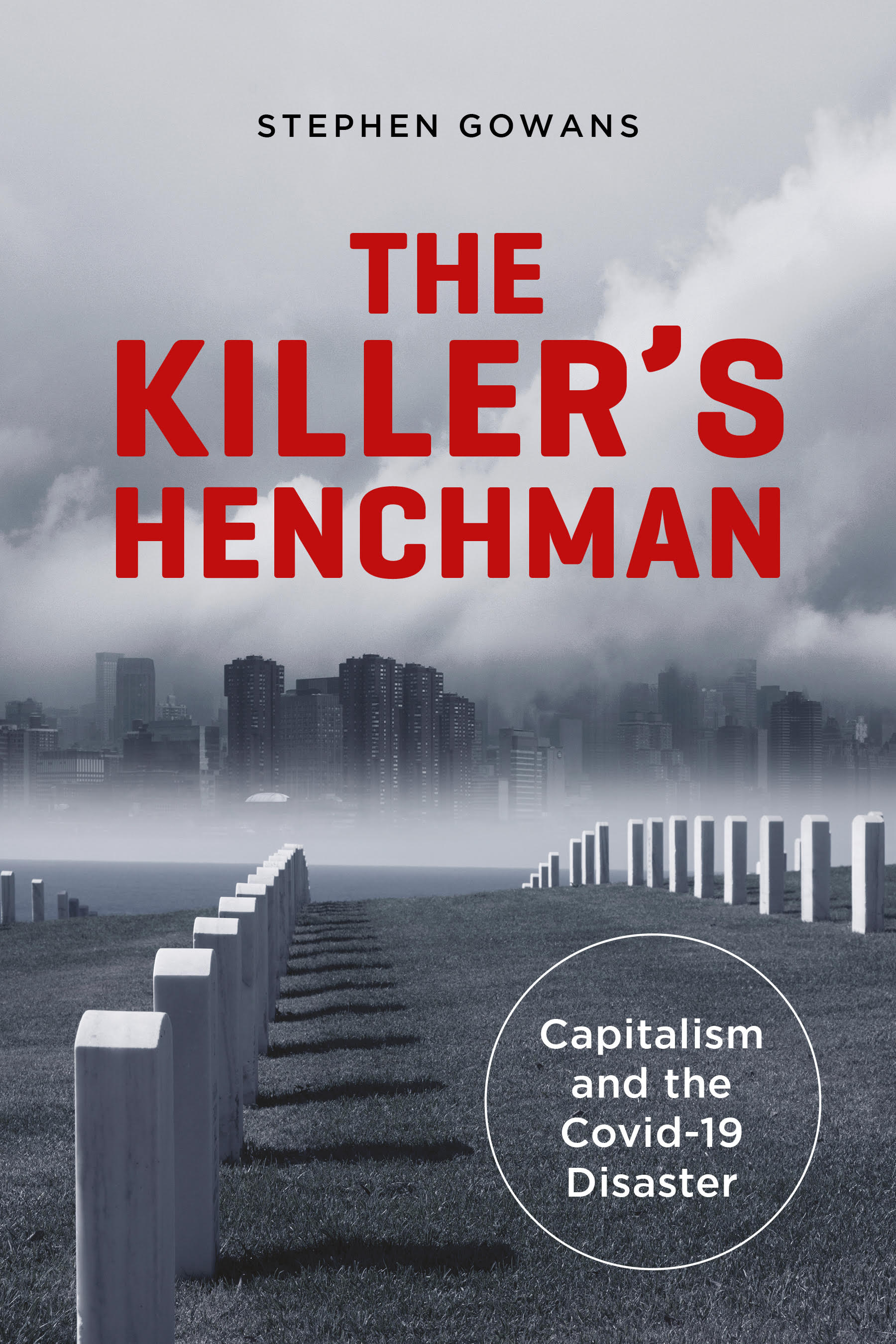
Coming soon. The Killer’s Henchman: Capitalism and the Covid-19 Disaster. Available for pre-order from Baraka Books.
Subscribe to get access to the rest of this post and other subscriber-only content.
September 17, 2021
By Stephen Gowans
Every country that has more colonies, capital, armies, than we have, deprives us of certain privileges, certain profits or super-profits, so among nations, the one that is economically better situated than others receives super-profits. It is the business of the bourgeoisie to fight for privileges and advantages for its national capital.–Lenin*
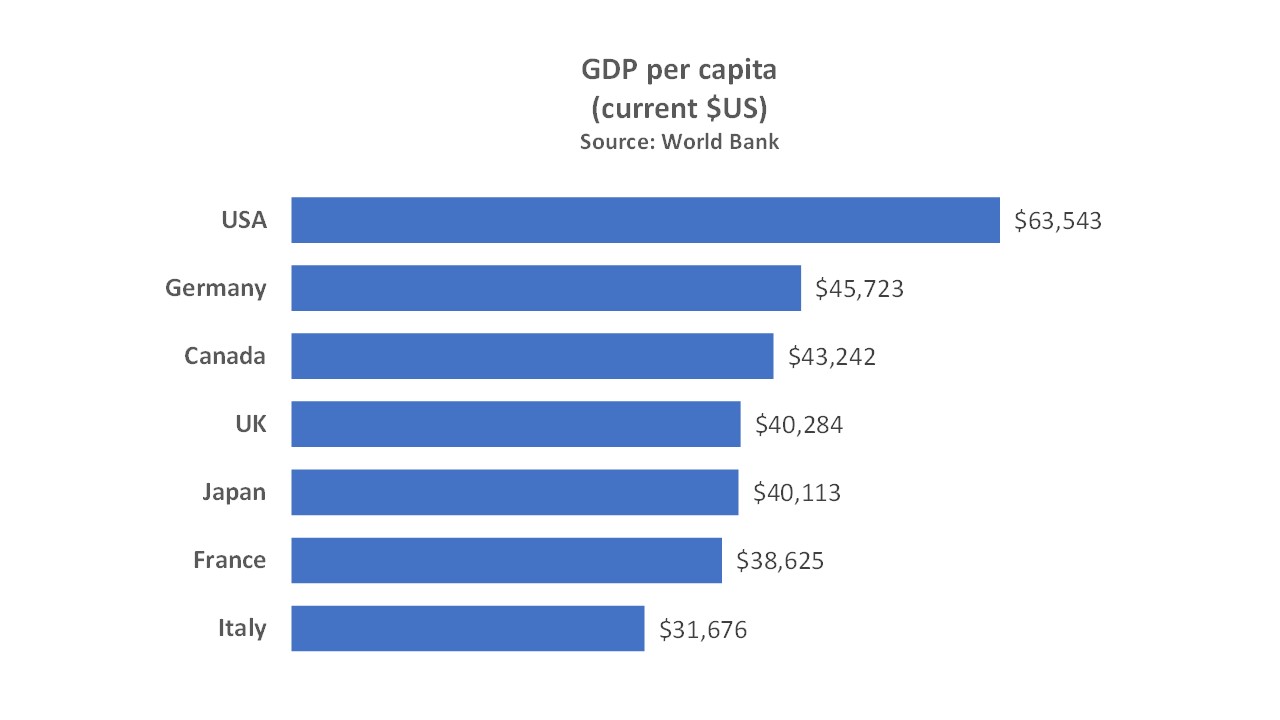
The Harvard economics professor, N. Gregory Mankiw, who served as chairman of the Council of Economic Advisers to the US president from 2003 to 2005, points to lower GDPs per capita in Western Europe to warn against US Americans emulating Western Europe’s welfare states. The higher taxes that Western Europeans pay for robust social supports, he cautions, undermine incentives to work, leading to lower incomes. “Europeans work less than [US] Americans because they face higher taxes to finance a more generous social safety net,” Mankiw argues.
While it’s true that the United States’ G7 partners are less affluent in GDP per capita terms, to what extent is this due to higher taxes versus the United States’ ability to shape the international economic order to suit the interests of US investors and businesses at the expense of its G7 partners?
US politicians endlessly point to the post-World War II economic order, of which Washington was the chief architect, as the key to US prosperity. For example, in 2017, John McCain, a major figure in the US foreign policy establishment, remarked: “We are the chief architect and defender of an international order governed by rules derived from our political and economic values. We have grown vastly wealthier and more powerful under those rules.” McCain warned that challenges to the US-created order threatened US prosperity.
Today, McCain’s “rules” are variously referred to as “the rules of the road,” the “rules-based international order,” and “international rules and norms.” What they refer to are US-created rules that make the United States “vastly wealthier and more powerful”—indeed, vastly wealthier and more powerful than even its G7 allies.
In an important article he wrote for the March/April 2020 edition of Foreign Affairs–the journal of the influential Wall Street-funded and directed policy formulation group, the Council on Foreign Relations–soon-to-be president Joe Biden noted that for the last 70 years, the United States has “played a leading role in writing the rules, forging the agreements, and animating the institutions that guide relations among nations.”
As McCain acknowledged, Washington constructed the rules to serve US economic interests.
US military might and economic leverage have allowed Washington to define the rules and enforce them. Our “ability to project power [is inter alia] the basis of how we … advance U.S. interests,” declared the Chairman of the Joint Chiefs of Staff in 2017.
Washington’s obsession with “the rules,” who writes them, and who benefits from them, lies at the heart of US hegemonism, but also US hostility to China. China, and other powers such as Russia, North Korea, and Iran, which Washington denounce as revisionist, want to revise the rules of the road that put the United States ahead of all other countries, politically, militarily, and economically. These countries, along with others, have formalized their opposition to a global order based on US rules and US supremacy by founding The Group of Friends in Defense of the Charter of the United Nations, an 18-nation alliance that promotes an international order based on international law and the equality of nations.
“Who writes the rules that govern trade? … The United States, not China, should be leading that effort,” insists Biden.
Until the end of World War II, Washington’s G7 partners, Germany, Japan, Italy, France, the UK, and Canada, were independent competitors of the United States, each seeking to carve up the world into their own spheres of trade, investment, and economic advantage. (Canada, as part of the British Commonwealth, followed London’s lead.)
The postwar international order, authored by the newly emergent hegemonic power, the United States, integrated the defeated Axis powers, along with the weakened French and British Empires, into an international order, defined by Washington, informed by Wall Street’s values, and aimed at promoting corporate USA’s prosperity.
To ensure its former imperial rivals would now accommodate, rather than compete with, US economic interests in a new US-defined world order, the United States occupied militarily Germany, Japan, Italy, and the UK. For almost 80 years, the United States has maintained a robust military presence in each of these countries. Why? In 2002, in an interview with United Press International, Alexander Haig, former Supreme Commander of NATO and US Secretary of State in the Reagan administration, explained.
Q — Why is the United States still stationing 70,000 troops in Germany?
A — A lot of good reasons for that. This presence is the basis for our influence in the European region and for the cooperation of allied nations…. A lot of people forget it is also the bona fide of our economic success. The presence of U.S. troops keeps European markets open to us. If those troops weren’t there, those markets would probably be more difficult to access.
Q — I didn’t forget. I just didn’t know that if the United States didn’t maintain 70,000 troops in Germany, European markets might be closed to American goods and services.
A — On occasion, even with our presence, we have confronted protectionism in a number of industries, such as automotive and aerospace.
In other words, the markets of former imperial rivals were integrated into the US market, and the glue that bound them to the United States, and continues to bind them–as The New York Times’ columnist Thomas Friedman once put it–is “the hidden fist” of “the United States Army, Air Force, Navy and Marine Corps.”
Washington would also integrate its former European imperial competitors into NATO, placing their militaries under formal US command, and thereby taking future inter-imperialist military rivalry off the table. At the same time, NATO allows Washington to exploit the fettered militaries of its former rivals as force multipliers in the pursuit of specifically US goals in the US-defined international realm.
After the war, Washington imposed a pacifist constitution on Japan, the United States’ main rival for domination of East Asia and the Pacific, effectively emasculating the country militarily, and ensuring it would not contest US primacy in the region. Washington is now pressuring Japan to lift the pacifist restrictions the United States itself imposed on Tokyo, in order to gear up for war on “revisionist” China, under US direction.
Additionally, the US military controlled, and continues to control, the world’s trade routes, and hence its former rivals’ access to markets and raw materials. “If you have a global economy, I think you need a global navy to look after that economy,” said U.S. Pacific Fleet Commander Admiral Scott Swift. The global navy is none other than the US Navy. Author Gregg Easterbrook notes that “the US Navy is ‘the police force of nearly all blue water.” … It “has made the oceans … safer for commerce.” Specifically, US commerce.
Importantly, Washington keeps its hand on the Middle East oil spigot. Germany, France, Japan, and Italy are highly dependent on oil from West Asia. With Washington able to close the spigot at will, Western Europe and Japan have few options but to accept what Hugo Chavez called “the international dictatorship of the United States empire.”
Hence, the United States’ G7 partners emerged from the war as US vassals. Within the globe-girding US empire, they were assigned roles as junior partners—that is, subordinate components of the US imperium. Their economic interests would be junior and inferior to those of Wall Street and corporate USA.
Mankiw’s analysis is risibly superficial. The idea that taxation undermines incentives to work rests on the notion that effort is proportional to its return. Taxes reduce the return on effort and therefore discourage work. If this is true, the opposite is also true: the greater the return, the greater the effort. By this logic, Mankiw ought to advocate a robust increase in the minimum wage, reasoning that the more money people are able to make, the more likely they are to want to work. But he’s not. Instead, Mankiw’s prescriptions invariably favor employers over workers. The wealthy should not be burdened by high taxes. Governments ought to raise revenue through consumption taxes: those that hit low-income families the hardest and the wealthy the least. In invariably promoting the interests of capital, Mankiw illustrates why Karl Marx described economists of the Harvard professor’s color as “hired prize fighters” of the bourgeoisie, not “disinterested inquirers,” whose only concern was “whether this theorem or that was … useful to capital or harmful.”
Moreover, Mankiw divorces his analysis from the surrounding conditions and events. History, politics, the imbalance in political and military power between the United States and Western Europe, do not enter his field of vision. Notwithstanding Mankiw, the disparity in per capita income between the United States and its G7 partners can be explained by Washington building a post-WWII international order to privilege US economic actors at the expense of its defeated and weakened imperial rivals. In other words, the outcome of the three decades-long, 1914-1945, inter-imperialist struggle, was the emergence of a US leviathan—one that reordered the world to put, not business on top, but US business on top, with the consequence that US GDP per capita would top that of its former competitors.
Had Germany prevailed in the struggle, and had it subsequently integrated the United States into a German-led global economic order, German GDP per capita would almost certainly be greater than that of the United States, for the simple reason that German-authored rules would favor German businesses. Likewise, had Japan prevailed, the Japanese, not US Americans, would enjoy the higher GDP per capita.
This is not to say that the rivalry has come to an end. It hasn’t. That the G7 countries continue to compete among themselves for markets and investment opportunities can be seen in Germany forging a stronger trading relationship with Beijing than Washington favors; in rivalry between the EU and the United States in connection with Airbus and Boeing; in Germany and France flirting with strategic autonomy for Europe; and between the United States and France in arms sales. These are but a few examples. Even so, while competition persists, it does so within bounds defined by Washington, enforced by its ability to control its rivals’ access to markets and raw materials.
It is not, then, Western Europe’s welfare states, and the support they receive from higher taxes, that account for why Washington’s G7 partners are poorer. Instead, the lower GDPs per capita of the United States’ former imperial rivals can be explained as the outcome of their losing the inter-imperialist struggle of the first half of the twentieth century. Emerging victorious and strengthened from the thirty-year-war, the United States used its military and economic clout to impose a global economic order on its former rivals—an order which puts corporate USA first, and relegates its G7 partners to junior positions, provides them junior access to profit-making opportunities, and leaves them with junior incomes.
*V.I. Lenin, “Imperialism and Socialism in Italy” in Lenin: The Imperialist War, International Publishers, 1930, p. 333.
Subscribe to get access to the rest of this post and other subscriber-only content.

