
Everyone wants peace. It’s just that they want it on their own terms. Libyan leader Muammar Gaddafi wants peace in Libya, so long as it means he remains in power. At a later date, his terms may change: peace in return for exile in a country that will keep him out of the clutches of the International Criminal Court. The rebels and NATO countries want peace too, but only so long as Gaddafi leaves and the rebels form a new government. Peace on your own terms really means victory. Indeed, that’s how victory could be defined.
In Libya, Protecting Profits from an Outbreak of Peace
Obama, Cameron and Sarkozy sent a message to the African Union in their jointly written April 14 op-ed: They’ll block any attempt to negotiate peace in Libya that doesn’t include Gaddafi’s ouster and the opening of Libya’s economy.
By Stephen Gowans
On April 14 US president Barak Obama, British prime minister David Cameron and French president Nicolas Sarkozy wrote an op-ed titled “Libya’s pathway to peace.” Appearing in the International Herald Tribune and two other newspapers, the op-ed set out US, British and French goals for Libya. One would be peace, but the pathway was to be Gaddafi’s exit, and his replacement by the Benghazi rebels.
While not presented as such, the op-ed was in fact a rejection of an African Union proposal for a negotiated settlement.

The AU had dispatched a delegation to Tripoli to meet with Gaddafi four days earlier, on April 10. The delegation proposed an immediate cease-fire, delivery of humanitarian aid, and negotiations between the Libyan government and the Benghazi rebels. Gaddafi accepted. But when the delegation arrived in Benghazi the next day, the rebels let it be known that the only peace they were interested in was one that saw Gaddafi, “his sons and his inner circle leave immediately.” (1)
US secretary of state Hilary Clinton quickly echoed the rebels’ position. Nothing could be resolved, she said, without “the departure of Gaddafi from power, and from Libya.” (2)
Peace was impossible in Libya without Gaddafi’s exit, the leaders insisted in their op-ed, because Gaddafi was the main threat to peace. It was “impossible to imagine a future for Libya with Gaddafi in power” they wrote, and added that “so long as Gaddafi is in power, NATO must maintain its operations.” Their case was based on the fiction that the conflict in Libya isn’t a civil war between rebels in the east and loyalists in the west but between the state and the people, as was true in Tunisia and Egypt and is true in Bahrain and Yemen.
As for Gaddafi being an obstacle to peace, that was belied by his acceptance of the AU peace proposal. But the armed uprising has, from the beginning, had nothing to do with peace. It has always been about regime-change.
Gaddafi is wrongly fit by the three leaders, as well as by supporters of the Western military intervention, into the mold of Bahrain’s Khalifa regime, which has used armed force to violently suppress a popular peaceful revolt. The uprising in Libya was armed, not peaceful, and while it may be popular in the east among tribalists, royalists, and radical Islamists led by neo-liberals connected to the United States, it has little popular support elsewhere in the country.
Despite casting the Gaddafi government in the role of the Khalifa regime, the leaders make no reference to the latter, which remains largely invisible in discussions of the “Arab spring” and which provides the Pentagon with a headquarters for its Fifth Fleet and runs a low-tax, no minimum-wage, foreign investment-friendly economy. If the US, British and French leaders were truly interested in protecting civilians they would have long ago imposed a no-fly zone over Bahrain and ordered the Saudi monarchy, surely the most regressive force on the planet, to withdraw its troops from Bahrain. But what they’re really interested in achieving in Libya is what was long ago achieved in Bahrain: a neo-colonial puppet regime that opens its country to Western military bases and unconditional exploitation by foreign corporations and investors.
And so Obama, Cameron, and Sarkozy used their op-ed to declare that there must be “a genuine transition” in Libya “led by a new generation of leaders” and that “in order for that transition to succeed, Gaddafi must go and go for good.” Significantly, the transition would usher in the new Western puppet. There are two indications of this.
The first is the nature of the rebel leadership. Its key members have important connections to the United States. Khalifa Heftir, a former Libyan Army colonel, has spent the last 25 years living seven miles from CIA headquarters in Langley, Virginia with no obvious means of support. (3) Mahmoud Jibril “earned his PhD in 1985 from the University of Pittsburgh under the late Richard Cottam, a former US intelligence official in Iran who became a renowned political scientist specializing on the Middle East.” Jibril “spent years working with Gaddafi’s son Saif on political and economic reforms … (b)ut after hardliners in the regime stifled the reforms, Jibril quit in frustration and left Libya about a year ago.” (4) Jibril has been out of Libya since the uprising began, meeting with foreign leaders. (5) Then there is the rebel government’s finance minister, Ali Tarhouni, who has been in exile for the last 35 years. His latest job was teaching economics at the University of Washington.
The second indication is provided in the three leaders’ op-ed. Libya, they write, must “develop the institutions to underpin a prosperous and open society.” Revealingly, the three leaders tell Libyans what institutions they should develop. But what if Libyans don’t want an open society at this point in their development? What if they want what the United States, Britain and France have had through long parts of their history (and still do have): a society closed to outsiders in strategic areas?
While the institutions of an open society aren’t exclusively economic, an open society is understood to be one whose doors are open to unconditional integration into the global economy. This differs from the Gaddafi government’s strategic integration, based on linkages aimed at increasing real wages in Libya rather than maximizing returns to foreign investors. This isn’t to say that Libya hasn’t welcomed foreign investment where it makes sense for the development of the country, but it is likely that the open society Obama, Cameron and Sarkozy foresee for Libya, has little to do with what makes sense for Libya, and everything to do with what makes sense for US, British and French investors and corporations.
1. Kareem Fahim, “Truce plan for Libya is rejected by rebels”, The New York Times, April 11, 2011.
2. David E. Sanger, “Possible Libya stalemate puts stress on U.S. policy”, The New York Times, April 11, 2011.
3. “Professor: In Libya, a civil war, not uprising”, NPR, April 2, 2011. http://www.npr.org/2011/04/02/135072664/professor-in-libya-a-civil-war-not-uprising
4. Farah Stockman, “Libyan reformer new face of rebellion”, The Boston Globe, March 28, 2011.
5. Kareem Fahim, “Rebel leadership in Libya shows strain”, The New York Times, April 3, 2011.
Scholars or Bamboozlers?
By Stephen Gowans
“When you’re criticized”, what should you do? asks Brian Martin, a scholar of non-violence. His answer: “Assess the way audiences are likely to perceive things.” That is, create the right impression.
Martin has written an article soon to be published in the Journal of Scholarly Publishing about how to respond to criticism, but it seems he also offers a guide to scholars on how to talk to non-scholars in popular forums – particularly those who have been criticized.
Martin may have been inspired to write his article because he has been criticized here and elsewhere for belonging to a dodgy organization that does openly what the CIA used to do covertly, namely, help people in country’s abroad overthrow their governments. That might not be such a bad thing were the successor regimes leftwing and advanced human progress but they’re invariably rightwing and keen to open their doors to US military bases and exploitation by Western capital.
What’s interesting about the advice that Martin delivers is that he seems to be telling scholars to shed their cloaks of dispassionate scholarly contemplation, in favour of a style of attack suited to persuading non-scholars. His advice: Ignore obscure critics who have no profile (otherwise you’ll give them credibility) and reply only to those who can command an audience. And then to do so with short, clear, punchy replies. Few people will read long, detailed, counter-arguments. Brevity and clarity are important.
If your aim is to win as many people to your side as you can, as opposed to say, thrashing out the issues in scholarly debate to arrive at the truth, there could be no better advice. Which makes you wonder why a scholar is recommending tactics more familiar to those who practice the cut and thrust of sharp political debate, than a battle of evidence and reasoned argument. Could it be that he’s a politician at heart?
I think so. The International Center on Nonviolent Conflict, the outfit Martin belongs to as an academic adviser, is an advocacy organization for non-violent direct action, or what is sometimes deceptively called “peace scholarship.” Peace scholars are not at all interested in peace as you and I understand it (say, avoiding unnecessary conflict). Instead, peace studies amount to figuring out how to win in a political conflict without using insurrectionary violence (because it is often ineffective against modern militaries) or traditional military methods (because it is often impractical). Seizing political power through the use of strikes, demonstrations, boycotts and non-violent sabotage – what used to be called destabilization – is what non-violent conflict is all about, according to the ICNC’s principals. Not surprisingly, militaries take a keen interest in peace scholarship. After all, it’s concerned with what militaries have traditionally existed to do, namely, guard political power at home and take it abroad. It’s not by accident that peace scholars sometimes refer to their discipline as the study of non-violent warfare.
Ah, but the phrase “peace scholarship” makes seizing power through destabilization sound leftwing and gosh, peaceful. It couldn’t possibly be a CIA-style thing, right?
Think again. It’s implicitly understood that when peace scholars talk about seizing political power that this is to happen in other countries, and not, God forbid, the United States, where the ICNC’s chiefs are firmly ensconced in the US establishment leading very comfortable lives, thank-you very much. They would hardly want to carry out a people power revolution close to ICNC headquarters.
The outfit’s founder, Peter Ackerman, is an immensely wealthy investor who engineered the KKR leveraged buy-out of RJR Nabisco and hobnobs with other board members of the US establishment on the influential Council on Foreign Relations and various other think-tanks and foundations. Not too long ago he sat on a task force headed by former U.S. National Security Advisor Zbigniew Brzezinski and former CIA Director and current U.S. Defense Secretary Robert Gates. And he once headed the far right Freedom House, which Noam Chomsky and Edward Herman described in their Manufacturing Consent as being interlocked with the CIA.
The ICNC’s defenders say that Ackerman’s connections are irrelevant, and that bringing them up amounts to assigning guilt by association. They have charged one of the ICNC’s most vigorous critics, Michael Barker, with trying to discredit sincere peace activists through a line of attack that amounts to singling out people because “they may have once been in a room with someone who may or may not have worked for the CIA.”
The rhetoric is clear, brief, punchy and memorable – exactly what, one suspects, Martin would recommend. The only problem is that it’s wrong.
Consider Ackerman. Wall Street background. Bags of money. Council on Foreign Relations membership. Task forces with the US foreign policy elite. Former Freedom House supremo. Holds seminars on how to destabilize governments for foreign activists sent his way by the US State Department. Hardly the model of a leftist peace activist. Or consider Lester Kurtz, one of Martin’s ICNC colleagues and another of Ackerman’s scholars. He has admitted to – indeed, was proud to acknowledge on his CV – that he has given advice to the CIA.
And that’s where Martin seems to have taken a wrong turn in his upcoming article. He seems more concerned with impression-making – of the kind that turns a wealthy establishment figure who works at overthrowing the bad boys on the State Department hit list into a left-leaning peacenik — and less with truth-telling. It’s like he’s saying to scholars: “Okay, now let me tell you how successful politicians and PR executives cover up embarrassing revelations.”
Well, one thing politicians, PR experts and other bamboozlers do is to prey on the weaknesses of people’s cognitive heuristics: that is, the ways they deal with complexity and too much information.
How do you tell whether the advice you’re receiving is sound? One way is to evaluate the credentials of the person offering it. For example, who are you going to believe about how you ought to deal with your troubling hernia — a licensed physician, or the local health food fanatic with a certificate in reflexology who peddles hot stone massage and flax seed oil? Evaluating statements about, say nuclear physics or hernia operations, by examining the credentials of the source is a good idea, if you know nothing about nuclear physics or hernias. Cognitive heuristics (that is, mental short-cuts) often work, but sometimes they can lead you astray, especially when unscrupulous people use them to lead you by the hand down the garden path.
One example of using peoples’ mental short-cuts to trip them up is a woman who not too long ago created a huge profile for herself by dispensing tough-love advice to troubled people on the radio. She called herself Dr., lending the impression that she was a psychiatrist or counselling psychologist – a person with credentials to deal with troubled individuals. She was neither. She was, instead, a Ph. D. in physiology. It’s as if your dentist, Dr. Hackensack, masquerades as a physician.
Another example would be a scholar writing a book which he prefaces with a short article by a well-known person who knows nothing about his book. He then presents the book as My Big Ideas, by Dr. X, with a forward by a well-known and admired person. This creates the impression that the well-known person endorses the book, and that the book – and its ideas — must therefore be worth paying attention to. Has this actually happened? Perhaps. Listen to this interview with journalist and science writer Fred Jerome, beginning at the 40 minute mark.
Stephen Zunes, the chief ICNC scholar, makes a habit of letting people know he is a professor with a Ph. D. He often refers to his docent, Ackerman, as Dr. Ackerman, but never as junk bond king Michael Milken’s former right-hand man or “the sniff” as he was known by his colleagues, for plumbing Milken’s proctological depths. Zunes, the sniff’s sniff, also makes sure to refer to critics as Mr. or Ms. even when he hasn’t the slightest idea whether they’re also Ph.D.s, who happen to shun honorific titles and therefore don’t make a big display of their educational attainments. Peacock-like credential displays, with the added intimation that your critics haven’t any, says: “I’m an expert; my critics aren’t. Who are you going to believe?”
Gravitas is related. Noam Chomsky’s gravitas is based on his reputation as a high profile linguist, his connection to MIT, and his prolific book-writing. A short-cut to evaluating whether what he says makes sense is to refer to his credentials. Wow, a guy like this must know what he’s talking about. Astonishingly, someone recently wrote a Z-Net article making a case whose support was largely that his position was based on what Chomsky told him. He was hoping to earn instant credibility by exploiting the cognitive heuristic that makes you deem anything Chomsky says as probably true (or probably wrong if you dislike him) without actually having to do the leg-work to figure it out yourself.
Many people hope that gravitas will unburden them of actually having to produce evidence for what they claim and it appears the hope is not always in vain. They can then make all manner of bold statements and expect to be believed, because, well…they have gravitas. That’s not to say Chomsky does this. But others do.
Here’s an interesting exercise. Read through one of Stephen Zunes’ articles and notice how many statements he makes with complete certitude about matters he couldn’t possibly know to be true. For example, in a recent article he said: “What has been remarkable about the successful civil uprisings against the Tunisian and Egyptian dictatorships, the serious popular challenges to the Yemeni and Bahraini dictatorships and the smaller-scale protests sweeping the region, is that they were completely indigenous and not sullied by foreign intervention.”
To this, I have three replies.
First, how could Zunes, or anyone else, possibly know this? It’s easy, in principle (and it turns out in fact too) to prove that it’s not true. All you have to do is cite one instance of foreign intervention and the claim that the uprisings were unsullied by foreign intervention crumbles. But how can you prove there has been no foreign intervention? You can’t. Zunes, however, wants us to believe he’s possessed of some sort of preternatural power that allows him to prove what mere mortals cannot — a negative.
Second, what evidence does he offer? Answer: Not a speck.
Third, if completely indigenous uprisings unsullied by foreign intervention are remarkable, it must be that uprisings that aren’t indigenous and are sullied by foreign intervention are the norm, otherwise how would the indigenous and unsullied ones be so remarkable? And yet Zunes is always prattling on about how the uprisings in which Uncle Sam and the ICNC have had an obvious hand (e.g., Serbia, Georgia, Ukraine, and attempts in Belarus and Iran) were completely or largely indigenous. It seems Zunes just makes it up as he goes. Indeed, the following from Ron Nixon’s April 14, 2011 New York Times’ report (“U.S. groups helped nurture Arab uprisings”) is strikingly at odds with Zunes’ confident assurance that the uprisings were unsullied by foreign intervention.
[A]s American officials and others look back at the uprisings of the Arab Spring, they are seeing that the United States’ democracy-building campaigns played a bigger role in fomenting protests than was previously known, with key leaders of the movements having been trained by the Americans in campaigning, organizing through new media tools and monitoring elections.
A number of the groups and individuals directly involved in the revolts and reforms sweeping the region, including the April 6 Youth Movement in Egypt, the Bahrain Center for Human Rights and grass-roots activists like Entsar Qadhi, a youth leader in Yemen, received training and financing from groups like the International Republican Institute, the National Democratic Institute and Freedom House, a nonprofit human rights organization based in Washington, according to interviews in recent weeks and American diplomatic cables obtained by WikiLeaks.
[…]
The Republican and Democratic institutes are loosely affiliated with the Republican and Democratic Parties. They were created by Congress and are financed through the National Endowment for Democracy, which was set up in 1983 to channel grants for promoting democracy in developing nations. The National Endowment receives about $100 million annually from Congress. Freedom House also gets the bulk of its money from the American government, mainly from the State Department.
[…]
Some Egyptian youth leaders attended a 2008 technology meeting in New York, where they were taught to use social networking and mobile technologies to promote democracy. Among those sponsoring the meeting were Facebook, Google, MTV, Columbia Law School and the State Department.
“We learned how to organize and build coalitions,” said Bashem Fathy, a founder of the youth movement that ultimately drove the Egyptian uprisings. Mr. Fathy, who attended training with Freedom House, said, “This certainly helped during the revolution.”
Ms. Qadhi, the Yemeni youth activist, attended American training sessions in Yemen.
“It helped me very much because I used to think that change only takes place by force and by weapons,” she said.
Through what magic does Zunes get away with it? The answer is in Martin’s upcoming article. Assess the way the audience is likely to perceive things. And then prey on their mental shortcuts. When you have no evidence, the truth is embarrassing, and your case is pure wind, it’s the only way to go.
Updated April 15, 2011.
Achcar Turns Lenin on His Head
By Stephen Gowans
Gilbert Achcar has invoked the authority of Lenin to claim that support for Western military intervention in Libya is the only defensible anti-imperialist position. Lenin made compromises, Achcar says, and like him, so must we.
Achcar doesn’t deny that the intervention is imperialist, but believes that imperialist or not, it was necessary to prevent a slaughter. His logic, however, is elusive. If the intervention is imperialist, even if it did prevent a slaughter (and it’s likely instead to have created the conditions for a protracted civil war) how can support of it be anti-imperialist? This is like saying that support for coal-fired generators is the only defensible pro-clean-air position, because nuclear could produce a catastrophe. You can argue about the relative merits of coal versus nuclear, and decide that coal is better than nuclear on balance, but that doesn’t make your position pro-clean air.
Lenin once said that he would ally with the devil himself if the devil was opposed to British imperialism. Where Achcar differs with Lenin is that he, Achcar, has allied with imperialism because imperialism says it opposes the devil.
Looking Out for Western Business and Investor Rights: Why the West Approves Military Interventions to Topple One Arab Government and Prop Up Another
By Stephen Gowans
In a previous article I pointed to three factors to explain the West’s decision to intervene militarily in Libya to prevent the government there from putting down an armed rebellion while it tacitly approves the Gulf Cooperation Council’s military intervention in Bahrain to put down a peaceful rebellion there. The double-standard, I argued, reflects dramatic differences between Libya and Bahrain in their relationship with the United States and its dominant investor and corporate class.
Bahrain is the home of the US Fifth Fleet, has long-standing warm relations with Washington, and strongly caters to Western corporate and investor interests. Since the Khalifa regime supports US corporate profit-making and military interests, and a new regime might not do the same to the same degree, Washington is prepared to allow Saudi and other GCC troops and tanks to assist Bahraini authorities in violently quelling a peaceful rebellion.
Libya, I pointed out, doesn’t provide bases for the US or other Western militaries, hasn’t had long-standing warm relations with Washington, and isn’t particularly accommodating of Western corporate and investor interests. From a neo-colonialist standpoint, Western powers could do better in Libya.
Some readers objected, arguing that in recent years Libya has sought to open itself to Western corporations and investors and has struck a number of deals with Western oil companies. It cannot be concluded, they continued, that the West’s decision to intervene military in Libya was motivated by Western profit-making considerations, for Libya is already catering to Western business interests.
To be sure, Libya has opened itself to the West, but doing deals with Western corporations is not the same as engineering a wholesale subordination of domestic interests to those of foreign bankers and corporations — typically, what corporate-and investor-oriented Western governments look for in Third World “partners”. For the wealthy scouring the globe for investment opportunities and corporations seeking export markets, an opening door in Libya doesn’t necessarily mean that Libya’s business climate is fully conducive to maximizing profits. That Libya allows some Western corporations to operate in the country doesn’t guarantee that investments are safe from expropriation, that performance requirements aren’t imposed on foreign investments, that repatriation of profits isn’t controlled, that taxes aren’t high, or that there is a commitment to labor market “flexibility.” In short, the Kaddafi government may, in recent years, have sought to expand Western access to investment opportunities in Libya, but that alone doesn’t mean that the conditions of access were regarded by corporations and investors as being as desirable as they could be, or as desirable, for example, as those provided by the government of Bahrain, or as desirable as those a future government might provide.
The Heritage Foundation provides a guide to how accommodating countries are to the profit-making interests of US corporations and investors. Every year the foundation publishes an Index of Economic Freedom, which ranks countries on how open they are to exports and foreign investment, how low their taxes are, how committed they are to protecting property rights, and so on; in short, how strongly a country favors foreign businesses and investors over its own people. Significantly, governments that are perennially targets of US government regime change efforts rank at or near the bottom of the index. This year’s list identifies the following 10 countries as the least economically free (i.e., least accommodating to foreign businesses), in order, from worst to slightly better:
• North Korea
• Zimbabwe
• Cuba
• Eritrea
• Venezuela
• Myanmar
• Libya
• Democratic Republic of Congo
• Iran
• Timor-Leste
Seven of the bottom 10 (North Korea, Zimbabwe, Cuba, Venezuela, Myanmar, Libya and Iran) are the targets of open regime change operations by the United States and its allies, carried out ostensibly because the targeted countries are not protecting human rights, threaten regional stability, or in the case of Libya, because the government is said to be attacking its own people. That these countries happen to be considered the least accommodating of foreign business profit-making points to an ulterior motive on the part of Western governments to bring about regime change, and to use human rights and humanitarian rhetoric as a cover for pursuing the economic interests of Western corporate and investor elites.
Significantly, not one country in the top 10 is a target of Western regime change efforts. If regime change were linked to human rights concerns and not unfavorable investment and export conditions, we might expect to find regime change targets scattered throughout the rankings, rather than bunched up at the bottom. One counter-explanation is that economically free countries tend to respect human rights, which is why the worst offenders on both counts are found at the bottom of the list. However, this couldn’t possibly be true, for the United States, which has an atrocious human rights record (Guantanamo, Abu Ghraib, torture and rendition of prisoners, arrest and detention without charge, extrajudicial assassination, weakening of Miranda rights, spying on its own citizens, restrictions on travel to Cuba, and so on) ranks as the 9th freest country in the world in economic terms, while Saudi Arabia, the least free country in terms of political and civil liberties and perhaps the most contemptuous of human rights, ranks in the top half.
Bahrain, as it turns out, is ranked number 10 of 179 countries on the Heritage Foundation list, next to the United States. Regionally, Bahrain is top ranked in North Africa and West Asia, while Libya, ranked 173 over all countries, falls dead last in regional rankings. Bahrain’s higher ranking is based on an array of government policies aimed to please foreign businesses. Property ownership is secure and expropriation is unlikely, whereas in Libya foreign companies are vulnerable to expropriation. Bahrain welcomes foreign investment and allows new businesses to be 100 percent foreign owned and controlled, while Libya screens foreign investment, imposes performance requirements on foreign investors that domestic investors are not required to meet, and demands that Libyans have a 35 percent stake in foreign companies that operate in the country. And while Bahrain imposes no restrictions on repatriation of profits, Libya does.
On trade, Bahrain imposes few restrictions on imports, while Libya maintains a variety of tariff and non-tariff barriers to help local firms develop. With the exception of oil companies, businesses that operate in Bahrain pay no corporate tax, while businesses in Libya are subject to a tax rate as high as 40 percent. Personal income tax is extremely low in Bahrain, but can reach as high as 90 percent in Libya. And while Bahrain provides businesses maximum flexibility in dealing with employees, even allowing them to pay desperation-level wages, Libya provides protection for workers on pay and working conditions.
In short, the Bahraini monarchy runs a foreign-investment- and import-friendly regime, while Libya’s economic policies favor local investors and businesses and provide some protections for labor. A government that was more like Bahrain’s, and less like Kaddafi’s, would unquestionably be congenial to foreign business interests.

Some readers contend that Western military intervention in Libya is aimed at preventing the slaughter of Libyan civilians. But a stronger case can be made that Western military intervention is aimed at regime change, and that far from protecting civilians, NATO bombing is only setting the stage for a prolonged civil war by weakening loyalist forces and thereby allowing the rebels to contest for power.
There are a number of reasons why the NATO operation in Libya can be seen as a regime change effort, on top of the motivation of replacing the current government with one more congenial to Western profit-making interests, discussed above.
First, the decision of the French government to recognize the rebel opposition as the legitimate government was a declaration that France, at least, is manoeuvring to install a new government in Libya. (1) Indeed, both France and Britain have acknowledged that they are seeking the ouster of Kaddafi. (2)
Second, US secretary of state Hilary Clinton said “Kaddafi’s ouster was the ultimate goal of the UN resolution” (3) and while US president Barack Obama denied this, he did say that the military “campaign will likely continue as long as Libyan leader Moammar Gadhafi is in power.” (4) If the intervention’s goal is to protect civilians and not install a new government, how can the aims of France and Britain and the comments of Clinton and Obama be reconciled?
Third, Washington hopes that sanctions “combined with NATO air power, will be enough to turn the tide militarily.” While the UN Security Council resolution authorizes the use of military means to protect civilians, it doesn’t authorize the use of military means to aid rebel forces. Yet newspapers on March 23, 2011 were full of stories on how fresh airstrikes were allowing rebel forces to recover lost ground. For example, The Wall Street Journal commented that,
“The hope for the West is that a continuation of military pressure on Col. Gadhafi’s forces, even at somewhat lower levels in coming days, combined with continued forward movement by the rebels, will be enough to make the Libyan army either buckle or turn on the Libyan leader. That would produce the outcome the West hopes for – the removal of Col. Gadhafi.” (5)
Meanwhile, the New York Times reported that “the airstrikes have lifted the rebels back from the brink of defeat in the eastern city of Benghazi and enabled them to rush west along the coast past their farthest gains of the previous peak weeks ago.” (6)
It is clear that the intention of the military intervention, which was authorized when the rebels’ defeat by loyalist forces was imminent, was to weaken the government side to allow the rebels to rally and seize the momentum. This hardly favors a quick resolution of the conflict. The conflict could go on for some time, perhaps taking more lives than would have been lost had the UN sent a fact-finding mission in return for a cease-fire, or had loyalist forces successfully put down the uprising weeks ago. The potential for the conflict to drag on, fuelled by the aid NATO provides the rebels through its airstrikes, was acknowledged by US secretary of defense Robert Gates. The Pentagon boss said “he couldn’t be sure NATO would have finished its mission by year-end.” (7)
The idea, then, that the UN Security Council authorized military intervention to protect civilians has no substance. Furthermore, the idea that the intervention is protecting civilians, whether that is the real intention of the intervention or not, seems unlikely, since the outcome so far has been to create the conditions for a protracted civil war – one moreover, that will be worsened by civilian deaths caused by NATO bombing on behalf of rebel forces.
If the rebel forces prevail and extend their control to all of Libya, or eventually settle for partition of the country, we can expect the economic policies of the future government to be closer to those of Bahrain, and therefore closer to the profit-making interests of Western corporations and investors. In this sense, the UN Security Council, and the military operation it authorizes, can be seen as investments in making Libya a more attractive place to do business in.
Finally, it might be pointed out, as Johnstone has (8), that the Gaddafi government has invested a considerable part of its oil revenues in sub-Saharan Africa, contrary to the usual practice among Arab oil states of shipping the proceeds of their oil sales to New York investment banks, the London Stock Exchange, and US arms manufacturers. These practices are more conducive to Western business interests than Gaddafi’s investments in Africa, and might be expected to become the standard practice in Libya if the rebel movement succeeds in ousting the current government.
1. Diana Johnstone, “Why are they making war on Libya?” Counterpunch, March 24, 2011.
2. Jay Solomon and Carol E. Lee, “Obama bets on limited engagement”, The Wall Street Journal, March 24, 2011.
3. Keith Johnson, Yaroslav Trofimov and Sam Dagher, “Allies rally against Gadhafi”, The Wall Street Journal, March 19, 2011.
4. Nathan Hodge, Sam Dagher, Stephen Fidler and Stacy Meichtry, “Allies strain to mend split”, The Wall Street Journal, March 23, 2011.
5. Sam Dagher and Stephen Fiddler, “Fresh airstrikes aid rebels” The Wall Street Journal, March 28, 2011.
6. David D. Kirkpatrick and Kareem Fahim, “Libyan rebels march toward Qaddafi stronghold”, The New York Times, March 27, 2011.
7. Sam Dagher and Stephen Fiddler, “Fresh airstrikes aid rebels” The Wall Street Journal, March 28, 2011.
8. Diana Johnstone, “Why are they making war on Libya?” Counterpunch, March 24, 2011.
Sanitizing the Bahraini Crackdown
By Stephen Gowans
One of the many ways in which establishment media bias is evidenced is in the selection of the perspectives journalists adopt to relate the events they’re reporting on. This shouldn’t be surprising. As Canadian journalist and author Linda McQuaig points out, we would expect a newspaper owned by environmentalists to have an environmentalist point of view. We would expect a labor newspaper to report on the world from the perspective of labor. For the same reason, we should expect newspapers owned by US corporations with connections to the US foreign policy elite to present the world from perspectives congenial to corporate and US foreign policy interests.
In major US media, US foreign affairs are always presented from Washington’s perspective. This happens because the least expensive and most “patriotic” way to cover US foreign affairs is to assign reporters to the White House, State Department and Pentagon to record what US state officials say. In this way, what happens outside the United States is presented through the prism of official US state interests. Corporate-funded think-tanks make their “impartial experts” readily available to major media to hold forth on a variety of foreign policy topics. Accordingly, corporate perspectives—which almost always align with official US state perspectives-help define media coverage of foreign events.
In establishment media, the conflict between the Israelis and Palestinians is overwhelmingly presented from the perspective of Israel (a US client and key apparatus of US foreign policy in Western Asia and North Africa.) Many people in the West sympathize with Israel’s point of view, because it’s the one they’re exposed to most often.
Coverage of the conflict in Libya between loyalist Tripoli (not a US client) and rebel Benghazi (on whose behalf the United States, France, Britain, Canada and Qatar have provided an air force) is presented from the rebel’s vantage point. Rarely are the motivations, thinking, and perceptions of the Libyan government explored in any kind of non-judgmental way, although government pronouncements, especially those of Libyan leader Muammar Gaddafi, are presented if they serve the purpose of backing up Washington’s claim that he is insane, brutal and “a creature”. And depiction of Gaddafi in unfavorable terms, offers a popular justification for military intervention in the country.
On the other hand, Libyan rebels are presented in a favorable light. This is true too of Islamists who have fought against US forces in Iraq and Afghanistan, and are now taking part in the rebellion against Tripoli. That Islamic fighters can be demonized in one instance, and lionized in another, shows that what counts in major media coverage is whether Islamists fight for, or against, the United States. When they’re fighting against the United States in Iraq and Afghanistan they’re insurgents, illegal combatants and terrorists. When they’re fighting on the US side in Afghanistan against the Soviets, in Bosnia against the Serbs, and now in Libya against Gaddafi, they’re freedom fighters, rebels, and pro-democracy activists.
With questions being raised about Bahrain’s brutal crackdown on its own pro-democracy movement, and Washington’s silence, the New York Times’ Ethan Bronner has weighed in on Washington’s side with an article from the Khalifa regime’s perspective: “Crackdown Was Only Option, Bahrain Sunnis Say” (March 20, 2011). As far as I know neither the New York Times, nor any other Western newspaper, has run an article with a headline like “Crackdown Was Only Option, Libyan Government Says”.
Lest anyone get it into their head that Bahrain’s deadly Saudi and UAE-assisted suppression of the Gulf state’s pro-democracy movement is deplorable, Bronner — acting as de facto PR representative of the Khalifa monarchy — explains:
“To many around the world, the events of the past week — the arrival of 2,000 troops from Saudi Arabia and other neighbors, the declaration of martial law, the forceful clearing out of Pearl Square, the military takeover of the main hospital and then the spiteful tearing down of the Pearl monument itself — seem like the brutal work of a desperate autocracy.
“But for Sunnis, who make up about a third of the country’s citizenry but hold the main levers of power, it was the only choice of a country facing a rising tide of chaos that imperiled its livelihood and future.”
Bronner personalizes the story through Atif Abdulmalik, a US-educated investment banker who was initially supportive of the pro-democracy movement, but changed his mind when the “mainly Shiite demonstrators moved beyond Pearl Square, taking over areas leading to the financial and diplomatic districts of the capital.” Abdulmalik said he sympathized “with many of the demands of the demonstrators. But no country would allow the takeover of its financial district. The economic future of the country was at stake.”
Bronner allows Abdulmalik to conclude with the article’s apparent take-away message: “What happened this week, as sad as it is, is good.”
To be sure, Bronner’s article isn’t a blatant pro-Bahraini puff piece. There’s a lot in it that is critical of the Bahraini government. But that it provides some evidence of balance is what makes it effective. A Bahraini supportive of his government’s position is allowed to tell his story in a way that treats his views as legitimate and rational. In Bronner’s hands, the views of Atif Abdulmalik—which are really the views of the Khalifa family–are easy to sympathize with.
A former TV journalist once told me that the way to present your own views under the guise of impartially reporting the facts is to find someone who agrees with you, and then build a story around that person’s point of view. That way you can craft a story to meet your own agenda, while maintaining the illusion that you don’t have one.
Bronner’s defenders will say the reporter is only presenting the facts. But there is always an infinitude of facts a reporter can present, and only a very limited space in which to present them. Distortion, which self-respecting journalists rarely do, isn’t half as important as selection, which self-respecting journalists always do. The facts that Bronner chooses to relate, and the ones he chooses to ignore, speak volumes about his political position and that of the newspaper he writes for. It is a bias the newspaper’s ownership structure, and its connections to the US foreign policy elite, mandate.
It is little wonder, then, that Bahrain, home to the US Fifth Fleet, and source of considerable wealth for the US corporate and financial elite, should get more favorable treatment in the United States’ newspaper of record than Libya, which is neither a site for the US military nor particularly accommodating to US bankers and corporate interests.
Imperialism or Barbarism! (Bahrain Doesn’t Count)
By Stephen Gowans
The renegade Achcar
Lebanese socialist Gilbert Achcar (author with Noam Chomsky of Perilous Power: The Middle East and U.S. Foreign Policy) can cite chapter and verse on why the US-French-British-Canadian military intervention on the side of the armed uprising in Libya is imperialist, but that doesn’t mean he’s against it. On the contrary, in this fight he’s lining up with the imperialists.

In an interview featured in Z-Net, Achcar writes: “The Western response, of course, smacks of oil” and “We all know about the Western powers’ pretexts and double standards.”
Still, Achcar, who somehow has managed to build a reputation as an anti-war activist, says “I believe that from an anti-imperialist perspective one cannot and should not oppose the no-fly zone, given that there is no plausible alternative for protecting the endangered population.”
Achcar stands at the head of a long line of renegades who talk the anti-imperialism talk, but when push comes to shove, walk the imperialist walk.
Their stock-in-trade is to justify their nonsense by turning reality on its head. That’s why, in Achcar’s world, anti-war activism and anti-imperialism now mean the opposite of what we always thought they meant.
We’re bombing to protect civilians—but we might kill them
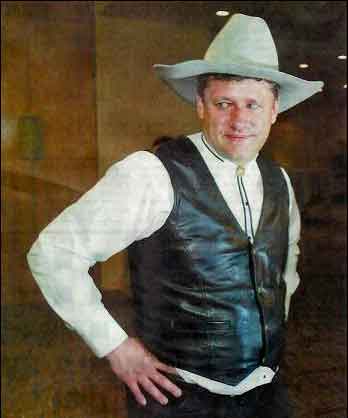
Canada’s prime minister, Stephen Harper, who is contributing six fighter-bombers to the hastily assembled Libyan rebel air force, as well as a frigate to lead a naval blockade, is warning Canadians that while “Canada is at war to protect innocent Libyan civilians…there are no guarantees that they…can avoid getting hurt.” [1] Harper must be channelling the US Army officer who infamously said during the Vietnam War that US forces had to destroy a village to save it. Canadians, Harper is warning, will be killing some Libyans to protect them.
The other allied military intervention
In the rush to climb aboard the let’s bomb Tripoli bandwagon, we mustn’t forget the other allied military intervention. Tanks and soldiers from Saudi Arabia and the United Arab Emirates are already in Bahrain, to protect the absolutist monarchy of the Khalifa family from the pro-democracy movement there. Saudi and Emirate’s troops will soon be joined by foreign troops from the six-member Gulf Cooperation Council. The GCC is made up of Saudi Arabia, the UAE, Bahrain, Qatar, Oman and Kuwait. [2].
The Khalifa regime says it’s not waging war against its people. It’s only restoring order. [3]
Kaddafi on the other hand isn’t restoring order. He’s waging war.
That’s the way things work now. When the US and its allies wage war they’re restoring order and protecting civilians. When countries targeted by the US try to restore order, they’re waging war and attacking civilians.
Three for the price of one
The Wall Street Journal reported today that “western officials worried that a victory for Col. Kaddafi could prevent the movement from spreading to places they would like to see it reach, such as Syria and Iran.” [4]
I believe the part about Western officials wanting to see uprisings spreading to Syria and Iran – countries they like no more than they like Libya. But if they were truly worried that a successful crackdown on rebellion could discourage uprisings in other countries, they wouldn’t be tacitly endorsing the crackdowns in Bahrain and Yemen. Do they think the opposition in Syria and Iran is oblivious to what’s going on in Bahrain, Saudi Arabia and Yemen, where US allies are brutally cracking down on rebellions in those countries with impunity?
The concern of Western officials is more likely this: Intervening on behalf of rebel forces sends a signal to opposition movements in Syria and Iran that if they take up arms against their governments, the West will help them too.
Charter, we don’t need no stinking charter
It doesn’t really matter that the UN Charter says that the UN Security Council can’t intervene in the internal affairs of its members. Who’s going to stop the biggest, most powerful countries, from doing whatever they want? Sure, they talk a good game about the rule of law. But the rule of law is for chumps. It is, as someone once said, a spider-web for catching the weak. The powerful simply push through it.
They picked the wrong guy
Jean-Paul Sartre turned down a Nobel Prize in 1964 on the grounds that it was a distinction reserved for “the writers of the West or the rebels of the East,” i.e., that it was used as an instrument of Cold War propaganda.

The Nobel Peace Prize is no less political today for the Cold War having ended. It is used, now as then, as an instrument of pro-imperialist propaganda. How else to explain the peace prize being conferred on a man who can only be described as an imperialist warmonger, now with, what – three, four, five wars under his belt: Barack Obama?
Contrast Obama’s giving the green-light to a declaration of war on Libya with the words of the Venezuelan president Hugo Chavez (who, by the way, could teach Gilbert Achcar, and another Z-Net favorite, Immanuel Wallerstein, a thing or two about what anti-imperialism really means. Wallerstein, it should be remembered, sought last week, in supercilious tones, to disabuse the anti-imperialist left, and Hugo Chavez in particular, of its confused analysis of Libya. Sighing heavily, and wondering where to begin to instruct the ignoramuses who were sounding the alarm about an impending Western military intervention, Wallerstein declared that the US was not about to intervene in Libya. “The … point missed by Hugo Chavez’s analysis is that there is not going to be any significant military involvement of the western world in Libya,” instructed Wallerstein. [7])
Here’s Chavez, whose analysis has turned out to be a good deal more insightful than Wallerstein’s:
“More death, more war. They are the masters of war. What irresponsibility. And behind that is the hand of the United States and its European allies.
“They want to seize Libya’s oil. The lives of Libya’s people don’t matter to them at all.
“It is deplorable that the United Nations lends itself to supporting war, infringing on its fundamental principles instead of urgently forming a commission to go to Libya.
“We know what’s going to happen: bombs, bombs, war, more suffering for the people, more death.” [5]
I think Chavez would have been a more fitting candidate for a genuine peace prize. But, then, his imperialist credentials aren’t in order.
Mass Delusions
I thought I had become so accustomed to the depth of US hypocrisy that I could no longer be surprised by it. But the following words, from today’s Wall Street Journal, left me speechless: “Potential Republican presidential candidates for 2012 have criticized the president in recent days for…not pushing America’s traditional role of international peacekeeper.” [6] Peacekeeper! What planet have these people been living on? Has their drinking water been contaminated by a hallucinogen? They might as well have said that WWII put an end to Hitler’s role as international peacekeeper.
Egypt Stagnation, Libya Intervention
Stephen Gowans and Brendan Stone talk about Egypt, Libya and Bahrain. Recorded March 16.
1. Mike Blanchfield, “Risks inherent in helping protect Libyans, Harper says”, The Canadian Press, March 19, 2011.
2. Alex Delmar-Morgan and Nicholas Casey, “Bahrain razes iconic square”, The Wall Street Journal, March 19, 2011.
3. Ibid.
4. Sam Dagher and Adam Entous, “Allied forces attack Libya”, The Wall Street Journal, March 20, 2011.
5. Hugo Chavez condemns military strikes in Libya”, The Associated Press, March 19, 2011.
6. Adam Entous and Laura Meckler, “Libyan raids show Obama doctrine in action”, The Wall Street Journal, March 20, 2011.
7. Immanuel Wallerstein, “Libya and the world left”, Z-Net, March 16, 2011. Z-Net advertises itself as a community of people committed to social change. Social change, yes, but in which direction, and in whose interests?
Intervention in Libya May Lead to More Deaths, Not Fewer
By Stephen Gowans
In explaining why his government supported the UN Security Council resolution authorizing all necessary measures to protect Libyan civilians, US president Barack Obama explained: “The U.S. doesn’t want a war. But we want to prevent a slaughter.”
Noble sentiments, but the Security Council resolution could lead to more deaths, not fewer.
Libyan government forces were well on their way to defeating the rebel forces (which may have been the trigger for the resolution.) Had they done so, the conflict would have ended.
Intervention may prevent a slaughter of rebel forces, but it could lead to a prolonged civil war, with more bodies piling up than would have, had the conflict been allowed to quickly culminate in a resolution. Among the corpses will be the civilian collateral damage that Western bombers are so proficient at producing.
Another possible outcome (perhaps more likely) is that Western military intervention tips the scales overwhelmingly in the rebels’ favor. Others have noted the similarities with Kosovo, where NATO signed on as the KLA’s air force in the guerrilla army’s fight with Serb forces. This time, however, the intervention has UN authorization, though whether it does or doesn’t hardly makes a difference. This one is no more defensible than the Kosovo intervention and is no less motivated by Western geo-political and elite economic interests.
Membership has its privileges
Meanwhile, the firing of live ammunition at protesters by Bahraini forces, backed by Saudi troops and tanks, has drawn no calls for all necessary measures to protect Bahraini citizens. There haven’t even been calls for mild measures. The best Washington can do is “express distress” and urge “the government (in Bahrain) to negotiate with the opposition and pursue change.”
Why the double standard?
As the New York Time’s Helene Cooper and Mark Landler explain, “Bahrain is an American ally. The Navy’s Fifth Fleet is based here and the Khalifa royal family has warm relations with Washington.”
Libya, of course, is neither a US ally (though it has in recent years cooperated with Washington on some matters), isn’t the site of US military bases, and its leader hasn’t had warm relations with Washington.
Had any of these things been true, we can take it that Qaddafi would now be free to slaughter as many Libyans as he pleased (though Washington would publically profess distress, while sitting on its hands.)
For bloodthirsty leaders, membership in the club of US allies has its privileges. The same can’t be said for the people who live under them.
Postscript, March 21, 2011.
From today’s Wall Street Journal (“Leaders struggle to define next moves”):
Security analysts fear Western airpower could decapitate Tripoli’s military command but not swing the balance of power firmly in the rebels’ favor, leading to protracted civil strife and a splintering of the Mediterranean country. Ungoverned areas, meanwhile, could provide sanctuary for al Qaeda and other militant Islamist groups that are active in northern Africa.
“The risk is that the no-fly zone became a cover for a widening civil war,” said Emile El-Hokayem, a Bahrain-based Mideast analyst for the International Institute for Strategic Studies. “It’s not clear if the Obama administration has firmly grasped this.”
What of Bahrain?
By Stephen Gowans
For weeks, demonstrators opposed to the absolute rule of the king Hamad bin Isa al-Khalifa have taken to the streets of Bahrain to demand reforms. At one point more than 100,000 people in a country of only a half million massed in the capital, Manama, shouting “Down, Down Hamad!”
The following is from Ethan Bronner’s report in today’s New York Times.
“Two days after the king of Bahrain called in 2,000 troops from Saudi Arabia and other neighboring allies, and the day after he declared martial law, his forces roared through downtown Manama, wresting it from the protesters who had in recent days taken charge of neighborhoods and nearby villages.
“…hundreds of Bahraini troops, backed by helicopters and tanks, forcefully cleared the capital’s central square of demonstrators clamoring for reform.
“Plumes of black smoke choked the city landscape as troops repeatedly fired tear gas canisters, rubber bullets and what sounded like live ammunition in their dawn assault.”
This invites the following questions.
When can we expect impassioned pleas for a UN- or NATO-enforced no-flight zone over Bahrain – or perhaps a no-drive zone — to protect Bahrainis from their brutal government and thuggish Saudi backers?
Will the Arab League demand a no-flight zone over Bahrain, as it did one over Libya?
When will Bahraini assets be frozen and travel sanctions imposed on the king, the crown prince, and their advisors?
When will Saudi Arabia be sanctioned for sending tanks into Bahrain – and for cracking down on its own pro-democracy demonstrators?
Will the UN Security Council demand the immediate withdrawal of Saudi forces from Bahrain?
Will the editors of newspapers who demand a no-flight zone over Libya – and once demanded Iraq’s immediate withdrawal from Kuwait – call for the immediate withdrawal of Saudi troops and tanks from its Gulf neighbor?
When will France recognize the leaders of the Bahraini opposition – jailed by Bahraini authorities – as Bahrain’s legitimate government?
When will the Bahraini king and the crown prince be denounced as thugs and tyrants?
Why does the soft left – which has so much to say about Libya and how the rebels should be supported – have so little to say about Bahrain?
Speaking of the soft left, world systems theorist Immanuel Wallerstein has been sighing heavily about “so much confused analysis about what is going on in Libya.” He “hardly knows where to begin” to correct it all.
Wallerstein says that if Libya’s government puts down the armed revolt in its own country other Arab governments will be encouraged to use force to put down peaceful revolts in theirs.
He makes it sound as if the Arab autocracies are rooting for Qaddafi.
But wasn’t it the Arab League that appealed for a no-flight zone over Libya? And do governments really need the example of Qaddafi to tell them if and when to use force against rebellions in their own countries?
Maybe Wallerstein should turn his attention to Washington.
Whether Arab autocracies use force to crack down on the revolts sweeping their countries has less to do with the success or failure of Qaddafi’s efforts to suppress the rebellion in Libya, and more to do with whether they get a green light from Washington – or at least its passive acceptance.
It’s of no small moment that Bahrain and Saudi Arabia are US clients, that Bahrain is home to the US Fifth Fleet, and that both countries are accommodating of the profit-making interests of US coroporations and investors. Nor is it inconsequential that Libya is neither of these things.
These facts go a long way toward explaining the double standard; a febrile reaction to the crackdown in Libya, and the comparative silence of the UN Security Council, Washington, Paris, London, newspaper editorial writers and the soft left on what is going on in Bahrain.
By the way, only 14 percent of the oil consumed in the United States comes from the Middle East and North Africa (see the table below). Most of the country’s oil comes from North America, so access to North Africa and the Middle East isn’t vital to the energy requirements of the United States. What access to the region is vital for, however, is the profits of Western oil companies, which extract, refine and sell the region’s oil to other countries, particularly those in Western Europe and Japan.
Retaining favorable access to the oil reserves of the Gulf states in order to continue to rake in profits from oil sales to other countries (not to secure oil for the home market) is the primary motivation for Washington’s historical – and continued – backing of Gulf monarchies and its total lack of sympathy for the pro-democracy movements inside them.
The media, predictably, follow Washington docilely in vociferously condemning Qaddafi while remaining comparatively silent and being decidedly less judgmental about events in Bahrain. France, Britain, the UN Security Council, responsibility-to-protect hawks, and the soft left, also predictably, do the same.
US oil supply in December 2010
Million barrels per day
US onshore production, 5.5, 37%
Middle East-North Africa, 2.1, 14%
Canada, 2.0, 14%
Mexico, 1.1, 7%
Nigeria, 1.0, 7%
US offshore, 0.1, 0%
Other, 3.0, 20%
Source: Sheila McNulty and Ed Crooks, “US groups unlock secret recipe for oil”, The Financial Times, March 3, 2011.
In Egypt, a New Guard
“There was a revolution, and then we discovered that those in charge of the revolution are not in the least bit revolutionary”–Egyptian newspaper editor, Ibrahim Issa.*
By Stephen Gowans
Field Marshal Mohamed Hussein Tantawi, known to Egyptians as “Mubarak’s poodle,” may be calling the shots in Cairo as head of the country’s military-led government, but the man who sits at his right hand side is the Pentagon’s poodle, and he’s likely to continue to play a key role in Egypt even after a civilian government succeeds the current military one.
Lt. General Sami Hafez Enan, “a favorite of the American military,” according to Elisabeth Bumiller’s piece in today’s New York Times, is second-in-command to Tantawi, the man reviled in Egypt for being a toady to the deposed president Hosni Mubarak.

Bumiller says Enan—who “remains in close contact with Pentagon officials by phone” and is “a crucial link for the United States”–is considered Tantawi’s likely successor as head of Egypt’s armed forces.
And since the military plays a dominant role in Egypt, Enan is likely to continue to exercise considerable influence, a point Bumiller agrees with. “No one disputes,” she observes, “that General Enan will play a central role in Egypt’s future government, more likely behind the scenes, where the country’s powerful and traditionally secretive armed forces are more comfortable.”
Washington showers $1.3 billion in military aid upon Egypt annually, which the Egyptian military uses to buy “American-made arms and equipment – typically F-16 fighter jets and M1A1 Abrams tanks.” None of the money ever leaves the United States. Instead, Enan and other senior Egyptian military officials present their wish list to the Pentagon, which then transfers US taxpayer dollars into the accounts of US arms merchants, who then deliver the goods.
It’s like an annual gift to General Dynamics. And Egypt. Courtesy of the US taxpayer.
Ever since Egypt agreed to become a prop of US imperialism in North Africa and West Asia—and to allow Israel to run roughshod over Arabs in Palestine and Lebanon–Washington has transferred $35 billion of US taxpayer money to the accounts of US arms manufacturers, on behalf of Egypt’s armed forces.
Bumiller reports that the reforms of General Enan and the military government “have so far been mostly cosmetic.”
Cosmetic is an apt description. Egypt’s revolution has amounted to little more that changing the faces of the state. Mubarak is out, because the people demanded it, and now so too is Mubarak’s old prime minister, also at the behest of the people. But Mubarakism—US domination of Egypt through a local military elite – remains.
This won’t change even if and when the current military government is succeeded by an elected, civilian, one.
What would happen if a future government decided to pursue policies at odds with US foreign policy preferences, especially in connection with Israel? Since a break with Washington on key foreign policy positions would likely disrupt the flow of equipment and training to the Egyptian armed forces, the probable outcome is that the government would lose the confidence of the military, and the military would take over to set Egypt back on the prescribed US foreign policy path. Knowing this, a civilian government is unlikely to step outside the boundaries its military’s benefactor is prepared to tolerate.**
And just how independent of the White House and State Department will a future civilian government be? Already, officials in Washington are “discussing setting aside new funds to bolster the rise of secular political parties.” Sure, Egyptians are free to elect anyone they want, but modern elections are major marketing campaigns. Without strong financial backing, you haven’t a chance. How fitting, then, for the continuation of Mubarakism that Washington’s democracy promoters will be furnishing “acceptable” politicians and political parties with money, strategic advice, polling, and whatever other support they need to prevail over alternatives judged to be incompatible with “US interests”, but which, may, on the other hand, represent the interests of the mass of Egyptians.
Westerners would never tolerate foreign powers backing the West’s political parties, even if it was done in the name of promoting democracy. Strange that so many Westerners think it fine for their own governments to meddle in other countries’ elections –and fall for the deception that the imperialist practice of exerting influence abroad by buying foreign politicians is really a laudable exercise in democracy promotion. If foreign governments meddling in our elections means an outside power is trying to gain advantage at our expense, doesn’t Washington’s setting aside new funds to meddle in Egypt’s elections mean Washington is trying to gain advantage at Egyptians’ expense?
Or are Washington’s and the EU’s motives somehow purer? Given their records of backing Mubarak, other dictatorships, and absolute monarchies, to protect Western “interests,” this can hardly be true.
How then–with Egypt’s armed forces being a virtual extension of the Pentagon and Washington’s democracy promoters preparing to boost funding to pro-US political parties–are we to believe that the Egyptian rebellion will bring about anything more than a cosmetic face-lift of Mubarakism?
A real revolution requires more than replacing Mubarak with Tantawi, Tantawi with Enan, and Enan with a civilian government that needs to keep Enan–and the Pentagon officials he’s in close contact with–happy. A revolution is not a changing of the guard.
* Neil MacFarquhar, “Milestone referendum in Egypt just days away”, The New York Times, March 13, 2011.
**”To wild cheers, Ashraf Huweidar of the Union of Popular Socialism told a crowd of several thousand that his new party would cancel the peace agreement (with Israel) if it came to power — something the military leadership has indicated it won’t allow.” (My emphasis). “Egyptian calls for trials of former leaders”, The Associated Press, April 1, 2011.
Postscript
Below is part of an exchange between The Washington Post and three unnamed members of Egypt’s Supreme Military Council, the body that is currently governing the country. The full interview was carried by the newspaper on May 18, 2011 (“Egyptian generals speak about revolution’).
Q. Do you think that Egypt’s strategic orientation toward Israel will change? Polls show a majority of Egyptians favor abrogating the [1979 peace treaty between Egypt and Israel]. How does the military view this?
A. Egypt fully respects its commitments. This has to be very clear. The peace treaty is part of our commitments and undertakings. It is not possible that 30 years of good relations with the United States will be easily obliterated or canceled.

