A Brief History of Two Koreas

How an American Korea and a Korean Korea came to blows over the same territory on this day 71 years ago

June 25, 2021

By Stephen Gowans

Korea, as a nation, has existed within the same space for over a thousand years, but it is only since 1948 that it has been divided into two states, and the division is the consequence of a US decision taken in pursuit of US geopolitical aims, without the slightest regard for the wishes or aspirations of Koreans, who didn’t want their country divided politically.

Had the United States not intervened in Korea at the end of the Second World War, historians agree that the nation would have emerged from the war, and from its years of colonization by the Japanese, with a politics that favored communism, or at the very least, favored a very robust leftist agenda, because that’s what Koreans, in the majority, wanted.

Koreans were, in the main, peasants, who were exploited by a tiny landlord class. And they lived in a country that was oppressed by the Japanese. They would naturally be inclined toward communist politics, since communist politics aimed at overcoming exploitation at all levels, including the levels of class and nation.

Today there are two states on the Korean peninsula, the Republic of Korea, or South Korea, the creation of the United States, and the Democratic People’s Republic of Korea, or North Korea, the creation of Koreans, and the successor to the People’s Republic of Korea, the state Koreans proclaimed for themselves at the end of WWII, before the United States arrived on the peninsula, and refused to recognize it.

These two states—one an American Korea, the other a Korean Korea—each claim to be the sole legitimate state in the country.

Kim Il Sung, who was the first leader of North Korea, worried that the division of Korea into US and Soviet occupation zones, which was done at the end of the Second World War to accept the Japanese surrender, would inevitably lead to the division of Korea into two states—one of patriots, and one of traitors.

The patriots, in Kim’s view, would be the Koreans who fought the Japanese colonization of Korea, and aspired to an independent Korea. The traitors would be the Koreans who collaborated with the Japanese, who, Kim believed (correctly it turns out), would also collaborate with the Americans. Kim recognized that the United States was an imperialist power that would seek to dominate Korea, as Japan had done, and would recruit collaborators to assist it, also as Japan had done.

Coveted by Great Powers

Koreans have had the great misfortune of inhabiting territory that has been either coveted by powerful states or dominated by them. China (which Korea borders), Russia (which Korea borders), Japan (which lies nearby across the Sea of Japan), and the United States (which regards itself as an Asia-Pacific power) have all, at one time or another, sought to make Korea, if not their own, then at least subservient.

Korea was long a tributary of its neighbor China.

After Japan modernized, and fell under a compulsion of its capitalist economy to seek markets for its industrial products, sources of raw materials, investment opportunities, and territory to settle its surplus population, its rapacious gaze fell upon Korea. The Sino-Japanese war was fought over the question of who would control the country: China or Japan. The Japanese won the war and therefore won Korea.

Russia was also interested in Korea. Japan and Russia fought the Russo-Japanese War over control of Korea (and Manchuria), a war the Russians lost, to the great consternation of the West, for this was the first time a Western power had been defeated by an Eastern one.

Finally, the United States fought Japan over control of all of East Asia, and when it defeated Japan in 1945 with the help of Britain and the Soviet Union, its intention was to supersede Japan as the hegemonic power in the region. Its goal was to make all of East Asia an American neo-colony.

Japanese Colony

Japan formally colonized Korea in 1910 and remained the colonial power for the next thirty-five years.

These were very harsh years for Koreans.

Korean culture was outlawed. All Korean political organizations were disbanded. Korean newspapers and public gatherings were prohibited. The education system was Japanized. Koreans were forced to speak Japanese, take Japanese names, and worship at Shinto shrines, even though Shintoism, the traditional religion of Japan, was foreign to Korea.

Koreans were coerced into service as conscripted laborers, sent to every corner of the empire to satisfy the requirements of Japan’s military and economic expansion. At the close of World War II, one third of industrial workers in Japan were Koreans.

At the same time, Korea was transformed into a Japanese granary. Agriculture was steered away from Korean needs to Japanese needs. The Japanese ate more Korean rice per capita than the Koreans did.

Korea, thus, became a means to Japanese ends, a country that existed to serve Japan, not itself.

Inspired by the Soviet Union and Communism

Koreans found themselves in a dual debased condition. Most were peasants, exploited by landlords. And they lived in a country oppressed by a foreign power. Such a people couldn’t help but be inspired by a Soviet Union that called for an end to the exploitation of man by man, and an end to the division of the world into oppressor and oppressed nations.

Moreover, the Soviet Union was not only calling for an end to these debased conditions, it was showing how they could be overcome. For example, the Bolsheviks had given land to the peasants and ended the rule of the landlords, something that would certainly appeal to Korean peasants who toiled under the oppression of Korean landlords. They also successfully repelled a dozen capitalist powers that tried to bring Russia under their control in the wake of the Bolshevik Revolution.

Later, the USSR emerged victorious from the greatest colonial war ever waged, that of Nazi Germany against the Soviet Union, impelled by the German imperialist aim of enslaving the peoples of Eastern Europe. Germany said its war for lebensraum would create its own American West or its own East Indies in Eastern Europe. The Soviet victory in repelling the attempted colonization of Eastern Europe was an inspiration to colonized people everywhere, Koreans included.

What’s more, communists were at the forefront of the struggle against Japanese colonialism. Kim Il Sung and Mao Tse Tung were major figures in the resistance.

Finally, the Soviet economy offered oppressed people a model of how to modernize and industrialize.

Washington’s Interest in Korea

The United States had the same interests in East Asia as Japan had—to exploit the region as a market, source of raw materials, and sphere for investment. 

Koreans hated the United States because they saw the country quite correctly as another imperialist power, no different from Japan. Washington had blessed Japan’s colonization of Korea in return for Tokyo blessing the United States’ colonization of the Philippines.

Thus, in the view of Koreans, these two countries were robbers, seeking to divide up East Asia between themselves.

Kim Il Sung made fun of Syngman Rhee, the anti-communist Washington picked as the first president of South Korea, because Rhee had spent over four decades in the United States lobbying Washington to free Korea from Japanese rule. Kim said this was like asking a robber who waits outside your house to help you evict the robber already inside your house.

Koreans, with the exception of people like Rhee, had no illusions about what the United States was, namely, a predator, waiting outside their door to rob them once the Japanese were evicted.

The US-Orchestrated Political Division of Korea

The United States created the Republic of Korea in 1948, over the objection of most Koreans, who saw the American project of establishing a state in the US occupation zone as an attempt to create a permanent political division of their country. Few Koreans wanted this. What they wanted was a unified, independent, communist Korea.

But the only way Washington could prevent Korea from becoming a communist state, or at the very least, a country with a robust leftist agenda and preference for political independence, was to artificially implant an anti-communist Gestapo-like police state in the US occupation zone to crush the political aspirations of Koreans who favored a unified communist country.

As mentioned, to accept the Japanese surrender, the peninsula had been divided at the end of WWII into two occupation zones, an American one, and a Soviet one. By agreement, the occupations and division were to last no longer than five years. Before the end of this period, elections were to be held for a pan-Korean government and the occupying armies were to leave. (The Soviets departed at the end of 1948. The Americans stayed and have never left.)

It was clear to Washington, that the election would be won by anti-imperialist, pro-communist forces, who would oppose a continued US presence on the Korean peninsula. Washington, then, had a choice. Lose all of the peninsula or keep the half it controlled. It chose to keep the half it controlled. To retain its influence in Korea, the United States created a puppet state in its own occupation zone. And then it boldly claimed that the state it created was the sole legitimate state in Korea, representing all Koreans.

The only possible response to this attempt to preempt the creation of an independent, unified Korea, was for Koreans who held out the hope of a Korean Korea to create their own state, as the sole legitimate state in the country.

That was why the DPRK was founded. It was also how the division of Korea between an American Korea and a Korean Korea came about.

The Patriot

Bruce Cumings, the leading US historian of Korea, recounted in his book, Korea’s Place in the Sun: A Modern History, that when “the leading scholar of Korean communism, Dae-sook Suh, was finally allowed to explain the real story to a large audience of young people in Seoul in 1989, upon hearing that Kim Il-sung was in fact a hero of the resistance, they all burst into applause.”

That, in short, is who Kim Il Sung was – a hero of the anti-Japanese resistance. Kim was so important as a guerilla leader that the Japanese established a special Kim unit to hunt him down, and they staffed it with Korean traitors who would later be recruited by the Americans to play leading roles in the South Korean military.

Kim spent 13 years in top positions in the armed struggle against the Japanese, and on the eve of his return to Korea after the Japanese surrender, the major Korean leaders of the resistance agreed that, owing to Kim’s reputation, his charisma, and his abilities, that he should become the principal political leader of a Korean Korea.

He wasn’t selected by the Soviets, but was chosen by his peers in the resistance. Indeed, the Soviets never fully trusted Kim, but within their occupation zone, they allowed Koreans to administer their own affairs independently, and to promote Kim as the leader of a Korean Korea.  

The Korean War

There are many views of what the Korean War was, or is.

One view is that the Korean War began in the early 1930s when Kim Il Sung created his first guerilla unit, and began to fight Korean traitors who collaborated with the Japanese, traitors who would then form the core of the US-created Republic of Korea, while Kim and his colleagues formed the core of the DPRK. According to this view, the Korean War is a war between the traitors of the American Korea and their descendants and the patriots of the Korean Korea and their descendants, and that, so long as these two states independently exist, the war between patriots and traitors, between those who oppose imperialism and those who collaborate with it, between American Korea and Korean Korea, never ends.

Another view is that the Korean War began in 1945, when the United States arrived on the peninsula and went to war with the People’s Republic of Korea, and five years later, with its successor, the Democratic People’s Republic of Korea.

A third view is that the war began in 1948, when the United States created a permanent political division in the nation by setting up an American Korea in the form of an anti-communist, Gestapo-like police state, staffed at the highest level of its military with pro-Japanese traitors, over the objections of the majority of Koreans. This presented Koreans with no choice, if they were to have a Korea that met their preferences, but to go to war to liberate their country.

This view, as the preceding one, sees the Korean War as a war of the United States on Koreans, whereas the first view sees the Korean War as a civil war, between those who fought against imperialism and those who collaborated with it.

The conventional view of the war is that it began on June 25, 1950 when North Korean forces crossed the 38th parallel, and immediately drove the South Korean army deep into the south. The United States soon after intervened, driving the North Korean forces out of the south, and deep into the north, up to the Yalu River, which divides Korea and China. At that point, China intervened, and China and North Korea drove US forces back across the 38th parallel where the war bogged down for the next two years. The war ended in an armistice in 1953 and a peace treaty has never been signed.

What most Americans don’t know about the war is that there was no moral or legal basis for US intervention.

There was no moral basis because American Korea was unacceptable to most Koreans. Because the collaborator government had little popular support, its army immediately collapsed. North Korea would have quickly won the war, millions of lives would have been saved, Koreans would have achieved the communism they desired, and an independent, unified, Korea would have been born, had the United States not intervened.

Fundamentally, the war was a civil war between Korean Koreans and American Koreans, a quarrel over how to organize the social, political and economic life of the nation. At the heart of the quarrel was the question of equality. Are nations equal, or are some nations destined to lead others, and to have rights and privileges senior to others?  Should exploitation be prohibited or welcomed? Should the country be integrated into the US Empire, or independent? And who should form the governing elite—collaborators with the Japanese Empire, or those who waged war against it? These questions were at the heart of the conflict.

Also, there was no legal basis for the US intervention, because there was no aggression across an international border. When North Korean troops crossed the 38th parallel on June 25, 1950 they crossed an imaginary line drawn in 1945 by two US colonels to separate US and Soviet occupation armies. This was not an international border separating two countries. It was simply a dividing line that came to separate two Korean armies. Koreans cannot invade Korea. What’s more, North Korea’s military action against territory occupied by a foreign power and its Korean collaborators was not an invasion; it was an attempt at liberation.

The War’s Aftermath

Open hostilities came to an end because the United States threatened a nuclear strike unless the North Koreans and their Chinese allies came to terms with Washington. Because the United States wielded a nuclear sword, it was able to drive a hard bargain, and the North Koreans and Chinese had little choice but to accept many US demands.

The United States left behind tens of thousands of troops and brought tactical nuclear weapons onto the peninsula which weren’t withdrawn until 1991. North Korea believes those weapons remain. At about the same time, the United States retargeted some of its strategic nuclear missiles away from the Soviet Union, which had dissolved at this point, to North Korea. Thus, for decades, the United States has cast a nuclear shadow over the Korean peninsula.   

That’s a key point in any talks about denuclearizing the peninsula. To North Korea, denuclearization means that the nuclear shadow Washington casts over Korea must be lifted. To Washington, denuclearization means North Korea must abandon its nuclear weapons but that the US nuclear shadow can remain.

Thesis and Antithesis

From 1961 until 1979, South Korea was ruled by Park Chung-hee, a military dictator who had served in the Imperial Japanese Army, and who had hunted down Korean guerillas liked Kim Il Sung. During this period, Park served as the largely figurehead ruler of an American Korea and Kim Il-Sung ruled in Korean Korea—the traitor versus the patriot.

From 2013 to 2017 Park’s daughter was president of South Korea and Kim Jong Un, Kim Il Sung’s grandson, was leader of North Korea.  As Bruce Cumings has pointed out, the conflict between traitors and patriots carried on in their descendants.

Park nurtured a capital-centered economy, in which South Koreans “had the right to work the longest hours in the industrial world at wages barely able to sustain one’s family,” as Cumings wrote. Kim preferred a people-centered economy, and had introduced an eight-hour work day and social security within months of coming to power.

Park was greatly hemmed in by the influence exercised behind the scenes by the US military commander, US ambassador, and CIA station chief—the decision-makers with ultimate authority in American Korea. Tens of thousands of US troops occupied the domain over which the southern leader’s state ruled. And his military reported, not to him, but to a US general. In the north, there were no foreign troops, and Kim preached a doctrine of self-reliance, which eschewed dependency on foreign powers.

In the south, the top political leader was a traitor to the Korean project of national liberation; in the north, the top political leader was a patriot who had devoted his life to Korea’s liberation.

In the south, the state was part of an empire. In the north, the state rejected empire.

The state of the south was founded by a foreign hegemon. The state of the north was founded by guerrilla leaders who had fought against foreign hegemony.

US Propaganda

US propaganda paints a false picture, not only of the DPRK, but also of the Republic of Korea.

It doesn’t tell you that South Korea is not an organically created Korean state, but a state created by Washington to serve US aims: an American Korea.

It doesn’t tell you that for decades, until the 1990s, South Korea was ruled by a series of vicious anti-communist military dictators, who ran a Gestapo-like police state that locked up communists and leftists, for infractions as mild as having something good to say about the DPRK or reading Marx and Engels.

It doesn’t tell you that there was a massive guerilla war in the south from 1945 to 1950 against the United States and its South Korean puppet, and that American Korea built concentration camps to hold the tens of thousands of Koreans who opposed the US presence in their country.

 It doesn’t tell you that the military of American Korea has always been under the command of US generals.

It doesn’t tell you that 300,000 troops of American Korea fought on the American side in Vietnam in return for injections of economic aid from the United States, making the American Korea a mercenary state, on top of a traitor state.

It doesn’t tell you that the South Korean military has been trained and equipped by the United States to kill communists. It killed communists in the south from 1945 to 1950, communists in the north from 1950 to 1953, and communists in Vietnam during the 1960s and 1970s. It is being trained by Americans today to kill the communists of a country Washington deems its enemy: China.

And it certainly doesn’t tell you that while Washington has done all it can to ensure that American Korea succeeds economically, it has also done all it can to immiserate Korean Korea.

The Future

North Korea’s manufacture of nuclear arms and ballistic missiles capable of striking US targets effectively forecloses the possibility of a US invasion of North Korea and a US nuclear strike. By using nuclear weapons to substantially enhance its means of self-defense, the DPRK is able to re-allocate resources from its military to its civilian economy, to mitigate the effects of the world’s longest and most comprehensive sanctions regime. No country has been the target of as long and comprehensive a campaign of economic warfare as the DPRK.

Concerning the prospects for a unified Korea, the key question is: Will it be a Korean Korea or an American Korea?

Washington’s favored unification scenario is one in which North Korea follows the East German path of annexation by its neighbor and absorption into the US empire. Since the early 1990s, US officials have expected this scenario to play out. Three decades later, their expectation has proved to be wide of the mark.

A Korean Korea, on the other hand, cannot be born unless the American Koreans evict US troops from the peninsula. Since the collaborators of the South Korean government evince no strong predilection for parting company with their American master—and since the possibility of North Korea unifying the peninsula by force is beyond the DPRK’s capabilities—the possibility of a unified Korean Korea is remote. But it’s the nature of anti-colonial struggles that they’re often long-term projects.

Kim Il Sung recognized that Korea’s fight for freedom might last hundreds of years. He wrote, “India won its independence from England after 200 years of colonial enslavement. The Philippines and Indonesia won their independence after 300 years. Algeria after 130 years. Sri Lanka after 150 years and Vietnam after nearly 100 years.”

It may take 200 years, maybe longer, for Korea to win its struggle, but one day all of Korea will be Korean.

Stephen Gowans is the author of Traitors, Patriots, and Empires: The Story of Korea’s Fight for Freedom, Baraka Books, 2018, available at https://www.barakabooks.com/catalogue/patriots-traitors-and-empires/

.

Do Communist-Led States Protect Public Health Better Than Capitalism?

Subscribe to continue reading

Subscribe to get access to the rest of this post and other subscriber-only content.

The Catastrophes of the Pandemic are the Catastrophes of Capitalism

Subscribe to continue reading

Subscribe to get access to the rest of this post and other subscriber-only content.

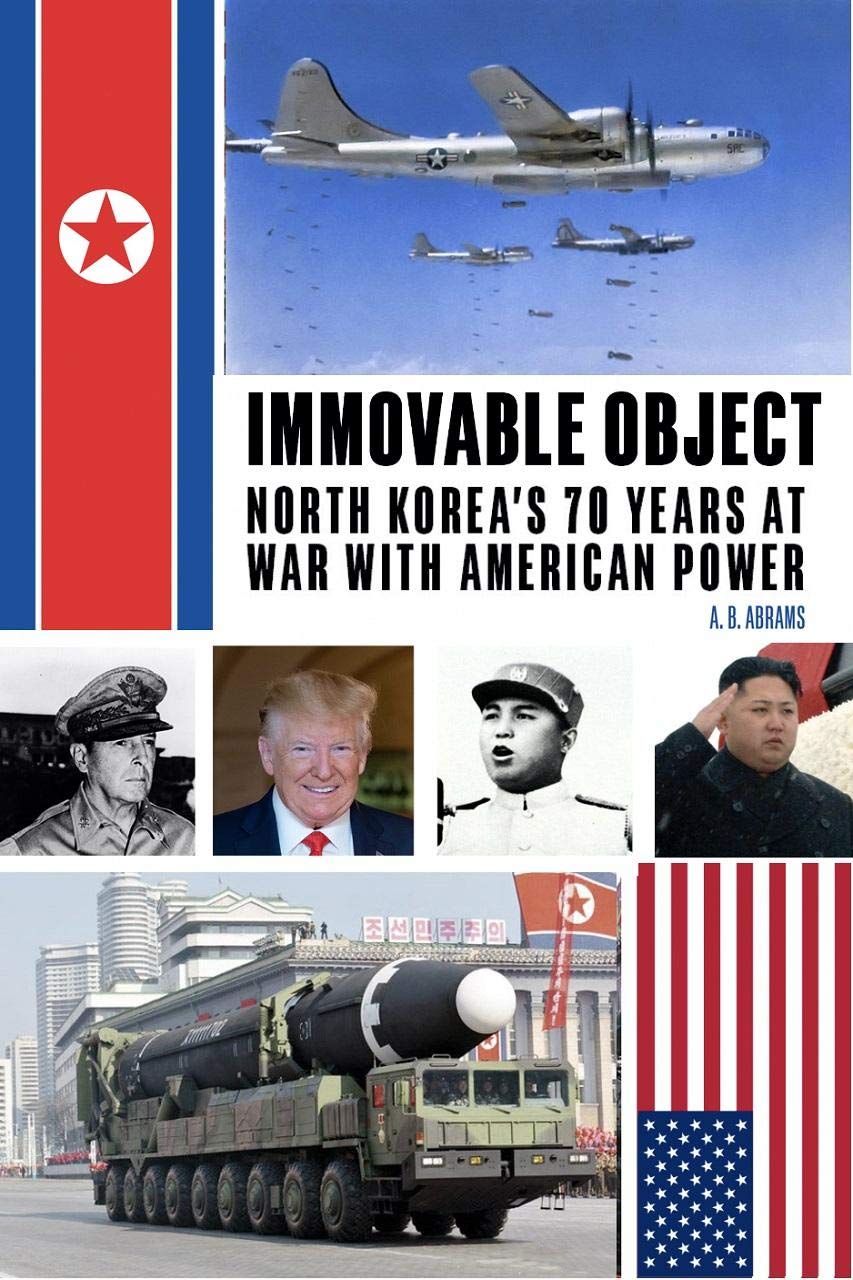
A Quintessential Eastern Marxist State: A Review of A.B. Abrams’ Immovable Object: North Korea’s 70 Years at War with American Power

By Stephen Gowans

April 3, 2021

On the eve of the First World War, and for a good many years thereafter, the bulk of humanity was in the thrall of a handful of great powers: Britain, France, Russia, and the rising powers of the United States, Japan, and Germany. These self-declared chosen nations and soi-disant models for humanity, enjoyed unexampled prosperity as the product of their ruthless despoliation of nine-tenths of humanity, made possible by their military and industrial supremacy.

In East Asia, the French raped Indochina; the British plundered Borneo, Malaya, Siam, and Hong Kong; Japan held Taiwan, Korea, and Manchuria in colonial subjection; the United States colonized the Philippines and Guam; the Netherlands looted Indonesia; the Portuguese enslaved Macau and East Timor; and China, as Sun Yat-sen remarked, was exploited by everyone.

The First World War—the Weltkrieg, or World War, as the Germans called it—marked the beginning of the end of the Columbian period, that era marked by the plunder of the world by Europe and its offshoots beginning with the voyages of Columbus to the Americas at the end of the fifteenth century and continuing through today. The 500-year-plus domination of Asia, Africa, and Latin America by the West has been aptly called “The 500 Year Reich,” an allusion to the identity of the practices used by the Nazis with those of their predecessors and contemporaries, not only by Germany, but also by the other ‘model nations’ as well. These practices comprised the methodology of colonialism. Deployed by Spain, Portugal, Britain, France, the United States, Italy, and Japan outside Europe, they became the paradigm for the Nazis, whose great crime in the eyes of their rivals was that, as Sven Lindqvist put it, they did in the heart of Europe what had theretofore only been done in the hearts of Africa, Asia, and the Americas. Racism, genocide, dispossession, and colonial subjugation outside of the metropole were acceptable in the capitals of Western Europe and North America, deemed necessary and inevitable, even extolled, but became great iniquities only when the Nazis inflicted them upon Europe.

Today, nearly half of the world’s wealth is controlled by the 10 percent the population that makes up the G7 countries, while the other half is shared by the remaining nine-tenths. The chasm dividing the East from the West has considerably narrowed with the Communist Party-orchestrated rise of China, a phenomenon ultimately traceable to what Domenico Losurdo argued was the signal event of the Weltkrieg.

The World War of 1914-1918 was many things, but among these it was “a war between two groups of the imperialist bourgeoisie for the division of the world, for the division of the booty, and for the plunder and strangulation of small and weak nations,” as Lenin put it. Lenin called for unity among the workers of the “model” nations, to emancipate, not only their labor from its exploitation by the bourgeoisie, but also to liberate their bodies from the war of industrial extermination the bourgeoisie had visited upon them. At the same time, the Bolshevik leader called for unity between the workers of the West and the oppressed peoples of India, China, Korea, Indochina, and elsewhere, against their common oppressor, the metropolitan bourgeoisie.  Broadening the compass of Marxism, the Bolsheviks extended Marx’s and Engel’s 1848 battle cry “Workers of the world unite!” to “Workers of the world and oppressed peoples, unite!”

This widening orientation, along with the Bolsheviks’ success in using the state and patriotism to mobilize the Russian population against the intervention of the “model nations” in Russia’s Civil War of 1919–21, inspired revolutionary nationalists like Mao Zedong, Ho Chi Minh, and Kim Il Sung, inaugurating a movement to end the 500-year Reich.

The World War, and the Bolshevik Revolution that sprang from its womb, had generally positive effects in the East. The toll of the war weakened the grip of the exploiting nations upon the peoples they exploited, while the Bolshevik example precipitated the anti-colonial revolution in the East. An Eastern Marxism developed, responsive to the needs of colonial peoples to overcome their dependency and achieve political and economic sovereignty.  Revolutionary nationalists would make good use of patriotism, the state, and industry to achieve political sovereignty and economic independence, as well as to protect dearly bought gains from the unceasing efforts of the imperialist Leviathans to reverse them.

By contrast, the Weltkrieg was a catastrophe in the West, and Western Marxism developed to reflect the experience of the war in Europe. Whereas the revolutionary nationalists of the East harnessed patriotism to the project of national liberation, Marxists in the West eschewed national devotion as a bourgeois subterfuge used to divide the proletariat along national lines. In the East, Marxists saw violence as a means of liberation and the military as an instrument for defending national revolutionary gains. In the West, the horrors of the war envenomed Marxists to violence and the military. Marxists of the Orient viewed the state as the means to organize economic development and as an instrument of repression to be ruthlessly deployed in the defense of revolutionary nationalist gains. Marxists of the Occident viewed the state with suspicion, an engine of class oppression, that had been used against them.

Each form of Marxism represented a set of proposed solutions to the problems of emancipation present at a specific time and place. In the East, the germane question concerned how people under colonial and semi-colonial domination could achieve political and economic sovereignty and safeguard their achievements once gained. In the West, the relevant question revolved around how to win political power to liberate industry from the control of shareholders and financiers and vest it in the hands of the proletariat.

Whether intentional or not, A.B. Abrams’ Immovable Object: North Korea’s 70 Years at War with American Power, examines the relationship between North Korea and the West from an Eastern Marxist perspective. Without using the idiom, Abrams presents the DPRK as a quintessential Eastern Marxist state. Korean patriotism, strong central authority, military preparedness, self-reliance, and the development of nuclear weapons and ballistic missiles are identified as sources of North Korea’s resilience in the face of Washington’s 73-year project to bring about “the end of North Korea”, as John Bolton once described Washington’s policy aim. These practices are presented as the bases for the DPRK’s success in achieving the revolutionary nationalist goals that lie at the center of the Eastern Marxist project.

Abrams’ history of the DPRK-US relationship begins with the arrival of US forces in Korea in 1945, after Koreans had declared a Korean People’s Republic, with which the US military government immediately went to war. Abrams devotes considerable attention to the Korean War, known as the Great Fatherland Liberation War in North Korea (memorializing the success of the combined Korean and Chinese forces in evicting the US invaders from territory administered by the DPRK), and the War to Resist America and Aid Korea, in China. Nearly half of the tome, weighing in at 675 pages, covers events since 1990, and a substantial part deals with recent events.  

Abrams’ history is not archival; he uncovers no new facts. Instead, it is perspectival, offering a fresh take on what the archives have already revealed—or, what seems like a fresh take to those, like myself, who are familiar with an historiography that is congenial to the Western Marxist perspective. To illustrate, Abrams makes an observation and poses a question that, at best, are quickly passed over in Western  accounts, if broached at all, but within the framework of Eastern Marxism, are critical. The observation is this: Of small countries that have liberated themselves from the iron-grip of colonialism, only North Korea, a country of a mere 24 million, has survived the aggressions of US imperialism, stood unbowed before relentless military pressure, withstood the burdens of sanctions, and developed its military strength to a high degree sufficient to take a US war on the East Asian state off the table. To be sure, in the realm of post-colonial resistance to US imperialism, Cuban resilience also stands out, but unlike the DPRK, Havana cannot stay the hand of US military aggression with a retaliatory strike capability.

Indeed, there is a lengthy list of states that have succumbed to US efforts to reverse the tide of national liberation. Egypt betrayed the Arab nationalist cause; the Soviet Union surrendered; Ba’athist Iraq was outmaneuvered; Gaddafi fell prey to the West’s blandishments and left his country defenseless; Ba’athist Syria has been partitioned among the United States, the Turks, the Israelis, Al Qaeda, and Kurd separatists; Iran’s economy is squeezed by a US blockade; and Venezuela is bedeviled by the twin demons of low oil prices and US sanctions. “Yugoslavia, Haiti, Cuba, Iran, Iraq, Sudan, Libya, Syria and others were all much softer targets,” writes Abrams.

“The KPA [Korean People’s Army] boasted the most sophisticated defense industry, densest air defense network, best trained soldiers, hardest fortifications, and largest submarine force and special forces of these states. Of America’s potential targets, Korean air, artillery, tank and ballistic missile forces were second only to those of China.”

North Korea’s borders are secure; it has a manufacturing economy that produces many of its own goods; it makes its own tanks, artillery, and submarines (including those capable of launching ballistic missiles), manufacturers MiG-29s domestically under license, and produces some of the world’s most advanced missiles. Pyongyang exports military gear to Cuba, Syria, Iran, and Hezbollah, and has provided special forces training to its allies. Its pilots flew missions on behalf of Arab nationalist forces in the 1967 Six Day War, the 1973 October War, and against US forces in the Vietnam War.  Far from being a failed state and the impoverished, bizarre,  laughing-stock of US propaganda, North Korea, in point of fact, is the most accomplished of the small post-colonial states. This gives rise to the central question that lies at the heart of Abrams’ book. How has Pyongyang managed to pull off this extraordinary feat?

“The successes of North Korea’s defense sector in developing high end missile technologies, and having done so in such a short time, with a very limited budget, totally contradicted predominant Western perceptions of the state as corrupt, inept, and backward. …[How] could the failed ‘Kim Regime’ have developed such technologies?”

In 1950, the DPRK fielded an army of soldiers equipped with rifles against a nuclear-armed military whose brutality knew few limits. In a footnote, Abrams observes: “It is estimated that the number of civilians killed by the IDF [Israeli military] in more than 70 years of frequent wars [is] less than the US-led coalition killed in an average week of war in Korea.” 

Since the US  war of mass extermination against the DPRK—at a minimum, 20 percent of the country’s population was killed by US and allied marauders from 1950 to 1953—the United States has continued to do everything in its power to enfeeble North Korea. It has deployed battlefield nuclear weapons to the peninsula; threatened the DPRK repeatedly with nuclear annihilation; and imposed the world’s longest lasting, and by now, most comprehensive, sanctions regime. Despite facing Himalayan obstacles, North Korea has advanced both economically and militarily. Its economy is stronger than ever, and it has replaced rifles with nuclear-tipped ICBMs as its principal means of self-defense. This represents a radical break from the Columbian era, when Europe and its offshoots felt free to wage war on the peoples it sought to conquer, knowing their victims were incapable of retaliating. No more will the DPRK face a nuclear-armed United States with rifles alone.

In Abrams’ view, the DPRK’s successful test launch in 2017 of an ICBM capable of striking the US mainland…

“represented the first time a medium or small state was able to effectively deter a superpower at such a peer level without need for support from a nuclear umbrella of a superpower sponsor of its own. In this respect North Korea’s achievement in 2017 was historically unprecedented, and was referred to by Vice Chairman of the Joint Chiefs of Staff and former Commander of the US Strategic Command John Kyten as having ‘changed the entire structure of the world.’”

This radical change, construed as ominous by Kyten, is assessed as a welcome development by Abrams—one which heralds peace and stability in East Asia.

“Considering the rationales widely expressed for American military action against the DPRK [and] the apparent willingness [of the United States] to bring death and destruction to supposedly allied Northeastern Asian states [in pursuit of the US foreign policy goal of bringing about the debellation of the DPRK] there is a strong argument that North Korea’s development of a viable nuclear deterrent with an intercontinental range is strongly in the interests not just of its own population—but of peace and stability in the entire region. Had the US and its Western allies been free to initiate a war, South Korea and Japan would have been devastated alongside North Korea and very likely parts of China and Russia, as well. By constraining America’s ability to start a war in East Asia through introduction of mutual vulnerability, North Korea’s deterrence program has ensured that extra-regional actors cannot initiate a regional war by ensuring that they too could be targeted should hostilities break out.”

What accounts for North Korea’s success?  Abrams traces the DPRK’s achievements to:

“The Korean nationalist state’s rooting in both Korean history and culture, its ‘culture of resistance’ built on the potent historical memory of subjugation, and its firm commitment to the centrally organized party system…These often overlooked factors do much to explain its unique ability to sustain a conflict under immense pressure for so long.”

Immovable Object argues that Washington’s hostility to North Korea originates, not in the East Asian state’s  proliferation activities, alleged human rights abuses, or mislabelled ‘provocations’ (North Korea doesn’t initiate provocations, but it does respond to them), but in Pyongyang’s embodiment of the fundamental values of the UN Charter—values which contradict Washington’s arrogation of world “leadership” (read dictatorship).

“North Korea’s existence is considered unacceptable [to Washington] because it refuses to submit to the imposition of Western leadership and become part of the Western-led order. For Pyongyang, the Western position is considered unacceptable because it is contrary to states’ right to self-defense as contravening international law and the UN Charter. The Western Bloc are so often referred to as ‘the imperialists’ in Korean rhetoric because they seek to impose their values, their ideologies, their economic and political systems and above all their soldiers and governance—whether direct or indirect—on the Korean people.”

In Abrams’ view, the mutual hostility of the United States and DPRK springs from a conflict between their antithetical Weltanschauungs. This isn’t…

“…a clash of capitalist and socialist ideologies, but rather of nations’ perceptions of the nature of international relations, world order and states’ rights to self-determination. The DPRK, like other East Asian states which won their independence in the aftermath of the Second World War, expressed a strong belief in global and regional orders comprised of nation states equal in their rights to their sovereignty, including self-defense and self-determination and prohibiting forced external interference into their domestic affairs. This is the same order enshrined in the United Nations Charter.”

While I agree to a point, I would argue that Washington is not opposed to Pyongyang’s embodying the UN Charter simply because it doesn’t like the UN Charter,  but that it dislikes the UN Charter for legitimizing the right of countries to pursue their own economic development outside of a system that privileges Wall Street’s interests.  This view is summarized in the words of Norman Bethune, a Canadian whose life anticipated that of Che Guevara: physician, communist, internationalist, martyr. Bethune died while serving with the Eight Route Army in China. He wrote: “Money, like an insatiable Moloch, demands its interest, its return, and will stop at nothing, not even the murder of millions, to satisfy its greed. Behind the army stands the militarists. Behind the militarists stands finance capital.” To which can be added: Behind finance capital stands a contempt for the UN Charter and any country that, exercising its Charter-defined right to independent economic development, denies the insatiable Wall Street Moloch its interest.   

Abrams’ compares South Korea’s Westernized society, with its strong US cultural influences, to North Korea’s non-Westernized society, with its strong indigenous influences.

“[South] Korean society [values] US education ties more than any others—with the majority of professors at leading universities holding degrees from the US … Similar trends can be observed among the country’s political elite. From 1948-1968 much of the [South] Korean leadership boasted higher education in Japan, which, as the previous imperial power occupying Korea, had heavily influenced the Korean elite through education. This Japanese influence would gradually recede to be replaced by an American one, and from 1968 to 2001 71% of ministers in the ROK held degrees from the United States. This fosters not only positive views towards and close ties with the new hegemon, as it was intended to do towards Japan beforehand, but also ensures American thought will continue to have a major influence over scholarship and political discourse in the country.”

The contrast with North Korea is sharp.

“North Korea lacks the colonial-era foundations for Western soft influence and an idealization of the West common to many countries formerly under American or European rule. North Koreans were never second class citizens in their own country, which combined with a lack of Western soft influence and strongly nationalist ‘Korea-first’ identity, perpetuated through media and education, means its population are not moved to remake themselves in the image of or to idolize the West—esthetically or otherwise. The extent of Western influence in South Korea and other Asian client states, and the depths to which it has permeated, shows the alternative fate for the Korean population to that of resistance under the DPRK—namely life under a system which attributes the greatest value not to one’s own nation, culture and thought, but instead under one which is heavily influenced by and idolizes the Western hegemon.”

One important aspect of Abrams’ book is its delineation of North Korea’s foreign relations and the vital support it provides to other small- and medium-sized states that are on a congeneric path of development independent of US domination and control. This is a neglected area. In Western propaganda, North Korea is portrayed as a ‘hermit kingdom’, hermetically sealed and separated by choice from the family of nations. While it is undoubtedly a US aim to isolate North Korea, and block its commerce with other countries, the aim is not reality. Readers might be surprised to discover that the DPRK has long been engaged in aiding the struggles of other peoples to free themselves  from the 500-year Reich. I will highlight two: Syria and Hezbollah, though Abrams also covers DPRK engagements with Vietnam, Iran, Libya, and southern Africa.   

“Of all America’s adversaries,” notes Abrams, “it is the Syrian Arab Republic which has relied most heavily on North Korean support in the face of Western and allied military and economic pressure.” From 1980 to 2010 the KPA “bolstered Syria’s defenses with a permanent stationing of forces including pilots, tank operators, missile technicians, and officers who trained much of the country’s military.” North Korean engineers “developed a specialized class of missile specifically for Syria’s defense needs, known as the Scud-ER,” and the East Asian state furnished Damascus with nuclear technologies to construct a reactor based on the DPRK’s Yongbyon plutonium reactor. The Syrian reactor was destroyed by Israel in 2007.

“Without continued Korean assistance Syria’s deterrent capabilities likely would have eroded into obsolescence in the post-Soviet era,” writes Abrams, “leaving the state highly vulnerable. Korean actions thus served to severely constrain Western and allied freedom of military action against a leading regional adversary.”

The resurgence of the Islamist war on the secular Arab nationalist state in 2011 led to stepped up North Korean aid.

“Notably, in 2015, the Korean People’s Army reportedly set up a command and control logistic assistance center to support the Syrian war effort, with Korean officers deployed to multiple fronts, including the frontlines of engagement against jihadist forces in Aleppo. A number of Western sources have meanwhile claimed regarding the KPA role on a second front in 2013: ‘Arab-speaking North Korean military advisors were integral to the operational planning of the surprise attack and artillery campaign during the battle for Qusair. According [to one report] KPA pilots were operating Syrian aircraft against jihadist forces. Considering the significant shortages of trained pilots Syria has endured since the mid-1990s, this report has some plausibility. Other reports … indicate that North Korea dispatched two special forces units … to Syria to engage jihadist forces, and that these units proved ‘fatally’ dangerous on the battlefield.”

Notably, Syria established a park in 2015 to honor the founder of the North Korean state, Kim Il Sung. The park is adjacent to a street in Damascus named after the Korean leader.

The DPRK’s military aid to Hezbollah has also been extensive. Abrams notes that “much of Hezbollah’s central leadership, including current Secretary General Hassan Nasrallah, Security and Intelligence chief Ibrahim Akil and head of counter-espionage operations Mustapha Badreddine, were trained” in North Korea.

Hezbollah’s military wing is “effectively a smaller reproduction of the Korean People’s Army.”

“Some indications of the extent of defense cooperation between the two parties were highlighted in the aftermath of the 2006 Israeli-Hezbollah War—a conflict in which the militia’s means of waging war indicated strong Korean influence. Israeli experts described Hezbollah’s war effort as ‘a defensive guerilla force organized along North Korean lines,’ concluding ‘all the underground facilities [Hezbollah’s], including arms dumps, food stocks, dispensaries for the wounded, were put in place primarily in 2003-2004 under the supervision of North Korean instructors.’ Other intelligence sources indicated that the Korean People’s Army had a military presence on the ground, concluding that Hezbollah was ‘believed to be benefiting from assistance provided by North Korean advisors.’ A further decisive factor was Hezbollah’s high degree of discipline and effective command and control…These factors were reportedly strongly focused on by the KPA when training Hezbollah’s special forces and officer corps.”

Abrams’ attributes Hezbollah’s success in defeating the Israeli military in 2006—the first time Israel had been vanquished in war—to the assistance it received from Pyongyang.

“Had Hezbollah lacked the tunnel networks, intelligence network, high level training, or missile assets provided by the DPRK, it is highly likely that it would have faced a swift and outright defeat in the summer of 2006 as the Israeli government had initially predicted. The tunnel and bunker network in particular, alongside the communications network and fortified armouries, were all reportedly built by Korean Mining Development Trading Corporation.”

Abrams’ chapter on North Korean ideology is particularly valuable for Westerners, for whom North Korean thinking may seem to be opaque, and may to Marxists appear to be un-Marxist. The renowned Korean scholar Bruce Cumings was once asked: “How many liberal democrats are there in North Korea?”  He replied: “As many as there are followers of Confucius in the United States.” Many Westerners fail to understand the DPRK because they view it from the lens of Western culture and fail to grasp the unique set of circumstances that created the Korean experience.

Abrams’ writes:

“From its formation North Korea’s ideology has been influenced by and has assimilated parts of the country’s traditional culture, Confucianism in particular, in a way that few if any other ideologies have in communist states. Premier Kim Il Sung’s reformism Juche speech in December 28, 1955, which outlined the country’s future ideological position … notably stressed the need to draw inspiration from national culture, history and traditions... While no mention was made of Marx, Engels, Lenin, Mao or even Stalin, the Korean leader warned against the ‘negation of Korean’ history with ‘foreign ideas,’ emphasizing above all else the importance of a Korean national identity. While the Stalinist economic model, which had rapidly industrialized the Soviet Union, would be largely adopted, this would be interpreted and applied in a way that was compatible with Korea’s own culture. As the Korean leader envisioned, the ‘essence’ and ‘principles’ of communist ideology would be ‘creatively applied’ in line with the needs of the Korean nation—the former would bend to the latter rather than vice-versa. He thus strongly criticized ‘dogmatism and formalism’ in ideological work and advised: ‘There can be no set principle that we must follow the Soviet fashion. Some advocate the Soviet way and others the Chinese but is it not high time to work out our own?’”

The coincidence of North Korea’s ‘Stalinist’ economic model with the ability of the country’s economy to weather the fierce storms of US hostility, raises two questions: Can the same model be exported to other countries to produce the same success? What could North Korea achieve without the unceasing efforts of the United States to bring about its destruction? While Abrams doesn’t address these questions, elsewhere he has written:

"If the country were free to trade and export its goods, capitalizing on advantages including a weak currency and a highly educated and skilled workforce and established technological and industrial bases, annual growth rates several times higher and likely significantly over 10% would be expected.”

 Syria’s ambassador to North Korea in 2017, Tammam Sulaiman, intoned, “I visited many other countries. I look at this country I see that … they do miracles here, really. This country, after the sanctions and with the skills that they have, they are making miracles.” Pausing he asked, “What if they were not under sanctions? They would do even more.”

According to one view, communism is the politics of liberation. Indeed, communists have always been involved in, if not in the van of, the world’s greatest emancipatory struggles. “The socialist revolution is by no means a single battle,” Lenin wrote in his essay “The Revolutionary Proletariat and the Right of Nations to Self-Determination.” Instead, it is “a whole series of battles around all problems of economic and democratic reforms” including “equal rights for women” and—importantly from the perspective of people trying to free themselves from colonial subjugation— “self-determination.” Socialism “would remain an idle phrase,” Lenin insisted, “if it were not linked up with a revolutionary approach to all the questions of democracy, including the national question,” by which he meant the right of peoples, including Koreans, to exercise sovereignty over their own affairs, rather than being dominated by imperialist masters.  Lenin envisaged what he termed “a truly democratic, truly internationalist” order, in which each nation is free to set its own course, and freely join with other states in relationships of mutual benefit. That, significantly, is the vision of the DPRK.

If Eastern Marxism is the use of patriotism, the military, and state-directed economic development to achieve and defend emancipatory goals, then the DPRK is, in practice, a quintessentially Eastern Marxist state. It is, moreover, a successful one, whose emulation by similar states in similar circumstances inspired by similar goals could significantly advance the world’s struggle to achieve a complete victory over the 500-year-plus Reich. 

Immovable Object is published by Clarity Press.

Stephen Gowans is the author of Patriots, Traitors, and Empires: The Story of Korea’s Struggle for Freedom, and Washington’s Long War on Syria, both published by Baraka Books.

North Korean cyber-theft. If it’s really happening, it’s entirely defensible.

September 16, 2019

By Stephen Gowans

The US Treasury Department has accused North Korea of stealing “around $700 million in the last three years and” attempting “to steal nearly $2 billion” by means of cyber operations.

The accusation, by itself, is evidence of nothing. North Korea may have done this, or not.

Here are three reasons to doubt the Treasury Department’s allegation:

#1. The intelligence on which the allegation is based may be genuine, but flawed. “The problem with intelligence is it’s always contentious. It’s always arguable,” warns John E. McLaughlin, former deputy director of the CIA.

#2. Washington has a long record of lying to justify aggressive actions against states it seeks to discredit, undermine, or overthrow. Recall Iraq’s non-existent weapons of mass destruction.

#3. “I was the director of the CIA. We lied, cheated, and stole,” boasted US Secretary of State Mike Pompeo, adding that US lying, cheating, and stealing “reminds you of the glory of the American experiment.”

On the other hand, here’s a reason to believe the allegation might be true.

http://www.barakabooks.com/

Washington has tried to asphyxiate the DPRK economically via its ‘maximum pressure’ campaign. In so doing, it has created an existential imperative for North Korea to find a way around the blockade, or face mass hunger. Cyber-theft may be one of the few ways the besieged country can prevent the collapse of its economy and starvation of its people.

The Wall Street Journal says that “U.S. intelligence, security companies and North Korea watchers say that” the cyber-operations “are largely for revenue-generation purposes,” and that the “cyber operations have become a crucial revenue stream.”

Sanctions kill.

US-led sanctions on Iraq during the 1990s produced over 500,000 deaths among children under the age of 5 through disease and malnutrition, more than the number of people killed by the US atomic bombings of Hiroshima and Nagasaki. US Secretary of State Madeline Albright didn’t deny this was true, but said it was ‘worth it.”

Recently economists Mark Weisbrot and Jeffrey Sachs found that sanctions on Venezuela “have inflicted, and increasingly inflict, very serious harm to human life and health, including an estimated more than 40,000 deaths from 2017–2018.”

US Secretary of State Mike Pompeo says Iran must do what the United States says “if they want their people to eat.”

Washington is trying to starve Iran, Venezuela, and North Korea into submission. It also has its hands on the necks of Syria and Cuba.  These countries are linked in this: They allow a significant role for the state in their economies and refuse to grant unfettered US access to their markets, their resources, their land, and their labor, preferring economic sovereignty.

Would it be any surprise if one of one or all of these targets resorted to illegal means to combat sanctions of mass destruction?

Some will rejoin that North Korea does have an option: It could surrender its nuclear weapons. The problem with this option is that it ignores a few crucial points.

First, the United States has been trying to asphyxiate North Korea economically since 1948, the year the state was born, long before it had nuclear weapons. Washington’s problem with the DPRK is not Pyongyang’s nuclear arsenal, but its refusal to become part of the US-superintended world economic order. If Pyongyang abandons its nuclear arms, it can expect to continue to face sanctions of mass starvation. Iran’s agreement to abridge its rights under international law to process uranium hasn’t stopped the United States from using siege tactics to try to coerce Tehran into yielding to other demands, unrelated to nuclear technology. Libyan leader Muammar Gaddafi’s abandonment of his nascent nuclear weapons program didn’t make life better for Libyans; on the contrary, it produced a humanitarian disaster whose end is nowhere in sight.

Second, North Korea developed nuclear weapons to defend itself against seven decades of US hostility—hostility that predated it decision to build a nuclear deterrent. Giving up its means of defense wouldn’t persuade US officials to drop their butcher knives and become Buddhists. Indeed, the DPRK’s nuclear weapons are the only guarantee of North Korea’s continued existence as an independent state.

Third, the demand that North Korea surrender its nuclear weapons, invites the obvious question: If North Korea must do this, why not the United States? Those who insist North Korea bow to US demands and abandon its nuclear deterrent have no answer for why the United States shouldn’t do the same. If the military behemoth United States needs nuclear weapons to defend itself, then surely the military pipsqueak North Korea has an even stronger self-defensive need of nuclear weapons.

In short, Washington won’t stop trying to starve the DPRK into submission until Pyongyang capitulates totally, and allows Korea north of the 38th parallel to be annexed to the United States economically and militarily, as Korea south of the parallel is.

Do North Korea’s nuclear warheads and ballistic missiles pose a threat to US national security? The Treasury Department warns that “North Korean hacking groups … have been perpetrating cyber attacks to support illicit weapon and missile programs,” leading The Wall Street Journal to characterize the cyber-operations as a “national security threat.”

The idea that DPRK cyber-operations would threaten US national security is ludicrous, even if the revenue gained were used exclusively to develop nuclear arms and the means to deliver them, rather than to prevent the collapse of the economy and mass starvation.

North Korea’s nuclear weapons and ballistic missile programs are strictly defensive, a point on which the US foreign policy establishment, and South Koreans, agree. As the New York Times’ Choe Sang-hun observed, “To South Koreans, the idea that North Korea would fire a nuclear-armed ICBM at the United States without being attacked is absurd. They argue that Mr. Kim knows the United States would retaliate by destroying the North and that they do not regard him as suicidal.”

The only threat North Korea’s nuclear weapons and ICBMs pose to the United States is the threat of self-defense. As former US Secretary of Defense Jim Mattis once said, “Defensive weapons are not provocative unless you are an aggressor.”  He said this in response to complaints about the United States supplying advanced arms to Ukraine, but the principle is the same.

The US military budget is 18 times the size of North Korea’s entire GDP. Washington has threatened North Korea with total destruction on numerous occasions. Anyone who thinks the United States isn’t the aggressor, hasn’t been paying attention.

Patriots, Traitors and Empires: The Story of Korea’s Fight for Freedom

Koreans have been fighting a civil war since 1932, when Kim Il Sung, the founder of the Democratic People’s Republic of Korea, along with other Korean patriots, launched a guerrilla war against Japanese colonial domination. Other Koreans, traitors to the cause of Korea’s freedom, including a future South Korean president, joined the side of Japan’s empire, becoming officers in the Japanese army or enlisting in the hated colonial police force.

But even before there was a civil war, Koreans fought for their freedom. From the early years of the twentieth century, when Japan incorporated Korea into its burgeoning empire, Koreans struggled against foreign domination, both that of Japan and the United States. At times they protested peacefully. At other times they rioted, launched insurrections, and fought sustained guerrilla wars. And after the United States engineered the political division of their country, they fought a conventional war, from 1950-1953, which cost three million Koreans their lives.

When the Japanese Empire collapsed in 1945, Koreans erupted in joy, quickly organizing an independent state, the Korean People’s Republic, to usher in the freedom they had long struggled for. But their joy quickly turned to bitterness as the United States refused to recognize the new republic, and soon declared war on it.

Koreans hungered for self-determination, land reform, and an economy directed to local needs, and they turned to communists as leaders, who had established great moral authority in the anti-colonial struggle for freedom, and looked to the Soviet Union for inspiration.

But a communist Korea failed to comport with the aspirations of US policy planners, mainly Wall Street lawyers and bankers, who sought a world in which US corporations and investors would be free to scour the globe in search of lucrative trade and investment opportunities. A Korea which handed control of the country’s land, resources, and factories to farmers, cooperatives and state-owned enterprises clashed sharply with the planners’ agenda.

In Patriots, Traitors and Empires: The Story of Korea’s Fight for Freedom, Stephen Gowans explores the fight of Korean patriots for freedom against the empires and traitors who opposed them, starting in 1905 and following the struggle through the Korean War to North Korea’s efforts to become a nuclear weapons-state, invulnerable to attack by the United States.

Coming in 2018 from Baraka Books.