Stephen Gowans is the author of The Killer's Henchman: Capitalism and the Covid-19 Disaster (2022); Israel, A Beachhead in the Middle East: From European Colony to US Power Projection Platform (2019); Patriots, Traitors and Empires: The Story of Korea's Struggle for Freedom (2018); and Washington's Long War on Syria (2017).
For notification of updates, send an e-mail to stephen.roy.gowans@gmail.com with "subscribe" in the subject line.
To most people, upward pressure on wages is not a problem. But to Smith it’s a concern. More for labor means less for capital. And for the Microsoft president and other top corporate executives whose job it is to maximize returns to investors and shareholders, i.e., capitalists, growing labor bargaining power—the outcome of weak population growth—is definitely a problem.
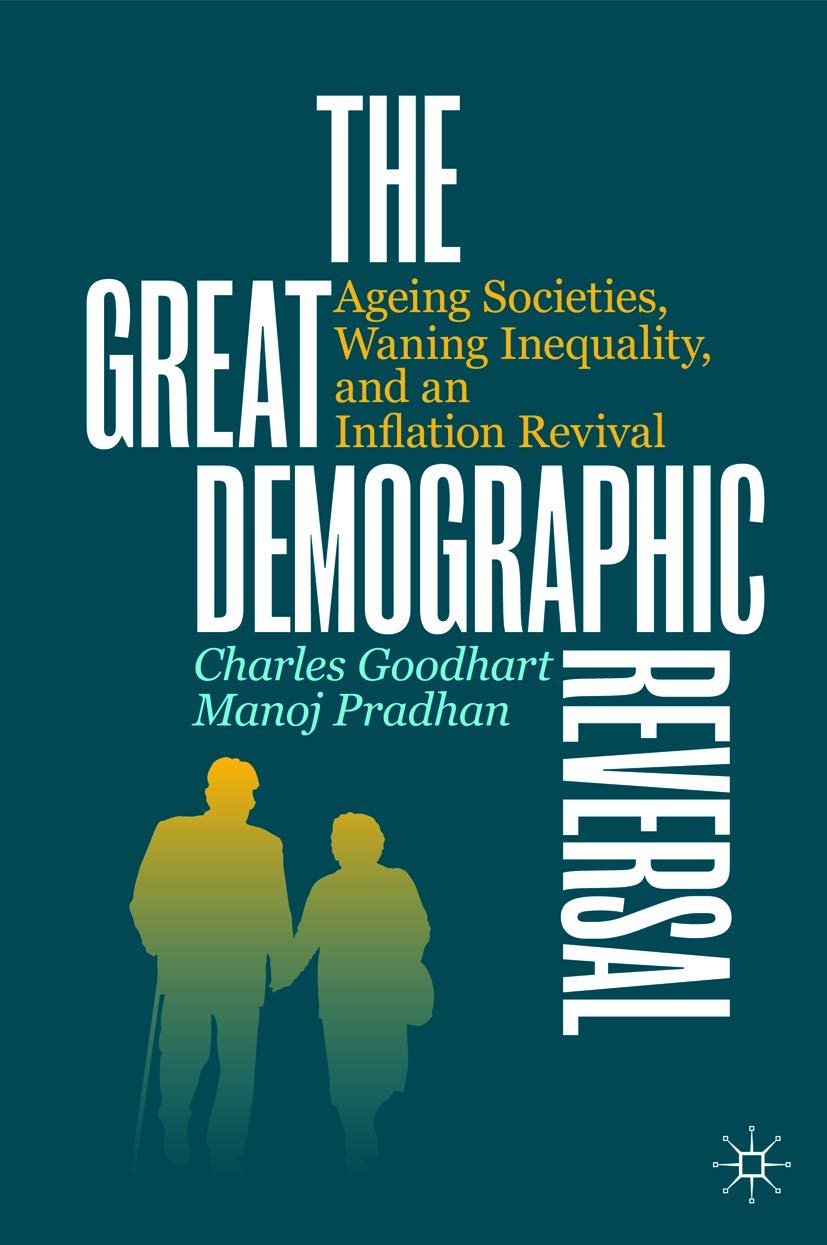
Goodhart and Pradhan argue that the integration into the global capitalist economy of low wage labor from the highly populous China, vastly expanded the available global labor force, undercutting labor bargaining power in the developed world, and with it the wages, benefits, working conditions, and the economic security of Western labor.
The effective labor supply for capitalist exploitation more than doubled from 1991 to 2018, the years during which China opened its doors and invited foreign investors to exploit the country’s vast, disciplined, and cheap work force. Along with the reincorporation of Eastern Europe into the capitalist economy, the baby boomer demographic wave, and rising participation of women in the labor force, these developments provided what the two economists call an enormous “positive” supply shock to the available labor force in the world’s capitalist trading system.
The supply shock definitely turned out to be favorable to the interests of the world’s captains of industry and sultans of finance, since the result was a weakening in the bargaining power of the Western labor force and a steady decline in private sector union membership with consequent benefits for capital in growing profits and CEO compensation.
“The gainers from all this have been those with capital,” note Goodhart and Pradhan, along with workers in China and Eastern Europe. Workers in North America, Western Europe, and Japan have suffered.
But the tide has turned. With the capitalist integration of China and Eastern Europe now complete, and population growth waning, Goodhart and Pradhan warn business leaders and their representatives in government that labor bargaining power is about to grow stronger.
They recommend the following measures to scotch the profit-limiting trend:
Accelerate automation;
Increase the age of retirement;
Outsource jobs to Africa and India (the last great pools of cheap labor);
Maintain aggressive immigration targets.
Neither Microsoft president Brad Smith, nor economists Goodhart and Pradhan, can abide the idea of labor increasing its bargaining power. Capital will do everything in its means to reverse the trend. More for labor means less for capital, and in a capitalist economy—that is, a society that takes its name from the class its serves, capitalists—less for capital is intolerable.
This ought to raise a question for those of us who rely for our living on employment income: Why tolerate a system that—in deploring better wages and working conditions—is so clearly against our interests?
Goodhart and Pradhan argue that the far right comes closest to acknowledging the reality that capital has used the outsourcing of jobs to China and Vietnam, and aggressive immigration targets, as weapons to undermine the bargaining power of Western labor.
As a consequence, the far right has been able to successfully vie with the left for the working class vote, since the left tends to shun analyses which might be construed as criticism of immigration and therefore misconstrued as racism, while eschewing criticism of China’s and Vietnam’s integration into the global capitalist economy out of a sense of solidarity with the developing world.
As they put it:
“One might have expected the voting support of those who have lost out relatively during the last three decades to go to left-wing parties in their own countries. After all, these parties were usually founded to foster the interests, and to look after the welfare, within the political scene of the working classes. Yet this has not generally happened in Europe and North America…Instead, the support of those left behind has gone in Europe mainly to radical populist right-wing parties. Why has this been so? One answer is attitudes toward immigration. Left wing political parties are idealists that support the unity of humanity…Moreover, the left-wing parties usually have a large base of immigrants. Thus, it is unlikely that left-wing parties will support tight controls on immigration.”
By contrast, the “right-wing populist position on immigration is far more consonant with the views of those who have been deleteriously affected by globalization than the inclusive position of left-wing parties.”
These analyses, as incendiary as they may appear, only show that:
Capitalism must be understood as a worldwide system and not analyzed in isolation, within national boundaries;
Capital pits labor in one part of the world against labor in another;
Solidarity across national borders, rather than solipsistic struggles within, is the effective counter-response to capital’s strategy of divide and conquer.
Unfortunately, what is construed nowadays as proletarian internationalism amounts to support for capitalist exploitation of low-wage labor in countries that call themselves Communist, rather than the joint struggle of labor across national boundaries against the proletariat’s common enemy, the bourgeoisie. Solidarity with China and Vietnam is not internationalism, and nor is support for aggressive immigration targets, where the purpose of the targets is to increase the supply of labor in order to hold down or decrease its price. Indeed, much of what passes for the far left these days is, with the exception of a few communist parties, a left interested in the boutique issues of multipolarity and Russia’s and China’s inter-imperialist struggles with the United States, rather than the state of the working class globally.
The left does indeed support the unity of humanity and equality of all people. But supporting policies intended to intensify competition for jobs is not support for the unity of humanity—it’s support for the disunity of the proletariat and the growing strength of the bourgeoisie. The better alternative is support for industrialization, cooperative development, and full employment everywhere—a world economy for, of, and by the proletariat, free from exploitation, rather than a global capitalist economy which compels workers in country A to compete with (and often fight against) workers in country B.
So long as labor remains reconciled to the capitalist system, one which fundamentally depends on labor’s exploitation, it will forever be the victim of a strategy of divide and conquer.
The Union of Communists of Ukraine (UCU), a communist party banned in Ukraine, published a statement on the war in their country on SolidNet, subsequently republished in English on The Defense of Communism site on July 12, 2022.
The following is a summary of the party’s analysis, which closely follows the classical Marxist view of imperialism.
The UCU characterizes the war in Ukraine as a clash of two imperialist alliances: One led by the United States, and the other led by Russia.
The UCU contests the reasons offered for war on both sides.
From the Russia side, the party disagrees that the war “is in the interests of ‘Russians,’” or for the “‘protection of the Russian-speaking population’” in Ukraine, or for the “‘denazification’ of the Ukrainian state.” Instead, it is “in the interests of Russian capital, which has sensed the danger and a necessity for the creation of new international conditions to provide further opportunities for profits and the growth of its capital.”
From the Ukrainian side, the war is not “about ‘the Ukrainian nation,’” or “‘the Ukrainian language and culture,’” or “even about ‘European values.’” In the party’s view, it is a war pursued by the EU, Ukraine, and North America, under US-leadership, “to destroy the economic and political power of the Russian bourgeoisie.” The “interests or rights of Ukrainian workers” are not a consideration. On the contrary, they are abridged and damaged by the war.
“Both Ukrainian and Russian workers in this war have only the right and obligation to go to the front and die so that one group of the world bourgeoisie defeats the other and gains more monopoly rights to oppress the workers, both in their own country and in the defeated countries.”
The war offers nothing of value to working people of the world. Indeed, the “consequences of this imperialist war … are catastrophic for the proletarian masses of all” countries. “A world war cannot but have world consequences: hunger, impoverishment, unemployment, and falling wages are already pacing the planet.”
[Energy and food prices are increasing as a direct consequence of the war. This has, in turn, led central banks to tighten money supplies to control inflation. The predictable consequence of central bank action is to tip economies into recession and visit further economic pain on working families worldwide.
Almost 50 million people have been pushed to the brink of starvation since the war began, as disruptions to grain supplies and soaring transportation costs push food prices out of the reach of the poor. At the same time, real incomes around the world are falling as wages stagnate and prices rise.]
As bad as these sequelae of the war are, a calamity of far greater significance lurks in the wings.
“The development of the military conflict in Ukraine has shown that its leading trend is its escalation into an open clash between the two imperialist blocs: Russia and its allies on one side, and NATO on the other side. This means the escalation of the war into a nuclear conflict and the emergence of a real threat of annihilation of humankind.”
The UCU invokes the classical Marxist view of imperialism as a system of rivalry among capitalist powers to dominate markets, raw materials, investment opportunities, and strategic territory. The “competition of capital inevitably leads to crises and wars.” Thus, the competition of capital must be eliminated to reduce the chances of humanity’s annihilation.
The “struggle against war” is “a struggle against the power of capitalists who wage wars.” It is based on “fighting against the capitalists in each of the warring states,” not supporting one bourgeoisie against the other [and not denying the imperialist character of one side or the other.]
“The UCU sees the way out of imperialist war for the working class not in abstract calls for peace and disarmament (which, at best, can only provide a reprieve from war for the parties to build up forces for an even fiercer clash), but in the need to eliminate capitalism as a parasitic and destructive social system, in which the competition of capital inevitably leads to crises and wars.”
To that end, the party proposes to turn the international war into a civil, or class, war, echoing Lenin’s slogan. At the same time, it appeals “to the Russian workers” to do the same, viz., “to turn the imperialist war into a class war against the power of capital and for the communist revolution.”
“The only thing we can oppose to the bourgeois nationalism …. which pits peoples against each other in war, is proletarian internationalism,” the party argues.
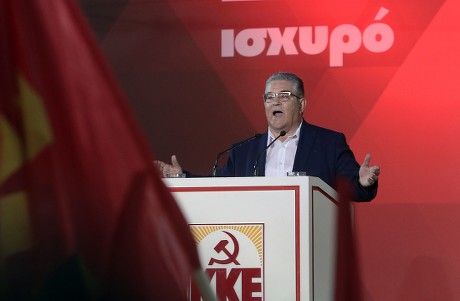
Below is a quick summary of a July 8 speech on the war in Ukraine by Dimitris Koutsoumbas, General Secretary of the Greek Communist Party (KKE), delivered to a conclave of communist parties from Greece, Mexico, Spain, and Turkey.
Earlier this year, Koutsoumbas’s party initiated a statement on the war in Ukraine, characterizing the war as the outcome of a struggle between capitalist classes. The statement was supported by a significant number of Communist Parties and Communist Youth Organizations, but rejected by others.
Koutsoumbas’s address elaborated on the KKE view, which has been summarized by one of its deputies in the European Parliament as follows: “The imperialist conflict in Ukraine is between two camps of robbers: The US-NATO-EU and the bourgeoisie of Ukraine against capitalist Russia, for the control of pipelines and markets.”
Here are some of the points Koutsoumbas made:
The war in Ukraine is a conflict between bourgeois states.
Bourgeois states engage in rivalries over raw materials, mineral wealth, commodity transport routes, geopolitical pillars, and market shares. These rivalries lead to war.
The causes of the imperialist war in Ukraine lie in the confrontation between bourgeois classes.
The USA, NATO, and EU are pursuing war in Ukraine to further their interests in Eurasia before embarking on a major conflict with China over which capitalist power will be supreme in the world economy.
People in all the belligerent countries and alliances—Russians, Ukrainians, Europeans, North Americans— are already paying the price for the war, either with their blood or in an unbearable economic burden.
The price they pay has been imposed on them by the bourgeoisie of all the belligerent powers.
Communists are engaged in a debate over the meaning of imperialism. One view limits imperialism to its reactionary–aggressive foreign policy, resulting in its identification with the USA and the most powerful EU member states. This view is too narrow.
[My note: The classical Marxist view of imperialism has always held that imperialism is an ineluctable outgrowth of capitalism and that it is expressed in rivalry among capitalist powers for access to raw materials, and to dominate markets, spheres of investments, and strategic territory. In the classical view, this rivalry eventually escalates to war.]
Capitalist relations of production now prevail entirely in China. Moreover, Russia, among the most powerful capitalist military powers in the world, and supported by powerful monopolies, is unquestionably capitalist. Imperialism is inseparable from capitalism. As capitalist powers, neither China or Russia, therefore, are outside the imperialist system.
Multipolaristas fantasize about a ‘peaceful cooperation’ in the framework of international capitalist competition through a utopian ‘non-aggressive’ rivalry, or a rivalry whose aggression will be held in check through various ‘security architectures’
[My note: Hilferding expresses the classical Marxist view on security architectures. “What an illusion,” it is, he wrote, “to preach international law in a world … of capitalist struggle where [the] superiority of weapons is the final arbiter.”]
Some communists have been deceived by the pretexts used by one or another ruling bourgeois class—North American, Russian, European, or Ukrainian—and have allowed themselves to become instruments of the pursuits of one or another bourgeois class.
We should not align with one or the other capitalist camp in the war, but instead work (1) to disengage our countries from the war and (2) most importantly, to overthrow the cause of the war: capitalism.
I join Pat Cumings and Greg Godels to talk about my new book “The Killer’s Henchman: Capitalism and the Covid-19 Disaster” on the podcast Coming From Left Field.
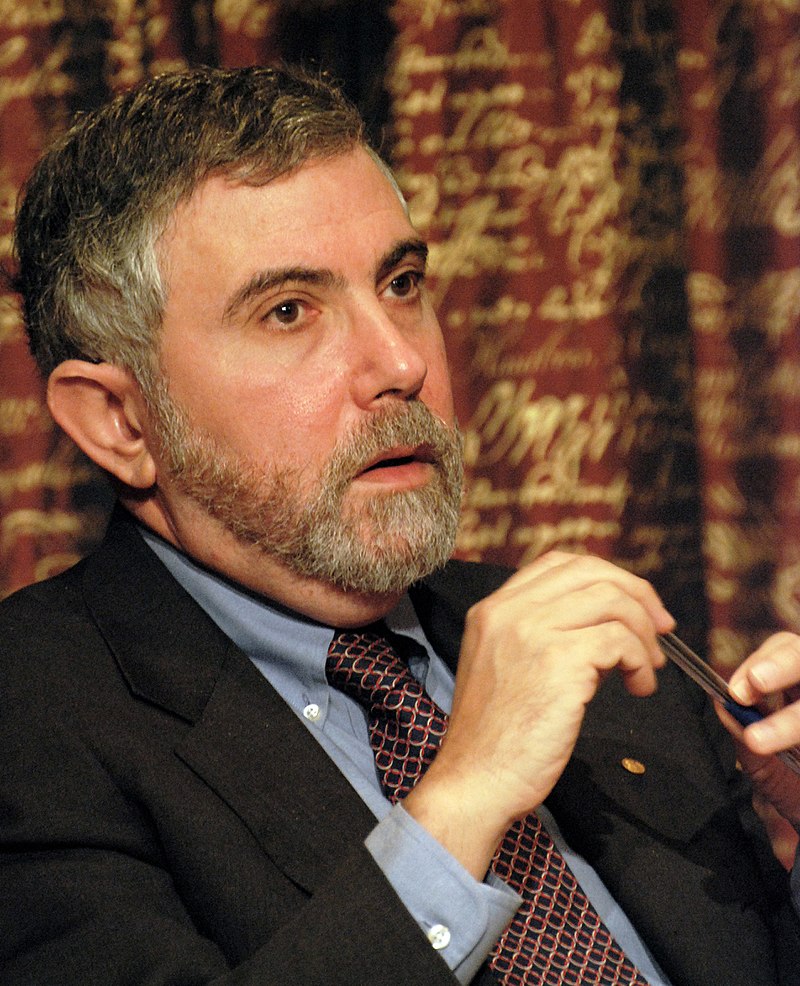
“A large part of the story involves shocks like rising oil and food prices … that are outside the control of policymakers,” writes the Nobel prize-winning economist. “These nonpolicy shocks explain why inflation has soared almost everywhere — for example, British inflation just clocked in at 9.1 percent.”
But rising oil and food prices are not outside the control of policymakers.
Oil prices are rising largely because US, Canadian, and EU policymakers imposed an embargo on imports of Russian hydrocarbons.
And food prices likely wouldn’t be rising had the US and NATO negotiated a new security architecture in Europe when Moscow pleaded for one in December. The West summarily dismissed Moscow’s overtures, seeing greater advantage in letting Russia—which Washington views as a great power rival—weaken itself by stepping into the quagmire of a war in Ukraine. The war is disrupting Ukraine grain exports, putting upward pressure on food prices globally.
If energy and food inflation is beyond the control of Western policymakers, as Krugman alleges, how do we explain this: The Washington Post revealed that the Biden administration anticipated that its response to a Russian invasion of Ukraine would precipitate rising energy prices and a food crisis, but was prepared to “countenance” these outcomes, despite the widespread pain they would cause.
The Post says Biden believed the stakes of allowing Russia to swallow up Ukraine were greater than the harm of spiraling energy and food prices.
The newspaper, however, didn’t explain what the stakes are, in the administration’s view. A good guess is that they are seen as the possible failure of the longstanding project of the United States absorbing Ukraine—seen in Moscow as part of the Russian sphere of influence and vital to its prosperity—into a US-led anti-Russia alliance.
Is a US victory in the game of grab really worth the pain of a growing affordability crisis, to say nothing of a looming food crisis in Africa and the Middle East?
Monetary authorities are now jacking up interest rates to extirpate underlying inflationary pressures, running the risk of precipitating a global recession. But Fed chair Jerome Powell admits that a tighter monetary policy won’t tame rising energy and food costs. In other words, Powell is on the cusp of producing a full-fledged stagflation.
The truth of the matter is that soaring oil, gas, and grocery prices—and a looming recession accompanied by climbing energy and food bills—are sequalae of decisions made by policymakers.
Krugman wants to lay the blame for the economic train-wreck on Putin. His “invasion of Ukraine has seriously damaged the world economy,” he writes.
This is too simple.
The proximal cause of the train-wreck is not the Russian invasion of Ukraine. It’s the West’s response to it. US, Canadian, and EU policymakers didn’t have to impose a fossil fuel embargo on Russia. Nor were they compelled to bolster Kyiv with tens of billions of dollars of aid, ensuring the war would drag on. (The longer the war lasts, the longer Ukraine’s grain exports will be disrupted, and the longer food prices will remain artificially high.) This was a decision policymakers freely took, with foreknowledge of the consequences.
The sad reality is that Western policymakers decided to become embroiled in a war they might have averted, had they seized the opportunity when offered. In maneuvering to weaken Russia by imposing a hydrocarbons ban, and furnishing Ukraine with aid to draw out the war (fighting Russia to the last Ukrainian), they have knowingly imposed substantial costs on their own citizens.
High inflation, then, is not the uncontrollable consequence of Putin’s decision to invade Ukraine. It is the anticipated and countenanced corollary of the pursuit of the US foreign policy goal of weakening Russia.
What should happen?
Russia should end its war on Ukraine and withdraw its forces.
The United States, Canada, and European Union should lift their embargo on imports of Russian oil, gas, and coal and cease other measures of economic warfare against the country.
NATO, little more than an instrument of US foreign policy and the means by which Washington dominates Europe, should be disbanded. The European Union, whose combined military spending and armed forces overshadow Russia’s, is capable of defending itself.
US and Canadian troops should be withdrawn from Europe and reoriented to territorial defense from power projection.
Brussels should negotiate a security architecture for Europe with Russia.
This is what we might wish to happen, but realistically, none of it is likely to happen. The expansionary imperatives of capitalism compel each state to compete on behalf of their capital-accumulating enterprises for investment opportunities, markets, sources of raw materials, and strategic opportunity on a world scale. Capitalism-induced rivalry creates tensions among countries—antagonisms that have a high likelihood of escalating to war. Therein is found the roots of the struggle among the United States, Europe, Russia, and Ukraine—a struggle that has burst forth in overt violence and produced a looming economic catastrophe.
Until economies are re-oriented to satisfying human needs rather than investors’ needs for handsome returns, until capitalism is overcome, there is no real hope for any meaningful turning away from the inauspicious path on which humanity now treads.
Journalist Patrick Cockburn decries Russian president Vladmir Putin’s decision to invade Ukraine as manifestly dumb. Putin, “convinced himself,” writes Cockburn, “that a Russian army of inadequate size would easily topple the government in Kyiv and the Ukrainian army would meekly surrender.” [1]
If Putin believed about Ukraine that he only had to kick in the doors and the whole rotten structure would come tumbling down (as Hitler believed about the Soviet Union), the expectation has, to be sure, turned out to be decidedly wrong. But we’ll have to wait to find out whether the invasion represents “the most disastrous decision in Russian history,” as Cockburn contends. The key question, from the perspective of Russian raison d’état, is whether the decision makes the Russian state and the elites it represents stronger relative to what they would have been had the invasion not been carried out. It’s too early to tell.
If Putin has blundered, and he may have, then so too, on the surface, has Biden. Biden’s decision to embargo Russian hydrocarbons, and to pressure Canada and the EU to do the same, has hurt Western consumers far more than it has hurt Russia.
According to the New York Times, “oil and refined fuel prices” in the United States “have risen to their highest levels in 14 years, due largely to sanctions on Russia oil.” Gasoline prices are up by more than 60 percent over last year. And higher fuel prices are rippling through the US economy, contributing to record high inflation. [2]
The Eurozone is dealing with a similar set of problems. “High prices are already sending shudders through an economy that is geared up to run on cheap Russian energy,” reports the Wall Street Journal. This has fueled record-high inflation and prompted some industrial companies to close. [3]
With monetary authorities raising interest rates to temper strong upward pressure on prices, Western economies are on the brink of a recession, and tens of millions teeter on the precipice of economic hardship. [4]
Meanwhile, this month alone, Moscow’s “coffers were expected to receive $6 billion more in oil and gas revenue than anticipated because” embargo-induced supply restrictions sent oil prices soaring. As the New York Times reports, “China and India, the world’s most populous countries, have swooped in to buy roughly the same volume of Russian oil that would have gone to the West. Oil prices are so high that Russia is making even more money now from sales than it did before the war began four months ago. And its once-flailing currency has surged in value against the dollar.” [5]
An embargo to punish Russia that ends up punishing Western consumers with higher energy prices, but allows Russia to reap the benefit of rising prices, surely rivals Putin’s decision to invade Ukraine for sheer stupidity.
Or does it?
If Biden’s goal is to punish Russia while protecting Western consumers, then his embargo decision has clearly backfired. But are these his goals?
Another view is that the US aim is to shift Europe’s energy dependence from Russia to sources under US control, in order to weaken Russia, and its oil and gas industry, and strengthen the oil and gas industries of the United States and its allies. Europe stands to lose big time, since sourcing energy from further afield will raise the continent’s energy bill. Additionally, by shifting Europe’s energy dependence to US-controlled suppliers, Washington increases its leverage over a Europe that increasingly seeks strategic autonomy at US expense. Washington has complained about Russia’s ability to use its energy supplies to blackmail Europe. Dependence on US-controlled suppliers simply shifts the role of potential blackmailer from Moscow to Washington.
According to the Washington Post, the Biden administration had discussed, even before Russia launched its invasion in February, the possibility that its response to the invasion would cause global spillover effects, in rising energy costs, food shortages, and a global recession. Moreover, US officials said they were willing to countenance these consequences. [6] (Fine for them; buffered by great wealth, they’ll hardly feel the effects themselves.)
If Western consumers are paying more for gasoline, natural gas, and groceries; if Africa and the Middle East are on the brink of a food crisis; if hundreds of millions are teetering on the edge of joblessness as the world economy slips closer to recession; it’s not because a stupid decision was made by a blundering Biden administration that has had calamitous unanticipated consequences; it’s because these are the anticipated and countenanced consequences of a US strategy to weaken Russia and bring Europe more firmly under the US thumb.
If Biden is stupid, his stupidity promises to produce welcome results for US energy companies, to say nothing of corporate America as a whole, which, on balance, stands to profit from Washington gaining greater leverage over Europe, one of the world’s largest economies and rival for world economic supremacy with corporate USA.
If there’s stupidity at play here, it’s the stupidity of believing that Washington’s actions are aimed at protecting and enlarging the interests of ordinary people. On the contrary, you and I are merely the means to the ends of—and collateral damage of the decisions taken to benefit—the elite of billionaires and wealthy investors who are the only people who really matter in Washington.
The war in Ukraine didn’t have to happen. For months, Moscow pressed Washington and NATO to negotiate a new security architecture in Europe. Moscow’s entreaties were dismissed out of hand. Once the war began, Washington could have launched efforts to bring about a diplomatic solution. Instead, it did the opposite, pumping billions of dollars of arms into Ukraine, and pressing its allies to do the same. This has been a boon for investors in US arms manufacturing, but a menace to the world, which now lives under a sword of Damocles in an elevated risk of nuclear war with Russia.
Tally up the consequences of Washington’s response to Russia’s invasion of Ukraine.
Rising energy prices.
Record-high inflation.
A world economy on the brink of a recession.
A looming food crisis.
An increased risk of nuclear war.
These consequences harm you and me, and everyone else like us, but they hardly affect the wealthy, if they affect them at all (with the exception of the last.)
But there are other consequences—effects that are hardly calamitous but, on the contrary, are pleasing to a narrow spectrum of the population, namely, corporate USA and wealthy US investors. These are:
Soaring demand for US arms.
The promise of a cornucopia of future profits for US weapons makers as NATO members hike their military outlays and two new members, Finland and Sweden, join the alliance. (To ensure interoperability of forces, NATO members largely buy their equipment from a common provider, the US arms industry.)
Growing opportunity for the US hydrocarbons industry.
US control of Europe’s energy supplies and therefore greater US political leverage over Europe.
Higher energy costs for European businesses, reducing their competitiveness relative to US firms.
Government decisions that hurt you and me may appear to be evidence of government stupidity. It’s more likely that the consequences are not calamitous for everyone, and the calamity for the rest of us is anticipated and countenanced.
2. Clifford Krauss and Marie Solis, “U.S. Gas Prices Hit a New High: $5 a Gallon,” The New York Times, June 11, 2022.
3. Joe Wallace and Eric Sylvers, “European Natural-Gas Prices Jump as Russia Cuts Supplies Again,” The Wall Street Journal, June 15, 2022.
4. Paul Hannon, Yuliya Chernova and Georgi Kantchev, “Russian Inflation Makes U.S. Price Rises Look Tame,” The Wall Street Journal May 20, 2022.
5. Victoria Kim, Clifford Krauss and Anton Troianovski, “Western Move to Choke Russia’s Oil Exports Boomerangs, for Now,” The New York Times, June 21, 2022.
6. Missy Ryan and Dan Lamothe, “With scant options in Ukraine, U.S. and allies prepare for long war,” The Washington Post, June 17, 2022.
“Capitalism can pursue no other policy than that of imperialism.” Rudolph Hilferding
“Imperialism is an inevitable accompaniment of capitalist development.” Nikolai Bukharin
“Colonial politics and imperialism are … the inevitable consequences of the very foundations of capitalism.” V.I. Lenin
By Stephen Gowans
June 18, 2022
Blaming the war in Ukraine on Russian aggression or, alternatively, NATO provocations, represents a failure to understand capitalist imperialism as a system of rivalry among states for economic advantage. Imperialism is not what Russia alone does, or only what the United States and its janissaries do, but is, instead, a system in which all capitalist powers and blocs are enmeshed. It is not a policy choice, but the inevitable outcome of rivalry among states that originates in the expansionary imperatives of capitalism. To borrow from Lenin, capitalist imperialism is “the struggle for the sources of raw materials, for the export of capital, for spheres of influence, i.e., for spheres for profitable deals, concessions, monopolist profits, and so on, in fine, for economic territory in general.” [1] Blame for wars that spring from this system cannot be assigned to only one state or alliance. The blame lies with capitalism itself. Capitalism inevitably creates antagonisms among states, and the antagonisms can, and often do, escalate to war.
The historian William Appleman Williams explained this well.
The issue is not whether capitalism is a unique cause of war. It is not. The causes of war, including the economic ones, operate within capitalism just as they have within other systems of political economy. It does seem demonstrable, however, that capitalism heightens and intensifies the role and impact of economic factors in causing wars. The essential dynamic engine of capitalism, after all, is held to be a never-ending economic competition within a world marketplace. … the competition has an inherent tendency to escalate into political tension and conflict, and that exacerbates and reinforces other causes of such contention. For this reason, capitalism reveals a strong propensity to produce or result in organized violence … [The] capitalist outlook structures the world in such a way that capitalist leadership often sees itself as being confronted with a choice between war or defeat in the competitive marketplace. [2]
Assigning blame for war to one bloc or state, rather than to the internal workings of capitalism, was denounced by all leading Bolsheviks, and much later, by Domenico Losurdo, who faulted the historian Fritz Fischer for blaming WWI on Germany alone. Losurdo wrote: “Fritz Fischer’s weighty monograph, [Germany’s Aims in the First World War] published in the early 1960s, makes the mistake of always defining imperialism in the singular, as if the German variety alone were operative.” [3] In a similar vein, we can fault many contemporary Marxists and anti-imperialists for making Fischer’s mistake of always defining imperialism in the singular, in this case, as if the US variety alone is operative.
Lenin wrote of one imperialist war, WWI, as “the natural continuation of the policies of the capitalist class and of the governments of all countries” (emphasis added). [4] Commenting on the same war, Lenin’s colleagues, Bukharin and Preobrazhensky, contended that “Undisputedly, the game of grab played by all the great powers was the real cause of the war. Only an idiot can continue to believe that the war took place because the Serbs killed the Austrian crown prince or because the Germans invaded Belgium” (emphasis added). [5]
They continued:
“The German capitalists maintained that Russia was the aggressor, whereas the Russians proclaimed everywhere that Germany began it. In Britain word went round that the British had entered the struggle on behalf of ‘gallant little Belgium.’ In France, everyone was writing, screaming, and singing to prove how gloriously France was behaving in defense of the heroic Belgian nation. Simultaneously in Austria and Germany it was being trumpeted that these two countries were repelling a Cossack invasion and were waging a purely defensive war.” [6]
“This “was all nonsense,” declared the two Bolsheviks, “a fraud.” [7] In truth, they said, “The essence of the imperialist war was … that in it, all were aggressors” (emphasis added). [8] That’s because the “essential desire of every one of the financial capitalist [States] is to dominate the world; to establish a world empire, wherein the small group of capitalists belonging to the victorious nations shall hold undivided sway” (emphasis added). [9] “In this manner,” Bukharin and Preobrazhensky argued, “the reign of financial capital must inevitably hurl all mankind into the bloody abyss of war for the benefit of bankers and [billionaires]; a war which is not for a people’s own land but for the plunder of other lands; a war that is waged in order that the world be subjugated by the financial capital of the conquering country.” [10]
It’s a surprise, then, to find that a Communist-led organization should make the same error the Bolsheviks and Losurdo condemned. “The West – driven by the imperialist ambitions of the United States and its NATO allies … provoked the actions of the Russian government,” declares the Canadian Peace Congress. [11] This is no different from saying, Germany, driven by imperialist ambitions, provoked the actions of the Entente. In a prize fight, the fighter who lands the first blow has not—driven by his ambition to win the fight—provoked the actions of his opponent. If we want to understand prize fighting, we have to understand it as an institution, as a system of rivalry in which the actors seek the same prize at the expense of their rivals. The same is true of capitalism on a world stage.
In concert with the Peace Congress’s attempt to identify the guiltier party, a recent online discussion panel, sponsored by the Toronto Association for Peace and Solidarity [12], also promoted an erroneous understanding of imperialism. Rather than locating the root cause of the war in rivalry among states driven by capitalist compulsions, it focused, in a climate of febrile attention to the war on Ukraine, exclusively on NATO, as if a war that is at the fore of public awareness can be understood in the motivations of one belligerent alone, or that the central problem is NATO (just one of many instruments of imperialism) rather than the capitalism-driven system of rivalry itself.
One cannot help but think that were the Bolshevik intellectuals transported across time to the present, they would, contrary to the approach of the Peace Congress, take a whole-system perspective, examining the role of capitalism and its imperatives in creating multiple antagonisms among the United States and its NATO alliance, the EU, Russia, and Ukraine.
The Canadian Peace Congress tries to explain the war in Ukraine as an outcome of the United States’ “imperialist ambitions,” but says nothing about the source of these ambitions (where do they come from?) and nothing about the imperialist ambitions of Russia (as if Russia, a country as thoroughly capitalist as any of those of the NATO alliance, is somehow immune to ambitions to defend and expand its economic territory.) That’s odd, considering the Congress is Communist-led. You might expect Communists to point out that:
Imperialist ambitions arise inevitably from the internal workings of capitalism.
Capitalism compels business people to nestle everywhere, settle everywhere, and set up connections everywhere, as the Communist Manifesto explained, which means that capitalists from various countries are always bumping up against each other in pursuit of the same profit-making opportunities in the world market.
The compulsive drive for markets, investment opportunities, and raw materials creates antagonisms among states.
Capitalism is a danger because it incubates imperialist ambitions that conduce to war.
Blame for capitalism-driven war lies, not in the actions of a single belligerent state or bloc, but in capitalism itself.
Ending the seemingly interminable succession of capitalism-driven wars will only happen when, as Lenin put it, “the class which is conducting the imperialist war, and is bound to it by millions of economic threads (and even ropes), is really overthrown and is replaced at the helm of state by the really revolutionary class, the proletariat” (emphasis in the original).[13]
These wars won’t be ended by cheering on one or more of the contestants, hoping that in the struggle for the world market one side grows stronger and the other weaker, as the apostles of multipolarity do today.
Instead of a communist, or class, analysis of the war in Ukraine we have been presented, not only by the Canadian Peace Congress, but by many groups and people who present themselves as Marxist-Leninists, with a Fritz Fischer-like perspective—one that makes the mistake of always defining imperialism in the singular, as if the US variety alone or the Russian variety alone is operative. This perspective transforms the meaning of imperialism from a system of rivalry for markets, raw materials, investment opportunities, and strategic territory into a denunciatory label to be attached to whichever bourgeois power one happens to dislike.
Similarly indefensible and often sophistical arguments are presented by soi-disant Marxist-Leninists to justify departures from class analyses.
For example, some say that while they recognize all parties to the war in Ukraine to be aggressors, they reserve their condemnation for their own country’s government because it is the only one over which they can exert some influence. There are two problems with this argument.
First, people can, and have, exerted influence over foreign governments. The movements to pressure South Africa to abandon apartheid, and the similar BDS movement aimed at apartheid Israel, represent such efforts. The worldwide demonstrations for peace in the lead-up to the 2003 Anglo-American invasion of Iraq, were also efforts to influence what, for most of the participants, was a foreign government: that of the United States. Those who refuse to condemn Russia on the grounds that it is a foreign country over which they have no control, have had no reservations in the past about condemning the United States, Israel, and South Africa, and seeking to alter these countries’ courses of action. The argument they make to justify their silence on Russia, therefore, lacks credibility.
Second, even if it were true that no pressure can be exerted on foreign governments, it does not follow that this binds one to omerta, a code of silence on the actions of foreign governments. The related argument that one’s main duty is to oppose one’s own government fails for the same reason; opposing one’s own government is not equal to refusing to acknowledge that other states, also enmeshed in a system of rivalry for markets, investment opportunities, and strategic territory, also behave, as a consequence, in repugnant ways. What’s on trial, or ought to be, is not the United States or Russia, but imperialism, a system of rivalry in which all states under the sway of capitalism (including China) are ensconced. As much as I can walk and talk at the same time, so too can I condemn Russia for its aggression in Ukraine and oppose my own government’s contributions to the war, while at the same time locating the source of their imperialist ambitions and belligerent actions in the systemic imperatives and logic of capitalism.
Others say they fault all belligerents, but refuse to cite Russia’s aggression for fear of adding to the weight of pro-war sentiment in their own country. This view is problematic. Failing to acknowledge Russia’s aggression when it has been visibly brought to the public’s attention, in no way challenges one’s own government’s arguments for war or makes the argument against war any stronger. It does, however, guarantee that, in failing to acknowledge the obvious, building credibility with the larger public becomes unnecessarily difficult. It seems far more likely that a public, in Europe anyway, that already sees Russia as an aggressor, but favors a rapid end to the war and opposes military build-ups [13], will be more receptive to an argument that acknowledges the apodictic reality of Russian aggression. A sounder approach to refusing to acknowledge Russia’s belligerent actions, or worse, to defend or excuse them, is to argue thus: Russia’s attempt to retain Ukraine within its sphere of influence by war is indefensible, but at the same time, so too are the actions of the United States and its allies, to draw Ukraine into the EU sphere, and therefore, the larger US ambit. Two blocs are fighting over the profit-making opportunities and strategic assets that repose within the borders of Ukraine, and the victims are the ordinary people around the world who are paying, if not in their lives or displacement through war, through their pocket books, in increasingly unaffordable energy and food, and higher taxes or foregone social expenditures due to increased military outlays, to say nothing of facing an elevated threat of nuclear war. This is not a war of justice, where one bloc has virtue on its side, but a war against humanity in which all participating governments are aggressors.
Perhaps thinking wrongly that organizing against the war in Ukraine amounts to supporting Russia, the Peace Congress avers that it takes courage to promote “peace and solidarity in moments of crisis and in an atmosphere of pro-war frenzy and propaganda.” But what courage is really needed to say what a majority of the population already thinks, namely, that
Russia’s actions are deplorable;
the US and NATO should have accommodated Russia’s request to negotiate a security architecture in December;
Washington should not be taking measures to prolong and intensify the war; it should be working toward a diplomatic solution.
(The Congress doesn’t say who it is promoting solidarity with, but one gets the sinking feeling it’s Russia. No wonder it thinks courage is required.)
One especially vacuous argument presented by those who misunderstand imperialism holds that failing to take a side in a rivalry among capitalist states for markets, spheres of influence, and investment opportunities is an exercise in cowardice. A side must be taken, these imbeciles insist. As a matter of logic, there is no compelling reason why one must take a side in a conflict. This is particularly true if the disputants pursue goals that are either indifferent or inimical to one’s own interests. In point of fact, the Bolshevik view of imperialism does take a side: that of the proletariat. What it doesn’t do is take the side of one bourgeoisie against another. The imbeciles demand we do.
Finally, some have dismissed the Bolsheviks’ analysis of imperialism as outdated, faulting it for being specific to conditions that prevailed in WWI, and therefore incapable of capturing the dynamics of a world dominated by a single hegemon. Two points can be made about this objection.
First, the early twentieth century was characterized by the predominance of the British Empire, which held large parts of the world under its sway, if not in its thrall. Britain’s primacy may not have been as strong as that of the United States today, but the empire was unquestionably first among great powers. The difference between a world dominated in the early twentieth century by the British Empire and the world dominated by the United States today, is quantitative, not qualitative, a matter of degree, not kind.
Second, while for a very brief period the United States was almost completely unchallenged as a global leviathan, both Russia and China have emerged as “revisionist” capitalist powers, to challenge the primacy of the United States and “revise” the US-superintended world order. By revise the world order, I mean repartition the world’s economic and strategic territory. Some people think there’s something progressive about this. If so, then World Wars I and II were progressive events, for they were the outcomes of Germany’s and Japan’s attempts to revise the world order to create greater multipolarity.
Germany and Japan, driven by the needs of their growing capitalist economies, emerged in the early twentieth century to challenge the British Empire, and to revise the global order London led—that is, to take from Britain and other great powers, the economic territory Berlin and Tokyo said they needed to thrive. Germany at a minimum lusted after a sphere of influence in all of continental Europe, while Japan sought pre-eminence in East Asia. Russia, today, is driven to protect its economic territory from US-led encroachments, while China’s capitalism-driven need for foreign markets and secure access to raw materials entangles it in a rivalry (along with complementarity) with the United States and the European Union. The rivalry may lead to war.
The period of conflict between the United States as the leader of the capitalist world, and the Soviet Union and Maoist China, as large powers, is different in one fundamental respect from the great power rivalry that marks the present: Russia is not a socialist country (and neither, by any common definition of the word “socialist”, is China.) That it is necessary to make a statement as blindingly obvious as this, one on par with, the earth is a sphere, is testament to the fact that some Marxist-Leninists are in the grips of an extraordinary delusion about the political economy of Russia and China. No, Russia is not the Soviet Union, and China, highly integrated into the US economy as a sphere of exploitation for US corporate behemoths seeking low-wage labor, while at the same time, a hot house for a growing clutch of billionaires with interests around the world, are not tribunes of the people, as some luftmenschen would like to believe.
The world politics on which the Bolsheviks cut their analytical teeth bears a much stronger resemblance to that of the world today than to the post-1945 twentieth century struggle between capitalist and communist blocs. Today, capitalist Russia and a China very much under the sway of capitalism, appear more like Germany and Japan during the so-called Second Thirty Year War, 1914-1945, namely, as rising capitalist powers with a mission, developed under the lash of capitalist expansionary imperatives, to repartition the world, than they resemble the Soviet Union and Mao’s China.
While NATO has unquestionably played a role in bringing about the war in Ukraine, focusing on NATO, and identifying the United States and its allies as bearing the greater guilt for the conflict, presents imperialism as if it were a policy that governments can adopt or reject at will rather than a capitalism-driven rivalry for the world market in which antagonisms among states are inevitable and wars are nearly ineluctable. We ought to be at a place where we can, to borrow from Bukharin and Preobrazhensky, explain the cause of the war in Ukraine as the outcome of “the game of grab played by all the great powers” and not—as “only an idiot can continue to believe”—either NATO provocations or Russian aggression.
[1] V.I. Lenin, Imperialism: The Highest Stage of Capitalism. International Publishers. 1939. P. 124.
[2] William Appleman Williams. The Great Evasion. Quadrangle Books. 1964. P. 75.
[3] Domenico Losurdo. War and Revolution. Verso. 2015. P. 137.
[4] “Resolution introduced by the delegation of the central committee of the RSDLP to the International Socialist Women’s Conference at Berne”, in Lenin: The Imperialist War. International Publishers. 1930. P. 472.
[5] N. Bukharin and E. Preobrazhensky. The ABC of Communism.Penguin Books. 1970. P. 158.
[12] https://www.youtube.com/watch?reload=9&v=7bFEdpj5dYU While this may not be true of the Toronto Association for Peace and Solidarity, some solidarity groups see their mission in connection with the war in Ukraine as one of expressing solidarity with one capitalist country, Russia, against an alliance of other capitalist countries, NATO, rather than solidarity with the proletariat, whose blood, labor, and future, is threatened by the struggle between these two bourgeois blocs.
[13] V.I Lenin, “The Proletarian Revolution and the Renegade Kautsky,” 1918, in Lenin’s Collected Works, Progress Publishers, Moscow, Volume 28, 1974, pp. 227-325.
Colonial politics and imperialism are not healthy, curable deviations of capitalism…they are the inevitable consequence of the very foundations of capitalism. Competition among individual entrepreneurs either to become ruined, or to ruin others; competition between individual countries places before each of them the alternative of their remaining behind, running the risk of [falling behind], or ruining and conquering other countries, thus elbowing their way to a place among the great powers. – V.I. Lenin, “Imperialism and Socialism in Italy”
May 12, 2022
By Stephen Gowans
From The Wall Street Journal we learn that China’s President Xi Jinping has hammered home the need for tighter party control over the economy with a wider role for state enterprises. Under Xi, China’s Communist Party has tried to transition from ‘economics in command’ to ‘politics in command.’
But now “China’s economy is struggling, and its financial markets are suffering. Some economists expect growth to contract this quarter. Millions of graduates are struggling to find jobs.”
Premier Li Keqiang is “helping press Xi to dial back some measures that have contributed to China’s economic slowdown.”
“As a young man, Li pursued a doctorate in economics under a prominent Chinese economist known for advocating Deng Xiaoping’s market-reform agenda and privatizing state firms.”
“Under Mr. Li’s influence, Beijing recently eased a regulatory crackdown on private technology firms, loosened lending to property developers and home buyers, and acted to help some manufacturers”, including Tesla, controlled by Elon Musk, the world’s richest person, “resume production when much of China has been forced into lockdowns by Mr. Xi’s zero-Covid approach.”
As the Marxist sociologist Albert Szymanski once pointed out, communists, like Xi, who choose to operate within the capitalist system soon discover that state policy is structured by capitalism, not by their policy preferences. Decision-makers who defy capitalism’s imperatives find their actions precipitate crises. Humbled, they quickly back peddle.
In a Chinese idiom, economics, i.e., capitalism, is in charge.
“The political orientations of the people who hold high-level positions in the capitalist state are largely irrelevant. The logic of capitalism structures the policy boundaries within which policy- and decision-makers operate, forcing conservatives, liberals, social democrats, and even communists who elect to work within the capitalist system, to operate within the same narrow pro-capitalist policy space. The prosperity and stability of a capitalist society depends on the private owners of capital accumulating sufficient profits. If they cannot generate enough profit, they cease to invest, and economic activity grinds to a halt. To maintain stability, governments must pursue policies to support the profit-making activities of their business communities. If they choose not to, their only option is to mobilize popular support to bring the economy under public ownership and control, so that investment decisions can be transferred from private hands to the public sphere, from profit-making as its goal to satisfying public needs as its end. There is no middle ground, where working-class interests can be robustly and continually expanded within a capitalist framework at the expense of the capitalist class.”
Capitalism structures state policy, not only in the realm of domestic matters, but in foreign relations, as well. Communists who elect to operate within the capitalist system are constrained to compete with other capitalist states for markets, raw materials, spheres of investment, and strategic territory, vital to their investors and profit-accumulating enterprises. If they are to play the capitalist game, states can no more absent themselves from rivalry with other states— with potential to escalate to war—than a private firm can absent itself from rivalry with its competition.
As two Bolsheviks wrote in their ABC of Communism, each “producer wants to entice away the others’ customers, to corner the market. This struggle assumes various forms: it begins with the competition between two factory owners; it ends in the world, wherein capitalist States wrestle with one another for the world market.” And in the struggle of capitalist states for the world market—in arms, oil and natural gas, rare earths, vaccines, robotics, supercomputers, AI, autonomous vehicles, 5G, and other commodities—lies the potential for war.
There is no doubt that Beijing has chosen to play the capitalist game. It is the centerpiece of its development project. There is, therefore, no option for China to excuse itself from imperialism. If it is to develop along capitalist lines, it must behave as a capitalist state, including by vying with other states for capitalist advantage around the world and indulging billionaires like Elon Musk and Apple’s Tim Cook, capitalists who have grown immensely wealthy by exploiting cheap Chinese labor.
That China’s capitalist development project is under the command of communists, neither negates the reality that the project is one of integration into a world capitalist system based on exploitation, or that, as Xi is finding out, politics in command can be checked by capitalism in command.
As political science professor Minxin Pei told The Wall Street Journal, Xi may be a “leftist deep down, but he has to make tactical compromises over the economy.” That is, the world capitalist economy.
In sum, despite the Communist Party being nominally in charge, and the president being a leftist “deep-down,” China is integrated into the world capitalist economy as a major, if not the major player, by the choice of China’s Communist Party rulers. State policies are not structured by communists seeking to end the exploitation of one human by another, but by the imperatives of the capitalist system Chinese communists have consciously embraced.




 What's Left